Togo Aluminum Alloys Market Growth Rate Analysis (2025 - 2031)
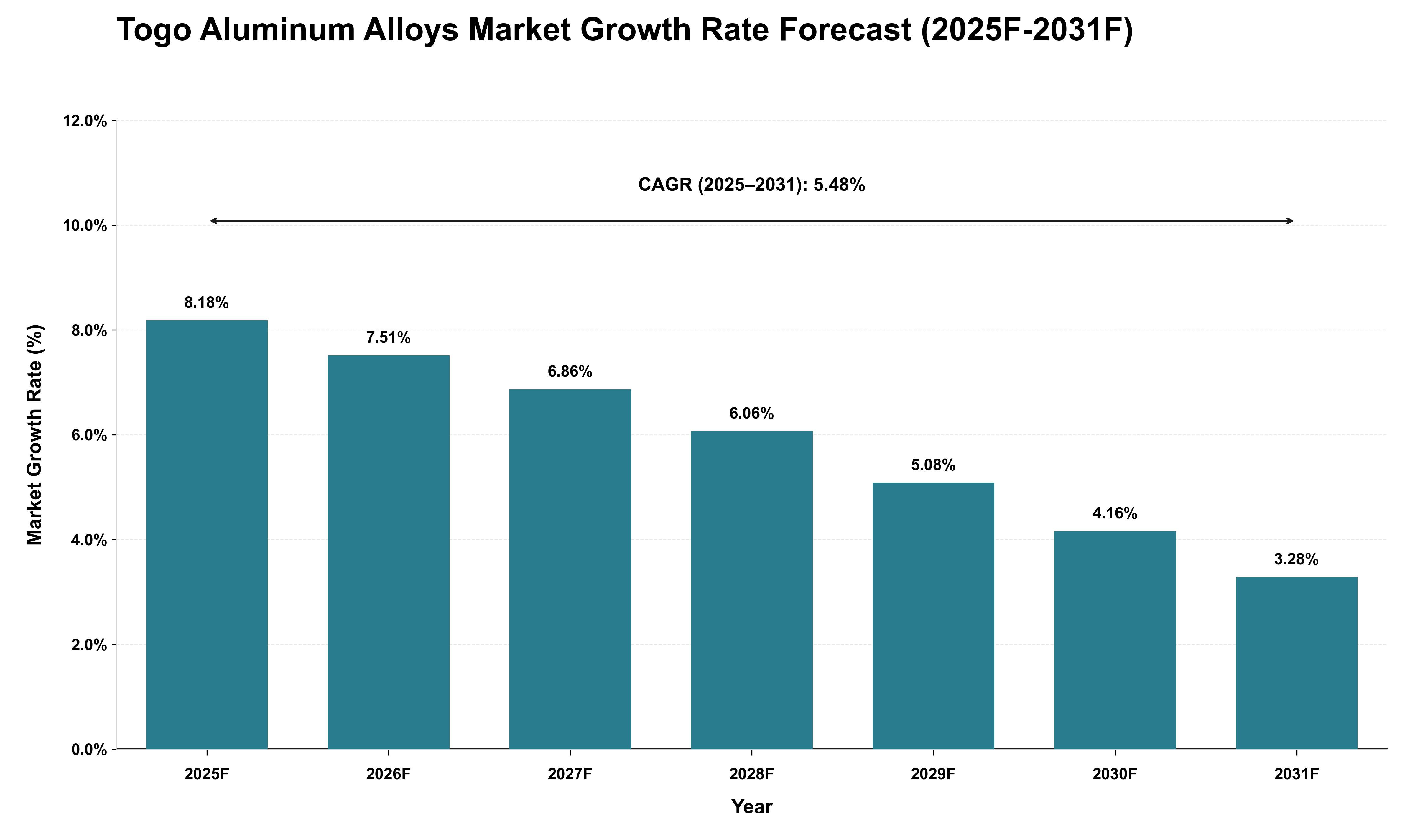
The Togo aluminum alloys market is projected to experience a compound annual growth rate of 5.48% from 2025 to 2031, reflecting a robust trajectory influenced by evolving global trade dynamics. The anticipated annual growth rates indicate a strong initial surge in demand, particularly in 2025 at 8.18%, likely driven by increased industrial applications and infrastructure projects that necessitate lightweight and durable materials. As the forecast progresses, the gradual decline in growth rates suggests an adjustment phase where import dependencies may play a critical role; Togo's reliance on imported raw materials could impact pricing and availability, influencing domestic production capabilities. Additionally, cyclical trends in global aluminum markets will affect trade flows, with fluctuations in demand from key trading partners potentially shaping Togo's export strategies. Overall, these factors will collectively drive the market's evolution within the specified timeframe.
Key Highlights of the Report:
- Togo Aluminum Alloys Market Outlook
- Market Size of Togo Aluminum Alloys Market, 2024
- Forecast of Togo Aluminum Alloys Market, 2031
- Historical Data and Forecast of Togo Aluminum Alloys Revenues & Volume for the Period 2021-2031
- Togo Aluminum Alloys Market Trend Evolution
- Togo Aluminum Alloys Market Drivers and Challenges
- Togo Aluminum Alloys Price Trends
- Togo Aluminum Alloys Porter`s Five Forces
- Togo Aluminum Alloys Industry Life Cycle
- Historical Data and Forecast of Togo Aluminum Alloys Market Revenues & Volume By Process for the Period 2021-2031
- Historical Data and Forecast of Togo Aluminum Alloys Market Revenues & Volume By Die Casting for the Period 2021-2031
- Historical Data and Forecast of Togo Aluminum Alloys Market Revenues & Volume By Sand Casting for the Period 2021-2031
- Historical Data and Forecast of Togo Aluminum Alloys Market Revenues & Volume By Permanent Mold Casting for the Period 2021-2031
- Historical Data and Forecast of Togo Aluminum Alloys Market Revenues & Volume By End-use for the Period 2021-2031
- Historical Data and Forecast of Togo Aluminum Alloys Market Revenues & Volume By Transportation sector for the Period 2021-2031
- Historical Data and Forecast of Togo Aluminum Alloys Market Revenues & Volume By Building & Construction sector for the Period 2021-2031
- Historical Data and Forecast of Togo Aluminum Alloys Market Revenues & Volume By Industrial sector for the Period 2021-2031
- Historical Data and Forecast of Togo Aluminum Alloys Market Revenues & Volume By Others for the Period 2021-2031
- Togo Aluminum Alloys Import Export Trade Statistics
- Market Opportunity Assessment By Process
- Market Opportunity Assessment By End-use
- Togo Aluminum Alloys Top Companies Market Share
- Togo Aluminum Alloys Competitive Benchmarking By Technical and Operational Parameters
- Togo Aluminum Alloys Company Profiles
- Togo Aluminum Alloys Key Strategic Recommendations






































