Togo Artificial Intelligence Market Top 5 Importing Countries and Market Competition (HHI) Analysis
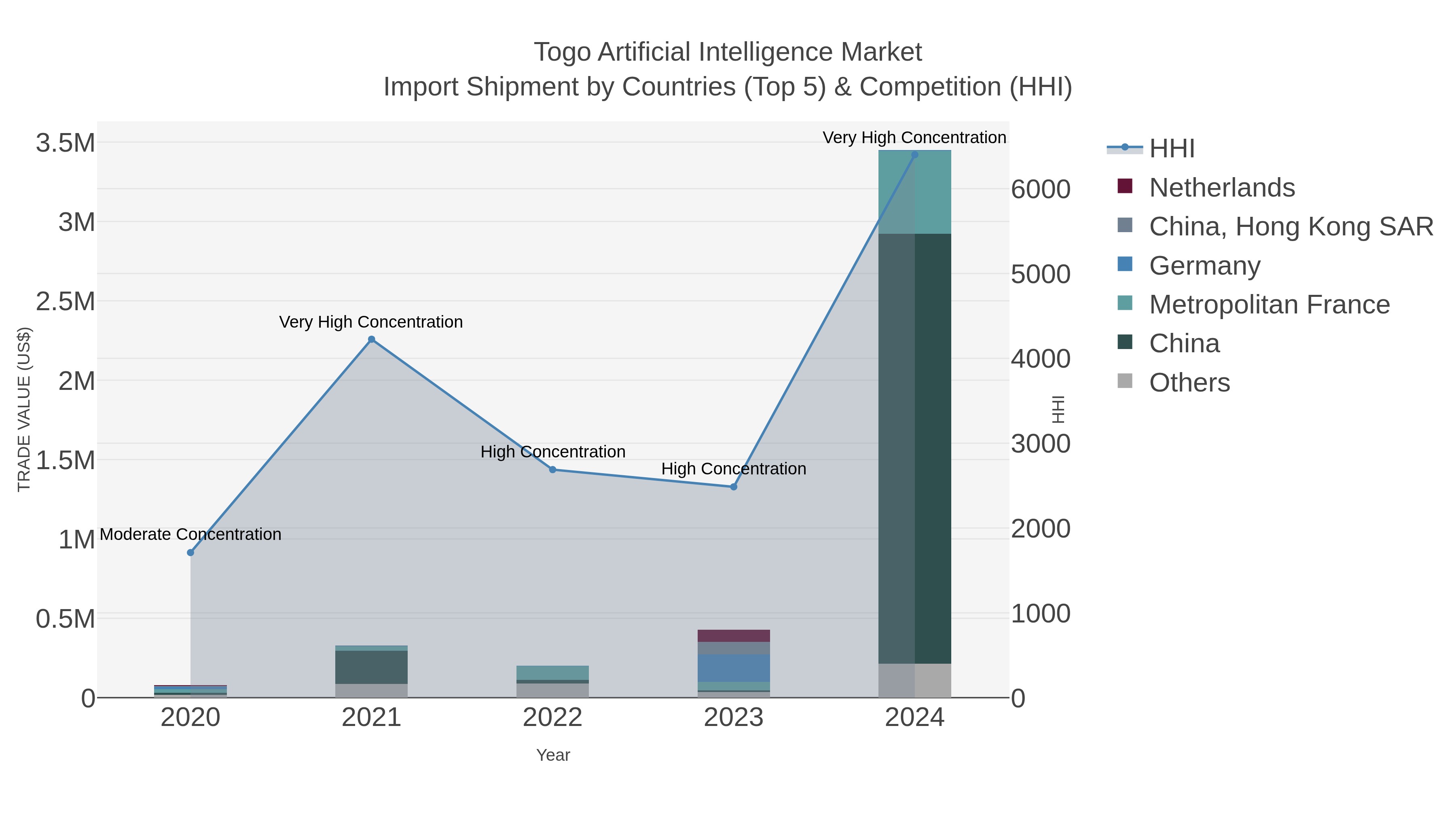
In 2024, Togo continued to import artificial intelligence products from a diverse range of countries, with China, Metropolitan France, Estonia, Morocco, and Switzerland being the top exporters. The market shows low concentration, indicating a broad sourcing strategy. While specific growth figures are not available for the period, the consistent import activity suggests a sustained demand for AI technology in Togo. This trend underscores the country`s ongoing efforts to leverage advanced technologies for various sectors, potentially driving further innovation and development in the AI landscape.
Key Highlights of the Report:
- Togo Artificial Intelligence Market Outlook
- Market Size of Togo Artificial Intelligence Market, 2025
- Forecast of Togo Artificial Intelligence Market, 2032
- Historical Data and Forecast of Togo Artificial Intelligence Revenues & Volume for the Period 2022 - 2032
- Togo Artificial Intelligence Market Trend Evolution
- Togo Artificial Intelligence Market Drivers and Challenges
- Togo Artificial Intelligence Price Trends
- Togo Artificial Intelligence Porter's Five Forces
- Togo Artificial Intelligence Industry Life Cycle
- Historical Data and Forecast of Togo Artificial Intelligence Market Revenues & Volume By Offering for the Period 2022 - 2032
- Historical Data and Forecast of Togo Artificial Intelligence Market Revenues & Volume By Hardware for the Period 2022 - 2032
- Historical Data and Forecast of Togo Artificial Intelligence Market Revenues & Volume By Software for the Period 2022 - 2032
- Historical Data and Forecast of Togo Artificial Intelligence Market Revenues & Volume By Services for the Period 2022 - 2032
- Historical Data and Forecast of Togo Artificial Intelligence Market Revenues & Volume By Technology for the Period 2022 - 2032
- Historical Data and Forecast of Togo Artificial Intelligence Market Revenues & Volume By Machine Learning for the Period 2022 - 2032
- Historical Data and Forecast of Togo Artificial Intelligence Market Revenues & Volume By Machine Vision for the Period 2022 - 2032
- Historical Data and Forecast of Togo Artificial Intelligence Market Revenues & Volume By Natural Language Processing (NLP) for the Period 2022 - 2032
- Historical Data and Forecast of Togo Artificial Intelligence Market Revenues & Volume By Others for the Period 2022 - 2032
- Togo Artificial Intelligence Import Export Trade Statistics
- Market Opportunity Assessment By Offering
- Market Opportunity Assessment By Technology
- Togo Artificial Intelligence Top Companies Market Share
- Togo Artificial Intelligence Competitive Benchmarking By Technical and Operational Parameters
- Togo Artificial Intelligence Company Profiles
- Togo Artificial Intelligence Key Strategic Recommendations






































