Togo Colorants Market Growth Rate Analysis (2025 - 2031)
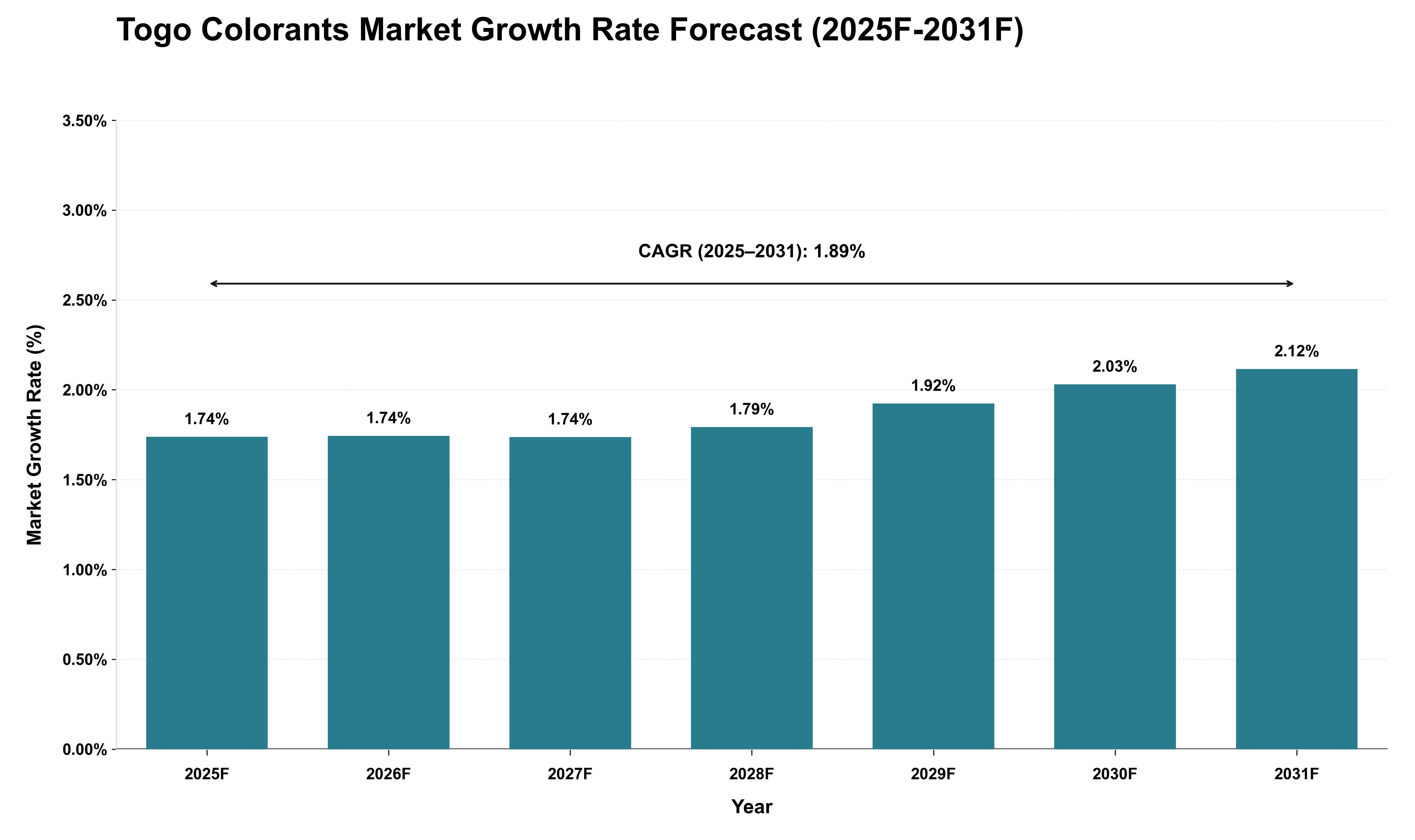
From 2025 onward, the Togo colorants market will experience a gradual increase in growth rates, reflecting a compound annual growth rate (CAGR) of 1.89%. This trend will be driven by anticipated fluctuations in supply chain dynamics and input costs, particularly as global demand for colorants rises in various industries such as textiles and plastics. The initial years will see stable growth at approximately 1.74%, indicating a period of adjustment as manufacturers optimize their sourcing strategies amidst potential volatility in raw material prices. As the forecast progresses, slight upticks to 2.12% by 2031 suggest that companies will increasingly leverage technological advancements to enhance production efficiency and reduce dependency on imported materials. This evolution will likely mitigate cost pressures while responding to evolving consumer preferences for sustainable products, thereby fostering a more resilient market environment throughout the forecast period.
Key Highlights of the Report:
- Togo Colorants Market Outlook
- Market Size of Togo Colorants Market, 2024
- Forecast of Togo Colorants Market, 2031
- Historical Data and Forecast of Togo Colorants Revenues & Volume for the Period 2021-2031
- Togo Colorants Market Trend Evolution
- Togo Colorants Market Drivers and Challenges
- Togo Colorants Price Trends
- Togo Colorants Porter`s Five Forces
- Togo Colorants Industry Life Cycle
- Historical Data and Forecast of Togo Colorants Market Revenues & Volume By Type for the Period 2021-2031
- Historical Data and Forecast of Togo Colorants Market Revenues & Volume By Dyes for the Period 2021-2031
- Historical Data and Forecast of Togo Colorants Market Revenues & Volume By Pigments for the Period 2021-2031
- Historical Data and Forecast of Togo Colorants Market Revenues & Volume By Masterbatches for the Period 2021-2031
- Historical Data and Forecast of Togo Colorants Market Revenues & Volume By Color Concentrates for the Period 2021-2031
- Historical Data and Forecast of Togo Colorants Market Revenues & Volume By End Use Industry for the Period 2021-2031
- Historical Data and Forecast of Togo Colorants Market Revenues & Volume By Packaging for the Period 2021-2031
- Historical Data and Forecast of Togo Colorants Market Revenues & Volume By Building & Construction for the Period 2021-2031
- Historical Data and Forecast of Togo Colorants Market Revenues & Volume By Automotive for the Period 2021-2031
- Historical Data and Forecast of Togo Colorants Market Revenues & Volume By Textiles for the Period 2021-2031
- Historical Data and Forecast of Togo Colorants Market Revenues & Volume By Paper & Printing for the Period 2021-2031
- Togo Colorants Import Export Trade Statistics
- Market Opportunity Assessment By Type
- Market Opportunity Assessment By End Use Industry
- Togo Colorants Top Companies Market Share
- Togo Colorants Competitive Benchmarking By Technical and Operational Parameters
- Togo Colorants Company Profiles
- Togo Colorants Key Strategic Recommendations






































