Togo Edible Oils Market Growth Rate Analysis (2025 - 2031)
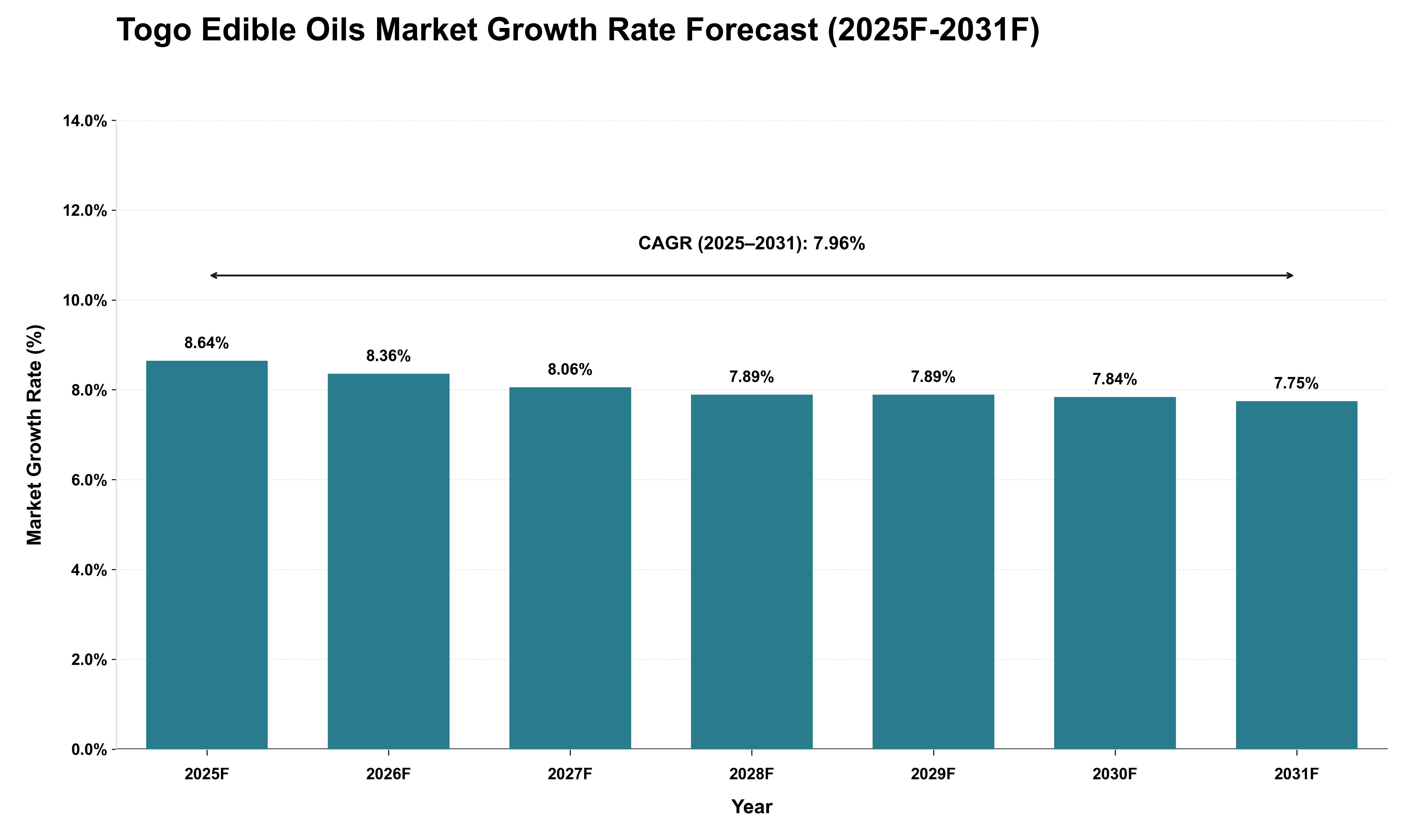
The Togo edible oils market is poised for robust growth driven by evolving consumer preferences and increasing health consciousness, which will significantly influence end-use demand from 2025 onward. The projected CAGR of 7.96% reflects a sustained upward trajectory, with annual growth rates starting at 8.64% in 2025 and gradually tapering to 7.75% by 2031. This trend indicates a strong initial demand surge, likely fueled by rising disposable incomes and urbanization, leading to greater consumption of processed foods that utilize edible oils. Additionally, import dependencies will play a critical role as Togo continues to rely on external sources for oil supply; fluctuations in global prices and trade policies could impact local market dynamics. As consumers increasingly prioritize quality and health benefits, the market will likely witness shifts toward premium products, further shaping the competitive landscape within this sector during the forecast period.
Key Highlights of the Report:
- Togo Edible Oils Market Outlook
- Market Size of Togo Edible Oils Market, 2024
- Forecast of Togo Edible Oils Market, 2031
- Historical Data and Forecast of Togo Edible Oils Revenues & Volume for the Period 2021-2031
- Togo Edible Oils Market Trend Evolution
- Togo Edible Oils Market Drivers and Challenges
- Togo Edible Oils Price Trends
- Togo Edible Oils Porter`s Five Forces
- Togo Edible Oils Industry Life Cycle
- Historical Data and Forecast of Togo Edible Oils Market Revenues & Volume By Type for the Period 2021-2031
- Historical Data and Forecast of Togo Edible Oils Market Revenues & Volume By Palm Oil for the Period 2021-2031
- Historical Data and Forecast of Togo Edible Oils Market Revenues & Volume By Soybean Oil for the Period 2021-2031
- Historical Data and Forecast of Togo Edible Oils Market Revenues & Volume By Sunflower Oil for the Period 2021-2031
- Historical Data and Forecast of Togo Edible Oils Market Revenues & Volume By Rapeseed Oil for the Period 2021-2031
- Historical Data and Forecast of Togo Edible Oils Market Revenues & Volume By Olive Oil for the Period 2021-2031
- Historical Data and Forecast of Togo Edible Oils Market Revenues & Volume By Packaging Type for the Period 2021-2031
- Historical Data and Forecast of Togo Edible Oils Market Revenues & Volume By Pouches for the Period 2021-2031
- Historical Data and Forecast of Togo Edible Oils Market Revenues & Volume By Jars for the Period 2021-2031
- Historical Data and Forecast of Togo Edible Oils Market Revenues & Volume By Cans for the Period 2021-2031
- Historical Data and Forecast of Togo Edible Oils Market Revenues & Volume By Bottles for the Period 2021-2031
- Historical Data and Forecast of Togo Edible Oils Market Revenues & Volume By End Use for the Period 2021-2031
- Historical Data and Forecast of Togo Edible Oils Market Revenues & Volume By Domestic for the Period 2021-2031
- Historical Data and Forecast of Togo Edible Oils Market Revenues & Volume By Food Service for the Period 2021-2031
- Historical Data and Forecast of Togo Edible Oils Market Revenues & Volume By Industrial for the Period 2021-2031
- Togo Edible Oils Import Export Trade Statistics
- Market Opportunity Assessment By Type
- Market Opportunity Assessment By Packaging Type
- Market Opportunity Assessment By End Use
- Togo Edible Oils Top Companies Market Share
- Togo Edible Oils Competitive Benchmarking By Technical and Operational Parameters
- Togo Edible Oils Company Profiles
- Togo Edible Oils Key Strategic Recommendations






































