Togo Foam Market Growth Rate Analysis (2025 - 2031)
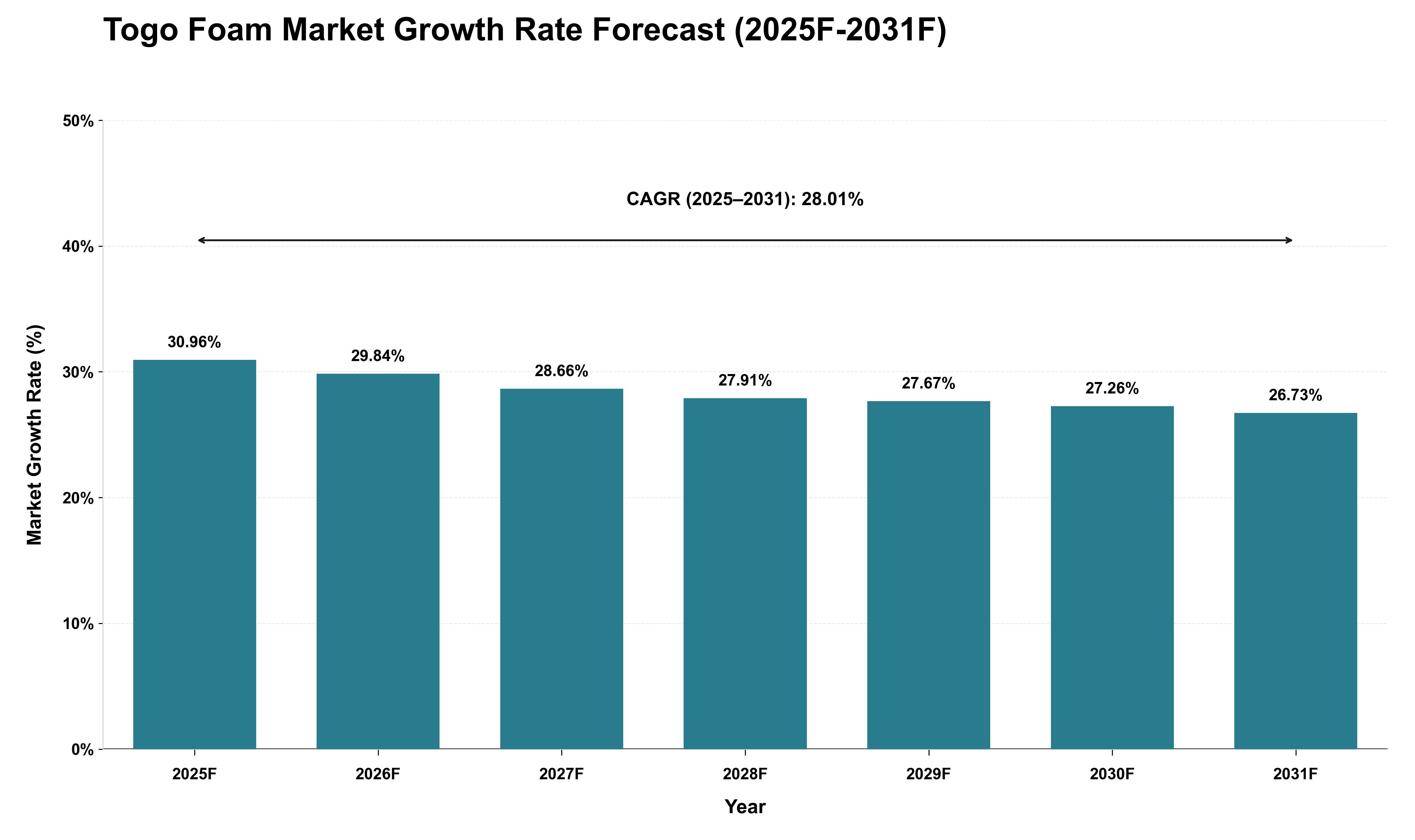
The Togo foam market is poised for significant growth, with a projected CAGR of 28.01% from 2025 to 2031, reflecting robust demand dynamics driven by evolving consumer preferences and increasing construction activities. The annual growth rates indicate a gradual decline, yet they remain substantial, suggesting that the market will experience sustained expansion as new entrants capitalize on emerging opportunities. This competitive landscape will likely intensify as domestic production capabilities are expected to improve, reducing import dependencies and fostering innovation in product offerings. Additionally, cyclical trends in the construction sector will influence demand patterns, with fluctuations in economic activity potentially impacting growth rates year-on-year. As manufacturers adapt to these changes and enhance their operational efficiencies, the Togo foam market will likely witness a diversification of applications beyond traditional uses, further solidifying its position within the regional economy.
Key Highlights of the Report:
- Togo Foam Market Outlook
- Market Size of Togo Foam Market, 2024
- Forecast of Togo Foam Market, 2031
- Historical Data and Forecast of Togo Foam Revenues & Volume for the Period 2021-2031
- Togo Foam Market Trend Evolution
- Togo Foam Market Drivers and Challenges
- Togo Foam Price Trends
- Togo Foam Porter`s Five Forces
- Togo Foam Industry Life Cycle
- Historical Data and Forecast of Togo Foam Market Revenues & Volume By Type for the Period 2021-2031
- Historical Data and Forecast of Togo Foam Market Revenues & Volume By Flexible Foam for the Period 2021-2031
- Historical Data and Forecast of Togo Foam Market Revenues & Volume By Rigid Foam for the Period 2021-2031
- Historical Data and Forecast of Togo Foam Market Revenues & Volume By Foam Type for the Period 2021-2031
- Historical Data and Forecast of Togo Foam Market Revenues & Volume By Polyurethane for the Period 2021-2031
- Historical Data and Forecast of Togo Foam Market Revenues & Volume By Polystyrene for the Period 2021-2031
- Historical Data and Forecast of Togo Foam Market Revenues & Volume By Polyolefin for the Period 2021-2031
- Historical Data and Forecast of Togo Foam Market Revenues & Volume By Phenolic for the Period 2021-2031
- Historical Data and Forecast of Togo Foam Market Revenues & Volume By PET for the Period 2021-2031
- Historical Data and Forecast of Togo Foam Market Revenues & Volume By Others for the Period 2021-2031
- Historical Data and Forecast of Togo Foam Market Revenues & Volume By End-use Industry for the Period 2021-2031
- Historical Data and Forecast of Togo Foam Market Revenues & Volume By Building & Construction for the Period 2021-2031
- Historical Data and Forecast of Togo Foam Market Revenues & Volume By Packaging for the Period 2021-2031
- Historical Data and Forecast of Togo Foam Market Revenues & Volume By Automotive for the Period 2021-2031
- Historical Data and Forecast of Togo Foam Market Revenues & Volume By Furniture & Bedding for the Period 2021-2031
- Historical Data and Forecast of Togo Foam Market Revenues & Volume By Footwear, Sports, & Recreational for the Period 2021-2031
- Historical Data and Forecast of Togo Foam Market Revenues & Volume By Others for the Period 2021-2031
- Togo Foam Import Export Trade Statistics
- Market Opportunity Assessment By Type
- Market Opportunity Assessment By Foam Type
- Market Opportunity Assessment By End-use Industry
- Togo Foam Top Companies Market Share
- Togo Foam Competitive Benchmarking By Technical and Operational Parameters
- Togo Foam Company Profiles
- Togo Foam Key Strategic Recommendations






































