Tunisia Bathroom Furniture Market Summary
The tunisia bathroom furniture market was estimated at USD 273 Million in 2025 and is projected to reach USD 369 Million by 2032, growing at a CAGR of 4.8% from 2026 to 2032.
Tunisia Bathroom Furniture Market Year-wise Growth Rate and Key Drivers
This graph highlights how the Tunisia Bathroom Furniture Market has steadily grown over the past five years, supported by major growth factors.
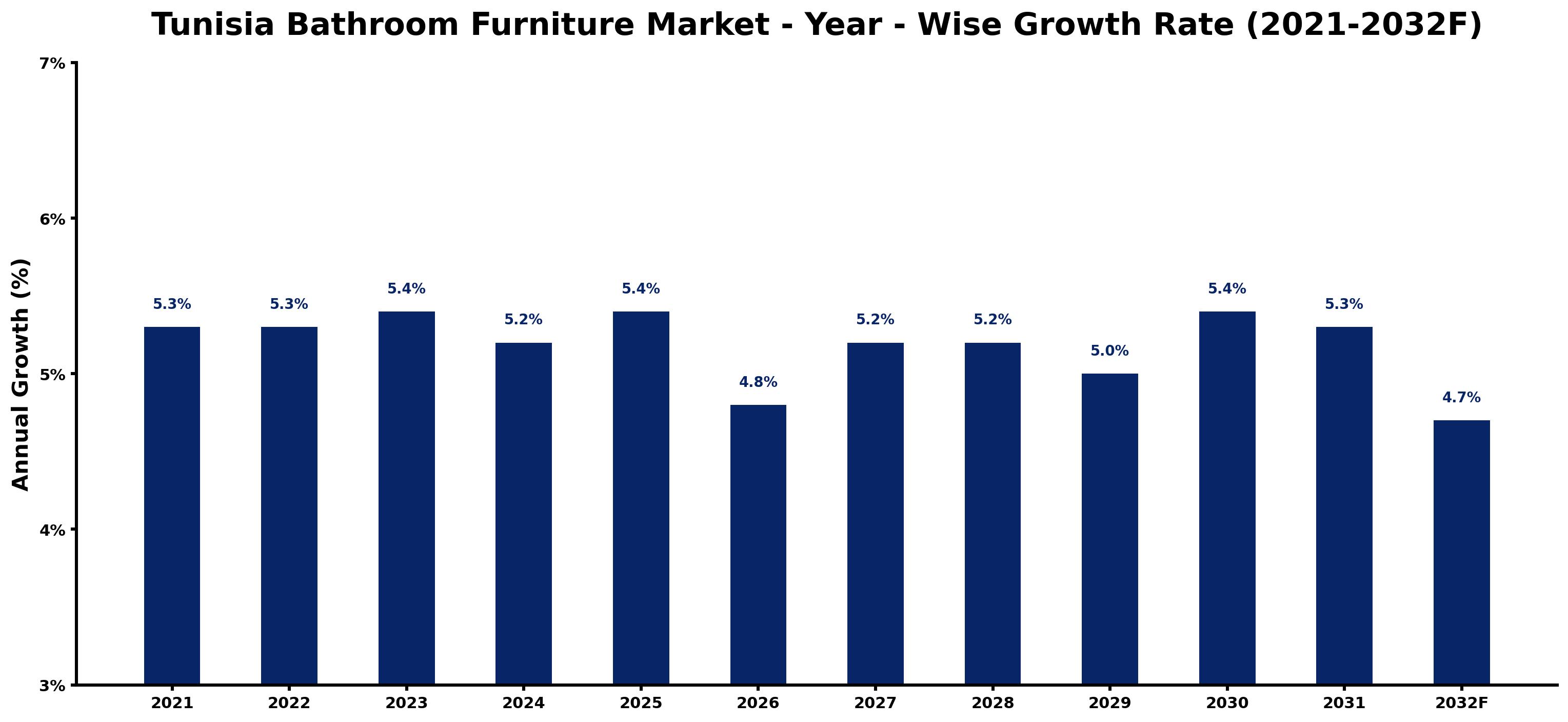
The table below presents the year wise growth rates along with the key drivers influencing the market
| Year | Growth Rate | Major Drivers |
| 2021 | 5.3% | Consumer preferences shift towards sustainable and eco-friendly bathroom furniture options. |
| 2022 | 5.3% | Emerging middle class increasingly invests in home renovation and aesthetic improvements. |
| 2023 | 5.4% | Online retail platforms expand, providing broader access to diverse furniture selections. |
| 2024 | 5.2% | Influence of social media trends drives demand for modern bathroom designs. |
| 2025 | 5.4% | Local manufacturing capabilities enhance market responsiveness to consumer demands. |
| 2026 | 4.8% | Urbanization trends increase household formation, boosting furniture purchase frequencies. |
| 2027 | 5.2% | Technological innovations in materials improve durability and design flexibility for furniture. |
| 2028 | 5.2% | Growing awareness of hygiene significantly impacts bathroom furniture design choices. |
| 2029 | 5.0% | Investment in hospitality and tourism sectors amplifies demand for luxury bathroom fittings. |
| 2030 | 5.4% | Rising disposable incomes encourage premium furniture brands to enter the market. |
| 2031 | 5.3% | Changing lifestyles lead to increased interest in multifunctional and space-saving designs. |
| 2032 | 4.7% | Renewed focus on wellness influences consumer preferences towards spa-like bathroom environments. |
Note - Market size estimations and growth projections presented in this report are based on 6Wresearch's advanced forecasting approach, validated with industry datasets as of June 2026.
Tunisia Bathroom Furniture Market Synopsis
The Tunisia Bathroom Furniture Market is projected to reach 4.8% and witness significant growth during the forecast period (2026-2032). The market is characterized by a robust demand for modern bathroom furniture solutions that align with evolving architectural trends and consumer preferences. Urbanization continues to drive the need for innovative and space-efficient designs, while rising disposable incomes facilitate enhanced spending on home improvement products, particularly in the bathroom segment.
Tunisia Bathroom Furniture Market Growth Drivers
Several key factors are contributing to the growth of the Tunisia Bathroom Furniture Market. Firstly, the ongoing trend of urbanization is leading to a surge in the construction of residential and commercial spaces, creating a demand for stylish and functional bathroom solutions. Secondly, higher disposable incomes have enabled consumers to invest in quality bathroom furniture, elevating their living standards.
- Urbanization is leading to smaller living spaces, increasing the demand for multifunctional and space-saving bathroom furniture.
- Higher disposable incomes facilitate consumer spending on premium bathroom furnishings, enhancing overall bathroom aesthetics and functionality.
- Consumer preferences are shifting towards eco-friendly materials, driving manufacturers to adopt sustainable production practices.
- Technological advancements have enabled the introduction of innovative bathroom furniture solutions, including smart storage options that cater to modern living needs.
- The increasing influence of global design trends is prompting local manufacturers to elevate their product offerings, fostering a competitive market environment.
Tunisia Bathroom Furniture Market Trends and Opportunities
The Tunisia Bathroom Furniture Market is witnessing several noteworthy trends that present unique opportunities for participants in this sector. A significant trend is the preference for sustainable and eco-friendly materials, driven by a burgeoning environmental consciousness among consumers. Additionally, the market is seeing a rising inclination towards contemporary designs that incorporate a blend of functionality and aesthetics.
- The demand for customized bathroom furniture solutions is escalating as consumers seek products that reflect their individual tastes and lifestyle needs.
- Online retail channels are gaining traction, offering consumers easy access to a wider range of products while enhancing the shopping experience.
- As urban spaces become more compact, innovative design solutions such as modular furniture are becoming increasingly popular.
- Smart technology integration in bathroom furniture is on the rise, appealing to tech-savvy consumers looking for enhanced functionality.
- The growing trend of open-concept bathroom designs is driving demand for cohesive furniture solutions that enhance spatial aesthetics.
Tunisia Bathroom Furniture Market Challenges and Restraints
Despite its positive growth trajectory, the Tunisia Bathroom Furniture Market faces several challenges that could impact its development. Intense competition among local and international brands can create pricing pressures and challenge profit margins. Additionally, fluctuating raw material prices can affect production costs, leading to unpredictable pricing strategies for manufacturers.
- The high cost of advanced manufacturing technologies poses a challenge for local manufacturers, limiting their ability to compete with imported products.
- Economic instability and political uncertainties can adversely influence consumer spending patterns, leading to fluctuations in market demand.
- A lack of standardized quality control measures might result in inconsistencies in product quality, affecting consumer trust and satisfaction.
- Changing consumer preferences towards high-end, customizable solutions can challenge conventional market players to adapt quickly.
- Supply chain disruptions may hinder the timely availability of essential materials, impacting production schedules and market responsiveness.
Tunisia Bathroom Furniture Market Investment Opportunities
The Tunisia Bathroom Furniture Market is rich with investment opportunities, particularly as urbanization fuels the real estate sector's growth. Investors can leverage the increasing demand for modern bathroom solutions by exploring various avenues, such as manufacturing and retailing a diverse range of products.
- Investing in eco-friendly and sustainable materials presents a significant opportunity, aligning with the rising consumer preference for green products.
- Strategic partnerships with local suppliers can enhance the supply chain, reducing costs and increasing product availability to meet growing demand.
- Focusing on innovative designs and customization options could position investors favorably in a competitive landscape.
- Expanding online retail channels can enhance market reach, catering to a growing demographic of online shoppers seeking convenience.
- Entering the market through niche segments, such as luxury bathroom solutions, can provide higher profitability due to lower competition.
Tunisia Bathroom Furniture Market Government Investment and Initiatives
The government of Tunisia is actively supporting the growth of the bathroom furniture market through various initiatives and policies. By offering incentives and subsidies to local manufacturers, the government aims to enhance production capacity and improve quality standards across the sector.
In addition, regulatory frameworks have been implemented to ensure compliance with safety and environmental standards, which helps foster a responsible manufacturing environment. The government's focus on promoting exports of bathroom furniture is expected to stimulate local economic growth, create job opportunities, and establish Tunisia as a competitive player in the global market.
Tunisia Bathroom Furniture Market Latest Developments (May 2025 - June 2026)
During the period from May 2025 to June 2026, the Tunisia Bathroom Furniture Market has seen several noteworthy developments. The rise of e-commerce platforms has significantly impacted retail dynamics, resulting in increased product accessibility for consumers. Furthermore, manufacturers are increasingly adopting sustainable practices, responding to consumer preferences for environmentally friendly products.
There has also been a discernible increase in the collaboration between local designers and manufacturers, aiming to create unique products that cater to the contemporary tastes of Tunisian consumers. As innovation becomes a focal point, companies are integrating smart technologies into their product lines to meet the growing demand for functionality. Overall, these developments reflect a dynamic sector poised for continued evolution.
Tunisia Bathroom Furniture Market - Key Attractiveness of the Report
- 10 Years of Market Numbers
- Historical Data Starting from 2022 to 2025
- Base Year: 2025
- Forecast Data until 2032
- Key Performance Indicators Impacting the Market
- Major Upcoming Developments and Projects
Key Highlights of the Report:
- Tunisia Bathroom Furniture Market Outlook
- Market Size of Tunisia Bathroom Furniture Market, 2025
- Forecast of Tunisia Bathroom Furniture Market, 2032F
- Historical Data and Forecast of Tunisia Bathroom Furniture Revenues & Volume for the Period 2022-2032F
- Tunisia Bathroom Furniture Market Trend Evolution
- Tunisia Bathroom Furniture Market Drivers and Challenges
- Tunisia Bathroom Furniture Price Trends
- Tunisia Bathroom Furniture Porter's Five Forces
- Tunisia Bathroom Furniture Industry Life Cycle
- Historical Data and Forecast of Tunisia Bathroom Furniture Market Revenues & Volume By Type for the Period 2022-2032F
- Historical Data and Forecast of Tunisia Bathroom Furniture Market Revenues & Volume By Bath Vanities for the Period 2022-2032F
- Historical Data and Forecast of Tunisia Bathroom Furniture Market Revenues & Volume By Console Vanity for the Period 2022-2032F
- Historical Data and Forecast of Tunisia Bathroom Furniture Market Revenues & Volume By Vanity Tops for the Period 2022-2032F
- Historical Data and Forecast of Tunisia Bathroom Furniture Market Revenues & Volume By Bathroom Mirrors for the Period 2022-2032F
- Historical Data and Forecast of Tunisia Bathroom Furniture Market Revenues & Volume By Other for the Period 2022-2032F
- Historical Data and Forecast of Tunisia Bathroom Furniture Market Revenues & Volume By Application for the Period 2022-2032F
- Historical Data and Forecast of Tunisia Bathroom Furniture Market Revenues & Volume By Household for the Period 2022-2032F
- Historical Data and Forecast of Tunisia Bathroom Furniture Market Revenues & Volume By Commercial for the Period 2022-2032F
- Historical Data and Forecast of Tunisia Bathroom Furniture Market Revenues & Volume By Other for the Period 2022-2032F
- Tunisia Bathroom Furniture Import Export Trade Statistics
- Market Opportunity Assessment By Type
- Market Opportunity Assessment By Application
- Tunisia Bathroom Furniture Top Companies Market Share
- Tunisia Bathroom Furniture Competitive Benchmarking By Technical and Operational Parameters
- Tunisia Bathroom Furniture Company Profiles
- Tunisia Bathroom Furniture Key Strategic Recommendations






































