Tunisia Carnauba Wax Market Size Growth Rate
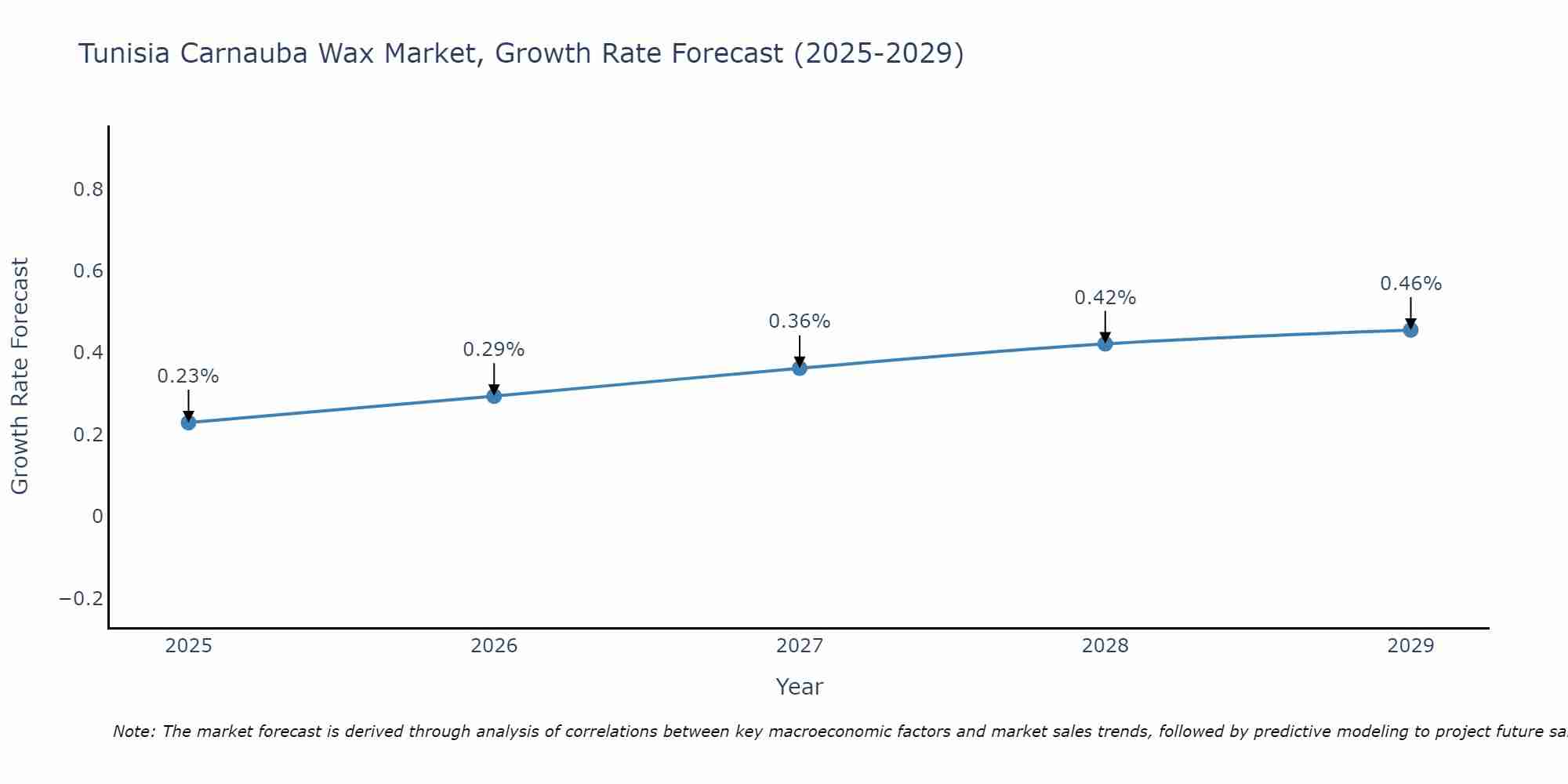
The Tunisia Carnauba Wax Market is poised for steady growth rate improvements from 2025 to 2029. From 0.23% in 2025, the growth rate steadily ascends to 0.46% in 2029.
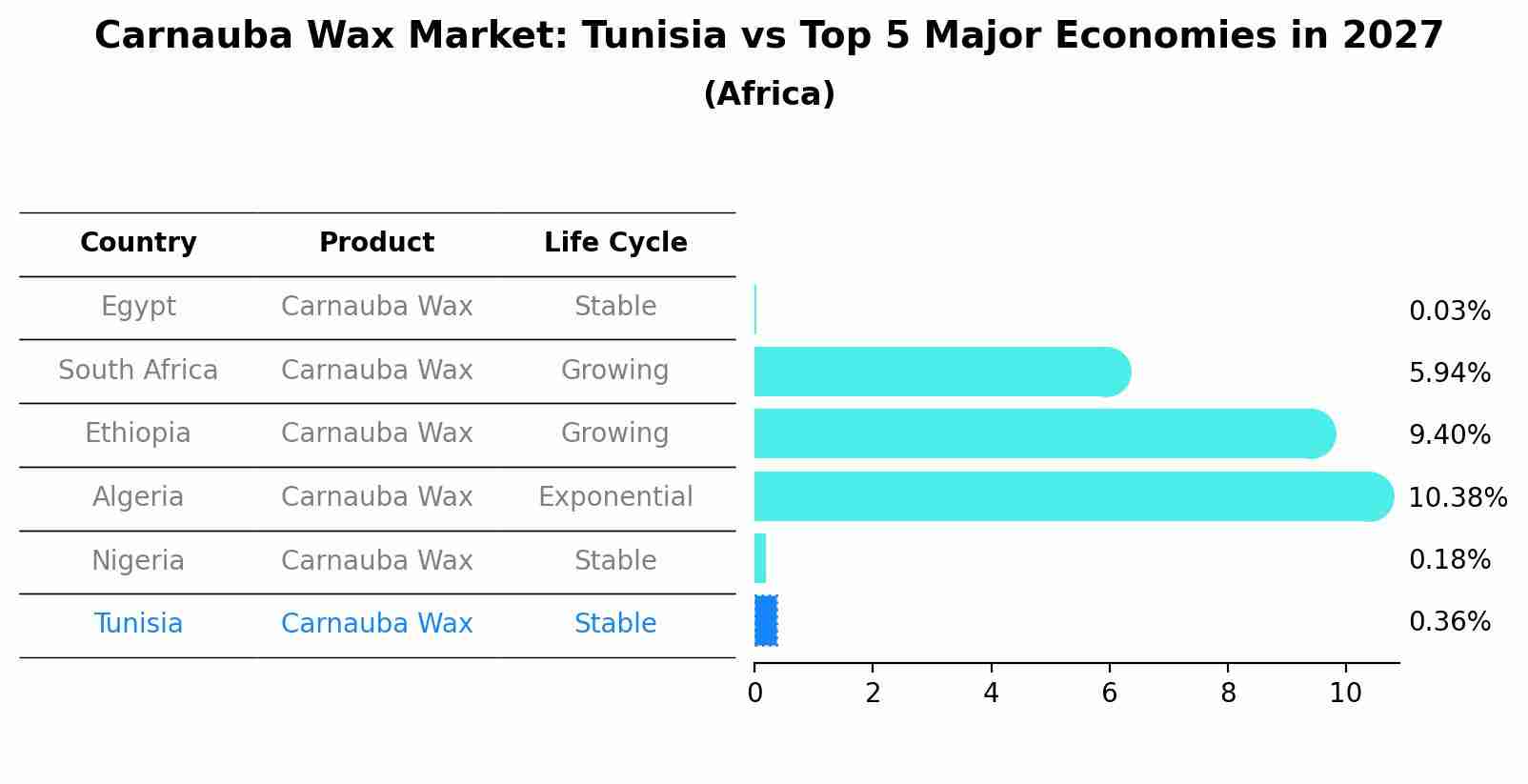
Carnauba Wax Market: Tunisia vs Top 5 Major Economies in 2027 (Africa)
The Carnauba Wax market in Tunisia is projected to grow at a stable growth rate of 0.36% by 2027, highlighting the country's increasing focus on advanced technologies within the Africa region, where Egypt holds the dominant position, followed closely by South Africa, Ethiopia, Algeria and Nigeria, shaping overall regional demand.
Tunisia Carnauba Wax Market Overview
Carnauba wax in Tunisia is a natural wax derived from the leaves of the carnauba palm, used in cosmetics, pharmaceuticals, and food products for its gloss, hardness, and water resistance properties.
Drivers of the market
The growth of the Tunisia carnauba wax market is influenced by the increasing demand for natural and sustainable ingredients in various industries, including cosmetics, food, and pharmaceuticals. Carnauba wax is used as a coating, thickener, and emulsifier. Additionally, the growing consumer preference for organic and eco-friendly products and advancements in wax extraction and processing technologies further drive market growth.
Challenges of the market
The Tunisia Carnauba Wax Market faces challenges such as high production costs and limited availability of raw materials. Additionally, there is competition from synthetic alternatives and limited consumer awareness about the benefits of carnauba wax.
Government Policy of the market
To support the cosmetics, food, and pharmaceuticals industries, the Tunisian government is promoting the carnauba wax market. Policies include financial incentives for producers, grants for research and development of new applications, and initiatives to attract foreign investment. The government also ensures that carnauba wax production complies with international safety and quality standards, enhancing its competitiveness in global markets.
Key Highlights of the Report:
- Tunisia Carnauba Wax Market Outlook
- Market Size of Tunisia Carnauba Wax Market, 2024
- Forecast of Tunisia Carnauba Wax Market, 2031
- Historical Data and Forecast of Tunisia Carnauba Wax Revenues & Volume for the Period 2021-2031
- Tunisia Carnauba Wax Market Trend Evolution
- Tunisia Carnauba Wax Market Drivers and Challenges
- Tunisia Carnauba Wax Price Trends
- Tunisia Carnauba Wax Porter's Five Forces
- Tunisia Carnauba Wax Industry Life Cycle
- Historical Data and Forecast of Tunisia Carnauba Wax Market Revenues & Volume By Product for the Period 2021-2031
- Historical Data and Forecast of Tunisia Carnauba Wax Market Revenues & Volume By Type1 for the Period 2021-2031
- Historical Data and Forecast of Tunisia Carnauba Wax Market Revenues & Volume By Type3 for the Period 2021-2031
- Historical Data and Forecast of Tunisia Carnauba Wax Market Revenues & Volume By Type4 for the Period 2021-2031
- Historical Data and Forecast of Tunisia Carnauba Wax Market Revenues & Volume By Application for the Period 2021-2031
- Historical Data and Forecast of Tunisia Carnauba Wax Market Revenues & Volume By Cosmetics for the Period 2021-2031
- Historical Data and Forecast of Tunisia Carnauba Wax Market Revenues & Volume By Food for the Period 2021-2031
- Historical Data and Forecast of Tunisia Carnauba Wax Market Revenues & Volume By Automotive for the Period 2021-2031
- Historical Data and Forecast of Tunisia Carnauba Wax Market Revenues & Volume By Pharmaceutical for the Period 2021-2031
- Historical Data and Forecast of Tunisia Carnauba Wax Market Revenues & Volume By Others for the Period 2021-2031
- Tunisia Carnauba Wax Import Export Trade Statistics
- Market Opportunity Assessment By Product
- Market Opportunity Assessment By Application
- Tunisia Carnauba Wax Top Companies Market Share
- Tunisia Carnauba Wax Competitive Benchmarking By Technical and Operational Parameters
- Tunisia Carnauba Wax Company Profiles
- Tunisia Carnauba Wax Key Strategic Recommendations






































