Tunisia Garden Furniture Market Summary
The tunisia garden furniture market was estimated at USD 153 Million in 2025 and is projected to reach USD 202 Million by 2032, growing at a CAGR of 4.8% from 2026 to 2032.
Tunisia Garden Furniture Market Year-wise Growth Rate and Key Drivers
This graph highlights how the Tunisia Garden Furniture Market has steadily grown over the past five years, supported by major growth factors.
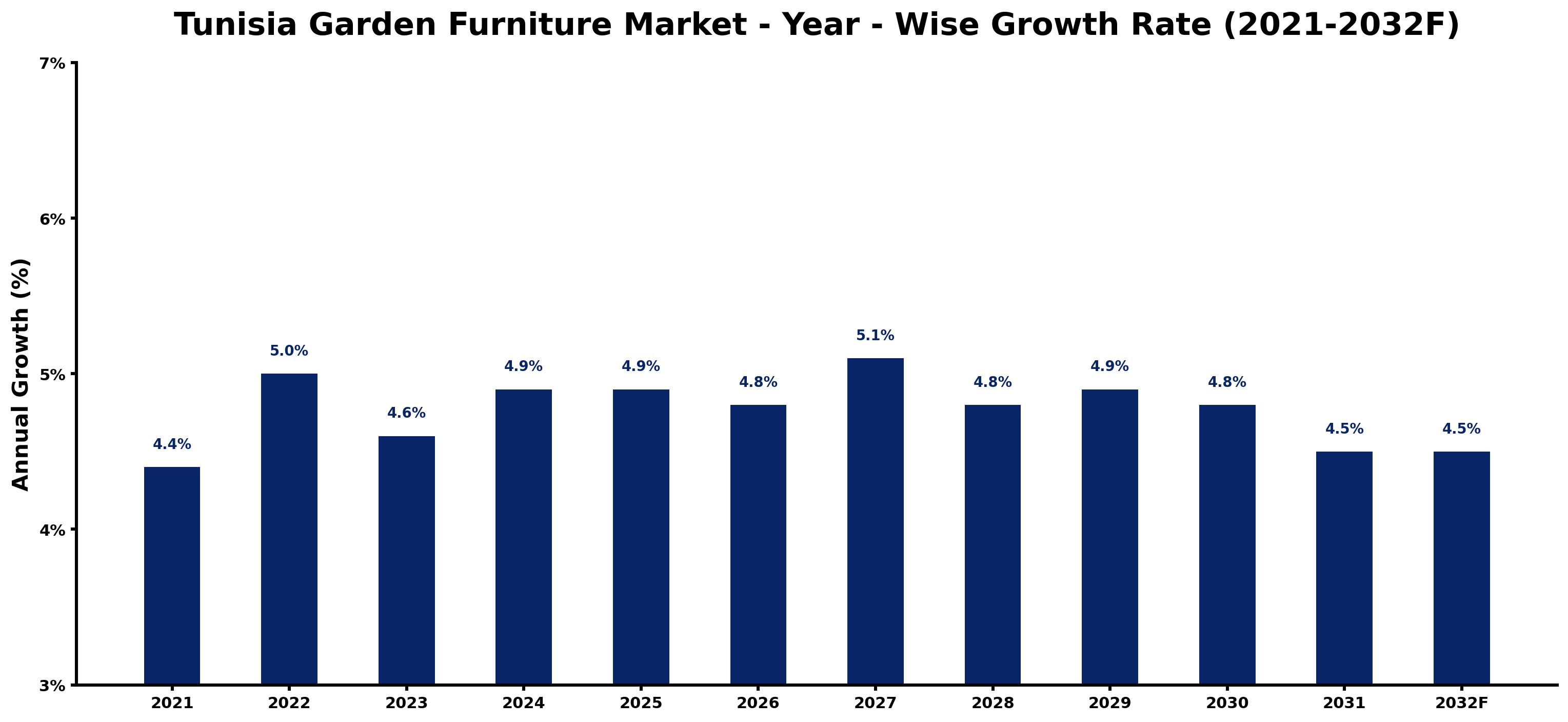
The table below presents the year wise growth rates along with the key drivers influencing the market
| Year | Growth Rate | Major Drivers |
| 2021 | 4.4% | Post-lockdown retail projects stimulated interest in outdoor relaxation spaces. |
| 2022 | 5.0% | Changes in consumer preferences highlighted the importance of sustainable materials. |
| 2023 | 4.6% | Increased tourism boosted demand for outdoor dining and leisure environments. |
| 2024 | 4.9% | Property developments focused on residential outdoor spaces attracted new buyers. |
| 2025 | 4.9% | Emerging trends in remote work increased consumer focus on backyard aesthetics. |
| 2026 | 4.8% | Local artisans began creating unique, culturally-inspired garden furniture designs. |
| 2027 | 5.1% | Growing awareness of environmental sustainability drove interest in eco-friendly options. |
| 2028 | 4.8% | Technological innovations improved materials, enhancing durability and aesthetic appeal. |
| 2029 | 4.9% | Increased disposable income among young professionals influenced garden furniture purchases. |
| 2030 | 4.8% | Urbanization trends shifted focus to compact and multifunctional outdoor furniture. |
| 2031 | 4.5% | Social media marketing created new platforms for showcasing garden furniture designs. |
| 2032 | 4.5% | Investment in public parks and outdoor spaces encouraged homeowners to diversify gardens. |
Note - Market size estimations and growth projections presented in this report are based on 6Wresearch's advanced forecasting approach, validated with industry datasets as of June 2026.
Tunisia Garden Furniture Market Synopsis
The Tunisia Garden Furniture Market is projected to reach 4.8% and witness significant growth during the forecast period (2026-2032). The accelerating pace of urbanization, coupled with rising disposable incomes among consumers, is driving a growing interest in outdoor living spaces. Tunisians are increasingly investing in high-quality and aesthetically pleasing garden furniture to enhance their outdoor environments for relaxation and social gatherings. This market offers a diverse array of products including outdoor tables, chairs, loungers, and umbrellas, catering to varying tastes and financial capacities. Furthermore, there is a strong focus on innovative designs and sustainable materials as manufacturers adapt to evolving consumer preferences.
Tunisia Garden Furniture Market Growth Drivers
Several key factors are propelling the Tunisia Garden Furniture Market forward. Firstly, urbanization is leading to a rise in residential developments, which promotes the inclusion of outdoor spaces in new housing projects. Secondly, increasing disposable incomes allow consumers to allocate more funds towards home decor, including outdoor furniture. Thirdly, the growing trend of outdoor living and leisure activities is reshaping lifestyles, creating a demand for functional and stylish garden furniture. Additionally, the favorable climate in Tunisia encourages year-round outdoor activities, further motivating consumers to invest in high-quality outdoor solutions. Lastly, the market is seeing a shift towards eco-friendly materials, aligning with global sustainability trends.
Tunisia Garden Furniture Market Trends and Opportunities
The demand for sustainable and eco-friendly garden furniture is gaining traction within the Tunisia Garden Furniture Market. Consumers are becoming increasingly aware of environmental issues and are seeking products made from materials such as bamboo, rattan, and recycled plastics. Moreover, the trend towards multifunctional and space-saving furniture is notable, particularly for urban dwellers with limited outdoor space. Customization is also emerging as a key trend, with consumers wanting the ability to personalize their outdoor living areas. To capitalize on these trends, businesses are innovating by introducing a wider range of sustainable materials, versatile designs, and customizable options that align with contemporary consumer values.
Tunisia Garden Furniture Market Challenges and Restraints
Despite its growth potential, the Tunisia Garden Furniture Market faces notable challenges. Intense competition among both local and international manufacturers creates pricing pressures that can erode profit margins. Additionally, fluctuating raw material prices can impact production costs, complicating pricing strategies. Changing consumer preferences towards modern, durable designs demand continuous innovation from manufacturers. Economic instability and political uncertainties in the region further complicate the purchasing power of consumers. Finally, logistical issues related to transportation and distribution can hinder companies from effectively reaching broader markets.
Tunisia Garden Furniture Market Investment Opportunities
The landscape of the Tunisia Garden Furniture Market is ripe with investment opportunities, particularly in light of a robust tourism sector and growing disposable incomes. Investors can leverage the rising trend of outdoor living by offering a varied selection of stylish, durable, and eco-friendly garden furniture aimed at both residential and commercial sectors. Furthermore, embracing e-commerce platforms offers significant potential to broaden market reach and accessibility. By focusing on innovative design, sustainable materials, and competitive pricing, investors can position themselves advantageously to capitalize on the increasing consumer interest in outdoor leisure and entertainment.
Tunisia Garden Furniture Market Government Investment and Initiatives
Government policies in Tunisia are increasingly aimed at boosting the garden furniture market through support for local production and small to medium-sized enterprises (SMEs). Incentives such as tax breaks and subsidies are provided to encourage domestic manufacturing, helping reduce the nation's reliance on imports. Regulatory frameworks are in place to ensure product quality and safety, alongside strict enforcement of standards aimed at consumer protection. Additionally, the government promotes sustainable practices within the industry, nudging manufacturers towards using eco-friendly materials and production techniques. These initiatives collectively aim to enhance competitiveness while fostering growth in the Tunisia Garden Furniture Market.
Tunisia Garden Furniture Market Latest Developments (May 2025 - June 2026)
Recent developments in the Tunisia Garden Furniture Market indicate a shift towards incorporating advanced technology in product offerings. Manufacturers are exploring innovations that enhance the durability and functionality of garden furniture, responding to consumer demand for longer-lasting and adaptable outdoor furnishings. Additionally, there is a noticeable uptick in collaborations focusing on sustainable production methods. The growing popularity of online shopping has also been characterized by the launch of new e-commerce platforms dedicated to outdoor living solutions, further enabling consumers to access a wider variety of products. These trends highlight the dynamic nature of the market as it adapts to the changing preferences of Tunisian consumers.
Tunisia Garden Furniture Market - Key Attractiveness of the Report
- 10 Years of Market Numbers
- Historical Data Starting from 2022 to 2025
- Base Year: 2025
- Forecast Data until 2032
- Key Performance Indicators Impacting the Market
- Major Upcoming Developments and Projects
Key Highlights of the Report:
- Tunisia Garden Furniture Market Outlook
- Market Size of Tunisia Garden Furniture Market, 2025
- Forecast of Tunisia Garden Furniture Market, 2032F
- Historical Data and Forecast of Tunisia Garden Furniture Revenues & Volume for the Period 2022-2032F
- Tunisia Garden Furniture Market Trend Evolution
- Tunisia Garden Furniture Market Drivers and Challenges
- Tunisia Garden Furniture Price Trends
- Tunisia Garden Furniture Porter's Five Forces
- Tunisia Garden Furniture Industry Life Cycle
- Historical Data and Forecast of Tunisia Garden Furniture Market Revenues & Volume By Type for the Period 2022-2032F
- Historical Data and Forecast of Tunisia Garden Furniture Market Revenues & Volume By Tables for the Period 2022-2032F
- Historical Data and Forecast of Tunisia Garden Furniture Market Revenues & Volume By Chairs for the Period 2022-2032F
- Historical Data and Forecast of Tunisia Garden Furniture Market Revenues & Volume By Dining Sets for the Period 2022-2032F
- Historical Data and Forecast of Tunisia Garden Furniture Market Revenues & Volume By Seating Sets for the Period 2022-2032F
- Historical Data and Forecast of Tunisia Garden Furniture Market Revenues & Volume By Others for the Period 2022-2032F
- Historical Data and Forecast of Tunisia Garden Furniture Market Revenues & Volume By Application for the Period 2022-2032F
- Historical Data and Forecast of Tunisia Garden Furniture Market Revenues & Volume By Brand Outlets for the Period 2022-2032F
- Historical Data and Forecast of Tunisia Garden Furniture Market Revenues & Volume By Franchised Furniture Store for the Period 2022-2032F
- Historical Data and Forecast of Tunisia Garden Furniture Market Revenues & Volume By E-Commerce for the Period 2022-2032F
- Historical Data and Forecast of Tunisia Garden Furniture Market Revenues & Volume By Others for the Period 2022-2032F
- Tunisia Garden Furniture Import Export Trade Statistics
- Market Opportunity Assessment By Type
- Market Opportunity Assessment By Application
- Tunisia Garden Furniture Top Companies Market Share
- Tunisia Garden Furniture Competitive Benchmarking By Technical and Operational Parameters
- Tunisia Garden Furniture Company Profiles
- Tunisia Garden Furniture Key Strategic Recommendations






































