Tunisia Glycerol Market Size Growth Rate
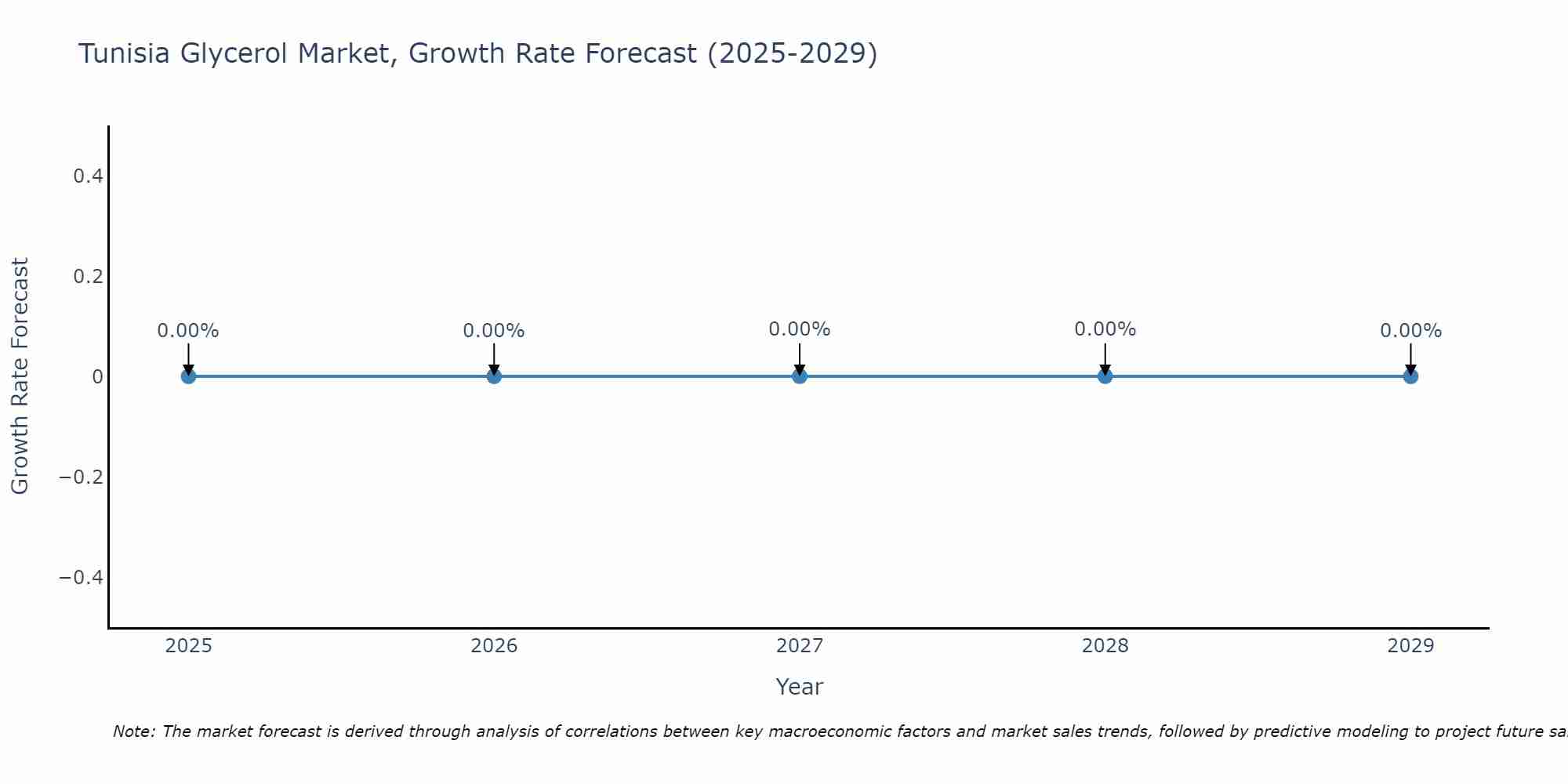
The Tunisia Glycerol Market is projected to witness mixed growth rate patterns during 2025 to 2029. The growth rate begins at 0.00% in 2025, climbs to a high of 0.00% in 2027, and moderates to 0.00% by 2029.
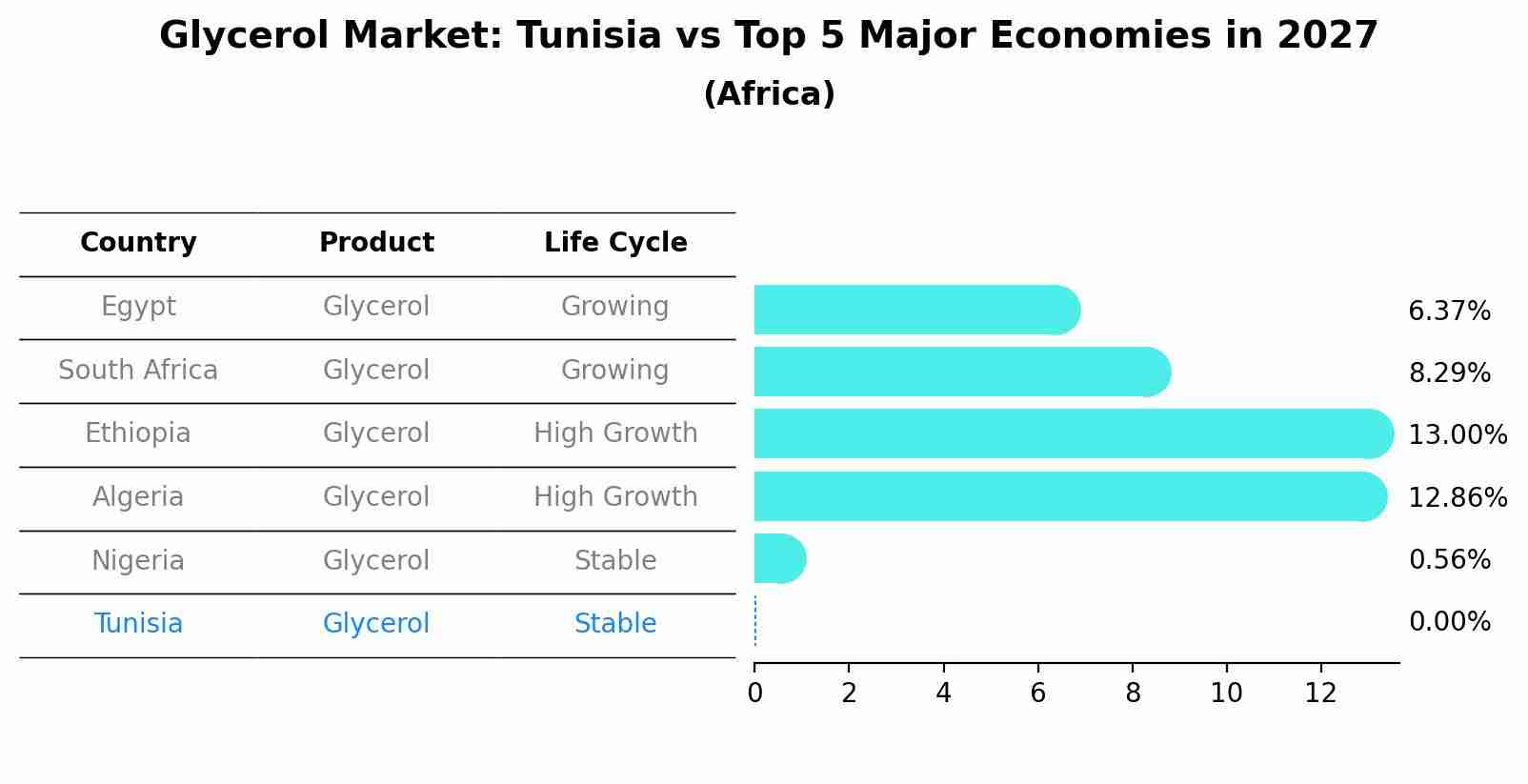
Glycerol Market: Tunisia vs Top 5 Major Economies in 2027 (Africa)
Tunisia's Glycerol market is anticipated to experience a stable growth rate of 0.00% by 2027, reflecting trends observed in the largest economy Egypt, followed by South Africa, Ethiopia, Algeria and Nigeria.
Tunisia Glycerol Market Overview
The Tunisia Glycerol Market is another term for the glycerin market, highlighting its role as a key ingredient in various products for its humectant, emollient, and sweetening properties.
Drivers of the market
The glycerol market in Tunisia is experiencing growth driven by several pivotal factors. Firstly, glycerol`s role as a key ingredient in pharmaceuticals, personal care products, food additives, and industrial applications underscores its broad applicability and demand. Secondly, the increasing adoption of glycerol in the pharmaceutical industry for its properties as a solvent, humectant, and sweetener supports market expansion. Thirdly, the food and beverage industry`s demand for glycerol as a safe and effective additive, particularly in low-calorie foods and beverages, contributes significantly to market growth. Moreover, technological advancements in glycerol production and purification processes enhance product quality, consistency, and cost-effectiveness, further driving market competitiveness.
Challenges of the market
The Glycerol Market in Tunisia encounters several obstacles, including limited availability of high-quality raw materials and the need for advanced production techniques. The market requires significant investment in technology to improve production efficiency and meet international quality standards. Additionally, competition from other countries with more established glycerol markets poses a challenge to local producers.
Government Policy of the market
Government policies in the glycerol market are designed to encourage innovation and sustainability within the chemical industry. The Tunisian government offers tax incentives and grants to companies that invest in the development of bio-based glycerol production methods. These initiatives aim to reduce environmental impact while promoting the use of renewable resources. The government also supports academic and industrial research collaborations to explore new uses for glycerol in various industries, including pharmaceuticals, cosmetics, and food processing. Additionally, stringent regulations are enforced to ensure that glycerol products comply with global quality standards, thereby fostering consumer confidence and facilitating export opportunities.
Key Highlights of the Report:
- Tunisia Glycerol Market Outlook
- Market Size of Tunisia Glycerol Market, 2024
- Forecast of Tunisia Glycerol Market, 2031
- Historical Data and Forecast of Tunisia Glycerol Revenues & Volume for the Period 2021-2031
- Tunisia Glycerol Market Trend Evolution
- Tunisia Glycerol Market Drivers and Challenges
- Tunisia Glycerol Price Trends
- Tunisia Glycerol Porter's Five Forces
- Tunisia Glycerol Industry Life Cycle
- Historical Data and Forecast of Tunisia Glycerol Market Revenues & Volume By Source for the Period 2021-2031
- Historical Data and Forecast of Tunisia Glycerol Market Revenues & Volume By Biodiesel for the Period 2021-2031
- Historical Data and Forecast of Tunisia Glycerol Market Revenues & Volume By Fatty Alcohols for the Period 2021-2031
- Historical Data and Forecast of Tunisia Glycerol Market Revenues & Volume By Fatty Acids for the Period 2021-2031
- Historical Data and Forecast of Tunisia Glycerol Market Revenues & Volume By Soap for the Period 2021-2031
- Historical Data and Forecast of Tunisia Glycerol Market Revenues & Volume By Type for the Period 2021-2031
- Historical Data and Forecast of Tunisia Glycerol Market Revenues & Volume By Crude for the Period 2021-2031
- Historical Data and Forecast of Tunisia Glycerol Market Revenues & Volume By Refined for the Period 2021-2031
- Historical Data and Forecast of Tunisia Glycerol Market Revenues & Volume By End-use for the Period 2021-2031
- Historical Data and Forecast of Tunisia Glycerol Market Revenues & Volume By Food & Beverage for the Period 2021-2031
- Historical Data and Forecast of Tunisia Glycerol Market Revenues & Volume By Pharmaceutical for the Period 2021-2031
- Historical Data and Forecast of Tunisia Glycerol Market Revenues & Volume By Nutraceutical for the Period 2021-2031
- Historical Data and Forecast of Tunisia Glycerol Market Revenues & Volume By Personal Care & Cosmetics for the Period 2021-2031
- Historical Data and Forecast of Tunisia Glycerol Market Revenues & Volume By Industrial for the Period 2021-2031
- Historical Data and Forecast of Tunisia Glycerol Market Revenues & Volume By Others for the Period 2021-2031
- Tunisia Glycerol Import Export Trade Statistics
- Market Opportunity Assessment By Source
- Market Opportunity Assessment By Type
- Market Opportunity Assessment By End-use
- Tunisia Glycerol Top Companies Market Share
- Tunisia Glycerol Competitive Benchmarking By Technical and Operational Parameters
- Tunisia Glycerol Company Profiles
- Tunisia Glycerol Key Strategic Recommendations






































