Tunisia Golf Clubs Market Size, Share & Growth Rate
The Tunisia Golf Clubs Market was estimated at USD 256 Million in 2025 and is projected to reach USD 346 Million by 2032, growing at a CAGR of 4.4% from 2026 to 2032. This growth trajectory is largely driven by the rising interest in golf tourism, which attracts a global audience to Tunisia's exquisite courses. Moreover, the countrys commitment to enhancing its golfing infrastructure and increasing participation rates among locals further supports the market's expansion.
Tunisia Golf Clubs Market Year-wise Growth Rate and Key Drivers
This graph highlights how the Tunisia Golf Clubs Market has steadily grown over the years, supported by major growth factors.
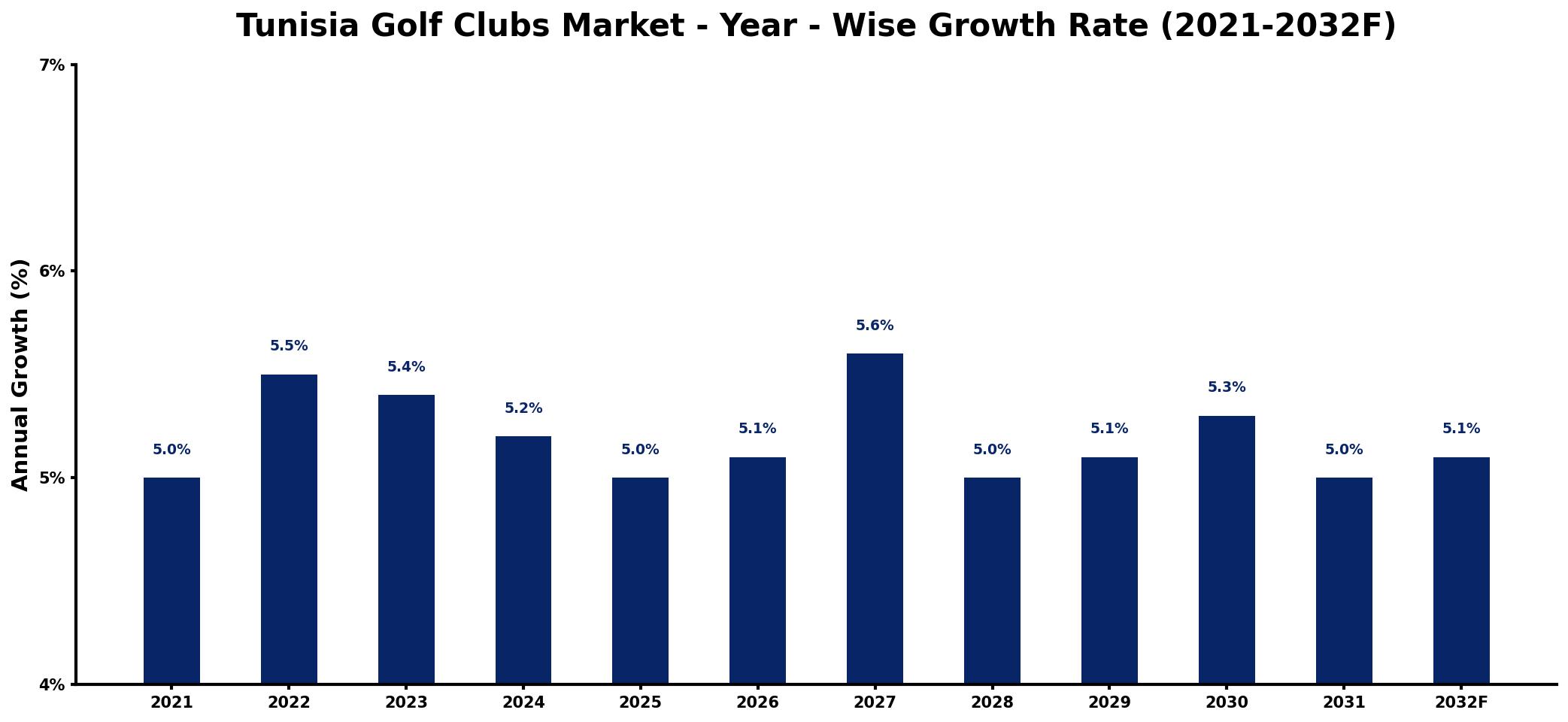
The table below presents the year‑wise growth rates along with the key drivers influencing the market
| Year | Growth Rate | Major Drivers |
| 2021 | 5.0% | Increased tourism and leisure activities |
| 2022 | 5.5% | Growing interest in outdoor sports |
| 2023 | 5.4% | Expansion of luxury resorts investment |
| 2024 | 5.2% | Emergence of new sports facilities |
| 2025 | 5.0% | Rise in domestic travel preferences |
| 2026 | 5.1% | Development of recreational land projects |
| 2027 | 5.6% | Enhanced marketing of outdoor experiences |
| 2028 | 5.0% | Strengthening of community engagement programs |
| 2029 | 5.1% | Surge in wellness tourism initiatives |
| 2030 | 5.3% | Boost in sports-related sponsorship deals |
| 2031 | 5.0% | Increase in corporate team-building events |
| 2032 | 5.1% | Growing popularity of family activities |
Note: Market size estimations and growth projections presented in this report are based on 6Wresearch's proprietary forecasting methodology, utilizing the latest available industry data, government publications, and primary research inputs.
Tunisia Golf Clubs Market Synopsis
The foremost force shaping the Tunisia Golf Clubs Market is the burgeoning golf tourism sector. Renowned for its idyllic locations and exceptional golf facilities, Tunisia stands out as an attractive destination for both domestic and international golf enthusiasts. This rise in popularity is complemented by a growing number of luxury resorts, which are elevating the golfing experience across the country.
In addition to tourism, the market is characterized by its diverse offerings, ranging from traditional golf clubs to modern golf resorts that cater to players of varying skill levels. The country's favorable climate allows for year-round golfing, contributing significantly to the appeal of these facilities.
Tunisia Golf Clubs Market Key Takeaways
- The market is set to grow from USD 256 Million in 2025 to USD 346 Million by 2032, at a CAGR of 4.4%.
- Growing interest in golf tourism is enhancing the demand for high-quality golfing facilities.
- Technology integration is reshaping the golfing experience, with clubs adopting advanced tools and solutions.
- Eco-friendly practices are increasingly prioritized within golf course development and maintenance.
- The Tunisian governments supportive policies aim to foster growth and investment in the golfing sector.
Evaluation of Restraints in Tunisia Golf Clubs Market
Despite the promising landscape, the Tunisia Golf Clubs Market faces several notable restraints. A primary concern is the limited awareness and interest in golf as a mainstream sport among the general population, which can stifle membership and engagement levels. Furthermore, ongoing economic instability can curtail discretionary spending on leisure activities, including golf. Additionally, infrastructure challenges and competition from alternative leisure activities may hinder the market's growth potential, making it imperative for clubs to enhance their offerings and outreach efforts.
Tunisia Golf Clubs Market Trends
Several current and emerging trends are shaping the Tunisia Golf Clubs Market. Firstly, the surge in golf tourism is leading to increased investments in luxury golf resorts and facilities. Additionally, golf clubs are increasingly incorporating technology, such as mobile apps for booking tee times and performance tracking, to improve the player experience. Another trend is the emphasis on sustainability, with more clubs adopting eco-friendly practices in course maintenance and design to appeal to environmentally conscious golfers.
Tunisia Golf Clubs Market Opportunities
The Tunisia Golf Clubs Market presents a wealth of investment opportunities driven by its rising stature as a golf destination. Investing in the development of high-quality golf courses and resorts can yield lucrative returns, particularly with the increasing number of international visitors seeking golf vacations. Additionally, creating comprehensive golf tourism packages that blend golfing with leisure activities can attract a broader demographic, thus enhancing revenue potential for clubs across the country.
Government Initiatives in the Tunisia Golf Clubs Market
The Tunisian government has recognized the potential of the golf sector as a key component of its tourism strategy. To bolster growth, it has introduced various initiatives, including tax incentives for investors and support for infrastructure development. Furthermore, regulations aimed at promoting environmental sustainability in golf course management are being enforced, aligning economic development with conservation goals. This regulatory framework is designed to enhance Tunisia's competitiveness in the global golf tourism market.
Future Insights of the Tunisia Golf Clubs Market
Looking ahead to the period of 2026-2032, the Tunisia Golf Clubs Market is anticipated to experience steady growth. As the tourism sector stabilizes and expands, coupled with increasing domestic interest in golf, demand for golfing facilities and services is likely to rise. The ongoing efforts to position Tunisia as a premier golfing destination and the hosting of international tournaments will further bolster the industry. These factors combined suggest a bright future for the market, driven by both local engagement and international appeal.
Tunisia Golf Clubs Market Latest Developments (2025 - 2026)
In recent months, the Tunisia Golf Clubs Market has seen a shift towards enhancing player experiences through the integration of technology and improved facilities. Clubs are now embracing digital platforms for better engagement and customer service. Additionally, there has been a notable increase in collaborative efforts between clubs and tourism boards to promote Tunisia as a golfing hotspot, effectively positioning the market for future growth and attracting more international visitors.
Tunisia Golf Clubs Market - Key Attractiveness of the Report
- 10 Years of Market Numbers
- Historical Data Starting from 2022 to 2025
- Base Year: 2025
- Forecast Data until 2032
- Key Performance Indicators Impacting the Market
- Major Upcoming Developments and Projects
Key Highlights of the Report:
- Tunisia Golf Clubs Market Outlook
- Market Size of Tunisia Golf Clubs Market, 2025
- Forecast of Tunisia Golf Clubs Market, 2032
- Historical Data and Forecast of Tunisia Golf Clubs Revenues & Volume for the Period 2022-2032F
- Tunisia Golf Clubs Market Trend Evolution
- Tunisia Golf Clubs Market Drivers and Challenges
- Tunisia Golf Clubs Price Trends
- Tunisia Golf Clubs Porter's Five Forces
- Tunisia Golf Clubs Industry Life Cycle
- Historical Data and Forecast of Tunisia Golf Clubs Market Revenues & Volume By Product Type for the Period 2022-2032F
- Historical Data and Forecast of Tunisia Golf Clubs Market Revenues & Volume By Woods for the Period 2022-2032F
- Historical Data and Forecast of Tunisia Golf Clubs Market Revenues & Volume By Iron for the Period 2022-2032F
- Historical Data and Forecast of Tunisia Golf Clubs Market Revenues & Volume By Wedges for the Period 2022-2032F
- Historical Data and Forecast of Tunisia Golf Clubs Market Revenues & Volume By Putters for the Period 2022-2032F
- Tunisia Golf Clubs Import Export Trade Statistics
- Market Opportunity Assessment By Product Type
- Tunisia Golf Clubs Top Companies Market Share
- Tunisia Golf Clubs Competitive Benchmarking By Technical and Operational Parameters
- Tunisia Golf Clubs Company Profiles
- Tunisia Golf Clubs Key Strategic Recommendations






































