Tunisia Hams Market Size Growth Rate
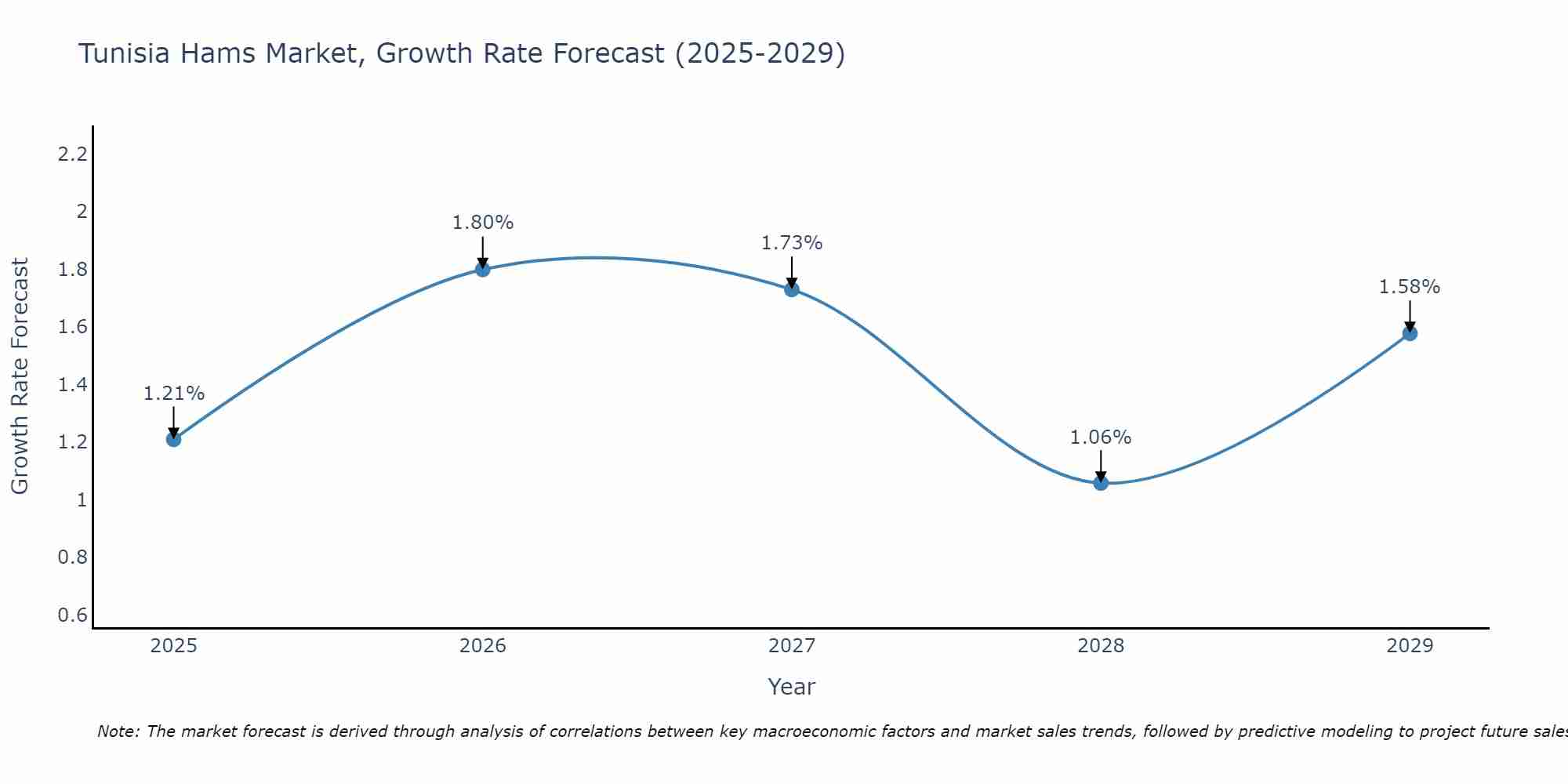
The Tunisia Hams Market is projected to witness mixed growth rate patterns during 2025 to 2029. Growth accelerates to 1.80% in 2026, following an initial rate of 1.21%, before easing to 1.58% at the end of the period.
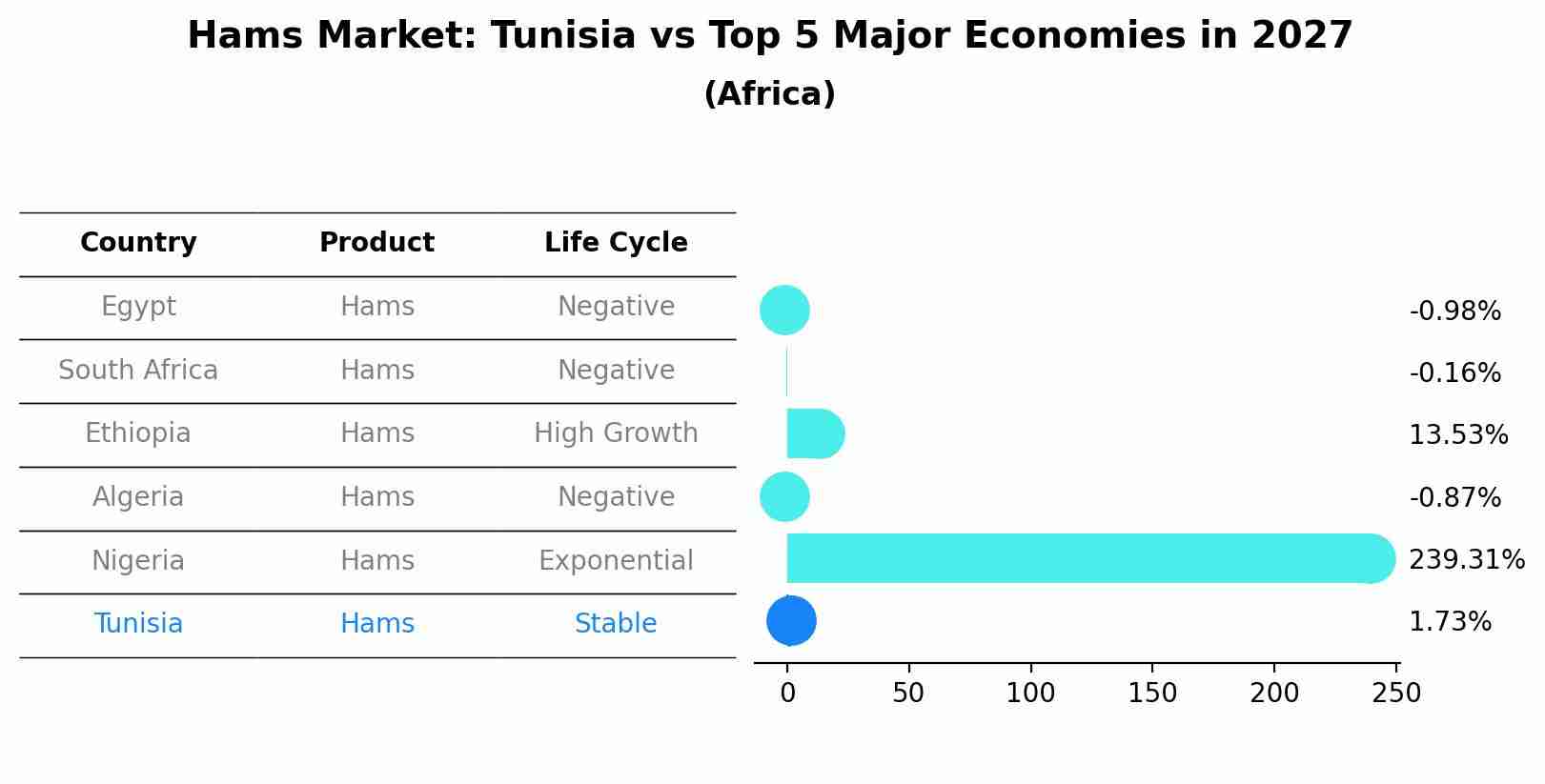
Hams Market: Tunisia vs Top 5 Major Economies in 2027 (Africa)
The Hams market in Tunisia is projected to grow at a stable growth rate of 1.73% by 2027, highlighting the country's increasing focus on advanced technologies within the Africa region, where Egypt holds the dominant position, followed closely by South Africa, Ethiopia, Algeria and Nigeria, shaping overall regional demand.
Tunisia Hams Market Overview
The Tunisia Hams Market is a growing sector within the country`s food industry, driven by increasing consumer demand for high-quality meat products. The market offers a variety of ham products, including traditional Tunisian hams such as Merguez and Khlii, as well as imported hams from European countries. Local producers dominate the market, leveraging traditional recipes and production methods to meet consumer preferences for authentic and flavorful hams. The market is characterized by competition among domestic players, with a focus on product innovation, quality, and pricing strategies. Additionally, the market is influenced by changing consumer lifestyles, with a growing trend towards convenience and ready-to-eat ham products. Overall, the Tunisia Hams Market presents opportunities for both local producers and international players looking to expand their presence in North Africa.
Tunisia Hams Market Trends
In the Tunisia Hams Market, there is a growing trend towards healthier and premium options. Consumers are increasingly seeking hams that are made from high-quality, natural ingredients with no added preservatives or artificial flavors. Organic and free-range hams are gaining popularity as people become more conscious of their food choices. Additionally, there is a rising demand for unique flavor profiles and specialty hams, such as those infused with herbs, spices, or regional ingredients. Convenience is also a key trend, with pre-sliced and packaged hams becoming more popular among busy consumers. Overall, the Tunisia Hams Market is witnessing a shift towards more health-conscious, premium, and diverse product offerings to cater to evolving consumer preferences.
Tunisia Hams Market Challenges
In the Tunisia Hams Market, some key challenges include fluctuating raw material prices, import restrictions on certain ingredients, and competition from alternative protein sources. The volatility in raw material prices can impact the overall production cost and profitability of ham manufacturers. Import restrictions on specific ingredients can limit the availability of high-quality inputs, affecting the final product`s taste and quality. Additionally, the rise in popularity of plant-based protein alternatives poses a competitive threat to traditional ham products, leading to a shift in consumer preferences. To navigate these challenges, companies in the Tunisia Hams Market need to adapt their sourcing strategies, innovate product offerings, and invest in marketing efforts to differentiate themselves and maintain market share.
Tunisia Hams Market Investment Opportunities
Investment opportunities in the Tunisia hams market include expanding production capacity to meet the growing demand for high-quality hams both domestically and potentially for export markets. Investing in modern processing facilities and technology to improve efficiency and product quality could also be a lucrative opportunity. Furthermore, exploring niche segments such as organic, halal, or gourmet hams could cater to specific consumer preferences and drive sales growth. Collaborating with local farmers to ensure a stable supply of high-quality meat could also be a strategic investment to secure sourcing for production. Overall, with the increasing consumer interest in premium food products and the potential for export opportunities, investing in the Tunisia hams market offers promising prospects for growth and profitability.
Tunisia Hams Market Government Policy
Government policies related to the Tunisia Hams Market include regulations on food safety and quality standards enforced by the Ministry of Health and the Food and Drug Control Agency. These regulations ensure that hams produced and sold in Tunisia meet specific hygiene and quality requirements to protect consumer health. Additionally, the Tunisian government may impose import tariffs or restrictions on imported hams to support domestic producers and maintain market stability. The government also plays a role in promoting the Tunisian hams industry through marketing initiatives and trade agreements with other countries. Overall, government policies aim to safeguard consumer interests, support local producers, and enhance the competitiveness of the Tunisia Hams Market both domestically and internationally.
Tunisia Hams Market Future Outlook
The future outlook for the Tunisia Hams Market appears promising, driven by a growing consumer preference for convenience foods, increasing disposable income levels, and a rising trend of incorporating Western-style diets. The market is expected to witness steady growth as consumers seek high-quality, ready-to-eat meat products like hams for quick and easy meal options. Additionally, the expanding retail sector and the growing popularity of online shopping platforms are likely to boost the accessibility and availability of hams to a wider consumer base across the country. To capitalize on this growth potential, industry players may focus on product innovation, marketing strategies, and expanding distribution networks to cater to the evolving demands and preferences of Tunisian consumers, thereby fostering further market expansion and development.
Key Highlights of the Report:
- Tunisia Hams Market Outlook
- Market Size of Tunisia Hams Market, 2021
- Forecast of Tunisia Hams Market, 2031
- Historical Data and Forecast of Tunisia Hams Revenues & Volume for the Period 2021 - 2031
- Tunisia Hams Market Trend Evolution
- Tunisia Hams Market Drivers and Challenges
- Tunisia Hams Price Trends
- Tunisia Hams Porter's Five Forces
- Tunisia Hams Industry Life Cycle
- Historical Data and Forecast of Tunisia Hams Market Revenues & Volume By Type for the Period 2021 - 2031
- Historical Data and Forecast of Tunisia Hams Market Revenues & Volume By Air Dried Cured Hams for the Period 2021 - 2031
- Historical Data and Forecast of Tunisia Hams Market Revenues & Volume By Smoked Hams for the Period 2021 - 2031
- Historical Data and Forecast of Tunisia Hams Market Revenues & Volume By Applications for the Period 2021 - 2031
- Historical Data and Forecast of Tunisia Hams Market Revenues & Volume By Supermarkets and Hypermarkets for the Period 2021 - 2031
- Historical Data and Forecast of Tunisia Hams Market Revenues & Volume By Independent Retailers for the Period 2021 - 2031
- Historical Data and Forecast of Tunisia Hams Market Revenues & Volume By Convenience Stores for the Period 2021 - 2031
- Historical Data and Forecast of Tunisia Hams Market Revenues & Volume By Specialist Retailers for the Period 2021 - 2031
- Historical Data and Forecast of Tunisia Hams Market Revenues & Volume By Online Retailers for the Period 2021 - 2031
- Tunisia Hams Import Export Trade Statistics
- Market Opportunity Assessment By Type
- Market Opportunity Assessment By Applications
- Tunisia Hams Top Companies Market Share
- Tunisia Hams Competitive Benchmarking By Technical and Operational Parameters
- Tunisia Hams Company Profiles
- Tunisia Hams Key Strategic Recommendations






































