Tunisia Herbal Cosmetics Market Size, Share & Growth Rate
The Tunisia Herbal Cosmetics Market was estimated at USD 928 Million in 2025 and is projected to reach USD 1340 Million by 2032, growing at a CAGR of 5.4% from 2026 to 2032. This growth trajectory is being driven by a significant shift in consumer preferences towards natural and organic beauty products, reflecting increasing concerns over synthetic ingredients. Moreover, the rising interest in traditional Tunisian herbal remedies is bolstering the market, providing a strong foundation for growth in the coming years.
Tunisia Herbal Cosmetics Market Year-wise Growth Rate and Key Drivers
This graph highlights how the Tunisia Herbal Cosmetics Market has steadily grown over the years, supported by major growth factors.
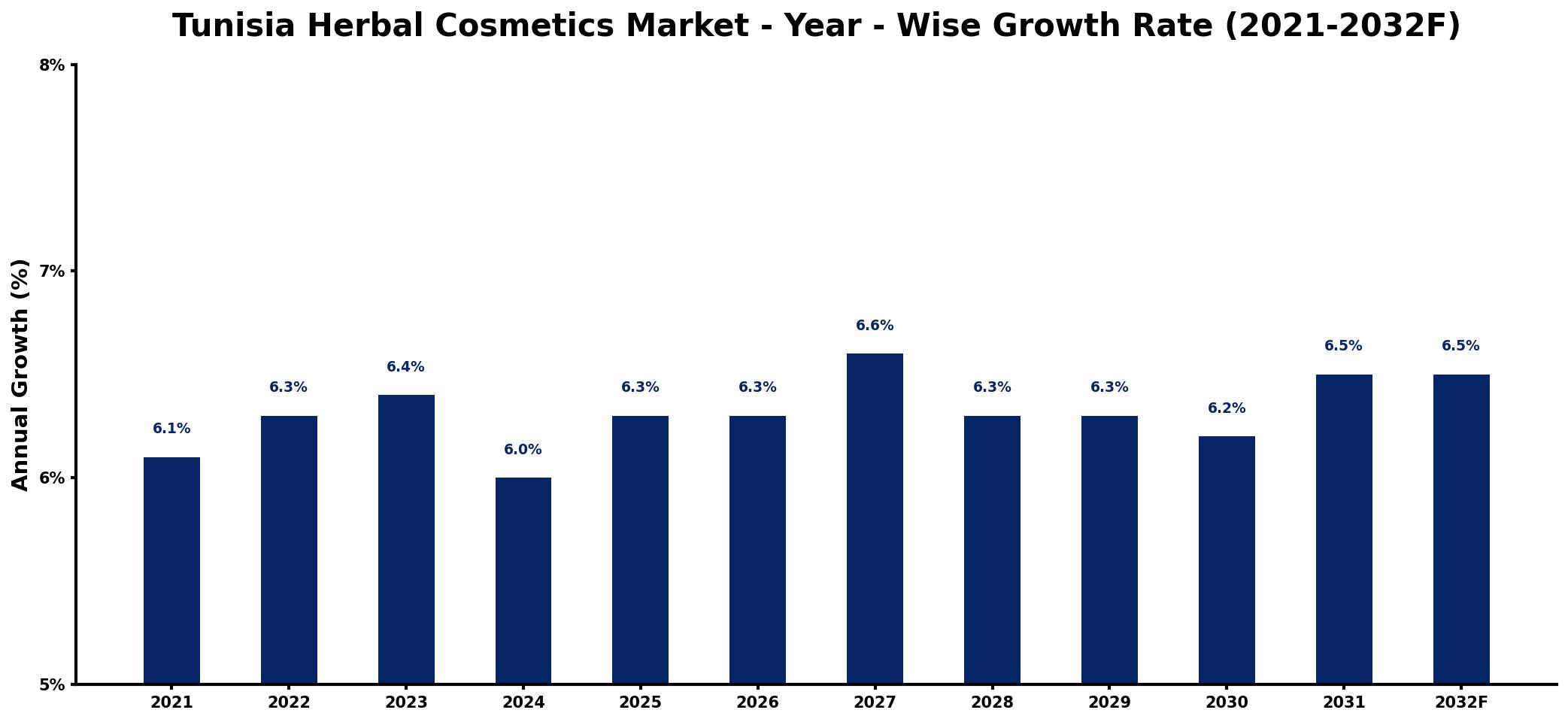
The table below presents the year‑wise growth rates along with the key drivers influencing the market
| Year | Growth Rate | Major Drivers |
| 2021 | 6.1% | Rising consumer health consciousness |
| 2022 | 6.3% | Increased investment in sustainability |
| 2023 | 6.4% | Growth in e-commerce platforms |
| 2024 | 6.0% | Expansion of local production facilities |
| 2025 | 6.3% | Emerging trends in natural ingredients |
| 2026 | 6.3% | Growing interest in ethical sourcing |
| 2027 | 6.6% | Higher demand for organic alternatives |
| 2028 | 6.3% | Increased focus on wellness lifestyles |
| 2029 | 6.3% | enhanced product quality standards |
| 2030 | 6.2% | Surge in influencer marketing strategies |
| 2031 | 6.5% | Broader acceptance of alternative therapies |
| 2032 | 6.5% | Rising popularity of DIY formulations |
Note: Market size estimations and growth projections presented in this report are based on 6Wresearch's proprietary forecasting methodology, utilizing the latest available industry data, government publications, and primary research inputs.
Tunisia Herbal Cosmetics Market Synopsis
The foremost force shaping the Tunisia Herbal Cosmetics Market today is the increasing consumer preference for sustainable and eco-friendly products. This trend is evident in the growing demand for herbal cosmetics that utilize locally-sourced ingredients such as argan oil, olive oil, and aloe vera, appealing to the environmentally conscious consumer.
Additionally, the rising awareness regarding the harmful effects of synthetic chemicals is steering consumers towards herbal alternatives. As Tunisian shoppers become more educated about the benefits of natural beauty solutions, brands are responding with innovative product offerings and sustainable packaging, further elevating the market's potential.
Tunisia Herbal Cosmetics Market Key Takeaways
- Consumer demand for natural and organic beauty products is rapidly increasing in Tunisia.
- Local ingredients such as olive oil and fig extract are becoming increasingly popular among consumers.
- The government is actively promoting the use of local herbal ingredients in cosmetics.
- Key market players are innovating in product development and focusing on sustainable practices.
- Investment opportunities abound for both domestic and international brands in this growing market.
Evaluation of Restraints in Tunisia Herbal Cosmetics Market
Despite the promising growth outlook, the Tunisia Herbal Cosmetics Market is hampered by several restraints. A notable concern is the lack of standardized regulations for herbal cosmetics, which can lead to quality control issues that erode consumer trust. Additionally, the presence of counterfeit herbal products poses a significant risk, potentially damaging the reputation of authentic brands and jeopardizing consumer safety. Furthermore, many Tunisian consumers remain unaware of the benefits of herbal cosmetics, which hinders wider market adoption.
Tunisia Herbal Cosmetics Market Trends
Current trends within the Tunisia Herbal Cosmetics Market reflect an increasing inclination towards herbal skincare products that target specific consumer concerns, such as anti-aging, hydration, and acne treatment. The growing popularity of products infused with traditional Tunisian ingredients, such as rose water and fig extract, is also notable. Eco-friendly packaging and sustainability in sourcing are becoming vital factors influencing purchasing decisions, aligning perfectly with the global push towards wellness and environmental consciousness.
Tunisia Herbal Cosmetics Market Opportunities
There exists significant growth potential within the Tunisia Herbal Cosmetics Market, particularly for investors looking to support local brands that prioritize sustainability. Opportunities include collaborations with Tunisian manufacturers to enhance product distribution, as well as the introduction of unique herbal formulations tailored to the preferences of local consumers. The increasing awareness of health-conscious beauty choices among consumers creates a favorable environment for new entrants and innovations in the herbal cosmetics segment.
Government Initiatives in the Tunisia Herbal Cosmetics Market
The Tunisian government has implemented various regulations and policies to support the herbal cosmetics sector. The Ministry of Health is responsible for the registration and approval of herbal cosmetic products, ensuring their safety and adherence to quality standards. Additionally, initiatives promoting the use of local herbal ingredients aim to leverage Tunisia's natural resources and bolster the local economy, fostering a competitive environment for both domestic and international businesses.
Future Insights of the Tunisia Herbal Cosmetics Market
Looking ahead to 2026-2032, the Tunisia Herbal Cosmetics Market is poised for substantial growth as awareness of natural beauty products continues to rise. The increasing consumer demand for products that align with health and environmental standards will likely drive innovation and expansion within the sector. Furthermore, government support for local ingredients and sustainable practices will encourage investment, positioning the market favorably for both domestic and global brands.
Tunisia Herbal Cosmetics Market Latest Developments (2025 - 2026)
Recent developments in the Tunisia Herbal Cosmetics Market have underscored a commitment to sustainability, with brands increasingly focusing on eco-friendly practices and ingredient sourcing. Innovations in product formulations have emerged, aiming to address specific skincare concerns while emphasizing natural compositions. Moreover, collaborations between local artisans and international companies are becoming more prevalent, reflecting a trend towards diversification and enhanced market reach.
Tunisia Herbal Cosmetics Market - Key Attractiveness of the Report
- 10 Years of Market Numbers
- Historical Data Starting from 2022 to 2025
- Base Year: 2025
- Forecast Data until 2032
- Key Performance Indicators Impacting the Market
- Major Upcoming Developments and Projects
Key Highlights of the Report:
- Tunisia Herbal Cosmetics Market Outlook
- Market Size of Tunisia Herbal Cosmetics Market, 2025
- Forecast of Tunisia Herbal Cosmetics Market, 2032
- Historical Data and Forecast of Tunisia Herbal Cosmetics Revenues & Volume for the Period 2022-2032F
- Tunisia Herbal Cosmetics Market Trend Evolution
- Tunisia Herbal Cosmetics Market Drivers and Challenges
- Tunisia Herbal Cosmetics Price Trends
- Tunisia Herbal Cosmetics Porter's Five Forces
- Tunisia Herbal Cosmetics Industry Life Cycle
- Historical Data and Forecast of Tunisia Herbal Cosmetics Market Revenues & Volume By Physical State for the Period 2022-2032F
- Historical Data and Forecast of Tunisia Herbal Cosmetics Market Revenues & Volume By Solid for the Period 2022-2032F
- Historical Data and Forecast of Tunisia Herbal Cosmetics Market Revenues & Volume By Semi-solid for the Period 2022-2032F
- Historical Data and Forecast of Tunisia Herbal Cosmetics Market Revenues & Volume By Liquid for the Period 2022-2032F
- Historical Data and Forecast of Tunisia Herbal Cosmetics Market Revenues & Volume By Product for the Period 2022-2032F
- Historical Data and Forecast of Tunisia Herbal Cosmetics Market Revenues & Volume By Skin Care Product for the Period 2022-2032F
- Historical Data and Forecast of Tunisia Herbal Cosmetics Market Revenues & Volume By Hair Care Product for the Period 2022-2032F
- Historical Data and Forecast of Tunisia Herbal Cosmetics Market Revenues & Volume By Baby Care Product for the Period 2022-2032F
- Historical Data and Forecast of Tunisia Herbal Cosmetics Market Revenues & Volume By Oral Care Product for the Period 2022-2032F
- Historical Data and Forecast of Tunisia Herbal Cosmetics Market Revenues & Volume By Make-up Product for the Period 2022-2032F
- Historical Data and Forecast of Tunisia Herbal Cosmetics Market Revenues & Volume By Distribution Channel for the Period 2022-2032F
- Historical Data and Forecast of Tunisia Herbal Cosmetics Market Revenues & Volume By Supermarket for the Period 2022-2032F
- Historical Data and Forecast of Tunisia Herbal Cosmetics Market Revenues & Volume By Pharmacy for the Period 2022-2032F
- Historical Data and Forecast of Tunisia Herbal Cosmetics Market Revenues & Volume By Departmental Store for the Period 2022-2032F
- Historical Data and Forecast of Tunisia Herbal Cosmetics Market Revenues & Volume By Beauty Spa/Salon for the Period 2022-2032F
- Historical Data and Forecast of Tunisia Herbal Cosmetics Market Revenues & Volume By Internet Retailing for the Period 2022-2032F
- Historical Data and Forecast of Tunisia Herbal Cosmetics Market Revenues & Volume By Specialty Store for the Period 2022-2032F
- Tunisia Herbal Cosmetics Import Export Trade Statistics
- Market Opportunity Assessment By Physical State
- Market Opportunity Assessment By Product
- Market Opportunity Assessment By Distribution Channel
- Tunisia Herbal Cosmetics Top Companies Market Share
- Tunisia Herbal Cosmetics Competitive Benchmarking By Technical and Operational Parameters
- Tunisia Herbal Cosmetics Company Profiles
- Tunisia Herbal Cosmetics Key Strategic Recommendations






































