Tunisia Light Therapy Market Size, Share & Growth Rate
The Tunisia Light Therapy Market was estimated at USD 237 Million in 2025 and is projected to reach USD 316 Million by 2032, growing at a CAGR of 4.2% from 2026 to 2032. This upward trajectory is fueled by a heightened consumer awareness of light therapy's benefits for mental health and skin conditions, alongside a growing preference for non-invasive wellness solutions. As more individuals seek accessible treatments, the demand for portable and home-based light therapy devices continues to rise.
Tunisia Light Therapy Market Year-wise Growth Rate and Key Drivers
This graph highlights how the Tunisia Light Therapy Market has steadily grown over the years, supported by major growth factors.
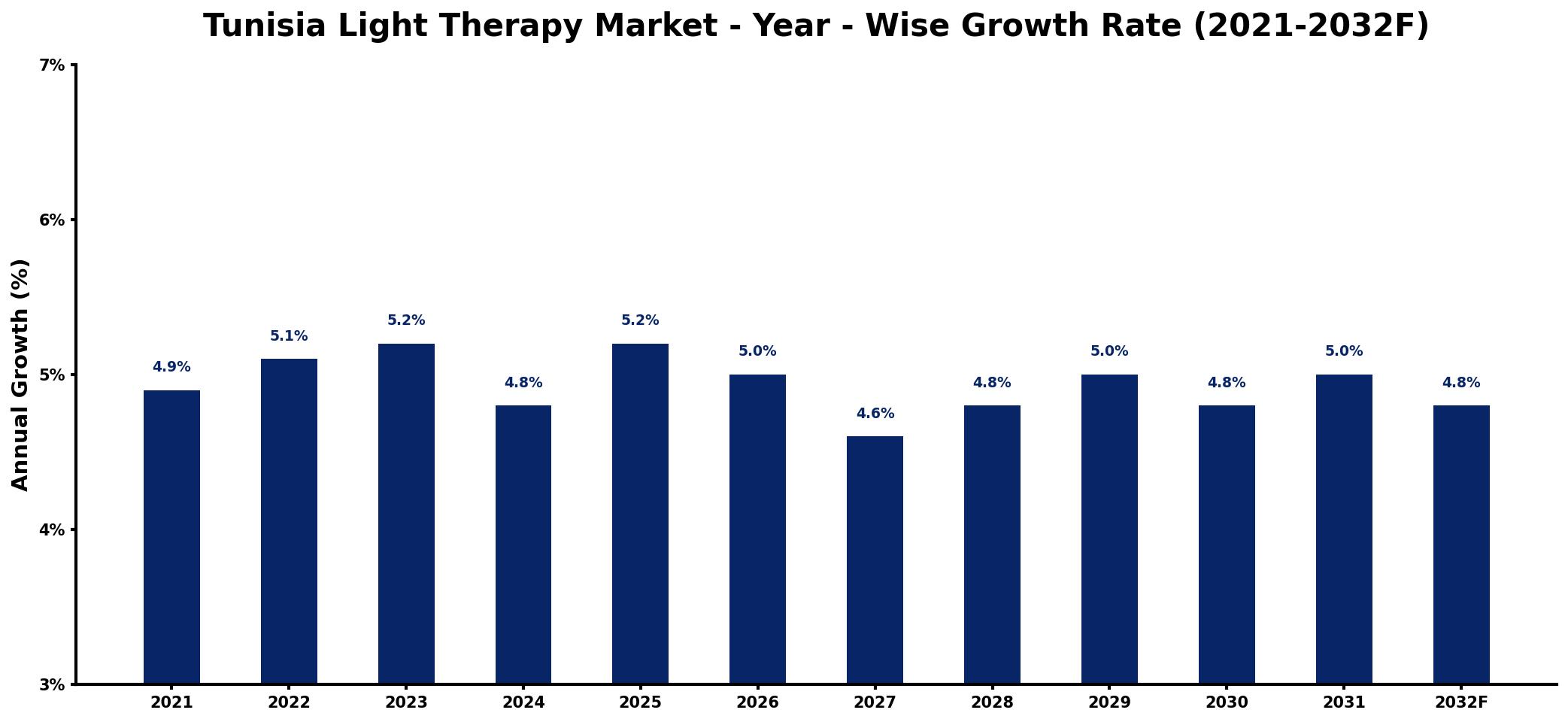
The table below presents the year‑wise growth rates along with the key drivers influencing the market
| Year | Growth Rate | Major Drivers |
| 2021 | 4.9% | Increased consumer health awareness |
| 2022 | 5.1% | Rising demand for wellness solutions |
| 2023 | 5.2% | Growing adoption of home devices |
| 2024 | 4.8% | Expansion in healthcare facilities |
| 2025 | 5.2% | Investments in innovative technologies |
| 2026 | 5.0% | Surge in preventative healthcare measures |
| 2027 | 4.6% | Enhanced focus on mental well-being |
| 2028 | 4.8% | Growth in alternative treatment options |
| 2029 | 5.0% | Emerging trends in self-care practices |
| 2030 | 4.8% | Increased integration with fitness programs |
| 2031 | 5.0% | Rising popularity of holistic approaches |
| 2032 | 4.8% | Strengthening collaborations with wellness brands |
Note: Market size estimations and growth projections presented in this report are based on 6Wresearch's proprietary forecasting methodology, utilizing the latest available industry data, government publications, and primary research inputs.
Tunisia Light Therapy Market Synopsis
The current landscape of the Tunisia Light Therapy Market reveals a significant shift towards utilizing light therapy for a variety of health and wellness purposes. Consumers are increasingly recognizing its efficacy in alleviating seasonal affective disorder, enhancing mood, and promoting skin health, driving demand across the sector.
Moreover, the growing trend of incorporating light therapy into wellness centers and clinics speaks to its expanding role in both medical and cosmetic applications. Manufacturers are innovating to improve user experience, thereby attracting a wider consumer base and propelling the market forward.
Tunisia Light Therapy Market Key Takeaways
- The market is on an upward growth trajectory, projected to reach USD 316 Million by 2032.
- Increased awareness of light therapy's therapeutic benefits is driving consumer demand.
- There is a notable trend towards the use of portable and convenient light therapy devices.
- The regulatory environment is favorable, supporting market growth and innovation.
- Investment opportunities exist in device manufacturing and training healthcare professionals.
Evaluation of Restraints in Tunisia Light Therapy Market
Despite promising growth prospects, the Tunisia Light Therapy Market faces real challenges that could hinder its expansion. A significant hurdle is the limited awareness and education regarding light therapy among the general population. This lack of knowledge restricts the adoption of light therapy products, even though they have the potential to address various health issues. Furthermore, regulatory challenges and a scarcity of standardized guidelines can impede innovation and market entry for new players, necessitating targeted efforts to increase understanding and acceptance of light therapy's benefits.
Tunisia Light Therapy Market Trends
Several key trends are shaping the Tunisia Light Therapy Market today. One of the most notable is the growing adoption of light therapy devices for home use, driven by consumer demand for convenience and accessibility. Additionally, there is an increasing inclination towards incorporating light therapy into wellness programs and spa treatments, aligning with the broader trend of holistic health. This dual focus on medical and cosmetic applications underscores the versatility and wide-ranging appeal of light therapy solutions.
Tunisia Light Therapy Market Opportunities
The landscape of the Tunisia Light Therapy Market is rife with investment opportunities. As awareness of light therapy's non-invasive nature grows, potential investors can tap into various segments, including the manufacturing and distribution of light therapy devices. There's also a significant opportunity to provide educational programs for healthcare professionals, ensuring they are well-versed in the benefits and applications of light therapy. By collaborating with wellness centers to integrate light therapy into their offerings, investors can further enhance their market presence.
Government Initiatives in the Tunisia Light Therapy Market
The Tunisian government plays a pivotal role in regulating the light therapy market, implementing policies focused on the safety and efficacy of devices. The Ministry of Health oversees the registration and approval processes, ensuring compliance with quality standards and the protection of consumer health. Guidelines are also provided for healthcare professionals to encourage the responsible use of light therapy in treating various conditions, helping to foster a trustworthy market environment.
Future Insights of the Tunisia Light Therapy Market
Looking forward to the years 2026-2032, the Tunisia Light Therapy Market is expected to continue its growth trajectory, driven by increased awareness of light therapy's therapeutic benefits. The rise in mental health issues and the legacy effects of the COVID-19 pandemic on well-being are likely to stimulate further adoption of light therapy devices. As advancements in technology emerge and consumer demand for natural and non-invasive treatment options escalates, the market will likely see innovative products that cater to these evolving needs.
Tunisia Light Therapy Market Latest Developments (2025 - 2026)
Recent developments in the Tunisia Light Therapy Market indicate a steady expansion, with new entrants seeking to innovate within the space. Efforts to raise awareness through educational campaigns and partnerships with wellness centers are becoming increasingly common. Additionally, advancements in technology are paving the way for more effective light therapy devices, further enhancing user experience and efficacy.
Tunisia Light Therapy Market - Key Attractiveness of the Report
- 10 Years of Market Numbers
- Historical Data Starting from 2022 to 2025
- Base Year: 2025
- Forecast Data until 2032
- Key Performance Indicators Impacting the Market
- Major Upcoming Developments and Projects
Key Highlights of the Report:
- Tunisia Light Therapy Market Outlook
- Market Size of Tunisia Light Therapy Market, 2025
- Forecast of Tunisia Light Therapy Market, 2032
- Historical Data and Forecast of Tunisia Light Therapy Revenues & Volume for the Period 2022-2032F
- Tunisia Light Therapy Market Trend Evolution
- Tunisia Light Therapy Market Drivers and Challenges
- Tunisia Light Therapy Price Trends
- Tunisia Light Therapy Porter's Five Forces
- Tunisia Light Therapy Industry Life Cycle
- Historical Data and Forecast of Tunisia Light Therapy Market Revenues & Volume By Product for the Period 2022-2032F
- Historical Data and Forecast of Tunisia Light Therapy Market Revenues & Volume By Light Box for the Period 2022-2032F
- Historical Data and Forecast of Tunisia Light Therapy Market Revenues & Volume By Floor and Desk Lamps for the Period 2022-2032F
- Historical Data and Forecast of Tunisia Light Therapy Market Revenues & Volume By Light Visor for the Period 2022-2032F
- Historical Data and Forecast of Tunisia Light Therapy Market Revenues & Volume By HDST for the Period 2022-2032F
- Historical Data and Forecast of Tunisia Light Therapy Market Revenues & Volume By Dawn Simulator for the Period 2022-2032F
- Historical Data and Forecast of Tunisia Light Therapy Market Revenues & Volume By Light Therapy Bulbs for the Period 2022-2032F
- Historical Data and Forecast of Tunisia Light Therapy Market Revenues & Volume By Others for the Period 2022-2032F
- Historical Data and Forecast of Tunisia Light Therapy Market Revenues & Volume By Application for the Period 2022-2032F
- Historical Data and Forecast of Tunisia Light Therapy Market Revenues & Volume By Psoriasis for the Period 2022-2032F
- Historical Data and Forecast of Tunisia Light Therapy Market Revenues & Volume By Vitiligo for the Period 2022-2032F
- Historical Data and Forecast of Tunisia Light Therapy Market Revenues & Volume By Eczema for the Period 2022-2032F
- Historical Data and Forecast of Tunisia Light Therapy Market Revenues & Volume By Acne Vulgaris for the Period 2022-2032F
- Historical Data and Forecast of Tunisia Light Therapy Market Revenues & Volume By Winter Blues for the Period 2022-2032F
- Historical Data and Forecast of Tunisia Light Therapy Market Revenues & Volume By Sleeping Disorders for the Period 2022-2032F
- Historical Data and Forecast of Tunisia Light Therapy Market Revenues & Volume By SAD for the Period 2022-2032F
- Historical Data and Forecast of Tunisia Light Therapy Market Revenues & Volume By Others for the Period 2022-2032F
- Historical Data and Forecast of Tunisia Light Therapy Market Revenues & Volume By Light Type for the Period 2022-2032F
- Historical Data and Forecast of Tunisia Light Therapy Market Revenues & Volume By Blue light for the Period 2022-2032F
- Historical Data and Forecast of Tunisia Light Therapy Market Revenues & Volume By Red light for the Period 2022-2032F
- Historical Data and Forecast of Tunisia Light Therapy Market Revenues & Volume By White light for the Period 2022-2032F
- Historical Data and Forecast of Tunisia Light Therapy Market Revenues & Volume By Others for the Period 2022-2032F
- Historical Data and Forecast of Tunisia Light Therapy Market Revenues & Volume By End-use for the Period 2022-2032F
- Historical Data and Forecast of Tunisia Light Therapy Market Revenues & Volume By Homecare settings for the Period 2022-2032F
- Historical Data and Forecast of Tunisia Light Therapy Market Revenues & Volume By Dermatology clinics for the Period 2022-2032F
- Historical Data and Forecast of Tunisia Light Therapy Market Revenues & Volume By Others for the Period 2022-2032F
- Tunisia Light Therapy Import Export Trade Statistics
- Market Opportunity Assessment By Product
- Market Opportunity Assessment By Application
- Market Opportunity Assessment By Light Type
- Market Opportunity Assessment By End-use
- Tunisia Light Therapy Top Companies Market Share
- Tunisia Light Therapy Competitive Benchmarking By Technical and Operational Parameters
- Tunisia Light Therapy Company Profiles
- Tunisia Light Therapy Key Strategic Recommendations






































