Tunisia Nail Polish Market Size, Share & Growth Rate
The Tunisia Nail Polish Market was estimated at USD 1354 Million in 2025 and is projected to reach USD 2464 Million by 2032, growing at a CAGR of 8.9% from 2026 to 2032. This upward trajectory is driven by the increasing consumer inclination towards trendy nail art and the expanding network of salons offering professional services. Moreover, the rising awareness around beauty standards and the demand for high-quality, durable products are further fueling growth within this vibrant market.
Tunisia Nail Polish Market Year-wise Growth Rate and Key Drivers
This graph highlights how the Tunisia Nail Polish Market has steadily grown over the years, supported by major growth factors.
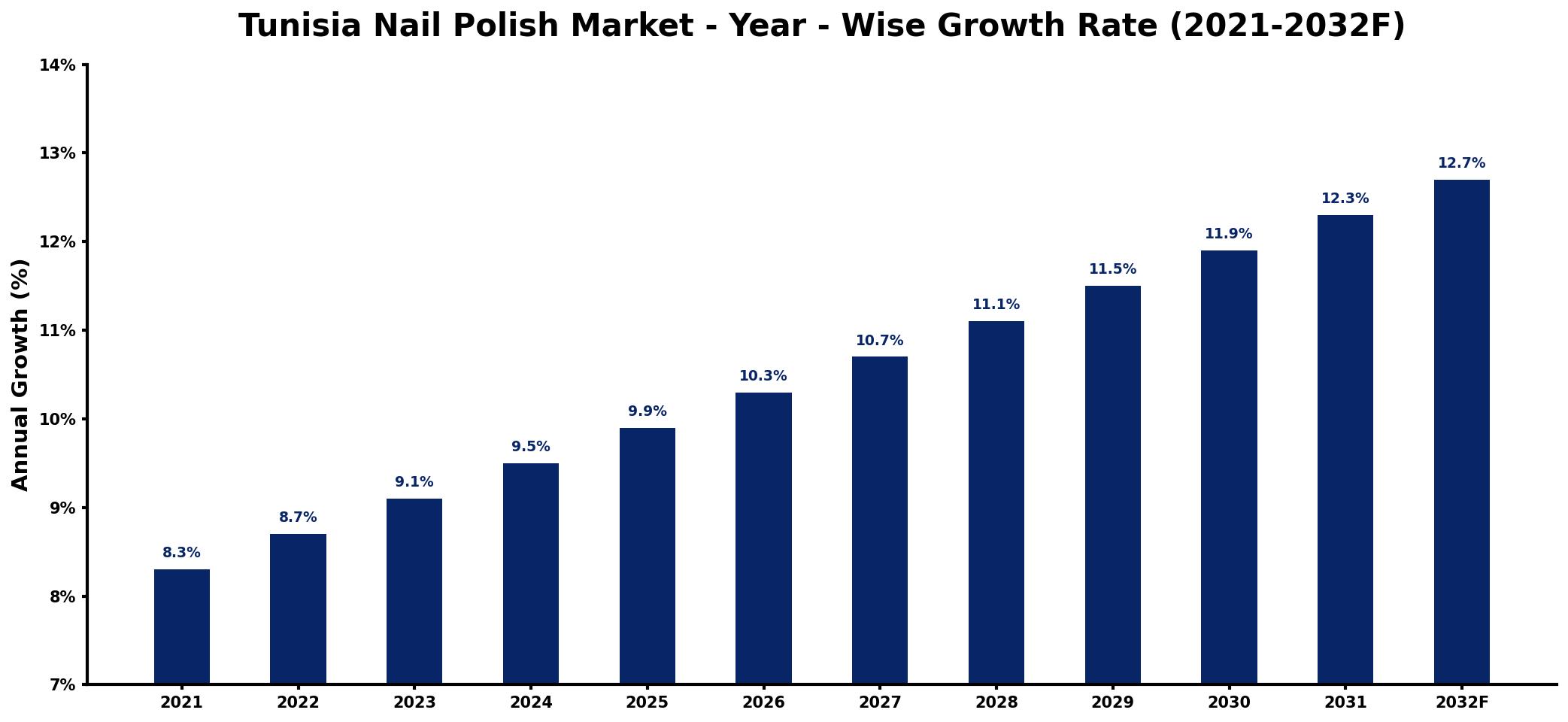
The table below presents the year‑wise growth rates along with the key drivers influencing the market
| Year | Growth Rate | Major Drivers |
| 2021 | 8.3% | Rising fashion trends influencing choices |
| 2022 | 8.7% | Increased disposable income among consumers |
| 2023 | 9.1% | Growing interest in personal grooming |
| 2024 | 9.5% | Expansion of retail distribution channels |
| 2025 | 9.9% | Emergence of eco-friendly alternatives |
| 2026 | 10.3% | Influence of social media marketing |
| 2027 | 10.7% | Collaboration with beauty influencers |
| 2028 | 11.1% | Introduction of innovative formulations |
| 2029 | 11.5% | Increased participation in beauty events |
| 2030 | 11.9% | Growth of online shopping platforms |
| 2031 | 12.3% | Development of regional manufacturing facilities |
| 2032 | 12.7% | Rising demand for premium products |
Note: Market size estimations and growth projections presented in this report are based on 6Wresearch's proprietary forecasting methodology, utilizing the latest available industry data, government publications, and primary research inputs.
Tunisia Nail Polish Market Synopsis
A significant trend influencing the Tunisia Nail Polish Market is the growing popularity of eco-friendly and cruelty-free products. Consumers are becoming increasingly conscious of the ingredients used in nail polish, leading to a surge in demand for formulations that prioritize both safety and sustainability. This shift is compelling brands to innovate and adapt their offerings to align with consumer preferences.
Additionally, the emergence of online retail platforms is revolutionizing the way nail polish is purchased in Tunisia. With a younger demographic inclined towards e-commerce, brands are investing in digital strategies to enhance accessibility and meet evolving shopping habits, thereby expanding their market reach.
Tunisia Nail Polish Market Key Takeaways
- The market is witnessing significant growth driven by fashion trends and salon industry expansion.
- Eco-friendly and sustainable nail polish formulations are gaining traction among consumers.
- Digital retailing is reshaping the shopping landscape, attracting younger consumers.
- Health-consciousness is impacting consumer preferences and brand strategies.
- Government regulations ensure product quality and consumer safety, fostering a reliable market environment.
Evaluation of Restraints in Tunisia Nail Polish Market
Despite the promising growth trajectory, the Tunisia Nail Polish Market faces notable restraints. A lack of consumer awareness regarding the potential health risks associated with certain chemical ingredients in traditional nail polishes poses a challenge. Additionally, consumer preferences are shifting towards more transparent brands that disclose their ingredients and practices. As brands navigate these shifting dynamics, those relying on conventional formulations may struggle to maintain market share unless they adapt their product offerings.
Tunisia Nail Polish Market Trends
Current trends in the Tunisia Nail Polish Market reflect a strong inclination towards nail art and unique color combinations influenced by cultural factors and seasonal changes. Innovative techniques, such as gel finishes and quick-drying formulas, are also gaining popularity, as consumers seek products that offer both convenience and style. As the market evolves, brands are increasingly investing in research and development to create long-lasting and vibrant shades that resonate with local preferences.
Tunisia Nail Polish Market Opportunities
The growing interest in eco-friendly products presents a lucrative opportunity for brands looking to innovate their formulations. Developing nail polishes that are free from harmful chemicals and packaged sustainably can attract environmentally conscious consumers. Additionally, expanding the presence of online retail channels can allow brands to tap into previously unreachable demographics and enhance their market penetration.
Government Initiatives in the Tunisia Nail Polish Market
In Tunisia, government policies governing the nail polish market focus on ensuring the safety and quality of cosmetic products. Regulatory frameworks require comprehensive ingredient labeling and adherence to manufacturing standards, thereby safeguarding consumer health. Furthermore, public initiatives aimed at promoting sustainability encourage brands to adopt eco-friendly practices, aligning with global trends towards environmental responsibility.
Future Insights of the Tunisia Nail Polish Market
Looking ahead to the 2026-2032 period, the Tunisia Nail Polish Market is poised for substantial growth driven by evolving consumer expectations and ongoing innovations in product development. The demand for unique, high-quality nail products, alongside the continued rise of eco-conscious consumerism, will shape the landscape. Brands that can effectively balance quality, safety, and environmental concerns are likely to lead the charge in this dynamic market.
Tunisia Nail Polish Market Latest Developments (2025 - 2026)
Recent industry developments indicate a noticeable shift towards the introduction of innovative formulations that cater to the growing demand for sustainability. Many brands are exploring novel ways to enhance product offerings while adhering to environmental standards. Additionally, partnerships between manufacturers and online retailers are emerging to streamline distribution, making products more accessible to consumers.
Tunisia Nail Polish Market - Key Attractiveness of the Report
- 10 Years of Market Numbers
- Historical Data Starting from 2022 to 2025
- Base Year: 2025
- Forecast Data until 2032
- Key Performance Indicators Impacting the Market
- Major Upcoming Developments and Projects
Key Highlights of the Report:
- Tunisia Nail Polish Market Outlook
- Market Size of Tunisia Nail Polish Market, 2025
- Forecast of Tunisia Nail Polish Market, 2032
- Historical Data and Forecast of Tunisia Nail Polish Revenues & Volume for the Period 2022-2032F
- Tunisia Nail Polish Market Trend Evolution
- Tunisia Nail Polish Market Drivers and Challenges
- Tunisia Nail Polish Price Trends
- Tunisia Nail Polish Porter's Five Forces
- Tunisia Nail Polish Industry Life Cycle
- Historical Data and Forecast of Tunisia Nail Polish Market Revenues & Volume By Product for the Period 2022-2032F
- Historical Data and Forecast of Tunisia Nail Polish Market Revenues & Volume By Regular Nail Polish for the Period 2022-2032F
- Historical Data and Forecast of Tunisia Nail Polish Market Revenues & Volume By Gel Nail Polish for the Period 2022-2032F
- Historical Data and Forecast of Tunisia Nail Polish Market Revenues & Volume By Others for the Period 2022-2032F
- Historical Data and Forecast of Tunisia Nail Polish Market Revenues & Volume By Distribution Channel for the Period 2022-2032F
- Historical Data and Forecast of Tunisia Nail Polish Market Revenues & Volume By Hypermarkets & Supermarkets for the Period 2022-2032F
- Historical Data and Forecast of Tunisia Nail Polish Market Revenues & Volume By Specialty Stores for the Period 2022-2032F
- Historical Data and Forecast of Tunisia Nail Polish Market Revenues & Volume By E-commerce for the Period 2022-2032F
- Historical Data and Forecast of Tunisia Nail Polish Market Revenues & Volume By Others for the Period 2022-2032F
- Tunisia Nail Polish Import Export Trade Statistics
- Market Opportunity Assessment By Product
- Market Opportunity Assessment By Distribution Channel
- Tunisia Nail Polish Top Companies Market Share
- Tunisia Nail Polish Competitive Benchmarking By Technical and Operational Parameters
- Tunisia Nail Polish Company Profiles
- Tunisia Nail Polish Key Strategic Recommendations






































