Tunisia Octopus Market Size Growth Rate
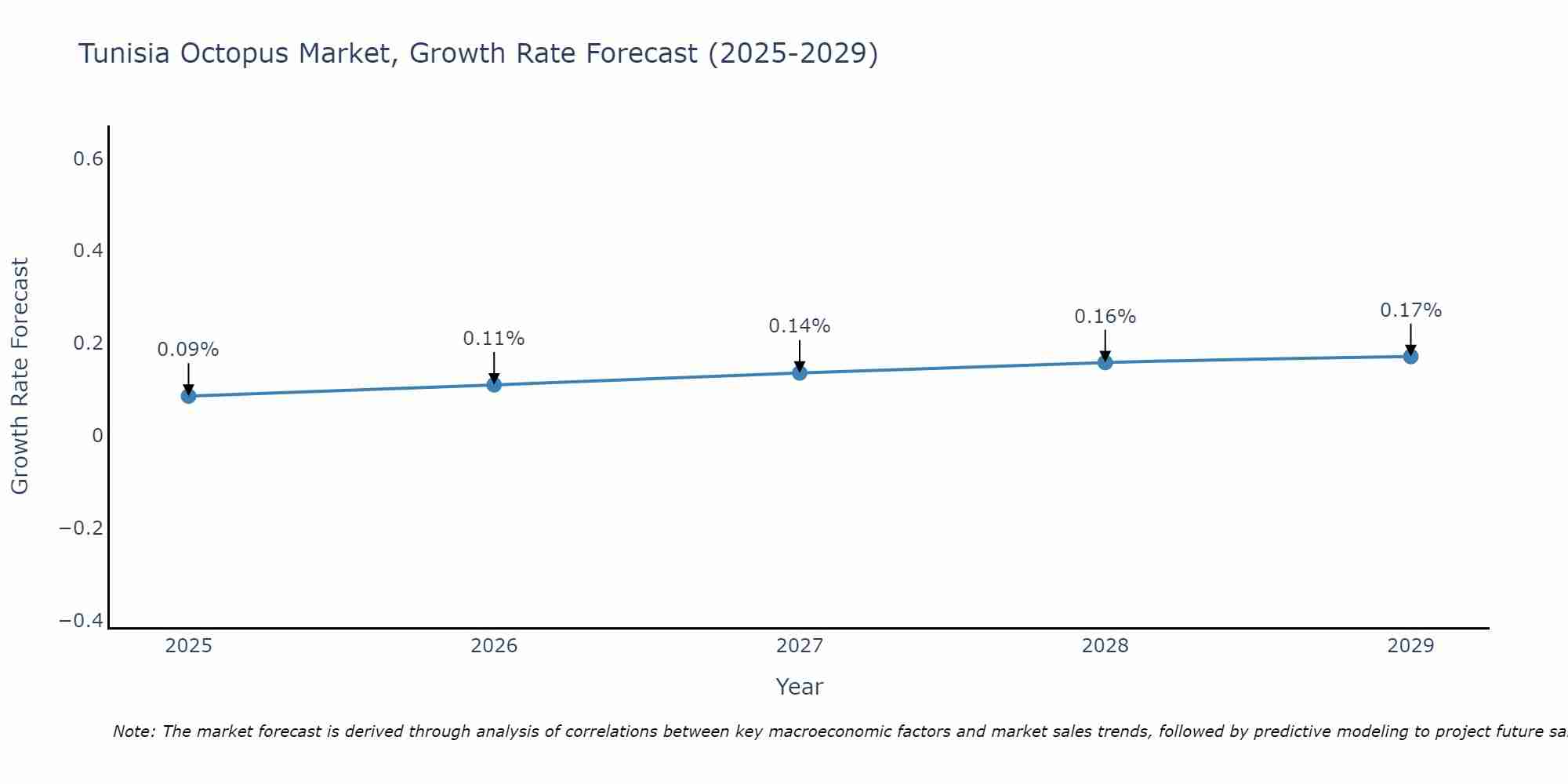
The Tunisia Octopus Market is poised for steady growth rate improvements from 2025 to 2029. The growth rate starts at 0.09% in 2025 and reaches 0.17% by 2029.
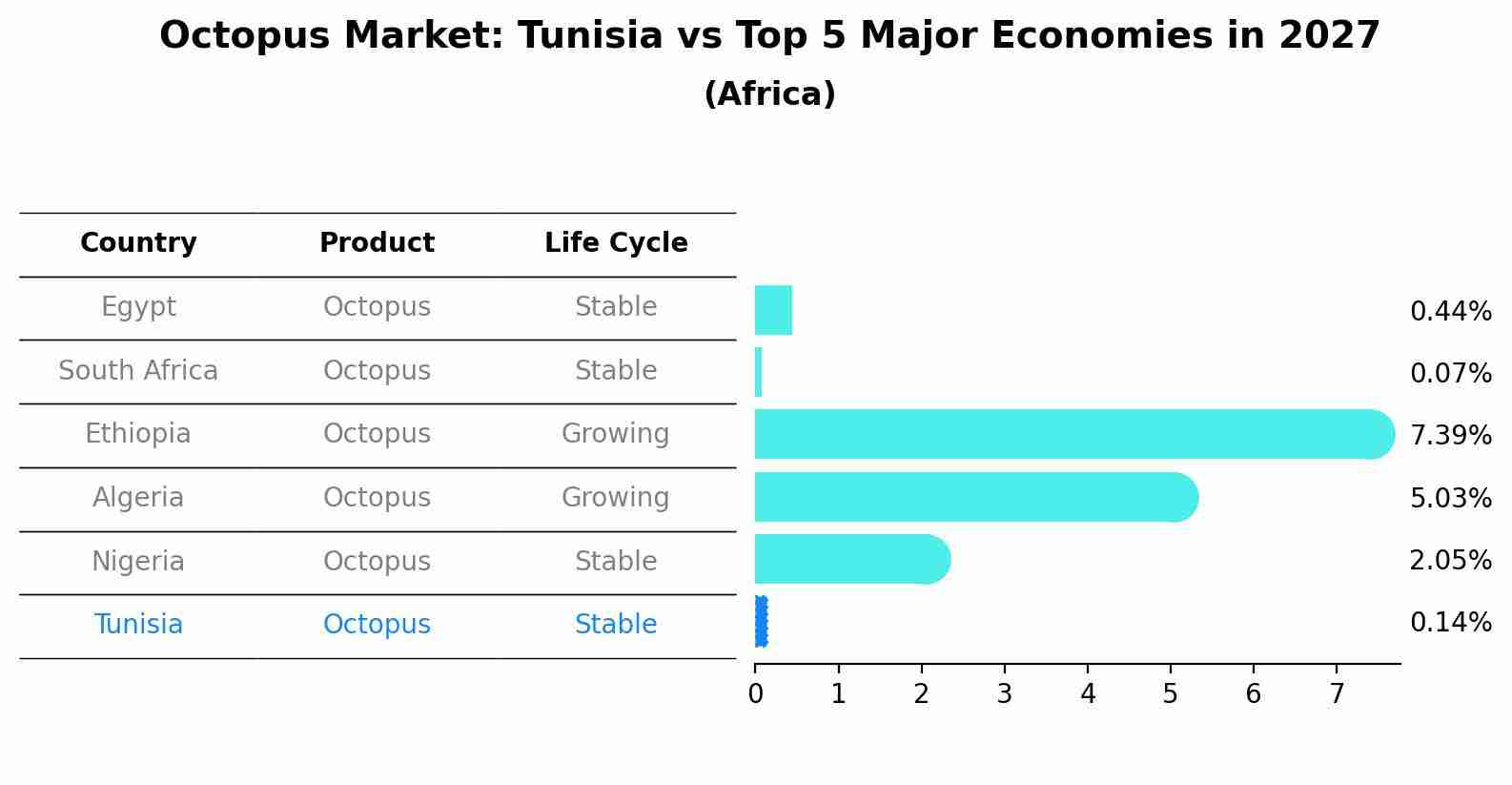
Octopus Market: Tunisia vs Top 5 Major Economies in 2027 (Africa)
Tunisia's Octopus market is anticipated to experience a stable growth rate of 0.14% by 2027, reflecting trends observed in the largest economy Egypt, followed by South Africa, Ethiopia, Algeria and Nigeria.
Tunisia Octopus Market Synopsis
The Tunisia Octopus market is a significant sector within the country`s seafood industry, driven by high demand both domestically and internationally. Octopus is a popular delicacy consumed in various forms, such as grilled, stewed, or in salads, making it a versatile ingredient in Tunisian cuisine. The market is characterized by a strong supply chain, with a focus on sustainable fishing practices to ensure the long-term viability of octopus stocks. Key players in the market include fishermen, seafood processors, distributors, and exporters who cater to local markets as well as export to countries in Europe and beyond. The market is influenced by factors such as seasonality, weather conditions, and international market trends, all of which impact pricing and availability of octopus products. Overall, the Tunisia Octopus market presents opportunities for growth and innovation in meeting the evolving demand for high-quality seafood products.
Tunisia Octopus Market Trends
In the Tunisia Octopus Market, there is a growing trend towards sustainable and ethical sourcing practices. Consumers are increasingly concerned about the environmental impact of octopus fishing and are seeking out products that are certified as being caught using methods that do not harm the marine ecosystem. Additionally, there is a rising demand for premium quality octopus products, such as fresh or gourmet frozen options, driven by a growing interest in culinary experiences and adventurous eating habits. The market is also witnessing an uptake in innovative packaging solutions that extend the shelf life of octopus products and enhance convenience for consumers. Overall, the Tunisia Octopus Market is evolving to cater to the changing preferences and values of consumers who are looking for high-quality, responsibly sourced seafood options.
Tunisia Octopus Market Challenges
In the Tunisia Octopus market, one of the main challenges faced is the fluctuation in octopus supply due to overfishing and environmental factors. This leads to inconsistent availability of octopus for both domestic consumption and export. Additionally, the lack of proper regulation and enforcement of sustainable fishing practices contributes to the decline in octopus populations. The market also struggles with limited infrastructure for processing and storage facilities, impacting the quality and shelf-life of octopus products. Furthermore, competition from other seafood products and imported octopus poses a challenge for local Tunisian octopus producers in terms of pricing and market share. Overall, addressing these challenges through sustainable fishing practices, improved infrastructure, and market strategies is crucial for the long-term viability of the Tunisia Octopus market.
Tunisia Octopus Market Investment Opportunities
The Tunisia Octopus Market presents promising investment opportunities due to the country`s strategic location along the Mediterranean coast and its abundance of high-quality octopus. Investors can consider opportunities in octopus farming, processing facilities, and export ventures. With the growing global demand for seafood, particularly in European and Asian markets, Tunisia`s octopus industry has the potential for significant growth and profitability. Additionally, sustainable practices in octopus farming and harvesting can appeal to environmentally conscious consumers, further enhancing the market`s appeal. By investing in the Tunisia Octopus Market, investors can capitalize on the country`s competitive advantage in octopus production and contribute to the development of a thriving seafood industry in the region.
Jordan Agar Market Government Policies
The Tunisian government has implemented various policies related to the octopus market to ensure its sustainability and protect the livelihoods of local fishermen. These policies include setting quotas on octopus fishing to prevent overexploitation, enforcing regulations on fishing methods to reduce bycatch and habitat destruction, and promoting sustainable practices through awareness campaigns and training programs. Additionally, the government has established marine protected areas to preserve octopus habitats and promote biodiversity. These policies aim to balance the economic benefits of the octopus market with the need to conserve this important marine resource for future generations, ultimately contributing to the long-term viability of the industry and the well-being of coastal communities.
Tunisia Octopus Market Future Outlook
The Tunisia Octopus Market is expected to experience steady growth in the coming years due to the increasing demand for seafood products both domestically and internationally. Factors such as the rising popularity of Tunisian cuisine, growing consumer awareness of the health benefits of octopus, and the expansion of aquaculture practices are likely to drive market growth. Additionally, advancements in technology and sustainable fishing practices are anticipated to improve the supply chain efficiency and quality of octopus products, further boosting market expansion. However, challenges such as environmental concerns related to overfishing and fluctuating market prices may pose obstacles to the market`s growth trajectory. Overall, the Tunisia Octopus Market is poised for positive development, supported by evolving consumer preferences and industry advancements.
Key Highlights of the Report:
- Tunisia Octopus Market Outlook
- Market Size of Tunisia Octopus Market, 2024
- Forecast of Tunisia Octopus Market, 2031
- Historical Data and Forecast of Tunisia Octopus Revenues & Volume for the Period 2021 - 2031
- Tunisia Octopus Market Trend Evolution
- Tunisia Octopus Market Drivers and Challenges
- Tunisia Octopus Price Trends
- Tunisia Octopus Porter's Five Forces
- Tunisia Octopus Industry Life Cycle
- Historical Data and Forecast of Tunisia Octopus Market Revenues & Volume By Product Type for the Period 2021 - 2031
- Historical Data and Forecast of Tunisia Octopus Market Revenues & Volume By Fresh for the Period 2021 - 2031
- Historical Data and Forecast of Tunisia Octopus Market Revenues & Volume By Processed for the Period 2021 - 2031
- Historical Data and Forecast of Tunisia Octopus Market Revenues & Volume By Application for the Period 2021 - 2031
- Historical Data and Forecast of Tunisia Octopus Market Revenues & Volume By Commercial for the Period 2021 - 2031
- Historical Data and Forecast of Tunisia Octopus Market Revenues & Volume By Food and Beverage for the Period 2021 - 2031
- Historical Data and Forecast of Tunisia Octopus Market Revenues & Volume By Distribution Channel for the Period 2021 - 2031
- Historical Data and Forecast of Tunisia Octopus Market Revenues & Volume By Direct for the Period 2021 - 2031
- Historical Data and Forecast of Tunisia Octopus Market Revenues & Volume By Indirect for the Period 2021 - 2031
- Tunisia Octopus Import Export Trade Statistics
- Market Opportunity Assessment By Product Type
- Market Opportunity Assessment By Application
- Market Opportunity Assessment By Distribution Channel
- Tunisia Octopus Top Companies Market Share
- Tunisia Octopus Competitive Benchmarking By Technical and Operational Parameters
- Tunisia Octopus Company Profiles
- Tunisia Octopus Key Strategic Recommendations






































