Tunisia Ornamental Fish Market Size, Share & Growth Rate
The Tunisia Ornamental Fish Market was estimated at USD 369 Million in 2025 and is projected to reach USD 493 Million by 2032, growing at a CAGR of 4.2% from 2026 to 2032. This upward trajectory is primarily driven by a burgeoning interest in aquariums among hobbyists, coupled with an increasing inclination towards home decor that integrates aquatic life. The rising middle class with disposable income further fuels this trend, creating a fertile ground for growth.
Tunisia Ornamental Fish Market Year-wise Growth Rate and Key Drivers
This graph highlights how the Tunisia Ornamental Fish Market has steadily grown over the years, supported by major growth factors.
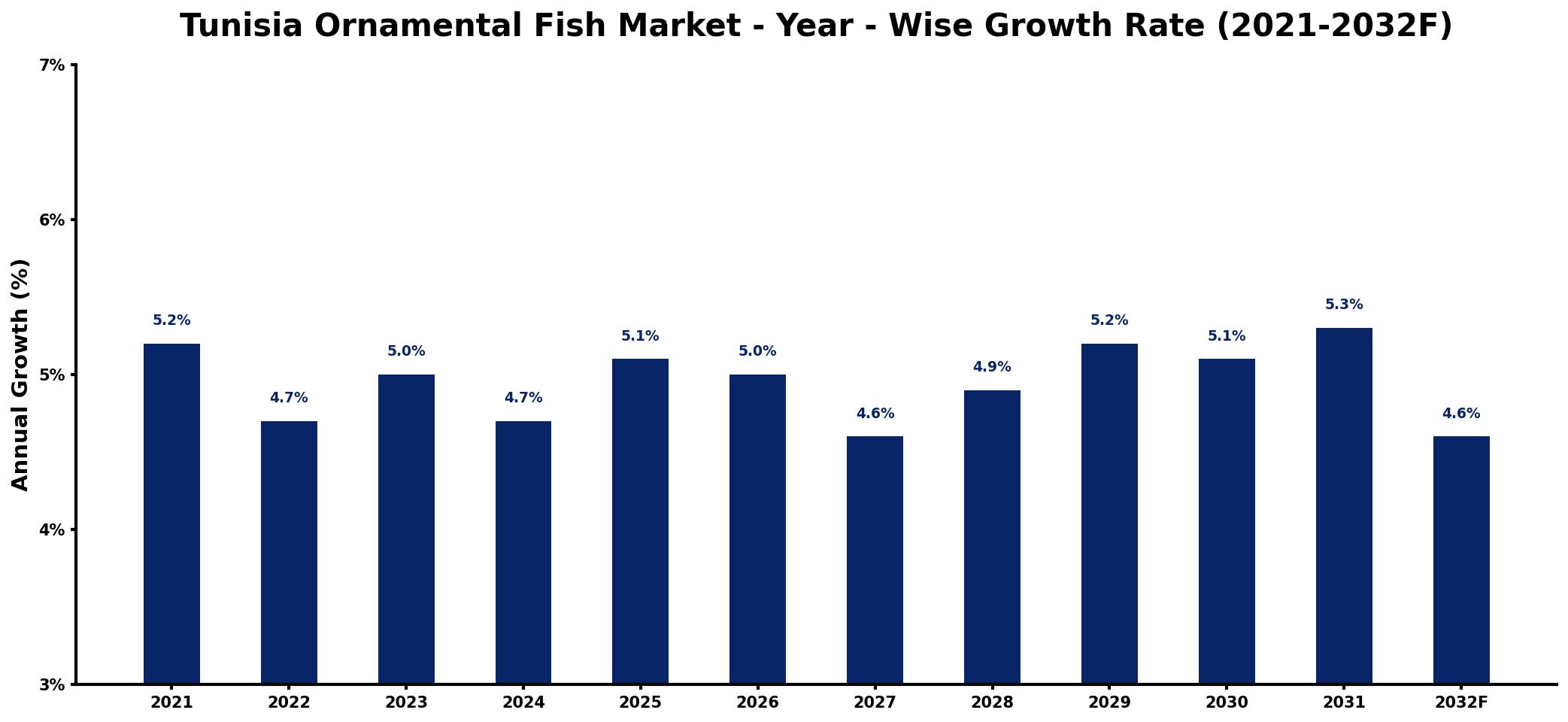
The table below presents the year‑wise growth rates along with the key drivers influencing the market
| Year | Growth Rate | Major Drivers |
| 2021 | 5.2% | Rising interest in aquascaping hobby |
| 2022 | 4.7% | Increased online sales platforms |
| 2023 | 5.0% | Expansion of local breeding facilities |
| 2024 | 4.7% | Growing popularity of aquariums |
| 2025 | 5.1% | Investment in sustainable farming practices |
| 2026 | 5.0% | Enhanced product variety available |
| 2027 | 4.6% | Emergence of eco-friendly alternatives |
| 2028 | 4.9% | Boost in community aquarium clubs |
| 2029 | 5.2% | Strengthening of supply chain networks |
| 2030 | 5.1% | Increased consumer education initiatives |
| 2031 | 5.3% | Partnerships with interior designers |
| 2032 | 4.6% | Focus on wellness and relaxation |
Note: Market size estimations and growth projections presented in this report are based on 6Wresearch's proprietary forecasting methodology, utilizing the latest available industry data, government publications, and primary research inputs.
Tunisia Ornamental Fish Market Synopsis
The strongest force shaping the Tunisia Ornamental Fish Market right now is the growing interest among consumers in aquarium keeping as a hobby. This expanding community is seeking a diverse array of freshwater and marine fish species, which enhances the aesthetic appeal of their living spaces and promotes relaxation. The increasing popularity of aquascaping is also notable, as it drives demand for unique and visually appealing setups.
Alongside the demand for ornamental fish, the market is also seeing a rise in awareness about sustainable practices. Consumers are now gravitating toward ethically sourced fish species, reflecting a shift in values that prioritizes conservation efforts. Local pet stores and specialized aquarium shops are adapting their offerings to meet these evolving preferences.
Tunisia Ornamental Fish Market Key Takeaways
- The market is driven by increasing disposable income and interest in aquarium hobbies.
- Consumers prefer unique and exotic species that enhance their aquarium aesthetics.
- There is a growing demand for high-quality aquarium accessories and maintenance services.
- Online purchasing platforms are expanding, providing customers with greater convenience.
- Sustainable sourcing and conservation awareness are becoming critical factors for consumers.
Evaluation of Restraints in Tunisia Ornamental Fish Market
Despite its growth potential, the Tunisia Ornamental Fish Market faces significant restraints that could limit its expansion. One major challenge is the limited infrastructure for breeding and distribution, which hampers local supply capabilities. Furthermore, many consumers remain unaware of the benefits and joy that come with maintaining ornamental fish, which affects overall demand. The market is also fragmented, populated with small-scale suppliers struggling to compete against cheaper imported fish, making it difficult for local businesses to thrive.
Moreover, the stringent regulations imposed on the importation of exotic species can complicate the business landscape, resulting in higher costs and delays. Overall, addressing these barriers will be crucial for the market's growth and sustainability in the coming years.
Tunisia Ornamental Fish Market Trends
The Tunisia Ornamental Fish Market is currently witnessing several key trends that are reshaping demand and technological applications. A notable trend is the increasing consumer preference for exotic and colorful fish, which not only enhance the visual appeal of aquariums but also align with personal aesthetics. Furthermore, sustainable practices are gaining traction, with a growing number of consumers actively seeking ethically sourced fish and eco-friendly products.
Additionally, the rise of online shopping is transforming the way consumers purchase ornamental fish and related supplies. This shift not only offers broader selection and convenience but also supports the growth of businesses that adopt effective digital marketing strategies. Education about proper care techniques and aquarium maintenance is on the rise, leading to increased demand for quality accessories and knowledgeable service providers.
Tunisia Ornamental Fish Market Opportunities
The Tunisia Ornamental Fish Market presents a range of promising investment opportunities as the interest in aquariums and pet ownership continues to rise. Key avenues for growth include breeding programs focused on exotic species, innovative retail solutions, and specialized online platforms that cater to the unique needs of fish enthusiasts. Establishing high-quality pet stores and aquarium maintenance services can also fill a significant market gap.
Furthermore, investing in sustainable breeding technologies and eco-friendly transportation methods can provide businesses with a competitive advantage, ensuring they meet the growing demand for environmentally conscious practices. As consumers become more engaged in creating visually captivating aquatic environments, the potential for financial return in this sector remains robust.
Government Initiatives in the Tunisia Ornamental Fish Market
The Tunisian government is proactively regulating the ornamental fish market through various initiatives aimed at promoting sustainability and protecting marine ecosystems. The Ministry of Agriculture, Water Resources and Fisheries plays a pivotal role in this sector by issuing licenses for fish farms and encouraging responsible practices that prevent overexploitation of wild fish species.
Policies implemented by the government also support research and development efforts that seek to enhance the breeding and trading of ornamental fish, thereby bolstering the industry's competitiveness on a global scale. By balancing economic growth with environmental conservation, these initiatives aim to ensure a thriving market for years to come.
Future Insights of the Tunisia Ornamental Fish Market
Looking forward to the period from 2026 to 2032, the Tunisia Ornamental Fish Market appears poised for continued growth. Factors such as rising disposable incomes and heightened interest in home aquariums as a form of personal expression are likely to drive demand. As technology advances, the accessibility and convenience of aquarium maintenance will improve, making it easier for individuals to engage in this hobby.
However, businesses will need to navigate potential environmental concerns, regulatory challenges, and competition from alternative leisure activities. With a strategic focus on sustainability and innovative marketing, the market can capitalize on these trends to realize its full growth potential.
Tunisia Ornamental Fish Market Latest Developments (2025 - 2026)
Recent developments in the Tunisia Ornamental Fish Market indicate a shift towards increased consumer engagement through educational initiatives. Businesses are beginning to host workshops and seminars to raise awareness about proper fish care and aquarium setup, enhancing consumer knowledge and satisfaction. Online platforms are also gaining traction, with several retailers introducing user-friendly websites to streamline the purchasing process, catering to the demand for convenience.
Additionally, the industry is witnessing a gradual emergence of collaborations between local breeders and government bodies aimed at fostering sustainable practices in fish breeding and transportation. These efforts underline the market's commitment to conservation while responding to consumer preferences for ethically sourced products.
Tunisia Ornamental Fish Market - Key Attractiveness of the Report
- 10 Years of Market Numbers
- Historical Data Starting from 2022 to 2025
- Base Year: 2025
- Forecast Data until 2032
- Key Performance Indicators Impacting the Market
- Major Upcoming Developments and Projects
Key Highlights of the Report:
- Tunisia Ornamental Fish Market Outlook
- Market Size of Tunisia Ornamental Fish Market, 2025
- Forecast of Tunisia Ornamental Fish Market, 2032
- Historical Data and Forecast of Tunisia Ornamental Fish Revenues & Volume for the Period 2022-2032F
- Tunisia Ornamental Fish Market Trend Evolution
- Tunisia Ornamental Fish Market Drivers and Challenges
- Tunisia Ornamental Fish Price Trends
- Tunisia Ornamental Fish Porter's Five Forces
- Tunisia Ornamental Fish Industry Life Cycle
- Historical Data and Forecast of Tunisia Ornamental Fish Market Revenues & Volume By Product for the Period 2022-2032F
- Historical Data and Forecast of Tunisia Ornamental Fish Market Revenues & Volume By Tropical Freshwater for the Period 2022-2032F
- Historical Data and Forecast of Tunisia Ornamental Fish Market Revenues & Volume By Temperate for the Period 2022-2032F
- Historical Data and Forecast of Tunisia Ornamental Fish Market Revenues & Volume By Marine for the Period 2022-2032F
- Historical Data and Forecast of Tunisia Ornamental Fish Market Revenues & Volume By Application for the Period 2022-2032F
- Historical Data and Forecast of Tunisia Ornamental Fish Market Revenues & Volume By Commercial for the Period 2022-2032F
- Historical Data and Forecast of Tunisia Ornamental Fish Market Revenues & Volume By Household for the Period 2022-2032F
- Tunisia Ornamental Fish Import Export Trade Statistics
- Market Opportunity Assessment By Product
- Market Opportunity Assessment By Application
- Tunisia Ornamental Fish Top Companies Market Share
- Tunisia Ornamental Fish Competitive Benchmarking By Technical and Operational Parameters
- Tunisia Ornamental Fish Company Profiles
- Tunisia Ornamental Fish Key Strategic Recommendations






































