Tunisia Pearl Jewelry Market Size, Share & Growth Rate
The Tunisia Pearl Jewelry Market was estimated at USD 723 Million in 2025 and is projected to reach USD 1026 Million by 2032, growing at a CAGR of 5.1% from 2026 to 2032. This growth is largely driven by a rising appreciation for luxury and bespoke jewelry among consumers, coupled with an increasing focus on sustainable and ethically sourced materials. As Tunisia's middle class expands and disposable incomes rise, demand for high-quality pearl jewelry as a status symbol and personal expression continues to strengthen.
Tunisia Pearl Jewelry Market Year-wise Growth Rate and Key Drivers
This graph highlights how the Tunisia Pearl Jewelry Market has steadily grown over the years, supported by major growth factors.
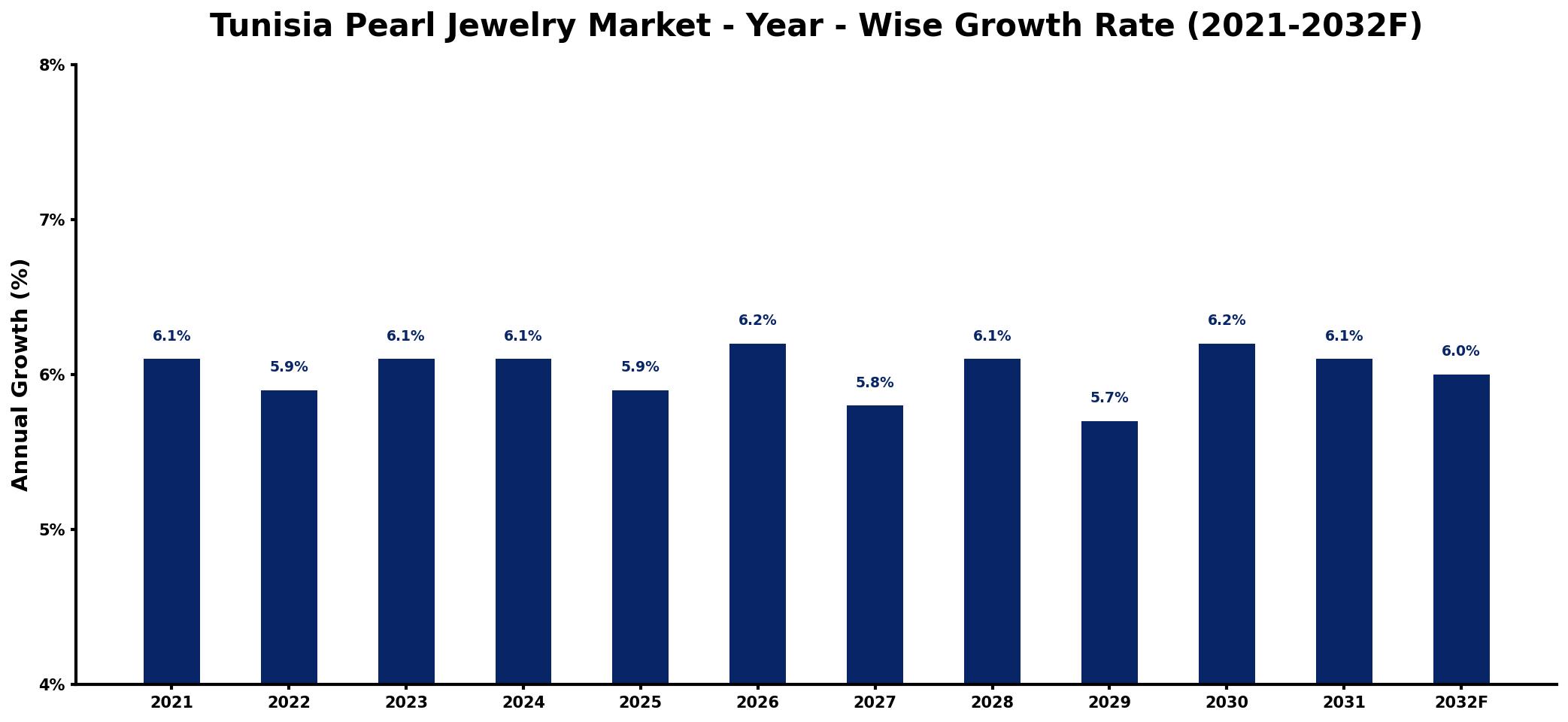
The table below presents the year‑wise growth rates along with the key drivers influencing the market
| Year | Growth Rate | Major Drivers |
| 2021 | 6.1% | Rising consumer spending on luxury |
| 2022 | 5.9% | Growing interest in artisan craftsmanship |
| 2023 | 6.1% | Increase in social media marketing |
| 2024 | 6.1% | Expansion of online retail platforms |
| 2025 | 5.9% | Strengthening of local artisan communities |
| 2026 | 6.2% | rising end-use demand growth |
| 2027 | 5.8% | Diversification of product offerings |
| 2028 | 6.1% | Emergence of eco-friendly practices |
| 2029 | 5.7% | Collaboration with fashion industry leaders |
| 2030 | 6.2% | Enhancement of customer experience strategies |
| 2031 | 6.1% | Growth in gifting and occasions |
| 2032 | 6.0% | Investment in sustainable sourcing methods |
Note: Market size estimations and growth projections presented in this report are based on 6Wresearch's proprietary forecasting methodology, utilizing the latest available industry data, government publications, and primary research inputs.
Tunisia Pearl Jewelry Market Synopsis
The Tunisia Pearl Jewelry Market is characterized by its rich cultural heritage and exceptional craftsmanship, offering unique pieces that resonate with both local and global consumers. Tunisian artisans frequently blend traditional designs with modern aesthetics, resulting in a diverse range of elegant and intricately detailed jewelry that captures the eye and elevates personal style.
As consumer preferences shift towards unique, customized pieces, the market has seen a surge in demand for designs that reflect individuality and creativity. Local designers are increasingly incorporating sustainable practices and materials, addressing the growing awareness of ethical consumption and attracting a clientele that values the story behind each piece of jewelry.
Tunisia Pearl Jewelry Market Key Takeaways
- The market showcases a blend of traditional and contemporary designs that appeal to discerning buyers.
- Consumers are increasingly prioritizing sustainability and ethical sourcing in their jewelry purchases.
- Local artisans play a pivotal role, crafting pieces that reflect Tunisia's cultural heritage.
- Growing disposable incomes among the middle class are contributing to increased spending on luxury items.
- Investment opportunities exist for those looking to promote Tunisian pearl jewelry as a luxury good on a global scale.
Evaluation of Restraints in Tunisia Pearl Jewelry Market
Despite its potential, the Tunisia Pearl Jewelry Market faces several restraints. Competition is intensifying, not only from local brands but also from international jewelry firms eager to penetrate the Tunisian market. The fluctuating global prices of pearls can disrupt production costs, presenting challenges for local artisans relying on imported materials. Furthermore, economic uncertainties and regional political instability can dampen consumer confidence, potentially affecting luxury spending in this niche sector. For businesses to navigate these challenges, a focus on quality, innovation, and strategic marketing will be essential to distinguish themselves in a competitive landscape.
Tunisia Pearl Jewelry Market Trends
A significant trend within the Tunisia Pearl Jewelry Market is the increasing consumer inclination towards sustainable and ethically sourced pearls. This shift reflects a broader global consciousness about environmental and social impacts. Additionally, as younger consumers seek distinctive jewelry pieces, the demand for customization and innovative design has surged. Artisans are now experimenting with integrating pearls into more contemporary settings, expanding their appeal beyond traditional styles and capturing the interest of a new demographic.
Tunisia Pearl Jewelry Market Opportunities
The market presents ample investment opportunities, particularly for ventures that focus on collaboration with local artisans. By amplifying the unique storytelling associated with Tunisian pearl jewelry, investors can cater to a growing appetite for premium, culturally rich products. Moreover, investing in effective branding and marketing strategies can elevate the perception of Tunisian pearls as luxury items in both local and international markets. Emphasizing quality and craftsmanship will be essential in attracting high-end consumers seeking authentic and exclusive jewelry pieces.
Government Initiatives in the Tunisia Pearl Jewelry Market
The Tunisian government has recognized the significance of the pearl jewelry market and has initiated several supportive measures. These include the establishment of certification standards aimed at enhancing the quality and authenticity of local pearls. Furthermore, financial and technical assistance is provided to artisans and producers through grants and training initiatives. By promoting sustainable harvesting practices and protecting marine ecosystems, the government aims to boost the competitiveness of the market while preserving the rich cultural heritage of pearl jewelry production in Tunisia.
Future Insights of the Tunisia Pearl Jewelry Market
Looking ahead to 2026-2032, the Tunisia Pearl Jewelry Market is poised for notable expansion. The increasing popularity of luxury jewelry as a personal expression, particularly among a younger and more affluent consumer base, will drive growth. Additionally, the ongoing trend towards sustainability will further cement the relevance of pearl jewelry in contemporary fashion. With skilled artisans continuing to innovate and uphold traditional craftsmanship, the market is well-positioned to capitalize on these evolving trends and attract both local and international buyers.
Tunisia Pearl Jewelry Market Latest Developments (2025 - 2026)
In recent months, the Tunisia Pearl Jewelry Market has seen an increase in collaborations between local artisans and international designers, aiming to create fusion pieces that appeal to a broader audience. Furthermore, there has been a notable surge in interest from international buyers looking to invest in high-quality Tunisian pearls. Local fairs and exhibitions have provided a platform for artisans to showcase their unique designs, enhancing the visibility of Tunisian craftsmanship on the global stage.
Tunisia Pearl Jewelry Market - Key Attractiveness of the Report
- 10 Years of Market Numbers
- Historical Data Starting from 2022 to 2025
- Base Year: 2025
- Forecast Data until 2032
- Key Performance Indicators Impacting the Market
- Major Upcoming Developments and Projects
Key Highlights of the Report:
- Tunisia Pearl Jewelry Market Outlook
- Market Size of Tunisia Pearl Jewelry Market, 2025
- Forecast of Tunisia Pearl Jewelry Market, 2032
- Historical Data and Forecast of Tunisia Pearl Jewelry Revenues & Volume for the Period 2022-2032F
- Tunisia Pearl Jewelry Market Trend Evolution
- Tunisia Pearl Jewelry Market Drivers and Challenges
- Tunisia Pearl Jewelry Price Trends
- Tunisia Pearl Jewelry Porter's Five Forces
- Tunisia Pearl Jewelry Industry Life Cycle
- Historical Data and Forecast of Tunisia Pearl Jewelry Market Revenues & Volume By Pearl Type for the Period 2022-2032F
- Historical Data and Forecast of Tunisia Pearl Jewelry Market Revenues & Volume By Freshwater for the Period 2022-2032F
- Historical Data and Forecast of Tunisia Pearl Jewelry Market Revenues & Volume By Saltwater for the Period 2022-2032F
- Historical Data and Forecast of Tunisia Pearl Jewelry Market Revenues & Volume By Material Type for the Period 2022-2032F
- Historical Data and Forecast of Tunisia Pearl Jewelry Market Revenues & Volume By Gold for the Period 2022-2032F
- Historical Data and Forecast of Tunisia Pearl Jewelry Market Revenues & Volume By Silver for the Period 2022-2032F
- Historical Data and Forecast of Tunisia Pearl Jewelry Market Revenues & Volume By Others for the Period 2022-2032F
- Historical Data and Forecast of Tunisia Pearl Jewelry Market Revenues & Volume By Jewelry Type for the Period 2022-2032F
- Historical Data and Forecast of Tunisia Pearl Jewelry Market Revenues & Volume By Necklace for the Period 2022-2032F
- Historical Data and Forecast of Tunisia Pearl Jewelry Market Revenues & Volume By Earrings for the Period 2022-2032F
- Historical Data and Forecast of Tunisia Pearl Jewelry Market Revenues & Volume By Rings for the Period 2022-2032F
- Historical Data and Forecast of Tunisia Pearl Jewelry Market Revenues & Volume By Others for the Period 2022-2032F
- Tunisia Pearl Jewelry Import Export Trade Statistics
- Market Opportunity Assessment By Pearl Type
- Market Opportunity Assessment By Material Type
- Market Opportunity Assessment By Jewelry Type
- Tunisia Pearl Jewelry Top Companies Market Share
- Tunisia Pearl Jewelry Competitive Benchmarking By Technical and Operational Parameters
- Tunisia Pearl Jewelry Company Profiles
- Tunisia Pearl Jewelry Key Strategic Recommendations






































