Tunisia Prom Dresses Market Summary
The tunisia prom dresses market was estimated at USD 302 Million in 2025 and is projected to reach USD 426 Million by 2032, growing at a CAGR of 5.7% from 2026 to 2032.
Tunisia Prom Dresses Market Year-wise Growth Rate and Key Drivers
This graph highlights how the Tunisia Prom Dresses Market has steadily grown over the past five years, supported by major growth factors.
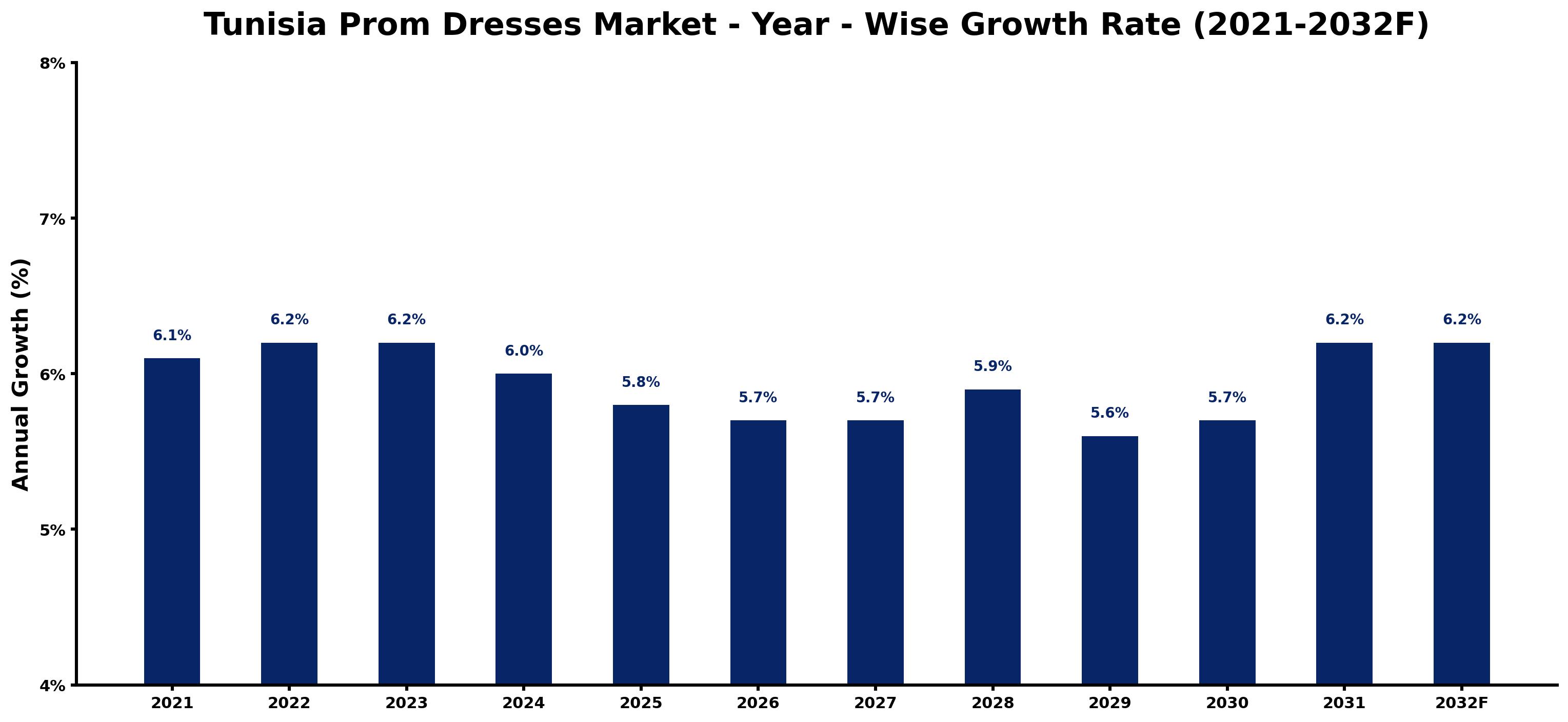
The table below presents the year wise growth rates along with the key drivers influencing the market
| Year | Growth Rate | Major Drivers |
| 2021 | 6.1% | COVID-19 recovery prompted a renewed interest in celebration attire for youth. |
| 2022 | 6.2% | Social media influencers highlighted local designers, boosting awareness for prom fashion. |
| 2023 | 6.2% | Digital shopping platforms emerged, simplifying access to diverse prom dress options. |
| 2024 | 6.0% | A growing preference for eco-friendly fabrics began to shape consumer purchasing habits. |
| 2025 | 5.8% | Seasonal sales strategies attracted a wider audience, enhancing market competitiveness. |
| 2026 | 5.7% | Cultural festivities increasingly incorporated prom-themed events, expanding market opportunities. |
| 2027 | 5.7% | Online fashion shows showcased Tunisian talent, inspiring local youth to engage with designers. |
| 2028 | 5.9% | Consumer interest shifted towards custom-made dresses reflecting individual identities and preferences. |
| 2029 | 5.6% | Collaboration between local boutiques and designers flourished, diversifying product offerings. |
| 2030 | 5.7% | Increased tourism brought international trends, influencing Tunisian prom dress styles. |
| 2031 | 6.2% | Sustainability became a core value, prompting brands to adopt ethical sourcing practices. |
| 2032 | 6.2% | The market matured with established brands and emerging startups coexisting harmoniously. |
Note - Market size estimations and growth projections presented in this report are based on 6Wresearch's advanced forecasting approach, validated with industry datasets as of June 2026.
Tunisia Prom Dresses Market Synopsis
The Tunisia Prom Dresses Market is projected to reach 5.7% and witness significant growth during the forecast period (2026-2032). This market is evolving rapidly due to the increasing demand from young consumers for fashionable formal wear that reflects their style during proms, weddings, and other significant occasions. With a diverse range of preferences for dress styles—ranging from classic elegance to modern, bold designs—Tunisian consumers are driving a multifaceted landscape. The competition between local designers and international brands is intensifying, resulting in a rich selection of prom dresses available at various price points and styles.
Tunisia Prom Dresses Market Trends and Opportunities
The Tunisia Prom Dresses Market is currently witnessing several key trends that shape consumer preferences and buying behaviors. A notable rise in demand for unique and customizable designs illustrates a shift towards individuality among young consumers. Furthermore, sustainability is becoming a cornerstone of purchasing decisions, with an increasing inclination towards eco-friendly materials and ethical production practices. Among the vibrant color palettes, bold hues and intricate embellishments are particularly favored. Social media continues to exert significant influence, with style inspirations drawn from celebrity appearances, driving the popularity of off-the-shoulder designs, dresses with high slits, and tailored silhouettes. Retailers are also adapting to market demands by offering a broader range of sizes, promoting inclusivity.
Tunisia Prom Dresses Market Challenges and Restraints
While the Tunisia Prom Dresses Market shows promise, it faces several challenges that could impact its growth trajectory. The intense competition posed by both domestic and international retailers complicates efforts for local businesses to distinguish themselves. Economic factors, including fluctuations in consumer purchasing power and disposable income, play a critical role in shaping demand patterns for high-priced prom dresses. Supply chain disruptions, notably delays in the importation of materials and finished products, can affect retailers' ability to meet market demands promptly. Additionally, the dynamic nature of fashion trends necessitates that businesses stay agile and responsive to evolving consumer preferences.
Tunisia Prom Dresses Market Investment Opportunities
The prospect of investment within the Tunisia Prom Dresses Market is robust, driven by the escalating appetite for fashionable and quality formal wear among the youth. As prom celebrations and formal events gain traction, opportunities abound for retailers and designers to tap into this niche. Establishing local boutiques or online storefronts, as well as collaborating with Tunisian designers to develop exclusive collections, can foster significant returns. Furthermore, introducing sustainable and ethically produced prom dresses aligns with the growing consumer demand for eco-conscious fashion. The overall market landscape promises ongoing evolution and expansion, presenting ample opportunities for informed investors.
Tunisia Prom Dresses Market Government Investment and Initiatives
The Tunisian government has implemented measures to regulate the prom dresses market, emphasizing product safety and consumer protection. These initiatives include establishing quality standards for materials used in garment production and monitoring manufacturing processes to eliminate the use of harmful chemicals. Additionally, labeling requirements have been instituted to provide consumers with essential product information. The government is also keen on ensuring fair pricing practices, thereby preventing exploitative pricing while promoting accessibility for the consumer base. Overall, such regulations aim to foster a transparent and competitive market environment, benefiting both consumers and businesses within the prom dresses industry.
Tunisia Prom Dresses Market Latest Developments (May 2025 - June 2026)
Recent developments in the Tunisia Prom Dresses Market demonstrate a marked shift towards greater online engagement and e-commerce solutions. As consumer behaviors evolve, retailers are increasingly leveraging digital platforms to enhance shopping experiences and expand their reach. There has been a noticeable emphasis on sustainable fashion practices, with several brands beginning to incorporate eco-friendly materials into their collections. Furthermore, collaborations between local designers and fashion influencers have gained traction, enhancing brand visibility and consumer connection. As Tunisia's youth continue to embrace formal events, trends surrounding customization and personalization options are likely to shape the offerings within the market.
Tunisia Prom Dresses Market - Key Attractiveness of the Report
- 10 Years of Market Numbers
- Historical Data Starting from 2022 to 2025
- Base Year: 2025
- Forecast Data until 2032
- Key Performance Indicators Impacting the Market
- Major Upcoming Developments and Projects
Key Highlights of the Report:
- Tunisia Prom Dresses Market Outlook
- Market Size of Tunisia Prom Dresses Market, 2025
- Forecast of Tunisia Prom Dresses Market, 2032F
- Historical Data and Forecast of Tunisia Prom Dresses Revenues & Volume for the Period 2022-2032F
- Tunisia Prom Dresses Market Trend Evolution
- Tunisia Prom Dresses Market Drivers and Challenges
- Tunisia Prom Dresses Price Trends
- Tunisia Prom Dresses Porter's Five Forces
- Tunisia Prom Dresses Industry Life Cycle
- Historical Data and Forecast of Tunisia Prom Dresses Market Revenues & Volume By Type for the Period 2022-2032F
- Historical Data and Forecast of Tunisia Prom Dresses Market Revenues & Volume By Long Dresses for the Period 2022-2032F
- Historical Data and Forecast of Tunisia Prom Dresses Market Revenues & Volume By Short Dresses for the Period 2022-2032F
- Historical Data and Forecast of Tunisia Prom Dresses Market Revenues & Volume By Knee-length Dresses for the Period 2022-2032F
- Historical Data and Forecast of Tunisia Prom Dresses Market Revenues & Volume By Fabric for the Period 2022-2032F
- Historical Data and Forecast of Tunisia Prom Dresses Market Revenues & Volume By Chiffon for the Period 2022-2032F
- Historical Data and Forecast of Tunisia Prom Dresses Market Revenues & Volume By Satin for the Period 2022-2032F
- Historical Data and Forecast of Tunisia Prom Dresses Market Revenues & Volume By Organza for the Period 2022-2032F
- Historical Data and Forecast of Tunisia Prom Dresses Market Revenues & Volume By Others for the Period 2022-2032F
- Historical Data and Forecast of Tunisia Prom Dresses Market Revenues & Volume By Distribution Channel for the Period 2022-2032F
- Historical Data and Forecast of Tunisia Prom Dresses Market Revenues & Volume By Store-Based for the Period 2022-2032F
- Historical Data and Forecast of Tunisia Prom Dresses Market Revenues & Volume By Non-Store-Based for the Period 2022-2032F
- Tunisia Prom Dresses Import Export Trade Statistics
- Market Opportunity Assessment By Type
- Market Opportunity Assessment By Fabric
- Market Opportunity Assessment By Distribution Channel
- Tunisia Prom Dresses Top Companies Market Share
- Tunisia Prom Dresses Competitive Benchmarking By Technical and Operational Parameters
- Tunisia Prom Dresses Company Profiles
- Tunisia Prom Dresses Key Strategic Recommendations






































