Tunisia Sports Apparel Market Summary
The tunisia sports apparel market was estimated at USD 499 Million in 2025 and is projected to reach USD 659 Million by 2032, growing at a CAGR of 4.8% from 2026 to 2032.
Tunisia Sports Apparel Market Year-wise Growth Rate and Key Drivers
This graph highlights how the Tunisia Sports Apparel Market has steadily grown over the past five years, supported by major growth factors.
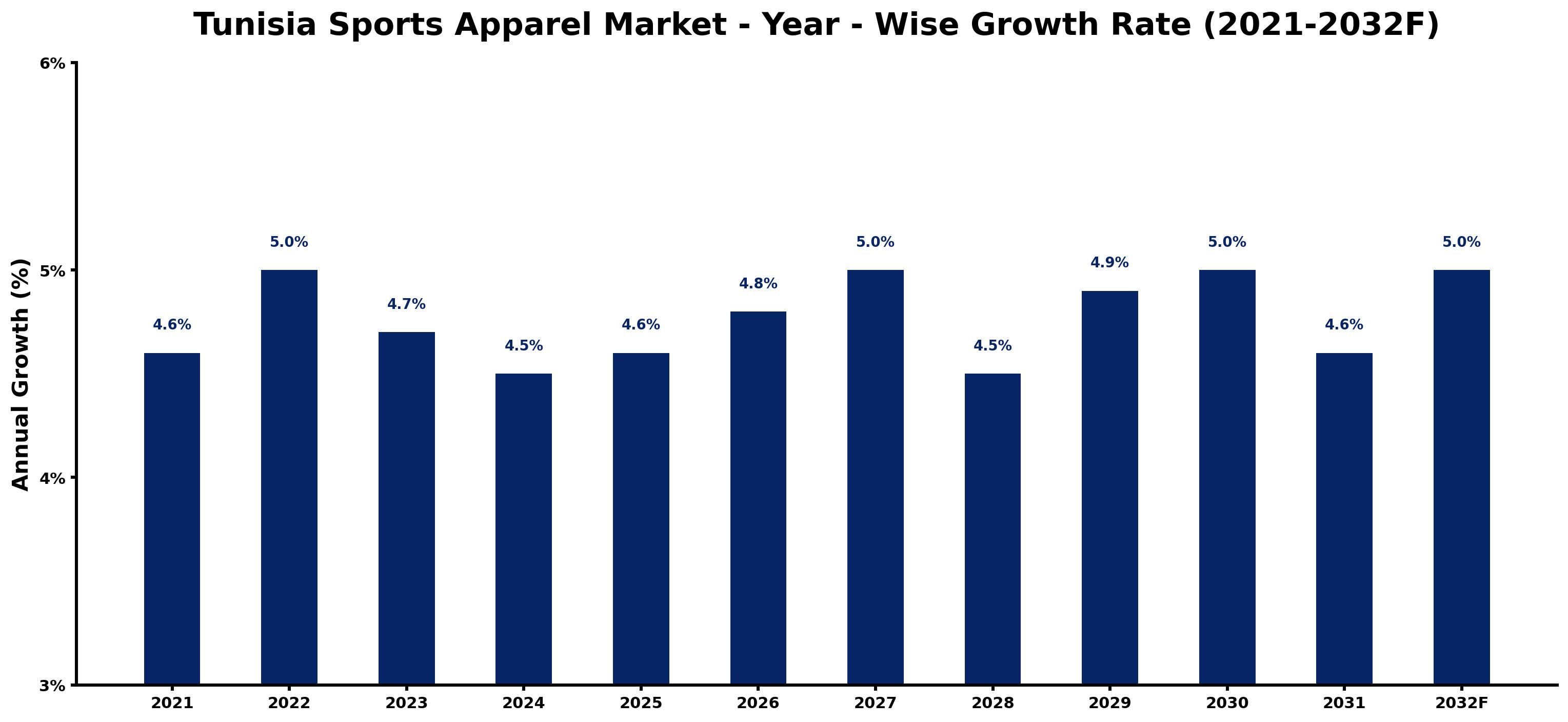
The table below presents the year wise growth rates along with the key drivers influencing the market
| Year | Growth Rate | Major Drivers |
| 2021 | 4.6% | Post-lockdown retail projects emphasized online sales, reshaping consumer purchasing behaviors profoundly. |
| 2022 | 5.0% | Local sporting events gained momentum, catalyzing interest in team merchandise and apparel. |
| 2023 | 4.7% | Youth engagement in sports surged, leading to a significant uptick in apparel sales. |
| 2024 | 4.5% | Emerging fitness trends showcased demand for specialized, high-performance athletic gear in Tunisia. |
| 2025 | 4.6% | Regional brands began collaborating with international designers, enhancing product variety and appeal. |
| 2026 | 4.8% | Increased health awareness sparked lifestyle changes, driving growth for casual sportswear options. |
| 2027 | 5.0% | Social media influencers significantly shaped consumer preferences, amplifying brand visibility and reach. |
| 2028 | 4.5% | A surge in fitness apps encouraged more individuals to invest in quality sports apparel. |
| 2029 | 4.9% | International sporting events hosted in Tunisia attracted global interest in domestic brands. |
| 2030 | 5.0% | The trend toward sustainability influenced purchasing choices, pushing eco-friendly apparel to prominence. |
| 2031 | 4.6% | Retail technology advancements streamlined shopping experiences, enhancing consumer engagement and conversion rates. |
| 2032 | 5.0% | Investment in local manufacturing capabilities reduced costs and increased the availability of sports apparel. |
Note - Market size estimations and growth projections presented in this report are based on 6Wresearch's advanced forecasting approach, validated with industry datasets as of June 2026.
Tunisia Sports Apparel Market Synopsis
The Tunisia Sports Apparel Market is projected to reach 4.8% and witness significant growth during the forecast period (2026-2032). This upward trajectory is expected to be fueled by several factors influencing consumer behavior and market dynamics within the country.
Tunisia Sports Apparel Market Growth Drivers
The growth of the Tunisia Sports Apparel Market can be attributed to various essential drivers that shape the landscape of this segment. Key factors include:
- Increased Disposable Income: A steady rise in disposable income among Tunisian consumers is leading to a shift in spending habits, allowing for greater investment in sports apparel.
- Growing E-commerce Penetration: The expansion of e-commerce platforms in Tunisia has made sports apparel more accessible, enabling consumers to shop conveniently from a variety of online retailers.
- Youth Demographics: The youthful demographic in Tunisia is driving demand for trendy sports clothing that aligns with contemporary fashion trends, further propelling sales across different age segments.
- Awareness of Branded Products: There is a growing awareness and preference for branded apparel, with consumers increasingly recognizing the value of quality and style associated with recognized brands.
- Fashion Trends: Rapidly changing fashion trends influence consumer preferences, leading to frequent purchases and upgrades of sports apparel to stay current with new styles.
Tunisia Sports Apparel Market Trends and Opportunities
The Tunisia Sports Apparel Market is characterized by distinct trends and opportunities that stakeholders can leverage for growth and expansion. Notable trends include:
- Shift Towards Sustainable Apparel: Increasing environmental consciousness among consumers is leading to a demand for sustainable materials and eco-friendly manufacturing processes within the sports apparel sector.
- Customization and Personalization: Consumers are increasingly interested in personalized sports apparel, leading to opportunities for brands to offer custom designs and tailored fits.
- Rising Participation in Sports and Fitness: As health awareness grows, more Tunisians are engaging in sports and fitness activities, driving demand for appropriate sportswear.
- Technological Innovations: Advancements in fabric technology and design are enhancing performance apparel, providing opportunities for manufacturers to introduce innovative products.
- Increased Marketing Initiatives: Brands are investing in targeted marketing strategies to engage the younger demographic, utilizing social media and influencers to enhance brand visibility.
Tunisia Sports Apparel Market Challenges and Restraints
Despite its growth potential, the Tunisia Sports Apparel Market faces several challenges that could hinder its expansion. These include:
- Price Sensitivity: Many consumers in Tunisia exhibit price sensitivity, which may limit their purchases to economically viable options, thereby affecting premium brand sales.
- Competition from Local Brands: The presence of competitive local brands may pressure international players, leading to price wars and impacting overall market profitability.
- Economic Fluctuations: Economic instability or fluctuations in disposable income can negatively impact consumer spending on non-essential items such as sports apparel.
- Lack of Infrastructure: Limited logistics and distribution infrastructure can pose challenges in reaching a broader audience effectively, particularly in rural areas.
- Changing Consumer Preferences: Rapid changes in fashion trends can lead to challenges for retailers in managing inventory and meeting consumers' demands promptly.
Tunisia Sports Apparel Market Government Investment and Initiatives
The Tunisian government is actively supporting the growth of the sports apparel market through various initiatives aimed at enhancing the retail environment and promoting health and fitness. These initiatives include:
- Investment in Infrastructure: The government is investing in improving infrastructure to support retail and e-commerce, ensuring that businesses can operate effectively and reach consumers.
- Supporting Local Manufacturing: Incentives are being provided to encourage local manufacturing of sports apparel, which can lead to job creation and economic growth.
- Health and Sports Promotion: Public campaigns promoting sports participation and healthy living are indirectly driving demand for sports-related apparel.
- Regulatory Support: The government is working to streamline regulatory processes affecting the retail and e-commerce sectors, making it easier for companies to operate within the market.
- Encouraging International Partnerships: Initiatives aimed at attracting international brands and partnerships are also in place, promoting a competitive market that benefits consumers.
Tunisia Sports Apparel Market Latest Developments (May 2025 - June 2026)
Recent developments in the Tunisia Sports Apparel Market indicate a robust evolution influenced by both consumer behavior and market dynamics. Noteworthy trends observed include a marked increase in online shopping, with many retailers enhancing their digital presence to cater to evolving consumer preferences. Moreover, the collaboration between local manufacturers and international brands has grown, allowing for a more extensive range of products and styles in the market. The introduction of innovative fabric technologies has also gained traction, appealing to an increasingly performance-conscious consumer base. Furthermore, promotional events and sports initiatives spearheaded by the government have reinforced public interest in sports participation, contributing positively to the overall apparel market.
Tunisia Sports Apparel Market - Key Attractiveness of the Report
- 10 Years of Market Numbers
- Historical Data Starting from 2022 to 2025
- Base Year: 2025
- Forecast Data until 2032
- Key Performance Indicators Impacting the Market
- Major Upcoming Developments and Projects
The growth is primarily driven by increasing disposable income, rising e-commerce penetration, and a young population demanding trendy apparel.
Government investments in infrastructure and support for local manufacturing are creating a favorable environment for the market's growth.
Key trends include the shift towards sustainable apparel, customization options, and advancements in fabric technology.
Price sensitivity among consumers and intense competition from local brands are significant challenges affecting the market.
Key Highlights of the Report:
- Tunisia Sports Apparel Market Outlook
- Market Size of Tunisia Sports Apparel Market, 2025
- Forecast of Tunisia Sports Apparel Market, 2032F
- Historical Data and Forecast of Tunisia Sports Apparel Revenues & Volume for the Period 2022-2032F
- Tunisia Sports Apparel Market Trend Evolution
- Tunisia Sports Apparel Market Drivers and Challenges
- Tunisia Sports Apparel Price Trends
- Tunisia Sports Apparel Porter's Five Forces
- Tunisia Sports Apparel Industry Life Cycle
- Historical Data and Forecast of Tunisia Sports Apparel Market Revenues & Volume By End-users for the Period 2022-2032F
- Historical Data and Forecast of Tunisia Sports Apparel Market Revenues & Volume By Children for the Period 2022-2032F
- Historical Data and Forecast of Tunisia Sports Apparel Market Revenues & Volume By Men for the Period 2022-2032F
- Historical Data and Forecast of Tunisia Sports Apparel Market Revenues & Volume By Women for the Period 2022-2032F
- Historical Data and Forecast of Tunisia Sports Apparel Market Revenues & Volume By Distribution Channel for the Period 2022-2032F
- Historical Data and Forecast of Tunisia Sports Apparel Market Revenues & Volume By E-commerce for the Period 2022-2032F
- Historical Data and Forecast of Tunisia Sports Apparel Market Revenues & Volume By Supermarket/Hypermarket for the Period 2022-2032F
- Historical Data and Forecast of Tunisia Sports Apparel Market Revenues & Volume By Brand Outlets for the Period 2022-2032F
- Historical Data and Forecast of Tunisia Sports Apparel Market Revenues & Volume By Discount Stores for the Period 2022-2032F
- Tunisia Sports Apparel Import Export Trade Statistics
- Market Opportunity Assessment By End-users
- Market Opportunity Assessment By Distribution Channel
- Tunisia Sports Apparel Top Companies Market Share
- Tunisia Sports Apparel Competitive Benchmarking By Technical and Operational Parameters
- Tunisia Sports Apparel Company Profiles
- Tunisia Sports Apparel Key Strategic Recommendations






































