Tunisia Sports Equipment Market Size, Share & Growth Rate
The Tunisia Sports Equipment Market was estimated at USD 872 Million in 2025 and is projected to reach USD 1251 Million by 2032, growing at a CAGR of 5.3% from 2026 to 2032. This growth trajectory is largely influenced by a heightened awareness of health and fitness, which has penetrated deeply into the Tunisian lifestyle. As more individuals engage in sports and recreational activities, the demand for diverse sports equipment—including apparel and accessories—continues to expand, fueled by increasing disposable incomes and government initiatives aimed at promoting active living.
Tunisia Sports Equipment Market Year-wise Growth Rate and Key Drivers
This graph highlights how the Tunisia Sports Equipment Market has steadily grown over the years, supported by major growth factors.
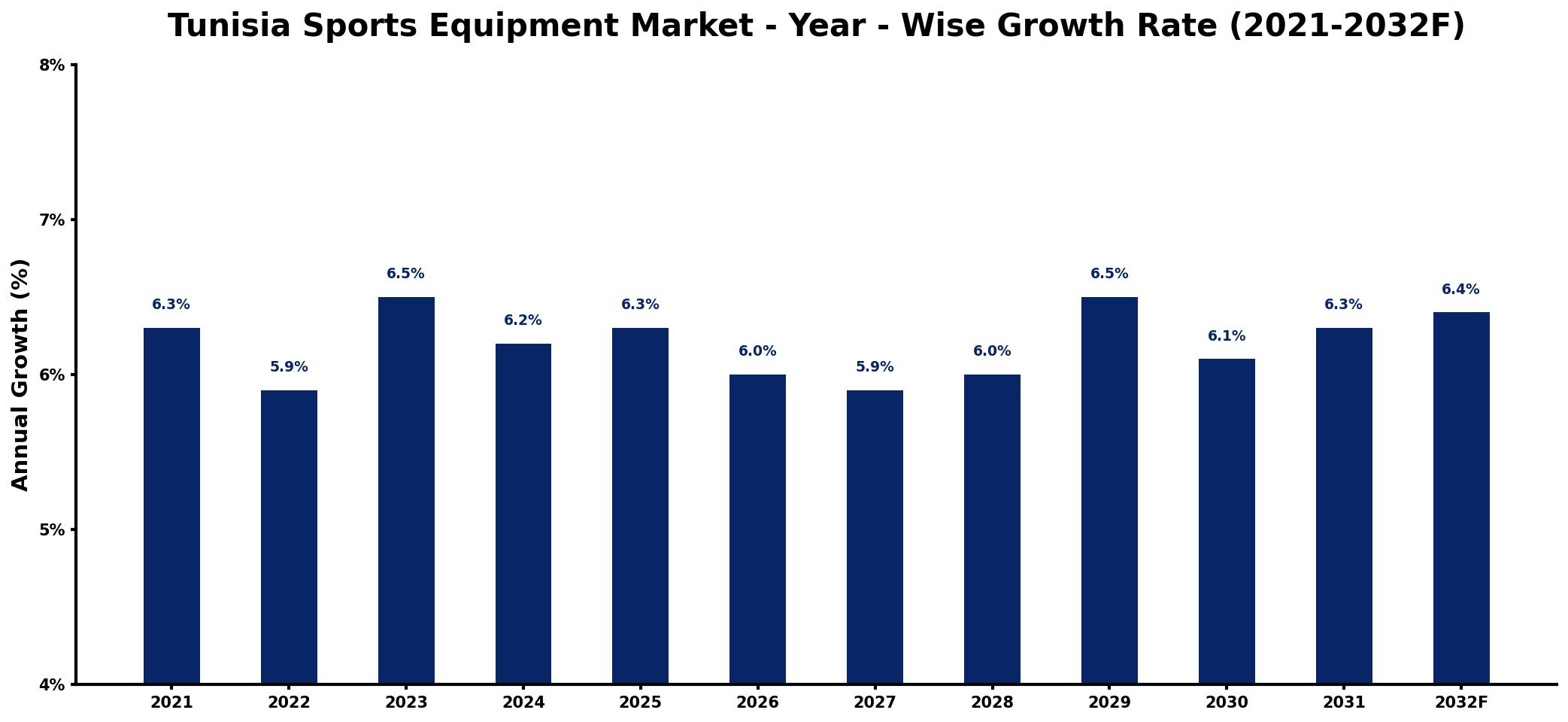
The table below presents the year‑wise growth rates along with the key drivers influencing the market
| Year | Growth Rate | Major Drivers |
| 2021 | 6.3% | Increased consumer health awareness |
| 2022 | 5.9% | Growth in local fitness centers |
| 2023 | 6.5% | Rise in youth participation programs |
| 2024 | 6.2% | Expansion of e-commerce platforms |
| 2025 | 6.3% | Surge in outdoor recreational activities |
| 2026 | 6.0% | Increased investment in wellness initiatives |
| 2027 | 5.9% | increased capital investment inflows |
| 2028 | 6.0% | strengthening international trade flows |
| 2029 | 6.5% | growing automotive sector requirements |
| 2030 | 6.1% | Increased demand for home fitness |
| 2031 | 6.3% | rising infrastructure development spending |
| 2032 | 6.4% | increased domestic production output |
Note: Market size estimations and growth projections presented in this report are based on 6Wresearch's proprietary forecasting methodology, utilizing the latest available industry data, government publications, and primary research inputs.
Tunisia Sports Equipment Market Synopsis
The sports equipment landscape in Tunisia is rapidly evolving, reflecting a shift in consumer attitudes toward health and wellness. More Tunisians are prioritizing physical fitness, leading to a robust demand for high-quality sports gear. This is evident in the rising participation in activities like soccer, basketball, and fitness training, which collectively drive market growth.
Additionally, the market's diversification is notable; there is a growing segment focused on home fitness solutions, as consumers invest in items like yoga mats and dumbbells. This trend is further complemented by the surge in outdoor activities such as hiking and cycling, showcasing a broadening interest in various sports.
Tunisia Sports Equipment Market Key Takeaways
- The market is increasingly driven by a health-conscious consumer base seeking high-quality sports equipment.
- Online retail is becoming a key distribution channel, enhancing access to sports products for consumers.
- Sustainable and eco-friendly sports gear is gaining traction among environmentally aware consumers.
- Home fitness equipment sales have surged due to a lasting focus on health stemming from the pandemic.
- Government initiatives aimed at boosting sports participation are bolstering overall market growth.
Evaluation of Restraints in Tunisia Sports Equipment Market
Despite the promising growth, the Tunisia Sports Equipment Market faces significant challenges. Limited purchasing power among consumers, primarily due to economic constraints, restricts spending on non-essential items. This limitation is compounded by the prevalence of counterfeit products, undermining the credibility of reputable brands and disrupting the market. Additionally, the lack of awareness regarding the availability of high-quality sports equipment further curtails market expansion. Addressing these issues will require a concerted effort to enhance economic conditions and improve distribution channels.
Tunisia Sports Equipment Market Trends
Several trends are currently shaping the Tunisia Sports Equipment Market. First, there is a marked increase in demand for home fitness equipment, driven largely by the aftermath of the pandemic, as many individuals have adapted their exercise routines to fit home environments. This includes investments in a variety of gym equipment suitable for home use.
Furthermore, the rising interest in outdoor activities is prompting higher sales of items like hiking gear and running shoes. Alongside these developments, consumers are increasingly drawn to sustainable and eco-friendly products, aligning their purchasing choices with their values. Smart sports equipment is also emerging, integrating technology such as fitness tracking and mobile app connectivity, further modernizing the market.
Tunisia Sports Equipment Market Opportunities
The Tunisia Sports Equipment Market presents several lucrative investment opportunities. With the increasing interest in sports, there's a robust demand for athletic apparel and footwear, particularly in popular categories like soccer and basketball. As consumer focus shifts towards health and wellness, investing in fitness equipment also shows promise. Moreover, with the popularity of outdoor pursuits such as hiking and cycling, opportunities in related equipment are likely to be profitable. Strategic collaborations with local sports clubs or event sponsorships can enhance brand visibility and market penetration.
Government Initiatives in the Tunisia Sports Equipment Market
The Tunisian government has initiated various policies to bolster the sports equipment market. These include providing tax incentives and subsidies to local manufacturers, aimed at reducing dependency on imports. Additionally, the government is actively investing in infrastructure to enhance sports facilities across the country, encouraging greater participation in sports. Initiatives that subsidize local sports clubs and organize community events are further promoting an active lifestyle among the population.
Future Insights of the Tunisia Sports Equipment Market
Looking ahead to 2026-2032, the Tunisia Sports Equipment Market is anticipated to maintain its growth momentum. The increasing awareness of health and wellness will continue to drive demand for sports-related products. Government efforts to promote sports and fitness, along with ongoing infrastructure development, are expected to create a conducive environment for market expansion. The growing trend of athleisure and technology integration in sports equipment will further enhance consumer engagement, making this an exciting space for local and international brands alike.
Tunisia Sports Equipment Market Latest Developments (2025 - 2026)
Recent trends indicate a shift towards e-commerce in the sports equipment sector, with more brands enhancing their online presence to cater to a digitally savvy consumer base. Additionally, there has been an uptick in initiatives focused on sustainability, with brands increasingly incorporating eco-friendly practices in their manufacturing processes. Local manufacturers are also stepping up efforts to combat counterfeit products, ensuring that consumers have access to genuine equipment. Furthermore, community sports events are being organized to encourage participation, signaling a vibrant future for the industry.
Tunisia Sports Equipment Market - Key Attractiveness of the Report
- 10 Years of Market Numbers
- Historical Data Starting from 2022 to 2025
- Base Year: 2025
- Forecast Data until 2032
- Key Performance Indicators Impacting the Market
- Major Upcoming Developments and Projects
Key Highlights of the Report:
- Tunisia Sports Equipment Market Outlook
- Market Size of Tunisia Sports Equipment Market, 2025
- Forecast of Tunisia Sports Equipment Market, 2032
- Historical Data and Forecast of Tunisia Sports Equipment Revenues & Volume for the Period 2022-2032F
- Tunisia Sports Equipment Market Trend Evolution
- Tunisia Sports Equipment Market Drivers and Challenges
- Tunisia Sports Equipment Price Trends
- Tunisia Sports Equipment Porter's Five Forces
- Tunisia Sports Equipment Industry Life Cycle
- Historical Data and Forecast of Tunisia Sports Equipment Market Revenues & Volume By Product for the Period 2022-2032F
- Historical Data and Forecast of Tunisia Sports Equipment Market Revenues & Volume By Ball over net games for the Period 2022-2032F
- Historical Data and Forecast of Tunisia Sports Equipment Market Revenues & Volume By Ball games for the Period 2022-2032F
- Historical Data and Forecast of Tunisia Sports Equipment Market Revenues & Volume By Fitness/Strength equipment for the Period 2022-2032F
- Historical Data and Forecast of Tunisia Sports Equipment Market Revenues & Volume By Athletic training equipment for the Period 2022-2032F
- Historical Data and Forecast of Tunisia Sports Equipment Market Revenues & Volume By Others for the Period 2022-2032F
- Historical Data and Forecast of Tunisia Sports Equipment Market Revenues & Volume By Distribution Channel for the Period 2022-2032F
- Historical Data and Forecast of Tunisia Sports Equipment Market Revenues & Volume By Online retail for the Period 2022-2032F
- Historical Data and Forecast of Tunisia Sports Equipment Market Revenues & Volume By Specialty & sports shops for the Period 2022-2032F
- Historical Data and Forecast of Tunisia Sports Equipment Market Revenues & Volume By Department & discount stores for the Period 2022-2032F
- Tunisia Sports Equipment Import Export Trade Statistics
- Market Opportunity Assessment By Product
- Market Opportunity Assessment By Distribution Channel
- Tunisia Sports Equipment Top Companies Market Share
- Tunisia Sports Equipment Competitive Benchmarking By Technical and Operational Parameters
- Tunisia Sports Equipment Company Profiles
- Tunisia Sports Equipment Key Strategic Recommendations






































