Tunisia Synthetic Fiber Market Size Growth Rate
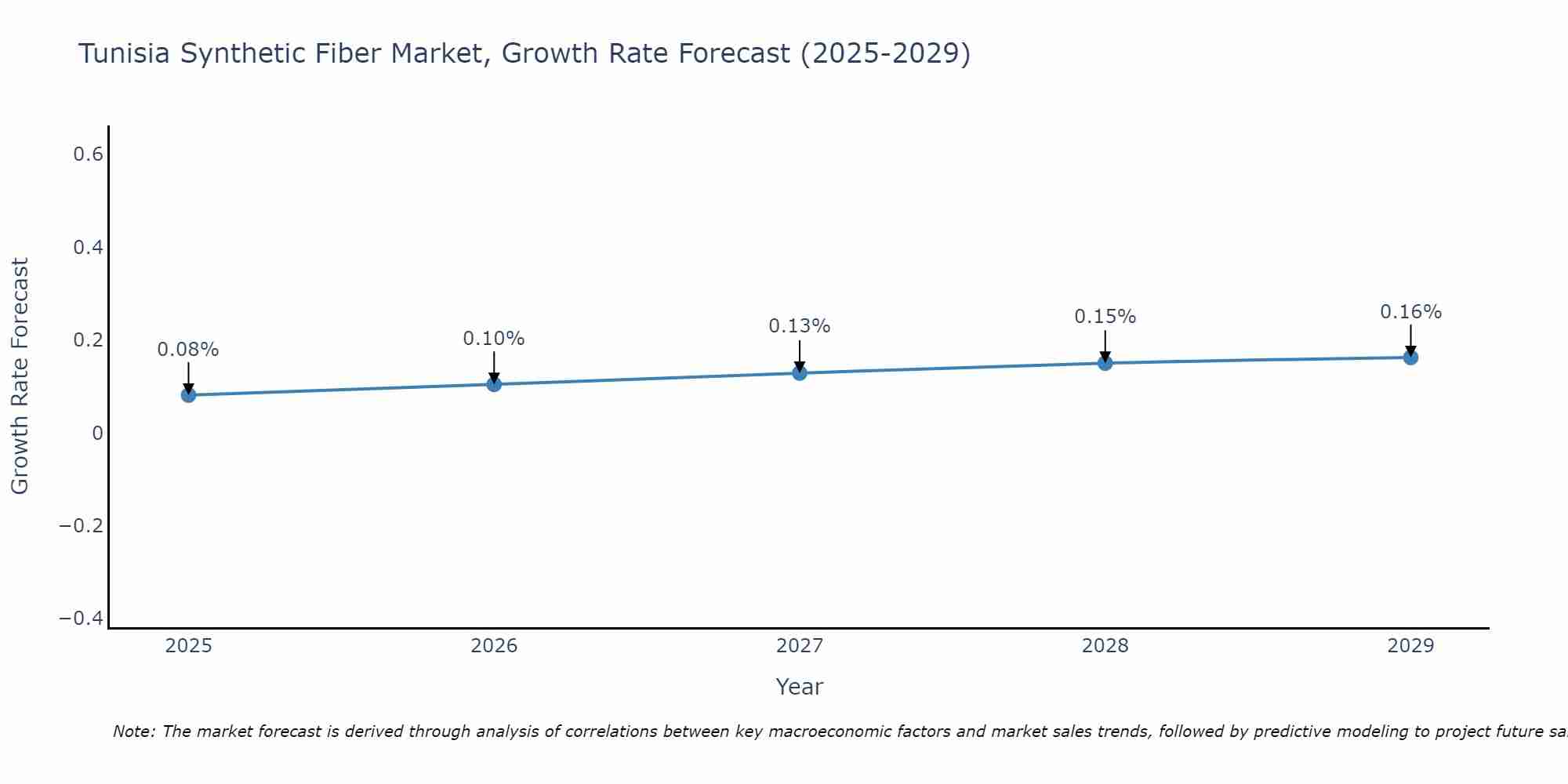
The Tunisia Synthetic Fiber Market is likely to experience consistent growth rate gains over the period 2025 to 2029. The growth rate starts at 0.08% in 2025 and reaches 0.16% by 2029.
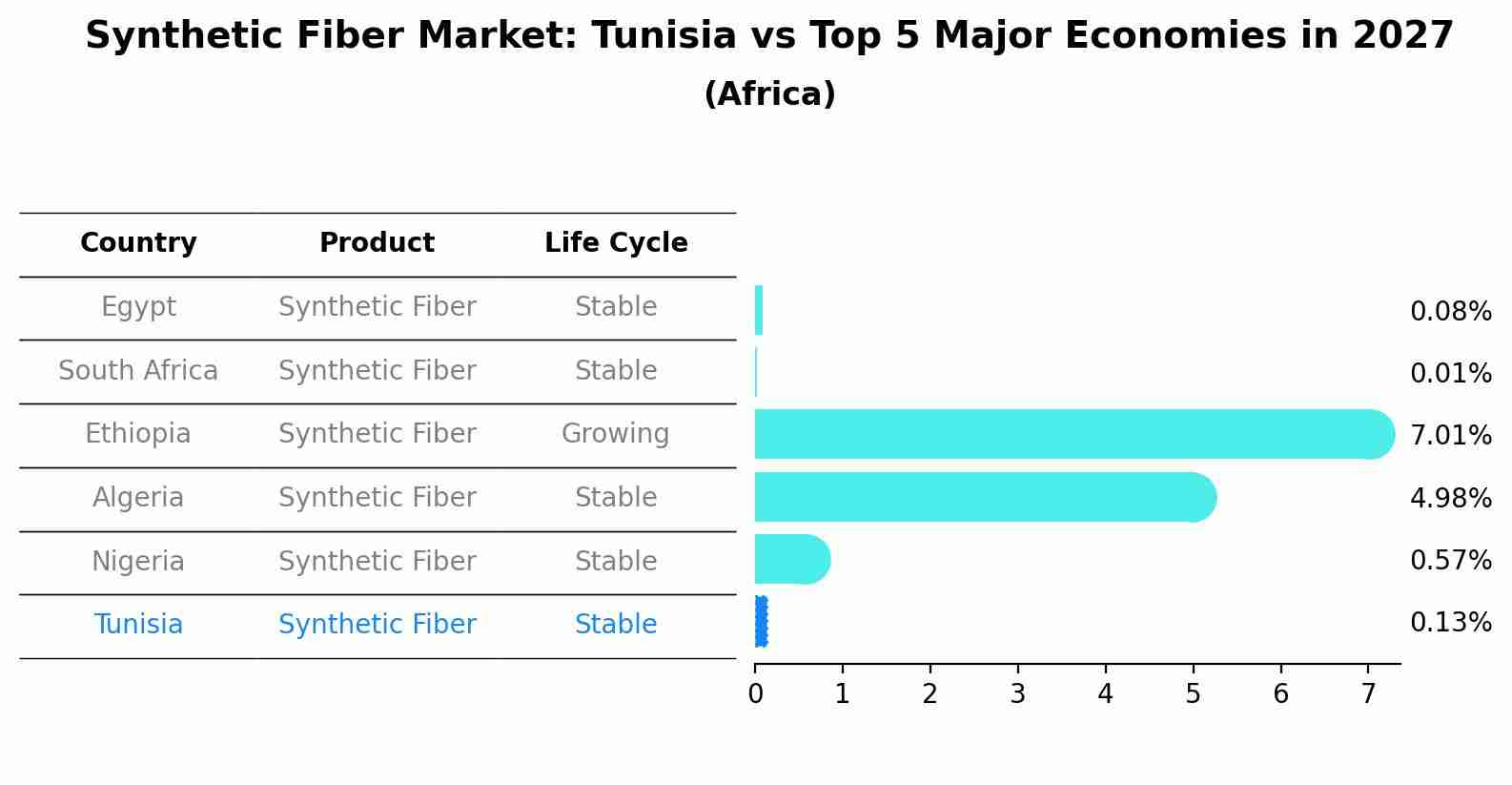
Synthetic Fiber Market: Tunisia vs Top 5 Major Economies in 2027 (Africa)
The Synthetic Fiber market in Tunisia is projected to grow at a stable growth rate of 0.13% by 2027, within the Africa region led by Egypt, along with other countries like South Africa, Ethiopia, Algeria and Nigeria, collectively shaping a dynamic and evolving market environment driven by innovation and increasing adoption of emerging technologies.
Tunisia Synthetic Fiber Market Synopsis
The Tunisia Synthetic Fiber Market is experiencing steady growth driven by the textile industry`s increasing demand for synthetic fibers. Polyester and nylon are the most commonly used synthetic fibers in Tunisia due to their versatility and cost-effectiveness. The market is witnessing a shift towards sustainable and eco-friendly synthetic fibers as environmental concerns rise among consumers. Key players in the Tunisia Synthetic Fiber Market include local manufacturers as well as international companies aiming to capitalize on the country`s growing textile sector. Government initiatives to promote the textile industry and attract foreign investments are further boosting the market growth. Overall, the Tunisia Synthetic Fiber Market is poised for expansion, with opportunities for innovation and sustainable practices shaping its future trajectory.
Tunisia Synthetic Fiber Market Trends
Currently, the Tunisia Synthetic Fiber Market is experiencing a shift towards sustainable and eco-friendly materials due to increasing awareness about environmental issues. Consumers are showing a preference for recycled synthetic fibers and bio-based alternatives to traditional petroleum-based materials. Additionally, there is a growing demand for high-performance synthetic fibers in sectors such as automotive, construction, and sports goods. The market is also witnessing innovations in terms of advanced technologies for the production of synthetic fibers, leading to improved quality and durability of the end products. Overall, the Tunisia Synthetic Fiber Market is evolving to meet the changing demands of consumers and industries, with a focus on sustainability and innovation.
Tunisia Synthetic Fiber Market Challenges
In the Tunisia Synthetic Fiber Market, some challenges include intense competition from imported synthetic fibers, fluctuating raw material prices, and limited domestic production capacity. The market is heavily reliant on imports to meet the demand for synthetic fibers, leading to price volatility and potential supply chain disruptions. Additionally, local manufacturers face difficulties in scaling up production due to limited access to advanced technology and machinery. Furthermore, compliance with environmental regulations and sustainability standards poses a challenge for the industry in terms of investing in eco-friendly production processes. Overall, navigating these challenges requires strategic planning, innovation, and collaboration within the sector to ensure sustainable growth and competitiveness in the Tunisia Synthetic Fiber Market.
Tunisia Synthetic Fiber Market Investment Opportunities
The Tunisia Synthetic Fiber Market presents opportunities for investment in the manufacturing and production of synthetic fibers such as polyester, nylon, and acrylic. With the increasing demand for synthetic fibers in various industries including textiles, automotive, and construction, investing in expanding production capacity or introducing new innovative products can be lucrative. Additionally, the growing trend towards sustainable and eco-friendly fibers presents an opportunity for investment in research and development of biodegradable synthetic fibers in Tunisia. Partnering with local textile manufacturers to supply high-quality synthetic fibers can also be a strategic investment opportunity to capitalize on the country`s growing textile industry. Overall, the Tunisia Synthetic Fiber Market offers potential for growth and profitability for investors looking to tap into the expanding demand for synthetic fibers domestically and internationally.
Jordan Agar Market Government Policies
The Tunisian government has implemented various policies to support the synthetic fiber market in the country. These policies include providing incentives and subsidies to local manufacturers to promote domestic production, as well as imposing tariffs on imported synthetic fibers to protect local industries. Additionally, the government has set quality standards and regulations to ensure the safety and reliability of synthetic fiber products in the market. Furthermore, efforts are being made to promote research and development in the synthetic fiber sector to enhance innovation and competitiveness. Overall, these government policies aim to boost the growth of the Tunisian synthetic fiber market and support the development of a sustainable and thriving industry in the country.
Tunisia Synthetic Fiber Market Future Outlook
The Tunisia Synthetic Fiber Market is expected to witness steady growth in the coming years, driven by factors such as increasing demand from various end-use industries including textiles, automotive, and construction. The market is likely to benefit from the rising trend of sustainable and eco-friendly synthetic fibers, as well as technological advancements leading to the development of innovative products with enhanced performance characteristics. Additionally, the growing population and improving economic conditions in Tunisia are anticipated to support the expansion of the synthetic fiber market. However, challenges such as fluctuating raw material prices and competition from natural fibers may pose constraints to the market growth. Overall, with a favorable economic environment and increasing consumer awareness towards sustainable products, the Tunisia Synthetic Fiber Market is poised for gradual expansion in the future.
Key Highlights of the Report:
- Tunisia Synthetic Fiber Market Outlook
- Market Size of Tunisia Synthetic Fiber Market, 2024
- Forecast of Tunisia Synthetic Fiber Market, 2031
- Historical Data and Forecast of Tunisia Synthetic Fiber Revenues & Volume for the Period 2021 - 2031
- Tunisia Synthetic Fiber Market Trend Evolution
- Tunisia Synthetic Fiber Market Drivers and Challenges
- Tunisia Synthetic Fiber Price Trends
- Tunisia Synthetic Fiber Porter's Five Forces
- Tunisia Synthetic Fiber Industry Life Cycle
- Historical Data and Forecast of Tunisia Synthetic Fiber Market Revenues & Volume By Type for the Period 2021 - 2031
- Historical Data and Forecast of Tunisia Synthetic Fiber Market Revenues & Volume By Polyester for the Period 2021 - 2031
- Historical Data and Forecast of Tunisia Synthetic Fiber Market Revenues & Volume By Nylon for the Period 2021 - 2031
- Historical Data and Forecast of Tunisia Synthetic Fiber Market Revenues & Volume By Acrylics for the Period 2021 - 2031
- Historical Data and Forecast of Tunisia Synthetic Fiber Market Revenues & Volume By Polyolefin for the Period 2021 - 2031
- Historical Data and Forecast of Tunisia Synthetic Fiber Market Revenues & Volume By Others for the Period 2021 - 2031
- Historical Data and Forecast of Tunisia Synthetic Fiber Market Revenues & Volume By Application for the Period 2021 - 2031
- Historical Data and Forecast of Tunisia Synthetic Fiber Market Revenues & Volume By Clothing for the Period 2021 - 2031
- Historical Data and Forecast of Tunisia Synthetic Fiber Market Revenues & Volume By Home Furnishing for the Period 2021 - 2031
- Historical Data and Forecast of Tunisia Synthetic Fiber Market Revenues & Volume By Automotive for the Period 2021 - 2031
- Historical Data and Forecast of Tunisia Synthetic Fiber Market Revenues & Volume By Filtration for the Period 2021 - 2031
- Historical Data and Forecast of Tunisia Synthetic Fiber Market Revenues & Volume By Others for the Period 2021 - 2031
- Tunisia Synthetic Fiber Import Export Trade Statistics
- Market Opportunity Assessment By Type
- Market Opportunity Assessment By Application
- Tunisia Synthetic Fiber Top Companies Market Share
- Tunisia Synthetic Fiber Competitive Benchmarking By Technical and Operational Parameters
- Tunisia Synthetic Fiber Company Profiles
- Tunisia Synthetic Fiber Key Strategic Recommendations






































