Tunisia Transport Packaging Market Summary
The tunisia transport packaging market was estimated at USD 267 Million in 2025 and is projected to reach USD 377 Million by 2032, growing at a CAGR of 5.9% from 2026 to 2032.
Tunisia Transport Packaging Market Year-wise Growth Rate and Key Drivers
This graph highlights how the Tunisia Transport Packaging Market has steadily grown over the past five years, supported by major growth factors.
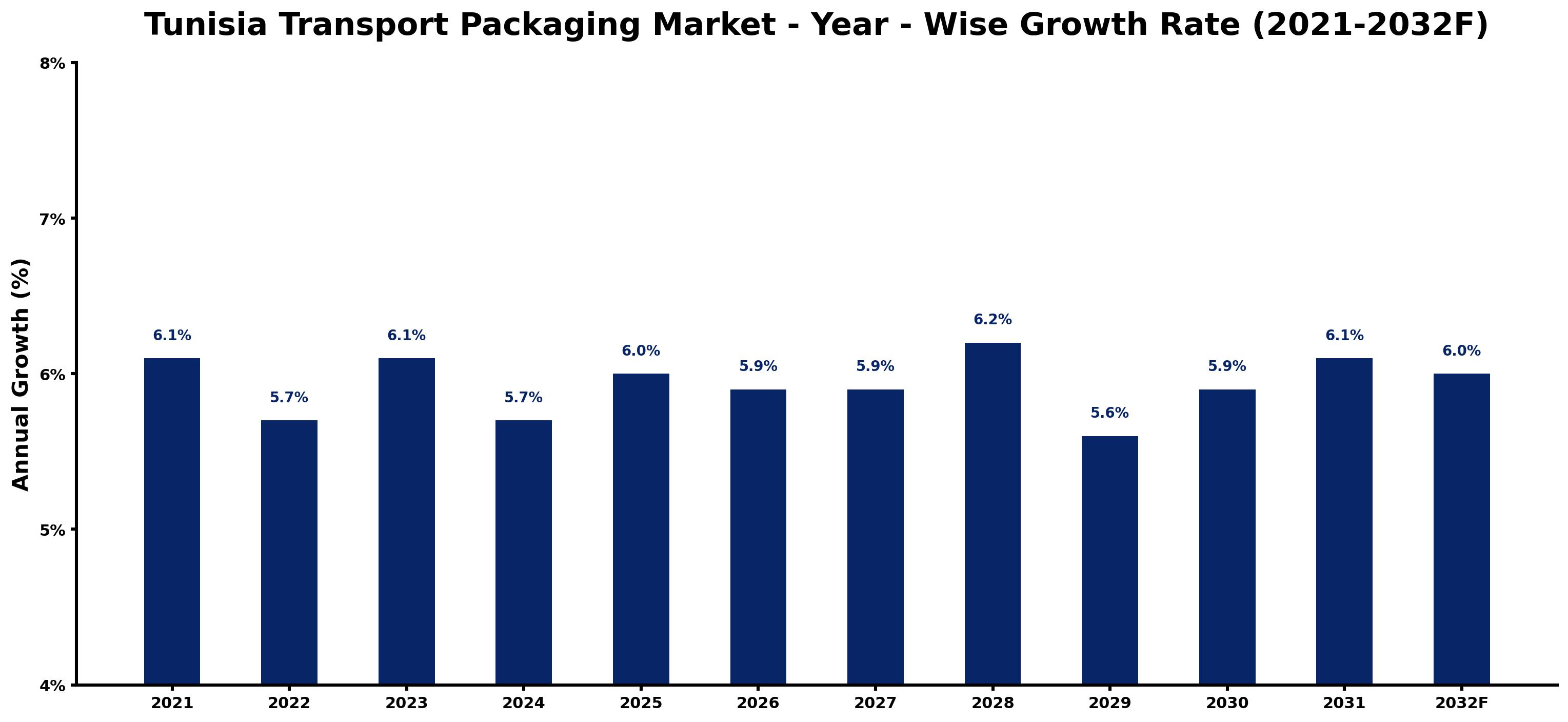
The table below presents the year wise growth rates along with the key drivers influencing the market
| Year | Growth Rate | Major Drivers |
| 2021 | 6.1% | Post-lockdown logistics demand highlighted inefficiencies in existing transport packaging methods. |
| 2022 | 5.7% | Local manufacturers began prioritizing sustainable materials in response to global consumer preferences. |
| 2023 | 6.1% | Regional construction projects in Tunisia necessitated specialized packaging solutions for fragile goods. |
| 2024 | 5.7% | Emerging e-commerce platforms increased the need for efficient, protective transport packaging solutions. |
| 2025 | 6.0% | Collaboration between local companies and international brands accelerated innovation within packaging designs. |
| 2026 | 5.9% | Rising awareness of environmental issues prompted a shift towards biodegradable packaging solutions. |
| 2027 | 5.9% | Adoption of smart technologies in packaging linked to improved inventory management efficiencies. |
| 2028 | 6.2% | Tunisia's strategic location as a transit hub opened doors to new market opportunities. |
| 2029 | 5.6% | Growth of the tourism sector created unique packaging demands for local artisanal products. |
| 2030 | 5.9% | Investment in regional infrastructure improved logistics, enhancing supply chain efficiencies significantly. |
| 2031 | 6.1% | Dynamic urbanization trends required adaptable packaging solutions for diverse consumer needs. |
| 2032 | 6.0% | Innovation in recycling processes led to greater market acceptance of reused packaging materials. |
Note - Market size estimations and growth projections presented in this report are based on 6Wresearch's advanced forecasting approach, validated with industry datasets as of June 2026.
Tunisia Transport Packaging Market Synopsis
The Tunisia Transport Packaging Market is projected to reach 5.9% and witness significant growth during the forecast period (2026-2032). This market plays a crucial role in the safe and efficient movement of goods across multiple sectors, including food and beverage, pharmaceuticals, and electronics. As businesses adapt to changing trade dynamics and logistics demands, the focus on durable and sustainable packaging solutions intensifies, fostering innovation and competitiveness within the market.
Tunisia Transport Packaging Market Growth Drivers
The growth of the Tunisia Transport Packaging Market is underpinned by several key drivers. First, the increase in international trade activities necessitates enhanced logistics solutions, prompting investment in reliable packaging to protect products during transit. Second, the rising e-commerce sector demands packaging that ensures product integrity from dispatch to delivery. Third, the need for robust packaging materials is amplified by the stringent regulations concerning product safety in various sectors, particularly in pharmaceuticals and food. Fourth, advancements in packaging technology, including eco-friendly materials and design innovations, are paving the way for more sustainable solutions. Lastly, geographic advantages, such as Tunisia's strategic location as a gateway to European and African markets, exacerbate the demand for efficient packaging logistics.
Tunisia Transport Packaging Market Challenges and Restraints
Despite favorable growth prospects, the Tunisia Transport Packaging Market faces several challenges. The volatility in raw material prices poses a significant threat to the cost structure and overall profitability of packaging manufacturers. Additionally, the logistics infrastructure within Tunisia is often seen as inadequate, leading to increased transportation costs and potential delays in the supply chain. Regulatory compliance presents another hurdle, as companies must navigate complex standards regarding sustainability and product safety. Moreover, the pressure to innovate packaging designs while maintaining cost-effectiveness can stifle the market's ability to adapt quickly to changing consumer preferences. Lastly, as environmental concerns rise, the industry's challenge lies in striking a balance between sustainable practices and maintaining competitive pricing.
Tunisia Transport Packaging Market Trends and Opportunities
The Tunisia Transport Packaging Market is witnessing several trends that create both opportunities and challenges. One prominent trend is the increasing demand for sustainable packaging solutions, driven by consumer awareness and government regulations focusing on environmental impact. Companies are exploring biodegradable and recyclable materials to meet these demands. Another opportunity arises from technological advancements in packaging, such as smart packaging that includes sensors for monitoring product conditions during transport. Furthermore, the customization of packaging to cater to specific industry needs is gaining traction, as businesses look for tailored solutions to enhance efficiency. The rise of omnichannel retailing necessitates diversified packaging strategies to cater to both online and offline sales, further driving innovation. Lastly, as Tunisia improves its logistics capabilities through investments in infrastructure, the demand for sophisticated packaging solutions is expected to grow.
Tunisia Transport Packaging Market Government Investment and Initiatives
Government investment in the Tunisia Transport Packaging Market plays a pivotal role in shaping the industry's future. Authorities are focusing on initiatives to optimize logistics efficiency, which includes modernizing transportation infrastructure and enhancing compliance with international standards for packaging materials. Incentives for sustainable practices have also been introduced, encouraging manufacturers to adopt eco-friendly materials and waste reduction strategies. Furthermore, collaboration between government agencies and industry stakeholders aims to establish standards that ensure product safety and environmental sustainability. These initiatives are vital for facilitating smoother logistics processes and positioning Tunisia as a competitive player in global trade.
Tunisia Transport Packaging Market Latest Developments (May 2025 - June 2026)
Recent developments in the Tunisia Transport Packaging Market reflect a growing emphasis on sustainability and innovation. As global environmental awareness increases, local manufacturers are pivoting toward biodegradable materials and designs that minimize environmental impact. The trend of incorporating technology into packaging is becoming more prevalent, with businesses exploring smart packaging solutions that enhance product safety. Additionally, collaborations between public and private sectors are fostering advancements in logistics infrastructure, contributing to improved efficiency in transportation networks. These developments align with the increasing demands from the e-commerce sector, which continues to reshape packaging requirements across the market.
Tunisia Transport Packaging Market - Key Attractiveness of the Report
- 10 Years of Market Numbers
- Historical Data Starting from 2022 to 2025
- Base Year: 2025
- Forecast Data until 2032
- Key Performance Indicators Impacting the Market
- Major Upcoming Developments and Projects
Key Highlights of the Report:
- Tunisia Transport Packaging Market Outlook
- Market Size of Tunisia Transport Packaging Market, 2025
- Forecast of Tunisia Transport Packaging Market, 2032
- Historical Data and Forecast of Tunisia Transport Packaging Revenues & Volume for the Period 2022-2032F
- Tunisia Transport Packaging Market Trend Evolution
- Tunisia Transport Packaging Market Drivers and Challenges
- Tunisia Transport Packaging Price Trends
- Tunisia Transport Packaging Porter's Five Forces
- Tunisia Transport Packaging Industry Life Cycle
- Historical Data and Forecast of Tunisia Transport Packaging Market Revenues & Volume By Material Type for the Period 2022-2032F
- Historical Data and Forecast of Tunisia Transport Packaging Market Revenues & Volume By Plastic for the Period 2022-2032F
- Historical Data and Forecast of Tunisia Transport Packaging Market Revenues & Volume By Polyethylene (PE) for the Period 2022-2032F
- Historical Data and Forecast of Tunisia Transport Packaging Market Revenues & Volume By Polypropylene (PP) for the Period 2022-2032F
- Historical Data and Forecast of Tunisia Transport Packaging Market Revenues & Volume By Polyethylene Terephthalate (PET) for the Period 2022-2032F
- Historical Data and Forecast of Tunisia Transport Packaging Market Revenues & Volume By Paper & Paperboard for the Period 2022-2032F
- Historical Data and Forecast of Tunisia Transport Packaging Market Revenues & Volume By Metal for the Period 2022-2032F
- Historical Data and Forecast of Tunisia Transport Packaging Market Revenues & Volume By Wood for the Period 2022-2032F
- Historical Data and Forecast of Tunisia Plastic Transport Packaging Market Revenues & Volume By Others for the Period 2022-2032F
- Historical Data and Forecast of Tunisia Transport Packaging Market Revenues & Volume By Packaging Types for the Period 2022-2032F
- Historical Data and Forecast of Tunisia Transport Packaging Market Revenues & Volume By Cartons for the Period 2022-2032F
- Historical Data and Forecast of Tunisia Transport Packaging Market Revenues & Volume By Wooden crates for the Period 2022-2032F
- Historical Data and Forecast of Tunisia Transport Packaging Market Revenues & Volume By Containers for the Period 2022-2032F
- Historical Data and Forecast of Tunisia Transport Packaging Market Revenues & Volume By Corrugated boxes for the Period 2022-2032F
- Historical Data and Forecast of Tunisia Transport Packaging Market Revenues & Volume By Barrels for the Period 2022-2032F
- Historical Data and Forecast of Tunisia Transport Packaging Market Revenues & Volume By IBCs for the Period 2022-2032F
- Historical Data and Forecast of Tunisia Transport Packaging Market Revenues & Volume By Strapping for the Period 2022-2032F
- Historical Data and Forecast of Tunisia Transport Packaging Market Revenues & Volume By Others for the Period 2022-2032F
- Historical Data and Forecast of Tunisia Transport Packaging Market Revenues & Volume By End-users for the Period 2022-2032F
- Historical Data and Forecast of Tunisia Transport Packaging Market Revenues & Volume By Agriculture for the Period 2022-2032F
- Historical Data and Forecast of Tunisia Transport Packaging Market Revenues & Volume By Automotive for the Period 2022-2032F
- Historical Data and Forecast of Tunisia Transport Packaging Market Revenues & Volume By Building & Construction for the Period 2022-2032F
- Historical Data and Forecast of Tunisia Transport Packaging Market Revenues & Volume By Chemicals & Pharmaceuticals for the Period 2022-2032F
- Historical Data and Forecast of Tunisia Transport Packaging Market Revenues & Volume By Food & Beverages for the Period 2022-2032F
- Historical Data and Forecast of Tunisia Transport Packaging Market Revenues & Volume By Metallurgical for the Period 2022-2032F
- Historical Data and Forecast of Tunisia Transport Packaging Market Revenues & Volume By Electrical & Electronics for the Period 2022-2032F
- Historical Data and Forecast of Tunisia Transport Packaging Market Revenues & Volume By Others for the Period 2022-2032F
- Tunisia Transport Packaging Import Export Trade Statistics
- Market Opportunity Assessment By Material Type
- Market Opportunity Assessment By Packaging Types
- Market Opportunity Assessment By End-users
- Tunisia Transport Packaging Top Companies Market Share
- Tunisia Transport Packaging Competitive Benchmarking By Technical and Operational Parameters
- Tunisia Transport Packaging Company Profiles
- Tunisia Transport Packaging Key Strategic Recommendations






































