Tunisia Vetiver Oil Market Size, Share & Growth Rate
The Tunisia Vetiver Oil Market was estimated at USD 375 Million in 2025 and is projected to reach USD 508 Million by 2032, growing at a CAGR of 4.4% from 2026 to 2032. This growth trajectory is primarily fueled by the rising demand for natural products in the cosmetic and personal care sectors, as consumers increasingly gravitate towards organic alternatives. Additionally, the therapeutic benefits associated with vetiver oil, particularly in aromatherapy and traditional medicine, are further propelling market interest.
Tunisia Vetiver Oil Market Year-wise Growth Rate and Key Drivers
This graph highlights how the Tunisia Vetiver Oil Market has steadily grown over the years, supported by major growth factors.
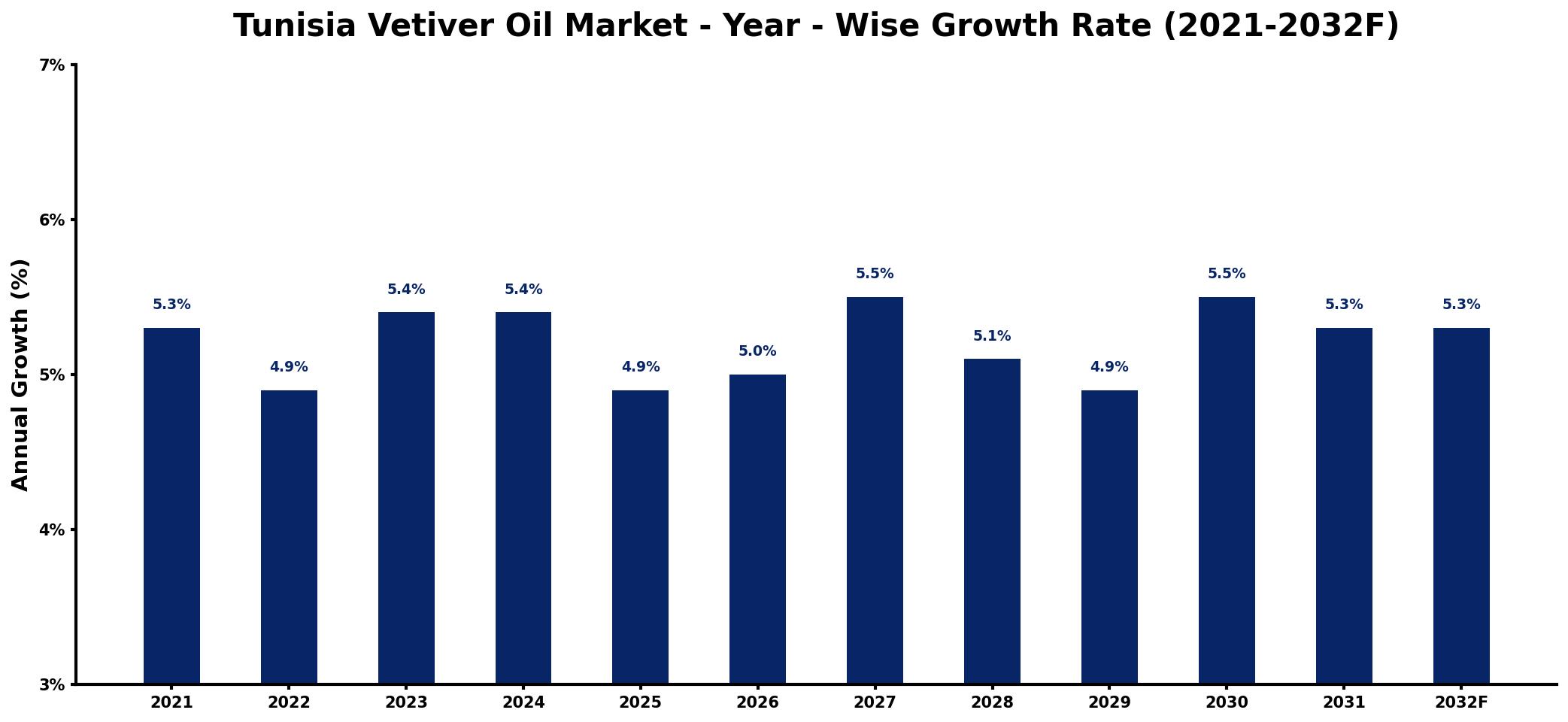
The table below presents the year‑wise growth rates along with the key drivers influencing the market
| Year | Growth Rate | Major Drivers |
| 2021 | 5.3% | Rising demand for natural fragrances |
| 2022 | 4.9% | Expansion in personal care sector |
| 2023 | 5.4% | Growing interest in aromatherapy products |
| 2024 | 5.4% | Increased investments in sustainable sourcing |
| 2025 | 4.9% | strengthening international trade flows |
| 2026 | 5.0% | Higher consumer awareness on wellness |
| 2027 | 5.5% | Boost in eco-friendly product lines |
| 2028 | 5.1% | Surge in online retail channels |
| 2029 | 4.9% | Growing popularity in home fragrances |
| 2030 | 5.5% | Expansion of organic product offerings |
| 2031 | 5.3% | Increased collaborations with wellness brands |
| 2032 | 5.3% | strengthening underlying market demand |
Note: Market size estimations and growth projections presented in this report are based on 6Wresearch's proprietary forecasting methodology, utilizing the latest available industry data, government publications, and primary research inputs.
Tunisia Vetiver Oil Market Synopsis
The most influential factor currently shaping the Tunisia Vetiver Oil Market is the escalating consumer preference for sustainable and organic products. This trend is particularly evident in the cosmetic and personal care industries, where vetiver oil's natural origins resonate with health-conscious consumers. As awareness of its benefits grows, the demand is expected to rise steadily, enhancing market prospects.
Furthermore, the integration of vetiver oil into various applications, including fragrances and food and beverage products, showcases its versatility. The ongoing exploration of vetiver's potential in therapeutic settings is likely to open new avenues for growth, solidifying its position in both domestic and international markets.
Tunisia Vetiver Oil Market Key Takeaways
- The market is primarily driven by increased consumer demand for natural and organic products.
- Growing awareness of vetiver oil's therapeutic benefits is enhancing its adoption in aromatherapy.
- Government support initiatives are facilitating better cultivation practices for vetiver farmers.
- Climate variability poses significant risks to consistent vetiver crop yields.
- Competition from other essential oil producers remains a key challenge impacting market dynamics.
Evaluation of Restraints in Tunisia Vetiver Oil Market
The Tunisia Vetiver Oil Market faces several constraints that hinder its full potential. Climate variability significantly impacts crop yields, leading to inconsistent supply, which directly affects the production of high-quality vetiver oil. Farmers are often unable to maintain steady output levels, creating volatility in the raw material market. Additionally, the industry grapples with stiff competition from established global players in the essential oil sector, further complicating the pricing landscape and profitability for local producers. A lack of advanced extraction and processing technologies also limits the overall quality and quantity of the oil produced, inhibiting market growth.
Tunisia Vetiver Oil Market Trends
Current trends in the Tunisia Vetiver Oil Market indicate a significant shift towards eco-friendly and sustainably sourced products. Consumers are increasingly prioritizing transparency and sustainability in their purchasing decisions, which aligns perfectly with vetiver oil's natural pedigree. Additionally, the integration of vetiver oil into novel applications, including health and wellness products, is on the rise. This trend not only bolsters the market but also encourages innovation in extraction techniques and product development.
Tunisia Vetiver Oil Market Opportunities
The Tunisia Vetiver Oil Market presents several promising growth opportunities. Increasing global demand for natural ingredients in cosmetics and personal care products paves the way for enhanced market penetration. Additionally, there is substantial scope for developing vetiver oil-based therapeutic products, capitalizing on the rising interest in holistic wellness. Partnerships between local farmers and international cosmetic brands can further unlock value, fostering sustainable economic growth within the industry.
Government Initiatives in the Tunisia Vetiver Oil Market
Recognizing the economic potential of vetiver oil production, the Tunisian government has enacted several policies aimed at bolstering this sector. These initiatives include financial assistance programs for farmers, which facilitate improved cultivation practices and enhance production capacity. Furthermore, the government promotes sustainable agricultural methods while also working to ensure better market access for local vetiver oil producers. Continued investment in research and development is also encouraged, aimed at enhancing the quality and yield of vetiver oil.
Future Insights of the Tunisia Vetiver Oil Market
Looking ahead to the period from 2026 to 2032, the Tunisia Vetiver Oil Market is poised for robust growth. The increasing shift towards organic and natural ingredients in various industries is expected to significantly boost demand. Additionally, as local producers enhance their cultivation and processing techniques, the overall quality of vetiver oil is likely to improve. This, combined with government support and rising global interest in aromatic and therapeutic oils, positions the Tunisia vetiver oil market as an increasingly attractive proposition for investors and producers alike.
Tunisia Vetiver Oil Market Latest Developments (2025 - 2026)
Recent developments in the Tunisia Vetiver Oil Market highlight a growing focus on sustainability and organic certification. Producers are increasingly adopting eco-friendly practices and striving for certifications that align with global market demands. Furthermore, collaborations between local farmers and international buyers are on the rise, facilitating technology transfers and knowledge sharing to enhance production capabilities.
Tunisia Vetiver Oil Market - Key Attractiveness of the Report
- 10 Years of Market Numbers
- Historical Data Starting from 2022 to 2025
- Base Year: 2025
- Forecast Data until 2032
- Key Performance Indicators Impacting the Market
- Major Upcoming Developments and Projects
Key Highlights of the Report:
- Tunisia Vetiver Oil Market Outlook
- Market Size of Tunisia Vetiver Oil Market, 2025
- Forecast of Tunisia Vetiver Oil Market, 2032
- Historical Data and Forecast of Tunisia Vetiver Oil Revenues & Volume for the Period 2022-2032F
- Tunisia Vetiver Oil Market Trend Evolution
- Tunisia Vetiver Oil Market Drivers and Challenges
- Tunisia Vetiver Oil Price Trends
- Tunisia Vetiver Oil Porter's Five Forces
- Tunisia Vetiver Oil Industry Life Cycle
- Historical Data and Forecast of Tunisia Vetiver Oil Market Revenues & Volume By Application for the Period 2022-2032F
- Historical Data and Forecast of Tunisia Vetiver Oil Market Revenues & Volume By Medical for the Period 2022-2032F
- Historical Data and Forecast of Tunisia Vetiver Oil Market Revenues & Volume By Food & Beverage for the Period 2022-2032F
- Historical Data and Forecast of Tunisia Vetiver Oil Market Revenues & Volume By Spa & Relaxation for the Period 2022-2032F
- Tunisia Vetiver Oil Import Export Trade Statistics
- Market Opportunity Assessment By Application
- Tunisia Vetiver Oil Top Companies Market Share
- Tunisia Vetiver Oil Competitive Benchmarking By Technical and Operational Parameters
- Tunisia Vetiver Oil Company Profiles
- Tunisia Vetiver Oil Key Strategic Recommendations






































