Tunisia Wire Harness Market Size, Share & Growth Rate
The Tunisia Wire Harness Market was estimated at USD 490 Million in 2025 and is projected to reach USD 679 Million by 2032, growing at a CAGR of 4.8% from 2026 to 2032. This positive trajectory is largely driven by the rapid expansion of the automotive sector, which increasingly relies on sophisticated wire harness systems. Additionally, the growing demand for electric vehicles further fuels the need for innovative wiring solutions, aligning perfectly with technological advancements in vehicle electronics.
Tunisia Wire Harness Market Year-wise Growth Rate and Key Drivers
This graph highlights how the Tunisia Wire Harness Market has steadily grown over the years, supported by major growth factors.
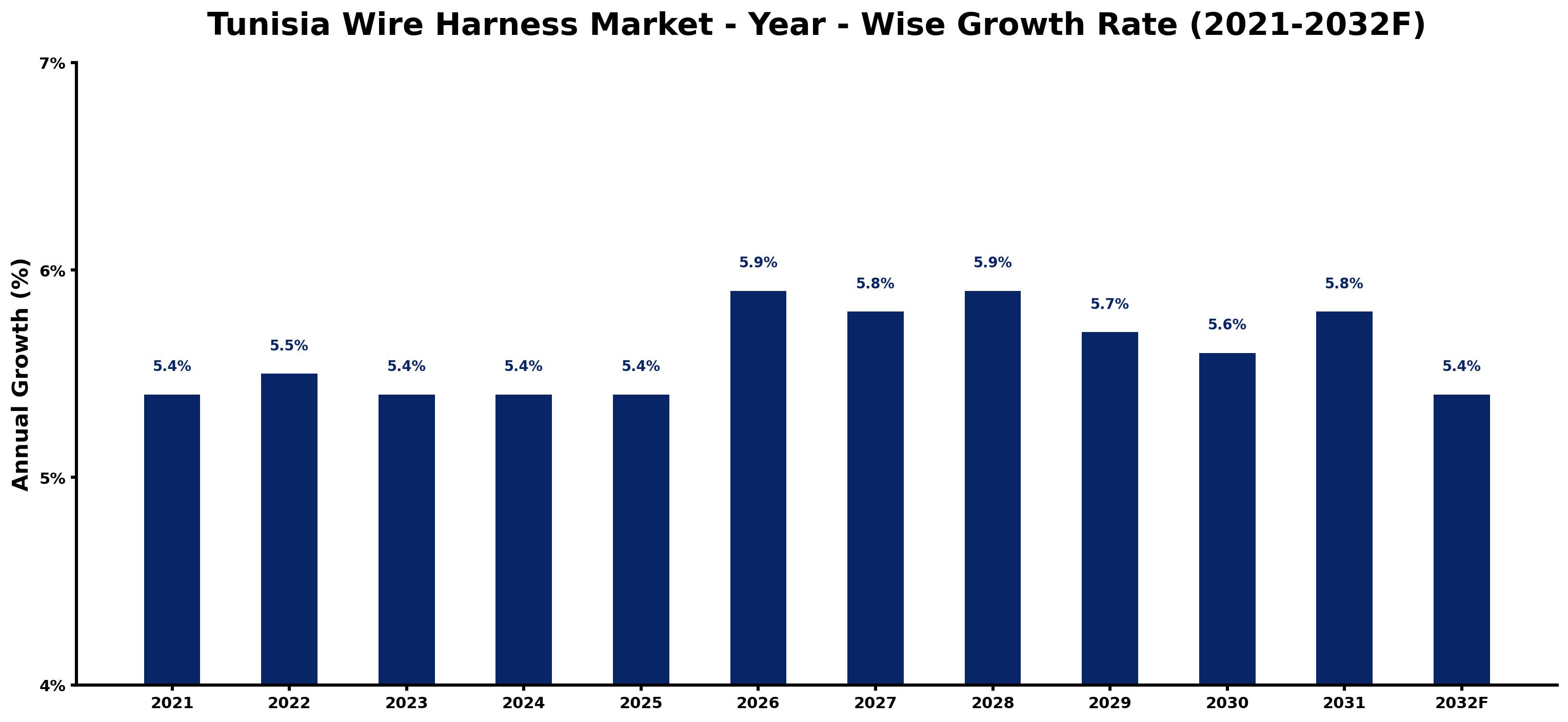
The table below presents the year‑wise growth rates along with the key drivers influencing the market
| Year | Growth Rate | Major Drivers |
| 2021 | 5.4% | Government infrastructure modernization initiatives |
| 2022 | 5.5% | Expansion of manufacturing activities |
| 2023 | 5.4% | Expansion of commercial construction activities |
| 2024 | 5.4% | Expansion of transportation and logistics networks |
| 2025 | 5.4% | Expansion of transportation and logistics networks |
| 2026 | 5.9% | Rising electricity demand across industries |
| 2027 | 5.8% | Rapid growth in telecom and data center sectors |
| 2028 | 5.9% | Expansion of transportation and logistics networks |
| 2029 | 5.7% | Rapid growth in telecom and data center sectors |
| 2030 | 5.6% | Government infrastructure modernization initiatives |
| 2031 | 5.8% | Increasing adoption of advanced technologies |
| 2032 | 5.4% | Expansion of manufacturing activities |
Note - Market size estimations and growth projections presented in this report are based on 6Wresearch’s advanced forecasting approach, validated with industry datasets as of June 2026.
Tunisia Wire Harness Market Synopsis
In Tunisia, the wire harness market is witnessing a significant transformation, largely fueled by the automotive industry's dynamic growth. Local manufacturers are adapting to the increasing complexities of modern vehicles, necessitating the integration of advanced electrical systems. This shift presents a unique opportunity for businesses to innovate and cater to the evolving requirements of automotive clients.
Moreover, sectors such as aerospace and telecommunications are also contributing to the market's expansion. The push for lightweight and durable materials is becoming essential as industries strive for efficiency and performance. Consequently, manufacturers are compelled to embrace new technologies, ensuring they remain competitive in this rapidly changing environment.
Tunisia Wire Harness Market Key Takeaways
- The market's growth is primarily driven by advancements in the automotive sector and the rise in electric vehicle production.
- Technological innovations are paving the way for customized wire harness solutions tailored to specific industry needs.
- Quality standards and certification adherence remain critical as manufacturers navigate increasingly complex electrical systems.
- Robust supply chain management strategies are essential to mitigate disruptions and ensure timely delivery of products.
- Government policies are aligning with industry standards, promoting safety and quality across wire harness manufacturing.
Evaluation of Restraints in Tunisia Wire Harness Market
Despite the promising outlook, the Tunisia wire harness market faces several constraints that may hinder its growth. One significant challenge arises from rapid technological advancements, which necessitate manufacturers to constantly innovate. This requirement for ongoing adaptation can be resource-intensive, especially for smaller players in the market. Moreover, maintaining rigorous quality control measures to meet both local and international standards complicates operations, as non-compliance can lead to severe penalties or loss of market access. Additionally, global supply chain disruptions, stemming from geopolitical tensions and material shortages, present further complications, forcing manufacturers to adopt more agile practices to respond effectively to these external pressures.
Tunisia Wire Harness Market Trends
Key trends shaping the Tunisia wire harness market include the increasing adoption of smart technologies and the incorporation of IoT solutions into automotive systems. As vehicles become more connected, there is a growing need for more sophisticated wire harness designs that support enhanced functionality. Furthermore, sustainability is increasingly influencing market dynamics, with manufacturers exploring eco-friendly materials and production methods in response to consumer and regulatory demands.
Tunisia Wire Harness Market Opportunities
The ongoing transition towards electric vehicles represents a significant growth opportunity within the Tunisia wire harness market. As manufacturers look to meet the unique wiring demands of electric drivetrains, there is a clear avenue for investment in innovative solutions. Additionally, expanding into untapped sectors such as renewable energy and telecommunications may yield substantial returns, as these industries continue to evolve and require robust electrical systems. Companies that focus on R&D to create customized and high-performance wire harnesses will likely find themselves well-positioned to capture market share.
Government Initiatives in the Tunisia Wire Harness Market
The Tunisian government is actively promoting policies aimed at enhancing the automotive manufacturing sector, which includes wire harness production. Initiatives focused on improving manufacturing standards and promoting automotive safety are crucial in aligning local production with international expectations. Additionally, public spending on infrastructure and incentives for technology adoption are paving the way for future investments in the wire harness market.
Future Insights of the Tunisia Wire Harness Market
Looking ahead to 2026-2032, the Tunisia wire harness market is poised for considerable growth, driven by technological advancements and increasing demand from diverse industries. As the electric vehicle sector expands, manufacturers will likely focus on developing more efficient and durable wire harness solutions. Moreover, the trend towards smart vehicle technologies will necessitate more integrated wiring systems, presenting further opportunities for innovation. Overall, businesses that invest in R&D and responsive manufacturing practices will be at the forefront of this evolving market.
Tunisia Wire Harness Market Latest Developments (May 2025 - June 2026)
In recent months, the Tunisia wire harness market has experienced notable advancements, particularly in the areas of technology integration and materials innovation. Manufacturers are increasingly adopting advanced manufacturing techniques to streamline production and improve efficiency. Additionally, there is a growing focus on sustainability, with several companies exploring eco-friendly materials and processes to align with global environmental standards. These trends indicate a proactive response to market demands and regulatory expectations.
Tunisia Wire Harness Market - Key Attractiveness of the Report
- 10 Years of Market Numbers
- Historical Data Starting from 2022 to 2025
- Base Year: 2025
- Forecast Data until 2032
- Key Performance Indicators Impacting the Market
- Major Upcoming Developments and Projects
Key Highlights of the Report:
- Tunisia Wire Harness Market Outlook
- Market Size of Tunisia Wire Harness Market, 2025
- Forecast of Tunisia Wire Harness Market, 2032
- Historical Data and Forecast of Tunisia Wire Harness Revenues & Volume for the Period 2022-2032F
- Tunisia Wire Harness Market Trend Evolution
- Tunisia Wire Harness Market Drivers and Challenges
- Tunisia Wire Harness Price Trends
- Tunisia Wire Harness Porter's Five Forces
- Tunisia Wire Harness Industry Life Cycle
- Historical Data and Forecast of Tunisia Wire Harness Market Revenues & Volume By Product Type for the Period 2022-2032F
- Historical Data and Forecast of Tunisia Wire Harness Market Revenues & Volume By Wire Harness Connector for the Period 2022-2032F
- Historical Data and Forecast of Tunisia Wire Harness Market Revenues & Volume By Wire Harness Terminal for the Period 2022-2032F
- Historical Data and Forecast of Tunisia Wire Harness Market Revenues & Volume By Material for the Period 2022-2032F
- Historical Data and Forecast of Tunisia Wire Harness Market Revenues & Volume By PVC for the Period 2022-2032F
- Historical Data and Forecast of Tunisia Wire Harness Market Revenues & Volume By Vinyl for the Period 2022-2032F
- Historical Data and Forecast of Tunisia Wire Harness Market Revenues & Volume By Thermoplast Elastomer for the Period 2022-2032F
- Historical Data and Forecast of Tunisia Wire Harness Market Revenues & Volume By Polyurethane for the Period 2022-2032F
- Historical Data and Forecast of Tunisia Wire Harness Market Revenues & Volume By Polyethylene for the Period 2022-2032F
- Historical Data and Forecast of Tunisia Wire Harness Market Revenues & Volume By Application for the Period 2022-2032F
- Historical Data and Forecast of Tunisia Wire Harness Market Revenues & Volume By Automotive for the Period 2022-2032F
- Historical Data and Forecast of Tunisia Wire Harness Market Revenues & Volume By Marine and Marine Engine for the Period 2022-2032F
- Historical Data and Forecast of Tunisia Wire Harness Market Revenues & Volume By Aerospace & Defense for the Period 2022-2032F
- Historical Data and Forecast of Tunisia Wire Harness Market Revenues & Volume By Military Machines for the Period 2022-2032F
- Historical Data and Forecast of Tunisia Wire Harness Market Revenues & Volume By Gaming & Amusements for the Period 2022-2032F
- Historical Data and Forecast of Tunisia Wire Harness Market Revenues & Volume By Medical Equipment & Devices for the Period 2022-2032F
- Historical Data and Forecast of Tunisia Wire Harness Market Revenues & Volume By Commercial Refrigeration & Food Machines for the Period 2022-2032F
- Historical Data and Forecast of Tunisia Wire Harness Market Revenues & Volume By Others for the Period 2022-2032F
- Tunisia Wire Harness Import Export Trade Statistics
- Market Opportunity Assessment By Product Type
- Market Opportunity Assessment By Material
- Market Opportunity Assessment By Application
- Tunisia Wire Harness Top Companies Market Share
- Tunisia Wire Harness Competitive Benchmarking By Technical and Operational Parameters
- Tunisia Wire Harness Company Profiles
- Tunisia Wire Harness Key Strategic Recommendations






































