Tunisia Wooden Furniture Market Size, Share & Growth Rate
The Tunisia Wooden Furniture Market was estimated at USD 195 Million in 2025 and is projected to reach USD 274 Million by 2032, growing at a CAGR of 5.0% from 2026 to 2032. This growth trajectory is driven by the burgeoning urban population and increasing disposable incomes, which fuel a rising demand for high-quality wooden furniture. Additionally, the distinctive craftsmanship and aesthetic appeal of Tunisian furniture continue to attract both domestic and international consumers.
Tunisia Wooden Furniture Market Growth Rate Analysis (2021-2032)
The Tunisian wooden furniture market is experiencing steady growth, with annual increases ranging from 5.6% to 6.2% projected over the coming years. In 2021, growth was recorded at 5.6%, gradually rising to 6.0% by 2023 and maintaining this level through 2025. The market’s stability is supported by a combination of burgeoning consumer demand for sustainable and locally produced furniture, coupled with investments in modern production techniques. By 2026, a slight uptick to 6.2% reflects enhanced infrastructure and digitalization trends in manufacturing processes. Despite minor fluctuations, such as the decrease to 5.6% in 2027, the overall sentiment remains optimistic due to ongoing policy support for the sector and a growing emphasis on energy-efficient practices.
Tunisia Wooden Furniture Market Year-wise Growth Rate and Key Drivers
This graph highlights how the Tunisia Wooden Furniture Market has steadily grown over the past five years, supported by major growth factors.
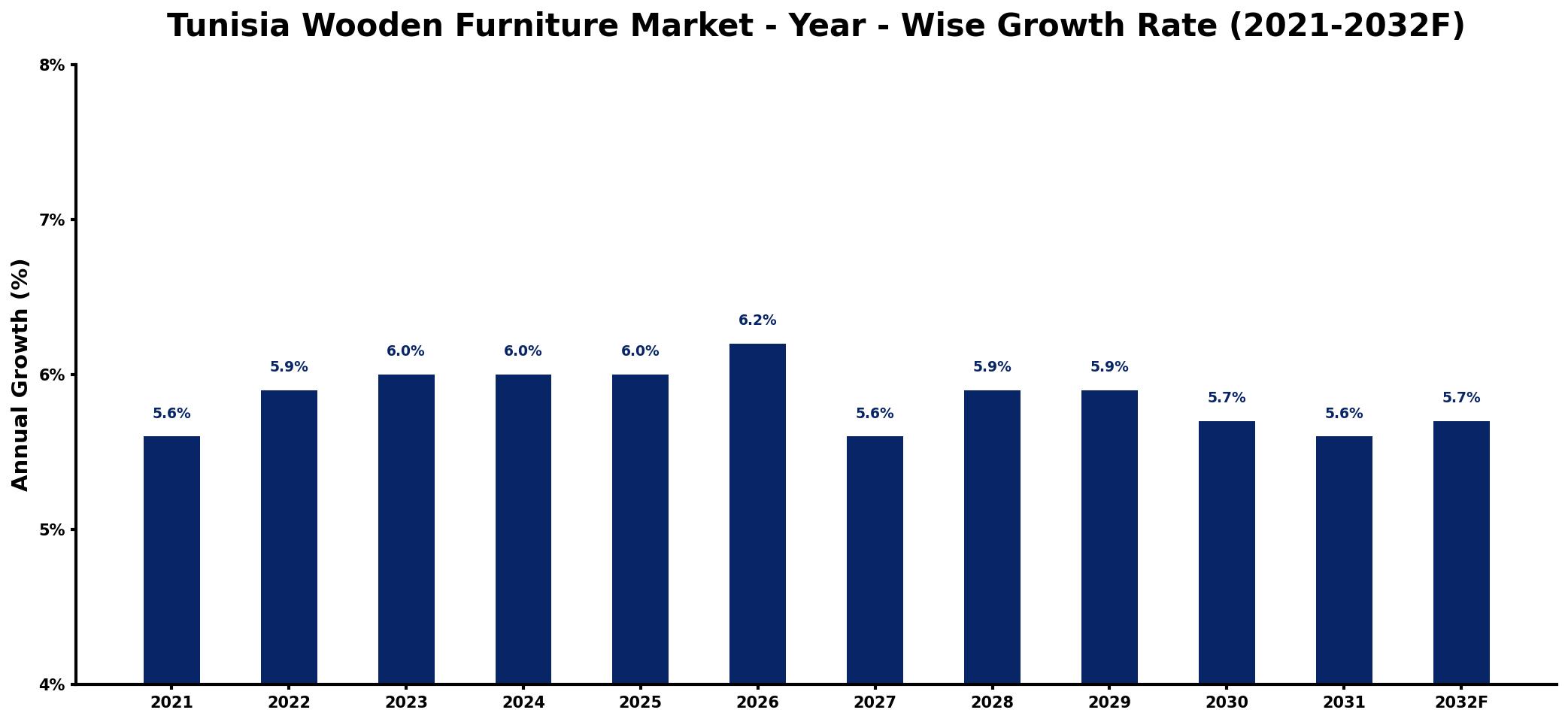
The table below presents the year‑wise growth rates along with the key drivers influencing the market
| Year | Growth Rate | Major Drivers |
| 2021 | 5.6% | Rising domestic construction projects |
| 2022 | 5.9% | Increased consumer spending confidence |
| 2023 | 6.0% | Growth in real estate sector |
| 2024 | 6.0% | Surge in home renovation activities |
| 2025 | 6.0% | Expansion of online retail platforms |
| 2026 | 6.2% | Growing interest in sustainable materials |
| 2027 | 5.6% | Increase in tourism related investments |
| 2028 | 5.9% | Boost in expatriate housing demand |
| 2029 | 5.9% | growing emerging market penetration |
| 2030 | 5.7% | Growing popularity of bespoke designs |
| 2031 | 5.6% | Rise in urbanization trends |
| 2032 | 5.7% | increased domestic production output |
Note: Market size estimations and growth projections presented in this report are based on 6Wresearch's proprietary forecasting methodology, utilizing the latest available industry data, government publications, and primary research inputs.
Tunisia Wooden Furniture Market Synopsis
The foremost force currently shaping the Tunisia Wooden Furniture Market is the seamless integration of traditional craftsmanship with modern design. Consumers increasingly favor sustainable products that embody both quality and unique artistry, which Tunisian manufacturers excel at delivering.
Simultaneously, the trend toward customization is gaining traction, as buyers look for bespoke pieces that reflect their individual styles. The hospitality sector, which values durability and design, remains a robust contributor to market growth, further driving the demand for locally-crafted wooden furniture.
Tunisia Wooden Furniture Market Key Takeaways
- The market is experiencing growth due to rising urbanization and disposable income.
- Sustainability and customization are pivotal in shaping consumer preferences.
- The blend of traditional craftsmanship and contemporary design drives competitiveness.
- Compliance with international standards enhances market appeal.
- The hospitality sector plays a significant role in overall demand for wooden furniture.
Evaluation of Restraints in Tunisia Wooden Furniture Market
Despite its rich heritage in woodworking, the Tunisia Wooden Furniture Market faces notable restraints. Economic fluctuations pose challenges to manufacturers, affecting pricing strategies and production capacities. Additionally, an influx of imported and mass-produced furniture threatens the market share of local artisans. The availability of high-quality raw materials remains a pressing concern, as fluctuating timber prices can severely impact both the cost of production and the final retail price of wooden furniture.
Tunisia Wooden Furniture Market Trends
Contemporary design trends are markedly influencing consumer behavior within the Tunisia Wooden Furniture Market. There is a growing preference for minimalist styles that emphasize functionality and aesthetic harmony. Additionally, eco-friendly materials are gaining popularity, as consumers become more environmentally conscious. This shift creates a unique intersection where craftsmanship and sustainability converge, leading to innovative furniture solutions.
Tunisia Wooden Furniture Market Opportunities
Opportunities for growth within the Tunisia Wooden Furniture Market are abundant. The increasing interest in sustainable and ethically produced goods provides an avenue for local manufacturers to expand their reach. Furthermore, the rise of e-commerce presents a chance to penetrate international markets more effectively. As the demand for customized furniture grows, brands that can offer personalized options are well-positioned to capture a larger share of the market.
Government Initiatives in the Tunisia Wooden Furniture Market
The Tunisian government has implemented several initiatives aimed at enhancing the wooden furniture sector. Regulations are in place to ensure that manufacturing processes prioritize product safety, quality, and sustainability. Additionally, incentives for compliance with international standards help local manufacturers strengthen their competitiveness. Public funding and support for training programs in craftsmanship further bolster the industry, ensuring a skilled workforce ready to meet evolving market demands.
Future Insights of the Tunisia Wooden Furniture Market
Looking forward to the period between 2026 and 2032, the Tunisia Wooden Furniture Market is expected to evolve significantly. The integration of advanced manufacturing techniques and design innovations will likely enhance product offerings. Moreover, as global market trends continue to shift towards sustainability, Tunisian manufacturers who adapt their practices will likely find considerable success. The emphasis on customization is set to persist, allowing businesses to cater to an increasingly discerning consumer base.
Tunisia Wooden Furniture Market Latest Developments (2025 - 2026)
In recent months, the Tunisia Wooden Furniture Market has witnessed a trend toward the adoption of sustainable practices among local manufacturers. There is growing collaboration with environmental organizations to ensure responsible sourcing of materials. Additionally, technological advancements in design and production processes are being explored, paving the way for innovative solutions that resonate with modern consumer preferences.
Tunisia Wooden Furniture Market - Key Attractiveness of the Report
- 10 Years of Market Numbers
- Historical Data Starting from 2022 to 2025
- Base Year: 2025
- Forecast Data until 2032
- Key Performance Indicators Impacting the Market
- Major Upcoming Developments and Projects
Key Highlights of the Report:
- Tunisia Wooden Furniture Market Outlook
- Market Size of Tunisia Wooden Furniture Market, 2025
- Forecast of Tunisia Wooden Furniture Market, 2032
- Historical Data and Forecast of Tunisia Wooden Furniture Revenues & Volume for the Period 2022-2032F
- Tunisia Wooden Furniture Market Trend Evolution
- Tunisia Wooden Furniture Market Drivers and Challenges
- Tunisia Wooden Furniture Price Trends
- Tunisia Wooden Furniture Porter's Five Forces
- Tunisia Wooden Furniture Industry Life Cycle
- Historical Data and Forecast of Tunisia Wooden Furniture Market Revenues & Volume By Type for the Period 2022-2032F
- Historical Data and Forecast of Tunisia Wooden Furniture Market Revenues & Volume By Hardwood for the Period 2022-2032F
- Historical Data and Forecast of Tunisia Wooden Furniture Market Revenues & Volume By Softwood for the Period 2022-2032F
- Historical Data and Forecast of Tunisia Wooden Furniture Market Revenues & Volume By Material for the Period 2022-2032F
- Historical Data and Forecast of Tunisia Wooden Furniture Market Revenues & Volume By Plywood for the Period 2022-2032F
- Historical Data and Forecast of Tunisia Wooden Furniture Market Revenues & Volume By Laminates for the Period 2022-2032F
- Historical Data and Forecast of Tunisia Wooden Furniture Market Revenues & Volume By MDF for the Period 2022-2032F
- Historical Data and Forecast of Tunisia Wooden Furniture Market Revenues & Volume By Other Materials for the Period 2022-2032F
- Historical Data and Forecast of Tunisia Wooden Furniture Market Revenues & Volume By Product for the Period 2022-2032F
- Historical Data and Forecast of Tunisia Wooden Furniture Market Revenues & Volume By Bedroom for the Period 2022-2032F
- Historical Data and Forecast of Tunisia Wooden Furniture Market Revenues & Volume By Seating for the Period 2022-2032F
- Historical Data and Forecast of Tunisia Wooden Furniture Market Revenues & Volume By Kitchen for the Period 2022-2032F
- Historical Data and Forecast of Tunisia Wooden Furniture Market Revenues & Volume By Other Products for the Period 2022-2032F
- Historical Data and Forecast of Tunisia Wooden Furniture Market Revenues & Volume By Application for the Period 2022-2032F
- Historical Data and Forecast of Tunisia Wooden Furniture Market Revenues & Volume By Residential for the Period 2022-2032F
- Historical Data and Forecast of Tunisia Wooden Furniture Market Revenues & Volume By Commercial for the Period 2022-2032F
- Historical Data and Forecast of Tunisia Wooden Furniture Market Revenues & Volume By Distribution Channel for the Period 2022-2032F
- Historical Data and Forecast of Tunisia Wooden Furniture Market Revenues & Volume By Offline for the Period 2022-2032F
- Historical Data and Forecast of Tunisia Wooden Furniture Market Revenues & Volume By Online for the Period 2022-2032F
- Tunisia Wooden Furniture Import Export Trade Statistics
- Market Opportunity Assessment By Type
- Market Opportunity Assessment By Material
- Market Opportunity Assessment By Product
- Market Opportunity Assessment By Application
- Market Opportunity Assessment By Distribution Channel
- Tunisia Wooden Furniture Top Companies Market Share
- Tunisia Wooden Furniture Competitive Benchmarking By Technical and Operational Parameters
- Tunisia Wooden Furniture Company Profiles
- Tunisia Wooden Furniture Key Strategic Recommendations






































