Turkey Asphalt Market Summary
The turkey asphalt market was estimated at USD 1440 Million in 2025 and is projected to reach USD 2110 Million by 2032, growing at a CAGR of 6.7% from 2026 to 2032.
Turkey Asphalt Market Year-wise Growth Rate and Key Drivers
This graph highlights how the Turkey Asphalt Market has steadily grown over the past five years, supported by major growth factors.
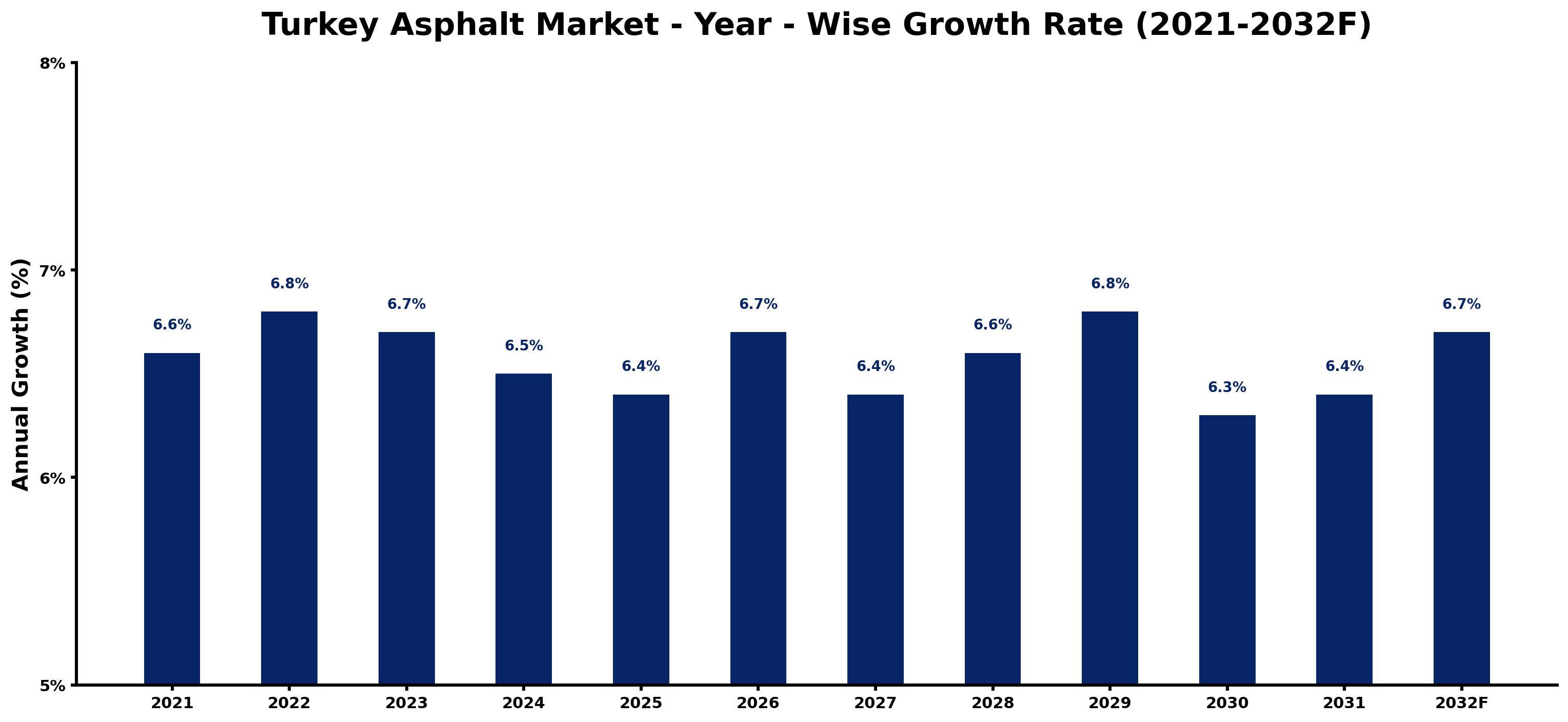
The table below presents the year wise growth rates along with the key drivers influencing the market
| Year | Growth Rate | Major Drivers |
| 2021 | 6.6% | As urban projects resumed, asphalt demand began recovering sharply across Turkey. |
| 2022 | 6.8% | Infrastructure investments surged, fueled by both local and foreign funding sources. |
| 2023 | 6.7% | Major highways and road expansions propelled the asphalt sector into new territories. |
| 2024 | 6.5% | The construction of high-speed rail networks highlighted asphalt's essential utility in infrastructure. |
| 2025 | 6.4% | Rising construction and maintenance budgets from municipalities further bolstered market growth. |
| 2026 | 6.7% | Innovative asphalt formulations improved performance in Turkey's challenging climate conditions. |
| 2027 | 6.4% | Technological improvements in production processes enhanced asphalt longevity and sustainability metrics. |
| 2028 | 6.6% | Increasing urbanization trends necessitated extensive road networks and asphalt-based solutions. |
| 2029 | 6.8% | Public-private partnerships emerged, streamlining project funding and accelerating asphalt applications. |
| 2030 | 6.3% | Sustainability initiatives prompted the use of recycled materials in asphalt production workflows. |
| 2031 | 6.4% | Growing interest in green construction practices reformulated the asphalt market landscape significantly. |
| 2032 | 6.7% | Decentralized energy solutions led to increased asphalt use in rural infrastructural developments. |
Note - Market size estimations and growth projections presented in this report are based on 6Wresearch's advanced forecasting approach, validated with industry datasets as of June 2026.
Turkey Asphalt Market Synopsis
The Turkey Asphalt Market is projected to reach 6.7% and witness significant growth during the forecast period (2026-2032). As a vital component in the construction industry, asphalt demand is primarily driven by ongoing infrastructure development efforts, urbanization, and a robust construction sector. The market is witnessing a heightened focus on road construction applications due to substantial government investments aimed at enhancing the country's transportation network, coupled with the necessity for maintenance and repairs of existing roads and highways.
Turkey Asphalt Market Growth Drivers
The Turkey Asphalt Market is experiencing a myriad of growth drivers that are intricately linked to the nation's economic and infrastructural landscape. Key growth drivers include:
- Significant government initiatives and funding directed towards infrastructure development projects are crucial for the market's expansion, particularly in road and highway construction.
- Urbanization trends continue to escalate in Turkey, increasing demand for high-quality asphalt products to support new residential and commercial developments.
- Investment in maintenance and repair of aging road networks is driving consistent demand for asphalt, ensuring that existing transportation frameworks remain functional and safe.
- The shift towards more sustainable asphalt solutions is propelling innovation, as producers adopt environmentally friendly practices and materials in their offerings.
- The integration of advanced technologies in asphalt production is enabling the development of superior quality asphalt mixtures, appealing to the evolving standards of the construction industry.
Turkey Asphalt Market Trends and Opportunities
The Turkey Asphalt Market is poised for transformative trends that present ample opportunities for industry stakeholders. Notable trends include:
- The growing adoption of warm-mix asphalt technology is promoting energy efficiency and reducing emissions during production, aligning with global sustainability goals.
- A rising demand for durable asphalt mixtures with enhanced performance characteristics is shaping product development, pushing manufacturers to innovate continuously.
- Utilization of recycled materials in asphalt production is gaining traction, driven by regulations aimed at reducing environmental impacts and promoting circular economy practices.
- Research and development investments are pivotal as companies seek to introduce technologically advanced asphalt products, catering to the construction industry's rigorous standards.
- Emerging market segments, such as airport and industrial infrastructure development, are creating new avenues for asphalt demand, reinforcing the market's growth potential.
Turkey Asphalt Market Challenges and Restraints
Despite the positive outlook, the Turkey Asphalt Market faces several challenges that need to be addressed for sustained growth. Key challenges include:
- Fluctuating raw material prices, particularly for bitumen, can significantly affect production costs and profitability for asphalt manufacturers.
- Increasing competition among industry players is leading to price wars, which may put pressure on margins and overall market stability.
- Stringent environmental regulations require the adoption of more costly eco-friendly additives, which can hinder the financial viability of projects.
- Bureaucratic hurdles and funding delays often impede infrastructure development timelines, subsequently affecting the demand for asphalt products.
- Seasonal fluctuations in construction activities can lead to inconsistent demand for asphalt products, impacting sales and production throughout the year.
Turkey Asphalt Market Government Investment and Initiatives
The Turkish government plays a pivotal role in shaping the asphalt market through various policies and initiatives aimed at enhancing infrastructure development. Key investments and strategies include:
- The implementation of the Strategic Plan for the Development of the Road Transportation Sector focuses on modernizing road infrastructure, thereby increasing asphalt consumption.
- Government initiatives encourage the use of recycled materials in asphalt production, enhancing sustainability and minimizing environmental impacts.
- Public-private partnerships are being promoted to facilitate investment in major infrastructure projects, thereby expanding market opportunities for asphalt producers.
- Incentives aimed at improving construction efficiency and sustainability are being introduced, aligning with global best practices in the asphalt production sector.
- The focus on urbanization and smart cities further propels investments in transportation infrastructure, directly stimulating demand for asphalt products.
Turkey Asphalt Market Latest Developments (May 2025 - June 2026)
Recent developments in the Turkey Asphalt Market indicate a continued focus on sustainability and innovation. Noteworthy trends include significant strides towards the adoption of eco-friendly asphalt production technologies. The regulatory landscape is evolving, with increased emphasis on sustainability measures in construction projects. Market participants are actively engaging in collaborations aimed at enhancing asphalt formulations, with a specific focus on performance improvement and cost reduction. Additionally, initiatives to increase the recycling rate of asphalt materials are gaining momentum, supporting broader environmental goals and resource efficiency within the sector.
Turkey Asphalt Market - Key Attractiveness of the Report
- 10 Years of Market Numbers
- Historical Data Starting from 2022 to 2025
- Base Year: 2025
- Forecast Data until 2032
- Key Performance Indicators Impacting the Market
- Major Upcoming Developments and Projects
Key Highlights of the Report:
- Turkey Asphalt Market Outlook
- Market Size of Turkey Asphalt Market, 2025
- Forecast of Turkey Asphalt Market, 2032F
- Historical Data and Forecast of Turkey Asphalt Revenues & Volume for the Period 2022-2032F
- Turkey Asphalt Market Trend Evolution
- Turkey Asphalt Market Drivers and Challenges
- Turkey Asphalt Price Trends
- Turkey Asphalt Porter's Five Forces
- Turkey Asphalt Industry Life Cycle
- Historical Data and Forecast of Turkey Asphalt Market Revenues & Volume By Type for the Period 2022-2032F
- Historical Data and Forecast of Turkey Asphalt Market Revenues & Volume By Paving Petroleum Asphalt for the Period 2022-2032F
- Historical Data and Forecast of Turkey Asphalt Market Revenues & Volume By Industrial Petroleum Asphalt for the Period 2022-2032F
- Historical Data and Forecast of Turkey Asphalt Market Revenues & Volume By Others for the Period 2022-2032F
- Historical Data and Forecast of Turkey Asphalt Market Revenues & Volume By Application for the Period 2022-2032F
- Historical Data and Forecast of Turkey Asphalt Market Revenues & Volume By Paving for the Period 2022-2032F
- Historical Data and Forecast of Turkey Asphalt Market Revenues & Volume By Roofing for the Period 2022-2032F
- Historical Data and Forecast of Turkey Asphalt Market Revenues & Volume By Others for the Period 2022-2032F
- Turkey Asphalt Import Export Trade Statistics
- Market Opportunity Assessment By Type
- Market Opportunity Assessment By Application
- Turkey Asphalt Top Companies Market Share
- Turkey Asphalt Competitive Benchmarking By Technical and Operational Parameters
- Turkey Asphalt Company Profiles
- Turkey Asphalt Key Strategic Recommendations






































