Turkey Bathroom Linen Market Size, Share & Growth Rate
The Turkey Bathroom Linen Market was estimated at USD 491 Million in 2025 and is projected to reach USD 664 Million by 2032, growing at a CAGR of 4.4% from 2026 to 2032. This growth is propelled by increasing urbanization rates and a rise in disposable incomes, leading consumers to prioritize quality and aesthetic appeal in home products. Furthermore, the growing trend towards eco-friendly materials is transforming consumer preferences, as they gravitate toward sustainable bathroom linen options.
Turkey Bathroom Linen Market Year-wise Growth Rate and Key Drivers
This graph highlights how the Turkey Bathroom Linen Market has steadily grown over the years, supported by major growth factors.
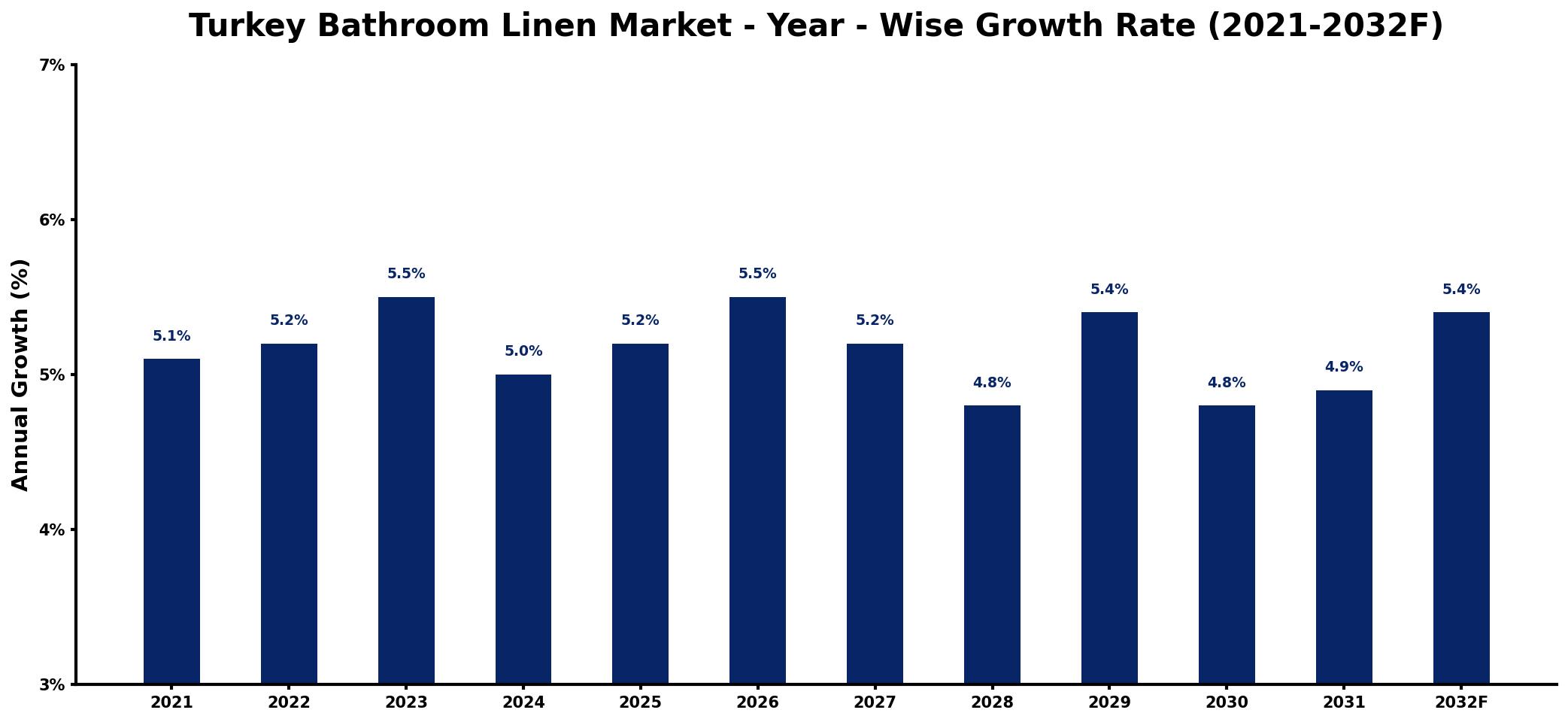
The table below presents the year‑wise growth rates along with the key drivers influencing the market
| Year | Growth Rate | Major Drivers |
| 2021 | 5.1% | Rising home improvement investments |
| 2022 | 5.2% | Increased consumer spending habits |
| 2023 | 5.5% | Growing focus on sustainability practices |
| 2024 | 5.0% | Expansion of e-commerce platforms |
| 2025 | 5.2% | Surge in interior design trends |
| 2026 | 5.5% | Higher disposable income levels |
| 2027 | 5.2% | Growth in tourism and hospitality |
| 2028 | 4.8% | Emergence of smart home technology |
| 2029 | 5.4% | Increased demand for luxury items |
| 2030 | 4.8% | Focus on wellness and relaxation |
| 2031 | 4.9% | Rising popularity of home renovations |
| 2032 | 5.4% | increased production capacity utilization |
Note: Market size estimations and growth projections presented in this report are based on 6Wresearch's proprietary forecasting methodology, utilizing the latest available industry data, government publications, and primary research inputs.
Turkey Bathroom Linen Market Synopsis
The demand for high-quality bathroom towels, bathrobes, and accessories is seeing a significant uptick in Turkey, as consumers look to enhance their bathing experience. Eco-friendly and organic cotton products are gaining traction, reflecting a shift in consumer values towards sustainability.
E-commerce platforms are becoming essential in the distribution of bathroom linen, providing consumers access to an extensive range of products. This digital transformation is not only boosting sales but also allowing for innovative marketing strategies that cater to the unique preferences of Turkish consumers.
Turkey Bathroom Linen Market Key Takeaways
- Increased urbanization and disposable incomes are driving market growth.
- Consumers are prioritizing quality, absorbency, and sustainability in their bathroom linen purchases.
- E-commerce is emerging as a dominant sales channel, enhancing product accessibility.
- Shifts in consumer preferences are pushing manufacturers towards innovative and eco-friendly product offerings.
- The market is becoming increasingly competitive with a mix of local and international brands.
Evaluation of Restraints in Turkey Bathroom Linen Market
While the market is on a growth trajectory, several factors pose challenges. Intense competition from both domestic and international brands fosters price wars, which can erode profit margins. Fluctuations in raw material costs, particularly in cotton, add another layer of complexity to pricing strategies. Companies must remain agile to keep up with rapidly changing consumer preferences and trends while ensuring product differentiation amidst a crowded market. Logistics and distribution hurdles, especially in rural areas, further complicate the landscape for bathroom linen manufacturers and retailers.
Turkey Bathroom Linen Market Trends
A notable trend in the Turkey Bathroom Linen Market is the increasing consumer preference for sustainable and eco-friendly products. Organic cotton and bamboo towels are gaining popularity as awareness of environmental issues rises. Additionally, a growing inclination toward luxury bathroom linens—characterized by high absorbency and softness—underscores the demand for premium products. The rise of personalized and themed bathroom décor is influencing consumer choices, driving interest in a diverse range of stylish designs.
Turkey Bathroom Linen Market Opportunities
Investment opportunities abound in this evolving market, particularly in the premium and sustainable segments. Companies that focus on providing eco-friendly and ethically sourced bathroom linens stand to gain from the conscious consumer movement. Moreover, as interior design becomes increasingly popular, brands can capitalize by launching stylish and innovative collections. E-commerce continues to offer significant growth potential, as the convenience and variety it provides resonate with the Turkish consumer.
Government Initiatives in the Turkey Bathroom Linen Market
The Turkish government has implemented policies aimed at ensuring product quality and safety within the Bathroom Linen Market. Regulations concerning material use are strict, prioritizing consumer health and safety. Furthermore, the government encourages sustainability practices, promoting the use of eco-friendly materials in production. Such initiatives aim to foster a competitive market environment while ensuring transparency through labeling requirements for consumers.
Future Insights of the Turkey Bathroom Linen Market
Looking ahead to 2026-2032, the Turkey Bathroom Linen Market is set for robust growth. The increase in urbanization and disposable incomes will likely enhance demand for high-quality products. As consumers continue to elevate their standards for home aesthetics, interest in premium and personalized bathroom linens will grow. E-commerce will remain a crucial channel for distribution, making it easier for consumers to access a diverse array of products that meet their evolving needs.
Turkey Bathroom Linen Market Latest Developments (2025 - 2026)
Recent developments in the Turkey Bathroom Linen Market indicate a strong shift towards sustainable practices among manufacturers. Many companies are actively sourcing eco-friendly materials and embracing innovative designs that align with consumer trends. E-commerce platforms are expanding their offerings, further enhancing market accessibility for consumers. Additionally, the introduction of luxurious and designer bathroom collections reflects a growing consumer interest in high-end home decor.
Turkey Bathroom Linen Market - Key Attractiveness of the Report
- 10 Years of Market Numbers
- Historical Data Starting from 2022 to 2025
- Base Year: 2025
- Forecast Data until 2032
- Key Performance Indicators Impacting the Market
- Major Upcoming Developments and Projects
Key Highlights of the Report:
- Turkey Bathroom Linen Market Outlook
- Market Size of Turkey Bathroom Linen Market, 2025
- Forecast of Turkey Bathroom Linen Market, 2032
- Historical Data and Forecast of Turkey Bathroom Linen Revenues & Volume for the Period 2022-2032F
- Turkey Bathroom Linen Market Trend Evolution
- Turkey Bathroom Linen Market Drivers and Challenges
- Turkey Bathroom Linen Price Trends
- Turkey Bathroom Linen Porter's Five Forces
- Turkey Bathroom Linen Industry Life Cycle
- Historical Data and Forecast of Turkey Bathroom Linen Market Revenues & Volume By Product for the Period 2022-2032F
- Historical Data and Forecast of Turkey Bathroom Linen Market Revenues & Volume By Bath Towels for the Period 2022-2032F
- Historical Data and Forecast of Turkey Bathroom Linen Market Revenues & Volume By Bathrobes for the Period 2022-2032F
- Historical Data and Forecast of Turkey Bathroom Linen Market Revenues & Volume By Others for the Period 2022-2032F
- Turkey Bathroom Linen Import Export Trade Statistics
- Market Opportunity Assessment By Product
- Turkey Bathroom Linen Top Companies Market Share
- Turkey Bathroom Linen Competitive Benchmarking By Technical and Operational Parameters
- Turkey Bathroom Linen Company Profiles
- Turkey Bathroom Linen Key Strategic Recommendations






































