Turkey Cloud Database and DBaaS Market Size & Growth Rate (2026-2032)
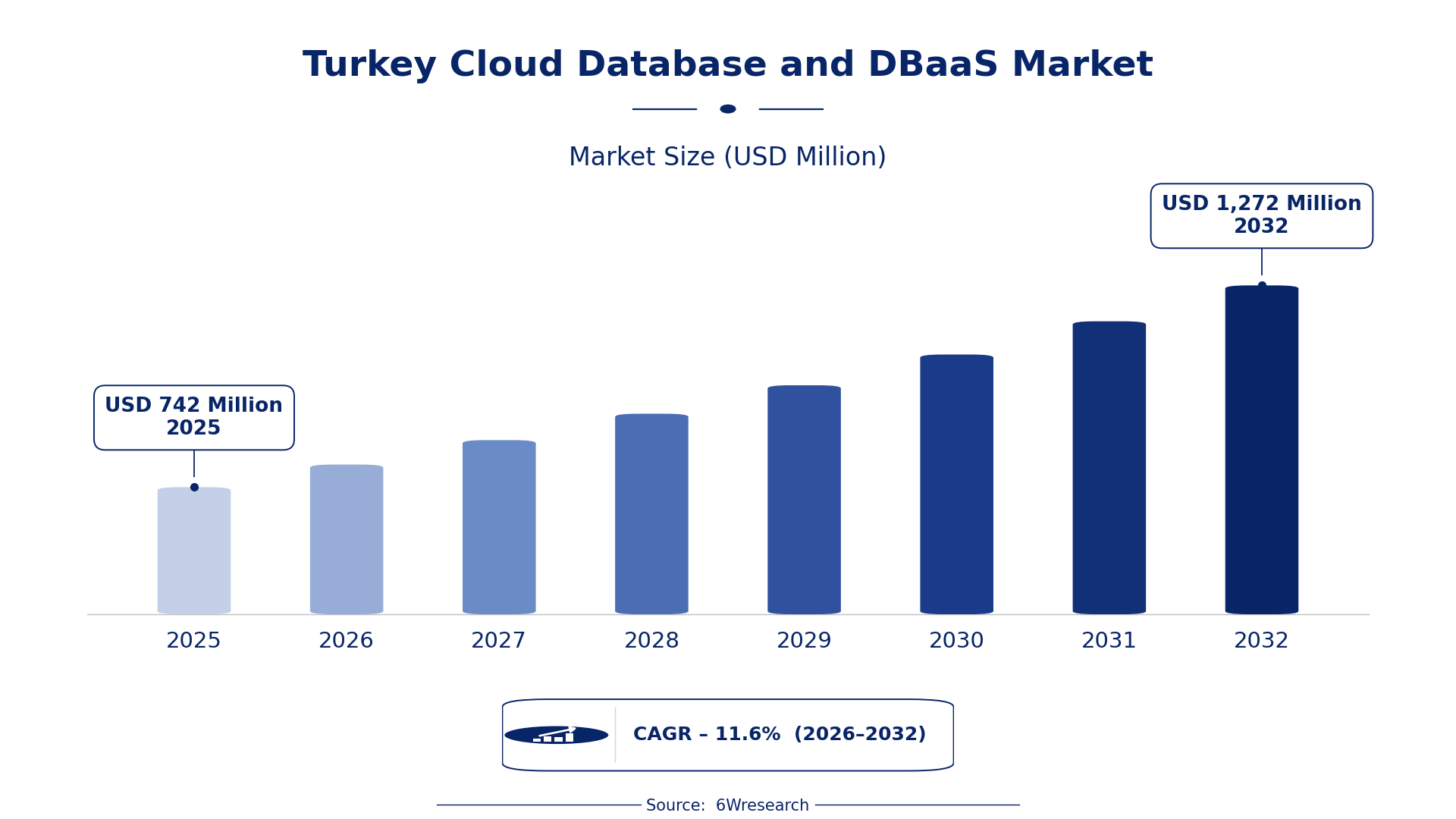
The Turkey Cloud Database and DBaaS Market was estimated at USD 742 Million in 2025 and is projected to reach USD 1272 Million by 2032, growing at a CAGR of 11.6% from 2026 to 2032.
Turkey Cloud Database and DBaaS Market Synopsis
The primary force driving the Turkey Cloud Database and DBaaS market is the rapid shift towards cloud computing as businesses embrace digital transformation. This trend is compelling organizations to adopt scalable, efficient, and cost-effective database solutions that meet their evolving data management needs.
As companies increasingly require real-time data processing and advanced analytics, the demand for cloud-based database services is soaring. This growth is further supported by heightened awareness of the security and compliance benefits that these solutions provide, positioning the market for continued expansion.
Turkey Cloud Database and DBaaS Market Year-wise Growth Rate and Key Drivers
This graph illustrates the annual growth rates of the Turkey Cloud Database and DBaaS Market from 2021 to 2032, highlighting a steady upward trajectory and projected expansion over the forecast period.
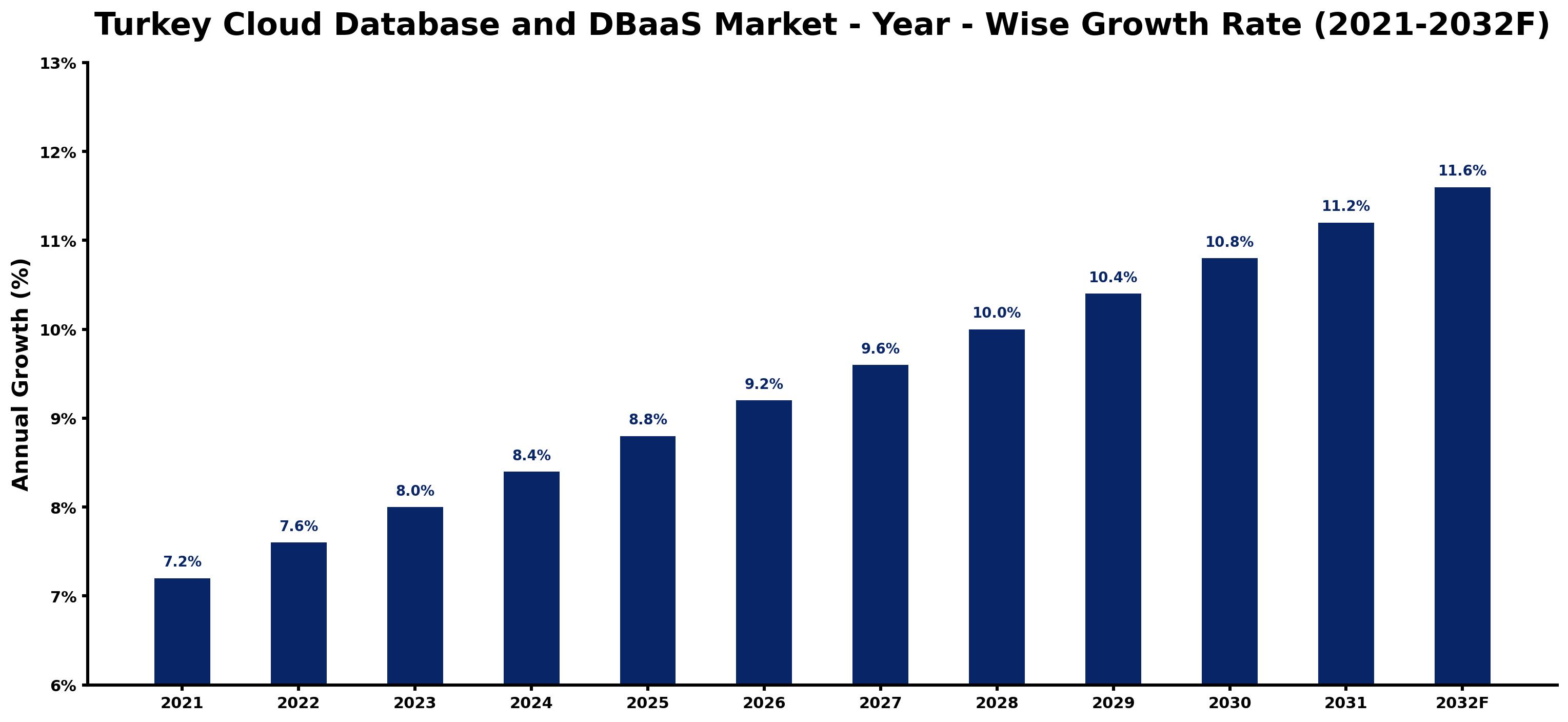
The table below presents the year‑wise growth rates along with the key drivers influencing the market
| Year | Growth Rate | Major Drivers |
| 2021 | 7.2% | Government digital initiatives promoting cloud adoption. |
| 2022 | 7.6% | Turkish tech startups driving demand for agile database solutions. |
| 2023 | 8.0% | E-commerce growth requiring efficient inventory management databases. |
| 2024 | 8.4% | Investment in fintech sector boosting database-as-a-service needs. |
| 2025 | 8.8% | Healthcare digitization increasing cloud database utilization. |
| 2026 | 9.2% | Telecom expansion driving demand for scalable data management. |
| 2027 | 9.6% | Rising cybersecurity mandates increasing database security solutions. |
| 2028 | 10.0% | Increased focus on big data analytics in businesses. |
| 2029 | 10.4% | Regulatory changes simplifying data residency requirements in Turkey. |
| 2030 | 10.8% | Adoption of AI technologies enhancing database functionalities. |
| 2031 | 11.2% | Growing reliance on mobile applications demanding cloud infrastructures. |
| 2032 | 11.6% | Urbanization trends increasing cloud data storage needs. |
Note: Market size estimations and growth projections presented in this report are based on 6Wresearch's proprietary forecasting methodology, utilizing the latest available industry data, government publications, and primary research inputs.
Turkey Cloud Database and DBaaS Market Key Takeaways
Below are some of the specific key takeaways from the market, including:
- The market is witnessing accelerated growth fueled by widespread digital transformation initiatives.
- Organizations are increasingly prioritizing managed database services to enhance operational efficiency.
- AI and machine learning integration into database solutions is becoming a key differentiator among providers.
- Small and medium-sized enterprises are emerging as a significant segment driving cloud database adoption.
- Data security and compliance are top concerns influencing purchasing decisions in the market.
Evaluation of Restraints in Turkey Cloud Database and DBaaS Market
Despite the robust growth, the Turkey Cloud Database and DBaaS market faces several restraints. Data security remains a major concern, as rising cyber threats challenge businesses to protect sensitive information. Additionally, there is a prevailing lack of understanding regarding the advantages of cloud databases among some companies, hindering adoption rates. Infrastructure limitations in certain regions further complicate the efficient deployment of cloud solutions. The transition from traditional database systems to cloud solutions also involves high initial investments, deterring many organizations from making the leap.
Turkey Cloud Database and DBaaS Market Trends
Several trends are shaping the Turkey Cloud Database and DBaaS market. The demand for managed database services continues to rise, as organizations seek to offload database management responsibilities. Additionally, integration of AI and machine learning capabilities into database solutions is gaining traction, enabling enhanced data processing and analytics. There is also a marked emphasis on data security and compliance, with businesses prioritizing solutions that meet stringent regulatory requirements.
Turkey Cloud Database and DBaaS Market Opportunities
The Turkey Cloud Database and DBaaS market presents numerous opportunities for growth. Companies can capitalize on the rising demand for specialized, industry-specific database solutions tailored to unique operational needs. Enhanced data analytics capabilities are also in high demand, providing avenues for innovative service offerings. on top of that, as the number of small and medium-sized enterprises seeking cloud database solutions grows, targeting this segment could yield substantial returns.
Government Initiatives in the Turkey Cloud Database and DBaaS Market
The Turkish government is actively fostering the growth of the Cloud Database and DBaaS market through a series of supportive policies. By offering tax incentives and promoting data localization, the government aims to create a favorable environment for businesses investing in cloud technologies. These initiatives are designed to enhance the competitiveness of the market while ensuring data security and privacy.
- A regulatory framework was introduced in 2025 mandating data protection measures for cloud services.
- A national digital infrastructure upgrade programme is currently underway to enhance connectivity for cloud services.
- Tax incentives for companies investing in cloud technologies were implemented in early 2025.
- A planned public-private partnership initiative aims to expand cloud service infrastructure by 2028.
- Ongoing campaigns to raise awareness about cloud benefits among businesses are currently being conducted.
Future Insights of the Turkey Cloud Database and DBaaS Market
Looking ahead to 2026-2032, the Turkey Cloud Database and DBaaS market is set for substantial growth. The increasing reliance on scalable and cost-effective database management solutions will drive demand. The proliferation of data-intensive applications and the need for enhanced data security will further reinforce this trend. As digital transformation initiatives continue across various sectors, the demand for cloud databases and DBaaS offerings will remain strong, prompting providers to innovate and expand their service portfolios.
Turkey Cloud Database and DBaaS Market Latest Developments
Recent activity in the Turkey Cloud Database and DBaaS market indicates a robust trajectory of innovation and investment. Organizations are increasingly launching initiatives aimed at enhancing their cloud capabilities and addressing evolving customer needs.
- A major technology vendor launched a new AI-driven database service in Q2 2025, aimed at improving data processing efficiency.
- An initiative that began in early 2025 is currently underway to enhance cybersecurity measures across cloud platforms.
- A leading regional operator is expected to roll out a new multi-cloud compatibility feature by the end of 2026.
- A public-private partnership aimed at expanding cloud infrastructure access is currently in the planning stages, expected to launch in late 2025.
- By mid-2025, a series of workshops designed to educate SMEs on cloud database benefits will be conducted nationwide.
Turkey Cloud Database and DBaaS Market - Key Attractiveness of the Report
- 10 Years of Market Numbers
- Historical Data Starting from 2022 to 2025
- Base Year: 2025
- Forecast Data until 2032
- Key Performance Indicators Impacting the Market
- Major Upcoming Developments and Projects
Key Highlights of the Report:
- Turkey Cloud Database and DBaaS Market Outlook
- Market Size of Turkey Cloud Database and DBaaS Market, 2025
- Forecast of Turkey Cloud Database and DBaaS Market, 2032
- Historical Data and Forecast of Turkey Cloud Database and DBaaS Revenues & Volume for the Period 2022-2032F
- Turkey Cloud Database and DBaaS Market Trend Evolution
- Turkey Cloud Database and DBaaS Market Drivers and Challenges
- Turkey Cloud Database and DBaaS Price Trends
- Turkey Cloud Database and DBaaS Porter's Five Forces
- Turkey Cloud Database and DBaaS Industry Life Cycle
- Historical Data and Forecast of Turkey Cloud Database and DBaaS Market Revenues & Volume By Database Type for the Period 2022-2032F
- Historical Data and Forecast of Turkey Cloud Database and DBaaS Market Revenues & Volume By SQL for the Period 2022-2032F
- Historical Data and Forecast of Turkey Cloud Database and DBaaS Market Revenues & Volume By NoSQL for the Period 2022-2032F
- Historical Data and Forecast of Turkey Cloud Database and DBaaS Market Revenues & Volume By Service for the Period 2022-2032F
- Historical Data and Forecast of Turkey Cloud Database and DBaaS Market Revenues & Volume By Professional Services for the Period 2022-2032F
- Historical Data and Forecast of Turkey Cloud Database and DBaaS Market Revenues & Volume By Consulting for the Period 2022-2032F
- Historical Data and Forecast of Turkey Cloud Database and DBaaS Market Revenues & Volume By Implementation for the Period 2022-2032F
- Historical Data and Forecast of Turkey Cloud Database and DBaaS Market Revenues & Volume By Support and Maintenance for the Period 2022-2032F
- Historical Data and Forecast of Turkey Cloud Database and DBaaS Market Revenues & Volume By Managed Services for the Period 2022-2032F
- Historical Data and Forecast of Turkey Cloud Database and DBaaS Market Revenues & Volume By Vertical for the Period 2022-2032F
- Historical Data and Forecast of Turkey Cloud Database and DBaaS Market Revenues & Volume By Banking, Financial Services and Insurance (BFSI) for the Period 2022-2032F
- Historical Data and Forecast of Turkey Cloud Database and DBaaS Market Revenues & Volume By Telecom and Information Technology (IT) for the Period 2022-2032F
- Historical Data and Forecast of Turkey Cloud Database and DBaaS Market Revenues & Volume By Government for the Period 2022-2032F
- Historical Data and Forecast of Turkey Cloud Database and DBaaS Market Revenues & Volume By Consumer Goods and Retail for the Period 2022-2032F
- Historical Data and Forecast of Turkey Cloud Database and DBaaS Market Revenues & Volume By Manufacturing for the Period 2022-2032F
- Historical Data and Forecast of Turkey Cloud Database and DBaaS Market Revenues & Volume By Energy and Utilities for the Period 2022-2032F
- Historical Data and Forecast of Turkey Cloud Database and DBaaS Market Revenues & Volume By Media and Entertainment for the Period 2022-2032F
- Historical Data and Forecast of Turkey Cloud Database and DBaaS Market Revenues & Volume By Healthcare and Life Sciences for the Period 2022-2032F
- Historical Data and Forecast of Turkey Cloud Database and DBaaS Market Revenues & Volume By Component for the Period 2022-2032F
- Historical Data and Forecast of Turkey Cloud Database and DBaaS Market Revenues & Volume By Solution for the Period 2022-2032F
- Historical Data and Forecast of Turkey Cloud Database and DBaaS Market Revenues & Volume By Services for the Period 2022-2032F
- Historical Data and Forecast of Turkey Cloud Database and DBaaS Market Revenues & Volume By Deployment Model for the Period 2022-2032F
- Historical Data and Forecast of Turkey Cloud Database and DBaaS Market Revenues & Volume By Public Cloud for the Period 2022-2032F
- Historical Data and Forecast of Turkey Cloud Database and DBaaS Market Revenues & Volume By Private Cloud for the Period 2022-2032F
- Historical Data and Forecast of Turkey Cloud Database and DBaaS Market Revenues & Volume By Hybrid Cloud for the Period 2022-2032F
- Historical Data and Forecast of Turkey Cloud Database and DBaaS Market Revenues & Volume By Organization Size for the Period 2022-2032F
- Historical Data and Forecast of Turkey Cloud Database and DBaaS Market Revenues & Volume By Large Enterprises for the Period 2022-2032F
- Historical Data and Forecast of Turkey Cloud Database and DBaaS Market Revenues & Volume By Small and Medium-sized Enterprises (SMEs) for the Period 2022-2032F
- Turkey Cloud Database and DBaaS Import Export Trade Statistics
- Market Opportunity Assessment By Database Type
- Market Opportunity Assessment By Service
- Market Opportunity Assessment By Vertical
- Market Opportunity Assessment By Component
- Market Opportunity Assessment By Deployment Model
- Market Opportunity Assessment By Organization Size
- Turkey Cloud Database and DBaaS Top Companies Market Share
- Turkey Cloud Database and DBaaS Competitive Benchmarking By Technical and Operational Parameters
- Turkey Cloud Database and DBaaS Company Profiles
- Turkey Cloud Database and DBaaS Key Strategic Recommendations






































