Turkey Coffee Beans Market Summary
The turkey coffee beans market was estimated at USD 448 Million in 2025 and is projected to reach USD 627 Million by 2032, growing at a CAGR of 6.0% from 2026 to 2032.
Turkey Coffee Beans Market Year-wise Growth Rate and Key Drivers
This graph highlights how the Turkey Coffee Beans Market has steadily grown over the past five years, supported by major growth factors.
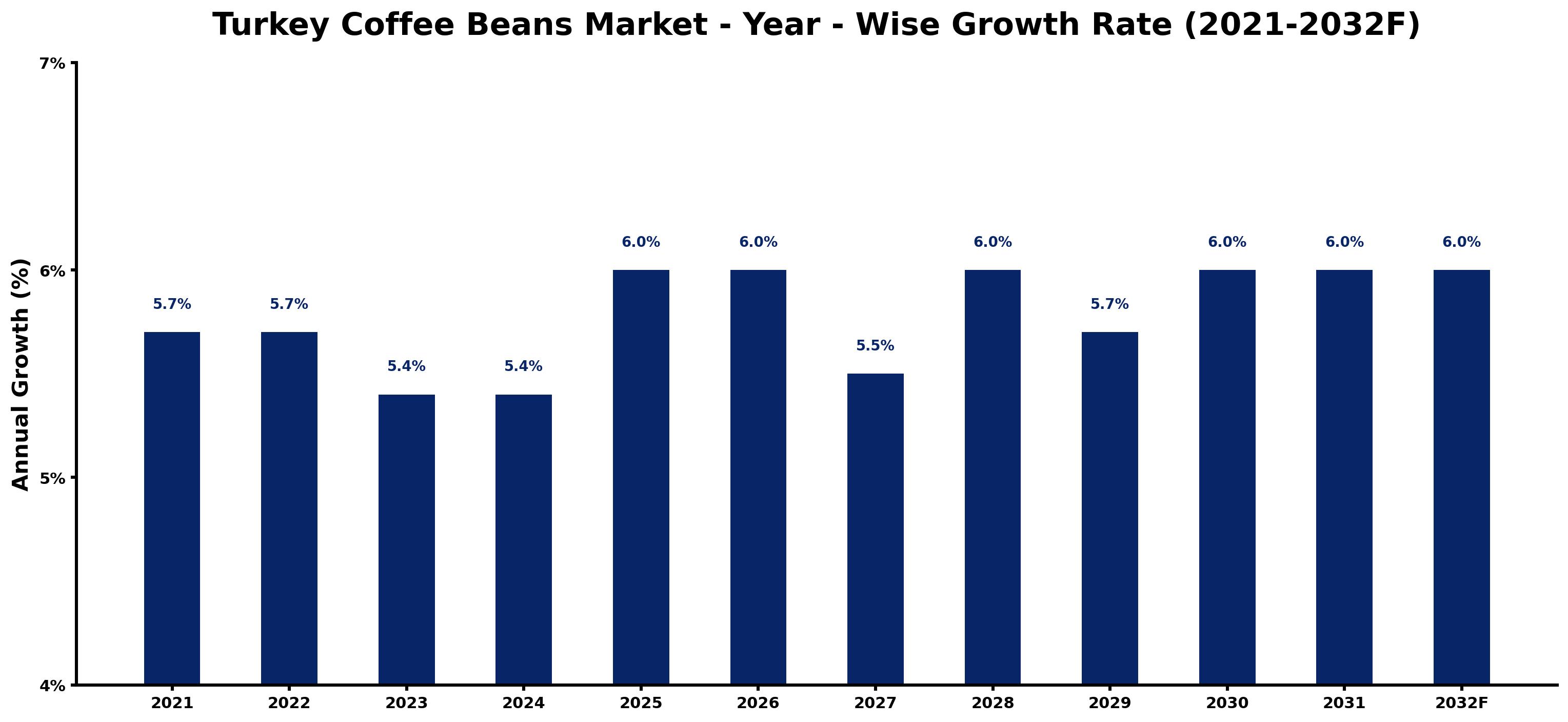
The table below presents the year wise growth rates along with the key drivers influencing the market
| Year | Growth Rate | Major Drivers |
| 2021 | 5.7% | Interest in traditional Turkish coffee culture began attracting global attention and consumers. |
| 2022 | 5.7% | Local roasters embraced sustainable practices, enhancing product quality and market appeal. |
| 2023 | 5.4% | E-commerce platforms expanded significantly, providing easier access to specialty coffee products. |
| 2024 | 5.4% | Regional tourism increased, with visitors seeking authentic Turkish coffee experiences. |
| 2025 | 6.0% | Coffee education programs emerged, heightening consumer awareness about brewing methods. |
| 2026 | 6.0% | Social media influencers began promoting Turkish coffee, spurring interest among younger demographics. |
| 2027 | 5.5% | Gourmet coffee shops proliferated, focusing on artisanal Turkish coffee and unique blends. |
| 2028 | 6.0% | Export opportunities flourished as international markets recognized Turkish coffee's unique flavor profile. |
| 2029 | 5.7% | Sustainable farming practices gained traction, ensuring a steady supply of high-quality beans. |
| 2030 | 6.0% | Consumer interest shifted towards organic coffee, prompting local farmers to adapt their practices. |
| 2031 | 6.0% | Collaborations between local brands and international firms expanded distribution and brand recognition. |
| 2032 | 6.0% | Cultural events celebrating Turkish coffee traditions emerged, further embedding the beverage in daily life. |
Note - Market size estimations and growth projections presented in this report are based on 6Wresearch's advanced forecasting approach, validated with industry datasets as of June 2026.
Turkey Coffee Beans Market Synopsis
The Turkey Coffee Beans Market is projected to reach 6.0% and witness significant growth during the forecast period (2026-2032). This expansion is fueled by an increasing consumer demand for specialty coffees, innovative espresso blends, and distinct single-origin varieties sourced from renowned global coffee-producing regions. Enthusiasts across cafes, restaurants, and households are elevating their coffee experiences, driving an evolution in Turkey's coffee culture.
Turkey Coffee Beans Market Growth Drivers
The growth trajectory of the Turkey Coffee Beans Market is supported by several key drivers:
- Rising consumer preferences for high-quality coffee beverages encourage the demand for diverse coffee products, leading to a surge in specialty coffee consumption.
- Innovations in agricultural practices, including advancements in coffee cultivation and processing technology, are enhancing the quality and efficiency of coffee production.
- The blossoming coffee culture in Turkey has spurred interest in artisanal coffee roasting practices, attracting consumers seeking unique flavors and experiences.
- Increased investments in sustainable sourcing initiatives promote fair trade practices and environmental stewardship, aligning with the growing consumer focus on ethical consumption.
- Regulatory standards concerning food safety and quality are shaping the market landscape, ensuring that high-quality coffee products are both safe and appealing to consumers.
Turkey Coffee Beans Market Challenges and Restraints
Despite the optimistic growth outlook, the Turkey Coffee Beans Market faces several challenges:
- Price volatility stemming from unpredictable weather conditions can adversely affect coffee supply, leading to fluctuating costs for consumers and businesses alike.
- Global supply chain disruptions pose risks by potentially delaying imports, affecting the availability of premium coffee beans.
- Intense competition from alternative beverages like tea and energy drinks may divert some consumers away from coffee, impacting overall market growth.
- As environmental concerns grow, the market must adapt by embracing sustainable coffee farming practices that ensure both quality and ethical sourcing.
- The need for continuous innovations in brewing and roasting techniques is essential to meet evolving consumer preferences for premium and organic coffee offerings.
Turkey Coffee Beans Market Trends and Opportunities
The evolving landscape of the Turkey Coffee Beans Market presents numerous trends and opportunities worth noting:
- The emergence of specialty coffee shops with a focus on providing an exceptional consumer experience is contributing to the market's transformation.
- Growing interest in home brewing methods is driving sales of high-end coffee machines and artisanal coffee beans, catering to consumers seeking cafe-quality beverages at home.
- Increased awareness of health benefits associated with coffee consumption, such as improved alertness and antioxidants, contributes to higher demand for diverse coffee products.
- Digital transformation in retail, including e-commerce platforms and subscription services for coffee delivery, is expanding market reach and consumer access to premium beans.
- Collaborations between coffee producers and local artisans are generating innovative products that align with both market trends and consumer preferences for unique flavors.
Turkey Coffee Beans Market Government Investment and Initiatives
The Turkish government is taking proactive steps to bolster the coffee beans market through various investments and initiatives:
- Government policies promoting agricultural imports play a critical role in ensuring the availability of high-quality coffee beans needed for domestic consumption.
- Support for technological advancements in coffee farming aligns with national objectives to modernize agriculture and enhance productivity within the sector.
- Regulations focused on product quality and food safety standards are implemented to ensure that consumers receive safe and high-quality coffee products.
- Incentives aimed at promoting sustainable practices in the coffee sector are encouraging farmers to adopt environmentally responsible methods of cultivation.
- The government is recognizing the value of coffee culture in enhancing tourism and economic growth, leading to broader support for local coffee brands and emerging startups.
Turkey Coffee Beans Market Latest Developments (May 2025 - June 2026)
In recent months, the Turkey Coffee Beans Market has undergone notable developments that are shaping its future trajectory:
- In response to the growing consumer preference for specialty coffees, many local coffee shops are diversifying their offerings, including a wider variety of single-origin beans.
- Technological innovations in coffee processing are being adopted, resulting in enhanced flavor profiles and improved quality of roasted coffee beans.
- The trend towards sustainability is prompting local producers to pursue certifications in organic and fair trade coffee, appealing to environmentally conscious consumers.
- Government support for research and development in coffee agriculture has led to improved crop yields, benefiting both farmers and the market at large.
- New marketing strategies, including social media campaigns, are being leveraged to engage younger consumers and educate them about premium coffee choices.
Turkey Coffee Beans Market - Key Attractiveness of the Report
- 10 Years of Market Numbers
- Historical Data Starting from 2022 to 2025
- Base Year: 2025
- Forecast Data until 2032
- Key Performance Indicators Impacting the Market
- Major Upcoming Developments and Projects
Key Highlights of the Report:
- Turkey Coffee Beans Market Outlook
- Market Size of Turkey Coffee Beans Market, 2025
- Forecast of Turkey Coffee Beans Market, 2032
- Historical Data and Forecast of Turkey Coffee Beans Revenues & Volume for the Period 2022-2032F
- Turkey Coffee Beans Market Trend Evolution
- Turkey Coffee Beans Market Drivers and Challenges
- Turkey Coffee Beans Price Trends
- Turkey Coffee Beans Porter's Five Forces
- Turkey Coffee Beans Industry Life Cycle
- Historical Data and Forecast of Turkey Coffee Beans Market Revenues & Volume By Product Type for the Period 2022-2032F
- Historical Data and Forecast of Turkey Coffee Beans Market Revenues & Volume By Arabica for the Period 2022-2032F
- Historical Data and Forecast of Turkey Coffee Beans Market Revenues & Volume By Robusta for the Period 2022-2032F
- Historical Data and Forecast of Turkey Coffee Beans Market Revenues & Volume By Others for the Period 2022-2032F
- Historical Data and Forecast of Turkey Coffee Beans Market Revenues & Volume By Applications for the Period 2022-2032F
- Historical Data and Forecast of Turkey Coffee Beans Market Revenues & Volume By Personal Care for the Period 2022-2032F
- Historical Data and Forecast of Turkey Coffee Beans Market Revenues & Volume By Food for the Period 2022-2032F
- Historical Data and Forecast of Turkey Coffee Beans Market Revenues & Volume By Pharmaceutical for the Period 2022-2032F
- Turkey Coffee Beans Import Export Trade Statistics
- Market Opportunity Assessment By Product Type
- Market Opportunity Assessment By Applications
- Turkey Coffee Beans Top Companies Market Share
- Turkey Coffee Beans Competitive Benchmarking By Technical and Operational Parameters
- Turkey Coffee Beans Company Profiles
- Turkey Coffee Beans Key Strategic Recommendations






































