Turkey Data Masking Market Size & Growth Rate (2026-2032)
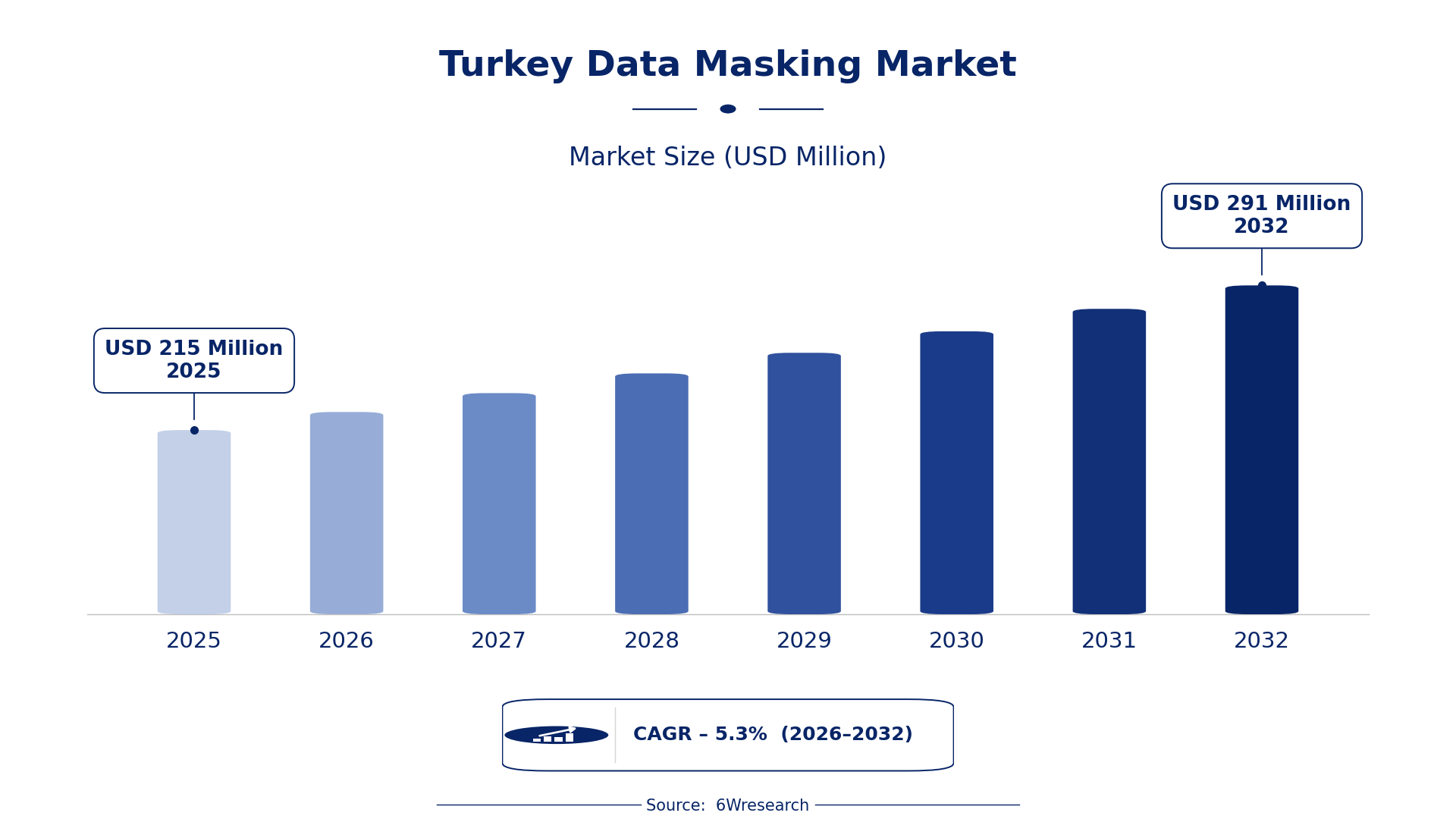
The Turkey Data Masking Market was estimated at USD 215 Million in 2025 and is projected to reach USD 291 Million by 2032, growing at a CAGR of 5.3% from 2026 to 2032.
Turkey Data Masking Market Synopsis
The increasing emphasis on data privacy in Turkey has catalyzed the adoption of data masking technologies across various sectors. Organizations are particularly focused on implementing strategies that anonymize sensitive information to maintain compliance with stringent regulations.
As companies transition to cloud environments, the demand for effective data masking solutions that can operate seamlessly within these platforms has intensified. This trend reflects a broader digital transformation, where safeguarding customer data has become paramount in securing trust and operational integrity.
Turkey Data Masking Market Year-wise Growth Rate and Key Drivers
This graph illustrates the annual growth rates of the Turkey Data Masking Market from 2021 to 2032, highlighting a steady upward trajectory and projected expansion over the forecast period.
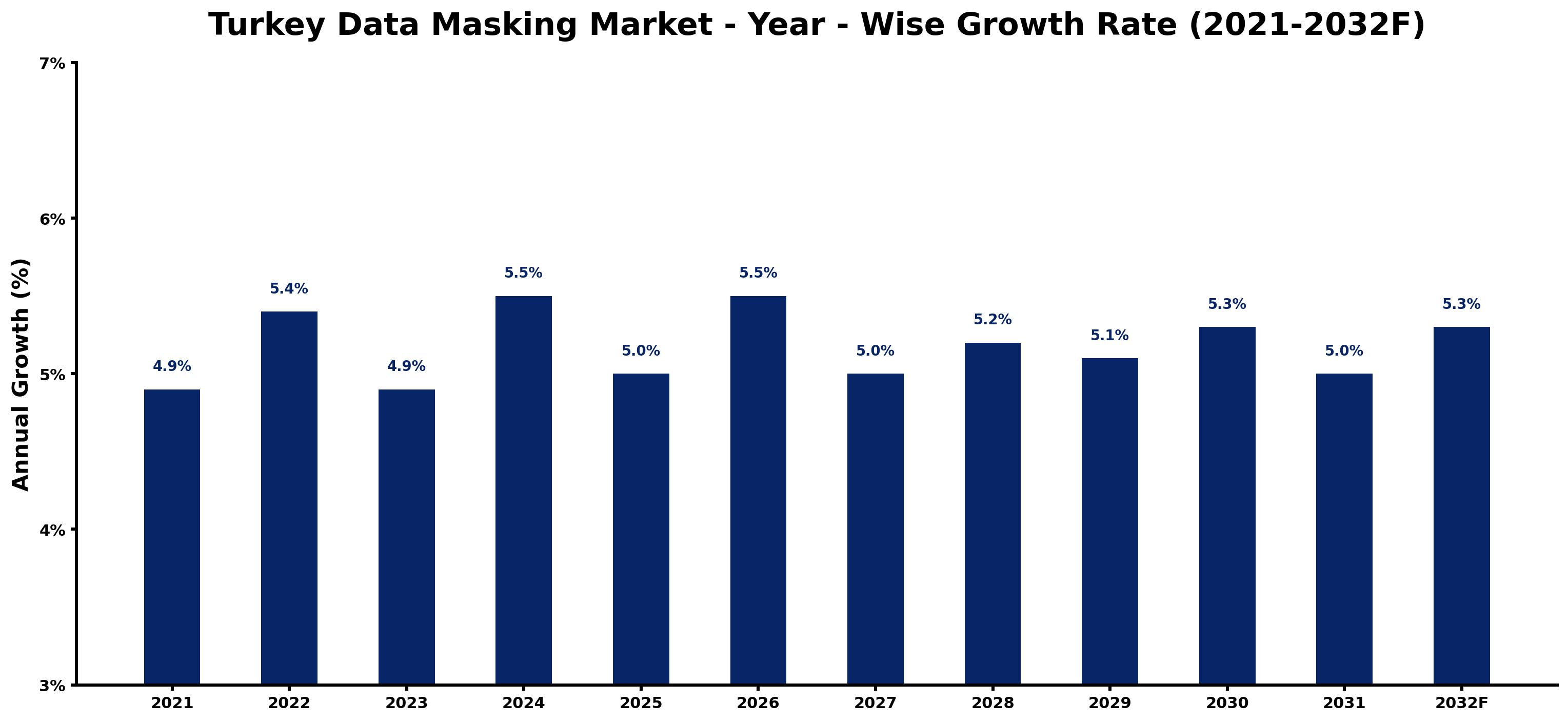
The table below presents the year‑wise growth rates along with the key drivers influencing the market
| Year | Growth Rate | Major Drivers |
| 2021 | 4.9% | New data protection law enhancing privacy and security. |
| 2022 | 5.4% | Increased data breach incidents spurring masking technology adoption. |
| 2023 | 4.9% | Growing cloud adoption requiring robust data privacy solutions. |
| 2024 | 5.5% | Local businesses prioritizing KYC compliance for customer data. |
| 2025 | 5.0% | Emergence of digital banking increasing sensitive data handling. |
| 2026 | 5.5% | Legal frameworks driving need for data de-identification tools. |
| 2027 | 5.0% | Rising awareness of data privacy among consumers and firms. |
| 2028 | 5.2% | Regulatory pressure on healthcare firms for patient data protection. |
| 2029 | 5.1% | Expansion in e-commerce fueling demand for secure transactions. |
| 2030 | 5.3% | Government focus on cybersecurity improving institutional data policies. |
| 2031 | 5.0% | Growing IoT adoption necessitating advanced data masking solutions. |
| 2032 | 5.3% | Increased foreign investments demanding compliance with local regulations. |
Note: Market size estimations and growth projections presented in this report are based on 6Wresearch's proprietary forecasting methodology, utilizing the latest available industry data, government publications, and primary research inputs.
Turkey Data Masking Market Key Takeaways
Below are some of the specific key takeaways from the market, including:
- The necessity for data masking has surged due to stringent data privacy laws and the increased risk of data breaches.
- Organizations are implementing advanced technologies such as dynamic data masking to enhance data protection strategies.
- The market is seeing a notable shift towards solutions that support cloud migration while ensuring compliance with local regulations.
- Investment in cybersecurity frameworks is boosting the demand for comprehensive data masking solutions across sectors.
- Innovative developments in privacy-preserving technologies are driving growth in market applications and use cases.
Evaluation of Restraints in Turkey Data Masking Market
Despite the positive momentum, several limitations are hindering market growth. Organizations face challenges in implementing effective data anonymization techniques that balance privacy protection with data utility. on top of that, developing robust masking algorithms suited for non-production environments remains a complex task, complicating data management processes. The regulatory landscape around data privacy is also evolving, and companies must continually adapt to meet changing compliance requirements, which can strain resources and expertise.
Turkey Data Masking Market Trends
A growing trend in the Turkey Data Masking Market is the shift towards dynamic data masking, where data can be masked on-the-fly based on user roles. This allows organizations to maintain operational efficiency while adhering to strict compliance guidelines. Additionally, the integration of artificial intelligence into data masking solutions is creating opportunities for more sophisticated anonymization techniques. As organizations increasingly adopt cloud-based infrastructures, the alignment of data masking practices with cloud security standards is becoming essential.
Turkey Data Masking Market Opportunities
The Turkey Data Masking Market is ripe for growth, particularly in sectors dealing with high volumes of sensitive personal data, such as finance and healthcare. Investment opportunities lie in developing comprehensive solutions that cater to the demands of businesses transitioning to cloud-based systems. Additionally, organizations seeking to enhance their data governance frameworks are likely to invest in data masking technologies that not only comply with regulations but also optimize data usage for analytics and business intelligence.
Government Initiatives in the Turkey Data Masking Market
The Turkish government is taking substantial steps to fortify data privacy and regulatory compliance, significantly influencing the data masking market. Recent policies aim to establish standards for data protection, driving organizations to implement effective data masking strategies that comply with national and European regulations.
- A regulatory framework introduced in 2025 mandating comprehensive data protection measures across various sectors.
- A national initiative focused on developing data anonymization standards is currently underway to enhance data security across industries.
- Upcoming legislation expected in 2026 will impose stricter penalties for non-compliance, further encouraging investments in data masking solutions.
- Public-private partnerships are being formed to promote advanced data security technologies and practices across the market.
Future Insights of the Turkey Data Masking Market
Looking ahead, the Turkey Data Masking Market is expected to witness substantial evolution driven by regulatory changes and technological advancements. As organizations prioritize data privacy, investment in advanced data masking solutions will likely surge. The integration of AI and machine learning into data security practices promises to enhance the effectiveness of data anonymization techniques, thereby fostering greater adoption across various sectors. A proactive approach to compliance and security will be key as the market matures from 2026 to 2032.
Turkey Data Masking Market Latest Developments
In the past year, Turkey’s data masking market has seen a flurry of activity focused on innovation and compliance. Organizations are increasingly looking to enhance their data security strategies in response to growing regulatory pressures and public concern over data privacy.
- A major technology vendor launched a new data masking product in early 2025, enhancing capabilities for on-premises and cloud environments.
- Ongoing partnerships between local firms and international data security experts are currently underway, aimed at integrating cutting-edge technologies into data masking solutions.
- An initiative focused on the development of industry-specific data anonymization frameworks began in mid-2025 and is currently in its active phase.
- A rollout of comprehensive training programs for organizations to better understand data masking solutions is planned for late 2026.
Turkey Data Masking Market - Key Attractiveness of the Report
- 10 Years of Market Numbers
- Historical Data Starting from 2022 to 2025
- Base Year: 2025
- Forecast Data until 2032
- Key Performance Indicators Impacting the Market
- Major Upcoming Developments and Projects
Key Highlights of the Report:
- Turkey Data Masking Market Outlook
- Market Size of Turkey Data Masking Market, 2025
- Forecast of Turkey Data Masking Market, 2032
- Historical Data and Forecast of Turkey Data Masking Revenues & Volume for the Period 2022-2032F
- Turkey Data Masking Market Trend Evolution
- Turkey Data Masking Market Drivers and Challenges
- Turkey Data Masking Price Trends
- Turkey Data Masking Porter's Five Forces
- Turkey Data Masking Industry Life Cycle
- Historical Data and Forecast of Turkey Data Masking Market Revenues & Volume By Data Masking Type for the Period 2022-2032F
- Historical Data and Forecast of Turkey Data Masking Market Revenues & Volume By Static for the Period 2022-2032F
- Historical Data and Forecast of Turkey Data Masking Market Revenues & Volume By Dynamic for the Period 2022-2032F
- Historical Data and Forecast of Turkey Data Masking Market Revenues & Volume By Component for the Period 2022-2032F
- Historical Data and Forecast of Turkey Data Masking Market Revenues & Volume By Software for the Period 2022-2032F
- Historical Data and Forecast of Turkey Data Masking Market Revenues & Volume By Services for the Period 2022-2032F
- Historical Data and Forecast of Turkey Data Masking Market Revenues & Volume By Business Function for the Period 2022-2032F
- Historical Data and Forecast of Turkey Data Masking Market Revenues & Volume By Finance for the Period 2022-2032F
- Historical Data and Forecast of Turkey Data Masking Market Revenues & Volume By Marketing & Sales for the Period 2022-2032F
- Historical Data and Forecast of Turkey Data Masking Market Revenues & Volume By Operations for the Period 2022-2032F
- Historical Data and Forecast of Turkey Data Masking Market Revenues & Volume By Legal for the Period 2022-2032F
- Historical Data and Forecast of Turkey Data Masking Market Revenues & Volume By Organization Size for the Period 2022-2032F
- Historical Data and Forecast of Turkey Data Masking Market Revenues & Volume By Small and Medium-sized Enterprises (SMEs) for the Period 2022-2032F
- Historical Data and Forecast of Turkey Data Masking Market Revenues & Volume By Large enterprises for the Period 2022-2032F
- Historical Data and Forecast of Turkey Data Masking Market Revenues & Volume By Deployment Type for the Period 2022-2032F
- Historical Data and Forecast of Turkey Data Masking Market Revenues & Volume By On-premises for the Period 2022-2032F
- Historical Data and Forecast of Turkey Data Masking Market Revenues & Volume By Cloud for the Period 2022-2032F
- Historical Data and Forecast of Turkey Data Masking Market Revenues & Volume By Vertical for the Period 2022-2032F
- Historical Data and Forecast of Turkey Data Masking Market Revenues & Volume By BFSI for the Period 2022-2032F
- Historical Data and Forecast of Turkey Data Masking Market Revenues & Volume By Healthcare and life sciences for the Period 2022-2032F
- Historical Data and Forecast of Turkey Data Masking Market Revenues & Volume By Retail and eCommerce for the Period 2022-2032F
- Historical Data and Forecast of Turkey Data Masking Market Revenues & Volume By Telecommunications and IT for the Period 2022-2032F
- Historical Data and Forecast of Turkey Data Masking Market Revenues & Volume By Government and defense for the Period 2022-2032F
- Historical Data and Forecast of Turkey Data Masking Market Revenues & Volume By Media and entertainment for the Period 2022-2032F
- Historical Data and Forecast of Turkey Data Masking Market Revenues & Volume By Manufacturing for the Period 2022-2032F
- Turkey Data Masking Import Export Trade Statistics
- Market Opportunity Assessment By Data Masking Type
- Market Opportunity Assessment By Component
- Market Opportunity Assessment By Business Function
- Market Opportunity Assessment By Organization Size
- Market Opportunity Assessment By Deployment Type
- Market Opportunity Assessment By Vertical
- Turkey Data Masking Top Companies Market Share
- Turkey Data Masking Competitive Benchmarking By Technical and Operational Parameters
- Turkey Data Masking Company Profiles
- Turkey Data Masking Key Strategic Recommendations






































