Turkey Mobile Security Market Size & Growth Rate (2026-2032)
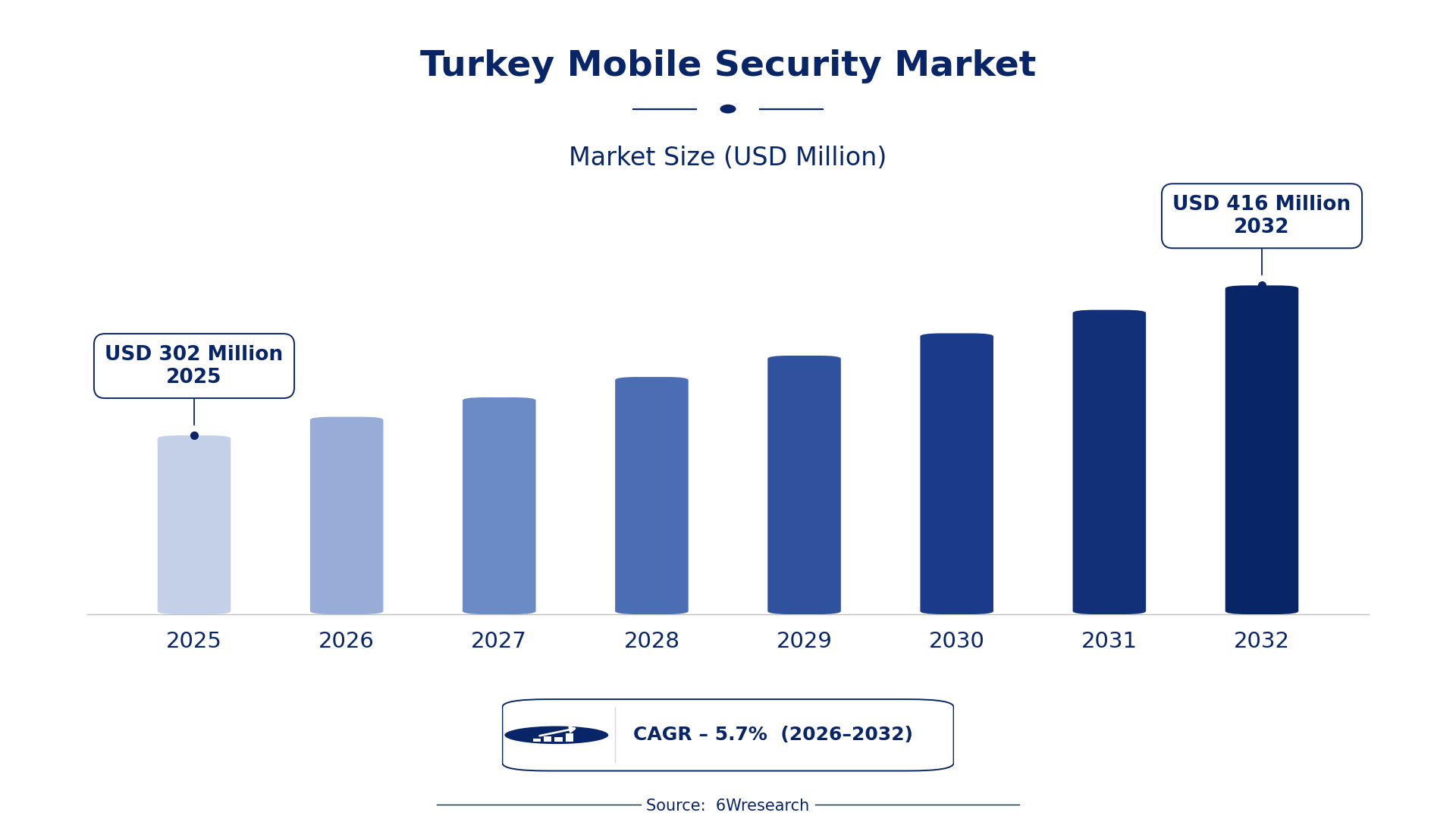
The Turkey Mobile Security Market was estimated at USD 302 Million in 2025 and is projected to reach USD 416 Million by 2032, growing at a CAGR of 5.7% from 2026 to 2032.
Turkey Mobile Security Market Synopsis
Turkey's mobile security sector has witnessed a surge in demand, driven primarily by the escalating number of cyber threats faced by businesses and consumers. However, as the market evolves, it is moving towards advanced security solutions that go beyond traditional antivirus software to encompass more comprehensive threat detection and response strategies.
While the current momentum is positive, the future will hinge on the ability of service providers to innovate. The integration of biometric authentication and behavioral analytics is setting the stage for a transformative period, with a notable focus on meeting regulatory compliance and enhancing user privacy.
Turkey Mobile Security Market Year-wise Growth Rate and Key Drivers
This graph illustrates the annual growth rates of the Turkey Mobile Security Market from 2021 to 2032, highlighting a steady upward trajectory and projected expansion over the forecast period.
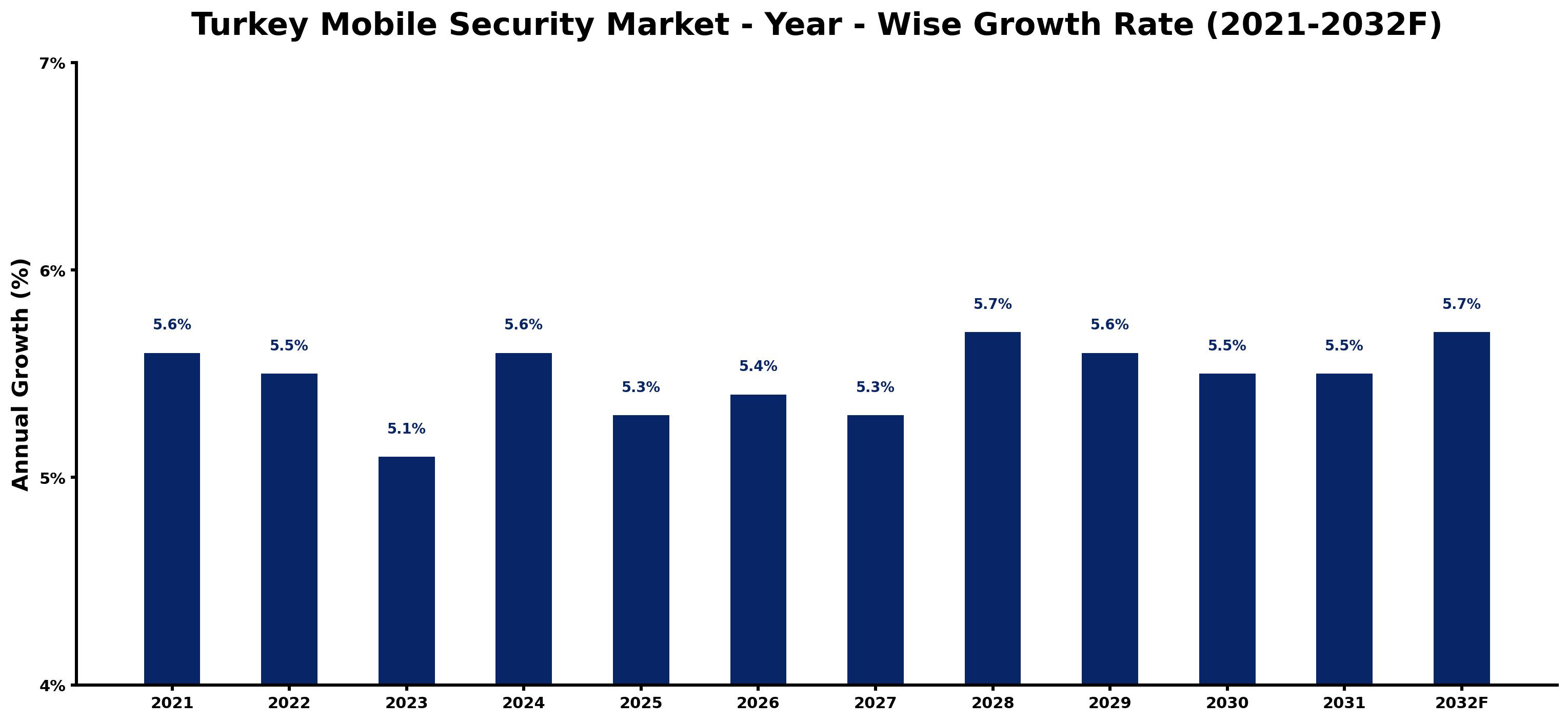
The table below presents the year‑wise growth rates along with the key drivers influencing the market
| Year | Growth Rate | Major Drivers |
| 2021 | 5.6% | Increase in mobile banking user base and security focus. |
| 2022 | 5.5% | Cybersecurity framework by BDDK enhancing mobile security measures. |
| 2023 | 5.1% | Regulatory push for biometric authentication in transactions. |
| 2024 | 5.6% | Growth in e-commerce prompting secure mobile payment solutions. |
| 2025 | 5.3% | Rise in online gaming boosting need for mobile security. |
| 2026 | 5.4% | Tech-savvy youth leading to higher mobile app security demand. |
| 2027 | 5.3% | Government regulations on personal data protection driving solutions. |
| 2028 | 5.7% | Adoption of 5G technology increasing mobile security concerns. |
| 2029 | 5.6% | Increased penetration of smartphones necessitating enhanced security. |
| 2030 | 5.5% | Partnerships between fintech and security firms for robust services. |
| 2031 | 5.5% | Local startups innovating security solutions for mobile applications. |
| 2032 | 5.7% | Focus on protecting user privacy within mobile ecosystems. |
Note: Market size estimations and growth projections presented in this report are based on 6Wresearch's proprietary forecasting methodology, utilizing the latest available industry data, government publications, and primary research inputs.
Turkey Mobile Security Market Key Takeaways
Below are some of the specific key takeaways from the market, including:
- The increasing frequency of cyber incidents is prompting both enterprises and individuals to prioritize mobile security solutions.
- Regulatory requirements are becoming stricter, compelling organizations to adopt advanced mobile security measures.
- The trend towards BYOD (Bring Your Own Device) policies is driving the demand for robust mobile device management (MDM) solutions.
- Technological advancements in mobile antivirus and encryption technologies are pivotal to market growth.
- Challenges related to data privacy and secure access control are crucial focus areas for ongoing market development.
Evaluation of Restraints in Turkey Mobile Security Market
Several key limitations impede the growth of Turkey's mobile security market. A significant challenge is the ever-adaptive nature of cyber threats, which complicates efforts to maintain effective mobile device protection. on top of that, ensuring secure mobile authentication remains a critical hurdle for organizations. The necessity to comply with evolving data protection regulations adds another layer of complexity for companies seeking to implement mobile security solutions effectively.
Turkey Mobile Security Market Trends
As the mobile security market in Turkey develops, certain trends are becoming increasingly prominent. The rise of Internet of Things (IoT) devices has created an imperative for mobile security protocols to extend beyond traditional devices. Additionally, an uptick in consumer awareness regarding privacy and security is pushing companies to offer more transparent and secure services. The shift towards AI-driven security measures is becoming a key differentiator among providers, enabling more proactive threat detection and incident response capabilities.
Turkey Mobile Security Market Opportunities
The potential for growth in the Turkey Mobile Security Market is substantial. Companies that can introduce innovative solutions tailored to local regulatory standards and user preferences are well-positioned for success. Additionally, investment in partnerships between technology providers and enterprises can create synergistic solutions that enhance security. There is a pronounced opportunity in developing comprehensive training programs that educate users on mobile security practices, helping to mitigate risks associated with human error.
Government Initiatives in the Turkey Mobile Security Market
Government policy is pivotal in shaping the mobile security landscape in Turkey. With rising concerns over cybersecurity, authorities are implementing regulatory frameworks designed to enhance data privacy and mobile device security. Such initiatives ensure that companies adhere to standards that protect both businesses and consumers in an increasingly digital economy.
- A cybersecurity strategy launched in early 2023 has mandated stricter compliance protocols for mobile app developers.
- Ongoing efforts include the establishment of a national cybersecurity task force focused on enhancing security measures across mobile platforms.
- Planned regulations for 2026 will introduce new guidelines for secure electronic transactions, emphasizing mobile security as a cornerstone.
- A recent initiative to fund cybersecurity training programs for IT professionals aims to bolster expertise in mobile security practices.
Future Insights of the Turkey Mobile Security Market
The outlook for the Turkey Mobile Security Market from 2026 to 2032 appears optimistic. The confluence of increasing mobile device usage, coupled with more stringent regulatory requirements, will likely drive demand for security solutions. on top of that, organizations that invest in advanced technologies such as AI and machine learning will be better positioned to address emerging threats, ensuring sustainable growth in a competitive environment.
Turkey Mobile Security Market Latest Developments
Recent developments in the Turkey Mobile Security Market reflect a concerted effort to enhance security measures and address new threats. The past year has seen notable advancements in mobile security technologies, indicating a shift towards more sophisticated protection strategies.
- A major technology vendor launched an upgraded mobile antivirus solution in late 2023, focusing on enhanced malware detection capabilities.
- An ongoing collaboration between telecommunications companies aims to develop a secure mobile payment platform, expected to roll out by mid-2024.
- A regulatory body is currently revising standards for mobile security frameworks, with a public consultation process underway that began in early 2023.
- Upcoming initiatives are set to enhance mobile device management capabilities, with pilot programs expected to commence by late 2025.
Turkey Mobile Security Market - Key Attractiveness of the Report
- 10 Years of Market Numbers
- Historical Data Starting from 2022 to 2025
- Base Year: 2025
- Forecast Data until 2032
- Key Performance Indicators Impacting the Market
- Major Upcoming Developments and Projects
Key Highlights of the Report:
- Turkey Mobile Security Market Outlook
- Market Size of Turkey Mobile Security Market, 2025
- Forecast of Turkey Mobile Security Market, 2032
- Historical Data and Forecast of Turkey Mobile Security Revenues & Volume for the Period 2022-2032F
- Turkey Mobile Security Market Trend Evolution
- Turkey Mobile Security Market Drivers and Challenges
- Turkey Mobile Security Price Trends
- Turkey Mobile Security Porter's Five Forces
- Turkey Mobile Security Industry Life Cycle
- Historical Data and Forecast of Turkey Mobile Security Market Revenues & Volume By End User for the Period 2022-2032F
- Historical Data and Forecast of Turkey Mobile Security Market Revenues & Volume By Individual for the Period 2022-2032F
- Historical Data and Forecast of Turkey Mobile Security Market Revenues & Volume By Enterprise (Solution (Authentication, Application Security, & Device Security), Service) for the Period 2022-2032F
- Historical Data and Forecast of Turkey Mobile Security Market Revenues & Volume By Deployment Mode for the Period 2022-2032F
- Historical Data and Forecast of Turkey Mobile Security Market Revenues & Volume By On-premises for the Period 2022-2032F
- Historical Data and Forecast of Turkey Mobile Security Market Revenues & Volume By Cloud for the Period 2022-2032F
- Historical Data and Forecast of Turkey Mobile Security Market Revenues & Volume By Organization Size for the Period 2022-2032F
- Historical Data and Forecast of Turkey Mobile Security Market Revenues & Volume By Small and Medium-Sized Enterprises (SMEs) for the Period 2022-2032F
- Historical Data and Forecast of Turkey Mobile Security Market Revenues & Volume By Large Enterprises for the Period 2022-2032F
- Historical Data and Forecast of Turkey Mobile Security Market Revenues & Volume By Vertical for the Period 2022-2032F
- Historical Data and Forecast of Turkey Mobile Security Market Revenues & Volume By BFSI for the Period 2022-2032F
- Historical Data and Forecast of Turkey Mobile Security Market Revenues & Volume By Telecom & IT for the Period 2022-2032F
- Historical Data and Forecast of Turkey Mobile Security Market Revenues & Volume By Retail for the Period 2022-2032F
- Historical Data and Forecast of Turkey Mobile Security Market Revenues & Volume By Healthcare for the Period 2022-2032F
- Historical Data and Forecast of Turkey Mobile Security Market Revenues & Volume By Government & Defense for the Period 2022-2032F
- Historical Data and Forecast of Turkey Mobile Security Market Revenues & Volume By Manufacturing for the Period 2022-2032F
- Historical Data and Forecast of Turkey Mobile Security Market Revenues & Volume By Others for the Period 2022-2032F
- Historical Data and Forecast of Turkey Mobile Security Market Revenues & Volume By Operating System for the Period 2022-2032F
- Historical Data and Forecast of Turkey Mobile Security Market Revenues & Volume By iOS for the Period 2022-2032F
- Historical Data and Forecast of Turkey Mobile Security Market Revenues & Volume By Android for the Period 2022-2032F
- Turkey Mobile Security Import Export Trade Statistics
- Market Opportunity Assessment By End User
- Market Opportunity Assessment By Deployment Mode
- Market Opportunity Assessment By Organization Size
- Market Opportunity Assessment By Vertical
- Market Opportunity Assessment By Operating System
- Turkey Mobile Security Top Companies Market Share
- Turkey Mobile Security Competitive Benchmarking By Technical and Operational Parameters
- Turkey Mobile Security Company Profiles
- Turkey Mobile Security Key Strategic Recommendations






































