Turkey Oil and Gas Cloud Applications Market Size & Growth Rate (2026-2032)
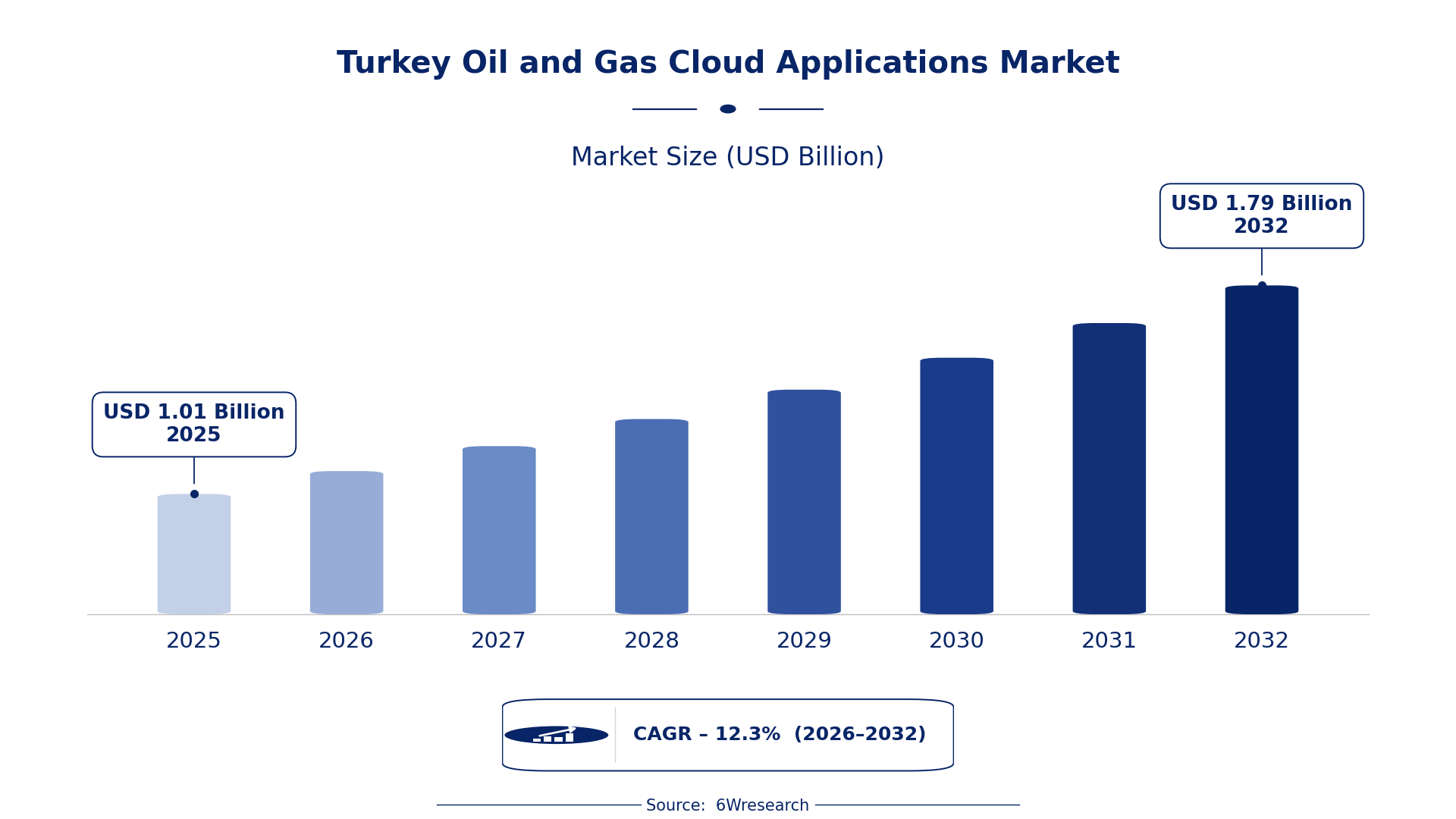
The Turkey Oil and Gas Cloud Applications Market was estimated at USD 1007 Million in 2025 and is projected to reach USD 1793 Million by 2032, growing at a CAGR of 12.3% from 2026 to 2032.
Turkey Oil and Gas Cloud Applications Market Synopsis
In Turkey, the oil and gas sector is increasingly embracing cloud applications to enhance operational efficiency. Companies are leveraging cloud technology for improved data management and real-time analytics, which are critical in an industry marked by complexity and high operational costs.
The market is witnessing a notable shift driven by government initiatives focused on digital transformation. This transition is creating a fertile ground for the adoption of innovative cloud solutions that streamline operations and foster collaboration among geographically dispersed teams.
Turkey Oil and Gas Cloud Applications Market Year-wise Growth Rate and Key Drivers
This graph illustrates the annual growth rates of the Turkey Oil and Gas Cloud Applications Market from 2021 to 2032, highlighting a steady upward trajectory and projected expansion over the forecast period.
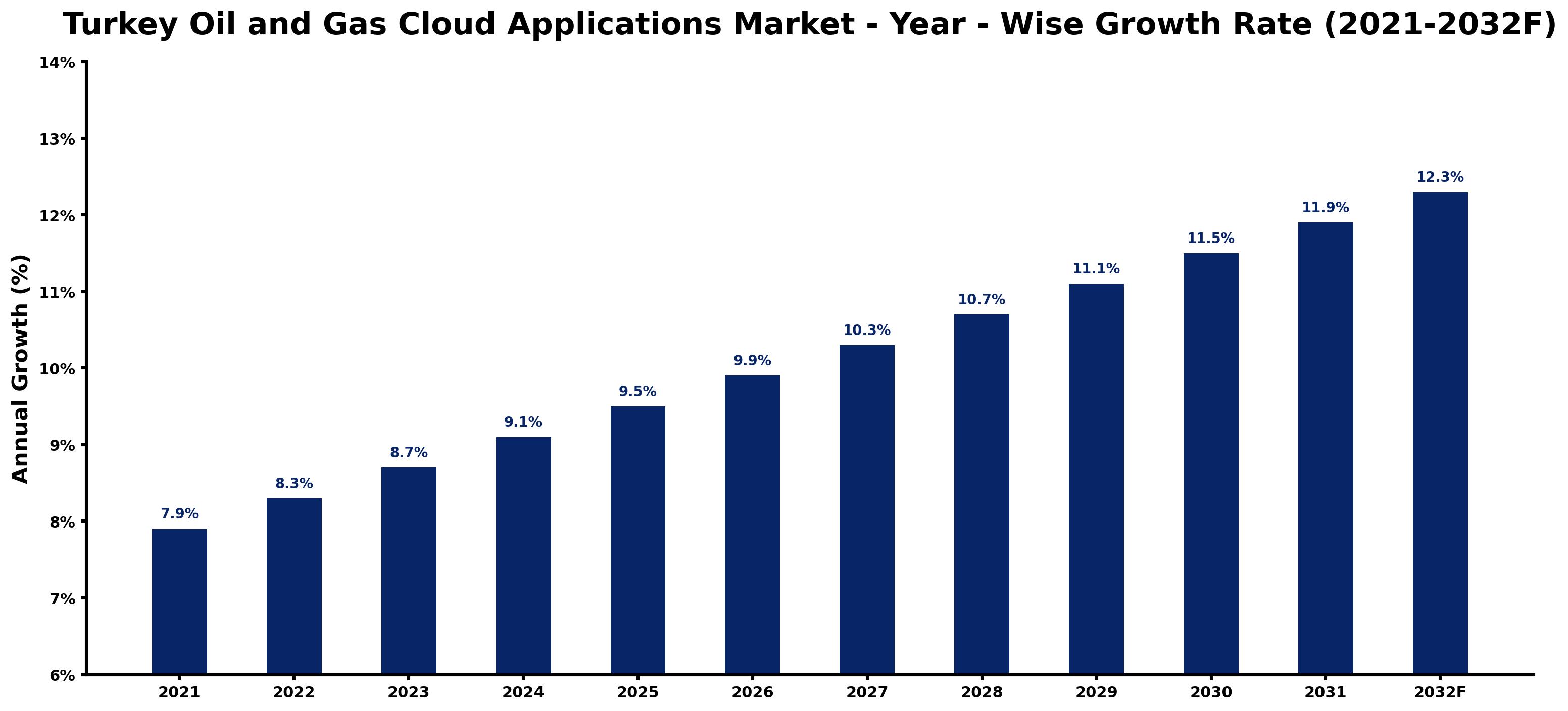
The table below presents the year‑wise growth rates along with the key drivers influencing the market
| Year | Growth Rate | Major Drivers |
| 2021 | 7.9% | Government incentives for digital transformation in oil sector. |
| 2022 | 8.3% | Adoption of advanced data management by Turkish oil companies. |
| 2023 | 8.7% | Increased cloud adoption driven by IT modernization initiatives. |
| 2024 | 9.1% | Rise of Turkish startups focusing on oil-related cloud solutions. |
| 2025 | 9.5% | Regulatory push for enhanced cybersecurity in oil applications. |
| 2026 | 9.9% | Growing focus on operational efficiency in oil production. |
| 2027 | 10.3% | Telecommunications advancements enhancing remote oil monitoring capabilities. |
| 2028 | 10.7% | Public-private partnerships accelerating cloud deployment in energy. |
| 2029 | 11.1% | Investment in IoT technologies boosting operational data integration. |
| 2030 | 11.5% | Rising need for real-time supply chain management tools. |
| 2031 | 11.9% | Integration of AI in oil data analytics applications. |
| 2032 | 12.3% | Growing trend of outsourcing cloud infrastructure in oil firms. |
Note: Market size estimations and growth projections presented in this report are based on 6Wresearch's proprietary forecasting methodology, utilizing the latest available industry data, government publications, and primary research inputs.
Turkey Oil and Gas Cloud Applications Market Key Takeaways
Below are some of the specific key takeaways from the market, including:
- Cloud applications are vital for optimizing asset management and operational workflows.
- Real-time data analytics capabilities are driving decision-making processes in oil and gas companies.
- Government policies are promoting digital transformation and cloud technology adoption.
- Data security and privacy remain critical concerns that need addressing in cloud implementations.
- Predictive maintenance and reservoir simulation are gaining traction within cloud-based solutions.
Evaluation of Restraints in Turkey Oil and Gas Cloud Applications Market
Despite the promising growth trajectory, the Turkey Oil and Gas Cloud Applications Market faces genuine hurdles. Chief among these is data security; companies are wary of vulnerabilities inherent in cloud environments. The integration of cloud applications with existing legacy systems presents another challenge, often requiring substantial investment in infrastructure upgrades. Additionally, the ongoing need for software updates, combined with high initial implementation costs, can deter potential adopters from fully committing to cloud solutions.
Turkey Oil and Gas Cloud Applications Market Trends
Several trends are shaping the Turkey Oil and Gas Cloud Applications Market. Notably, there is a growing inclination towards cloud-based data analytics tools that enhance operational insights and facilitate predictive maintenance. Companies are also increasingly adopting collaborative platforms to improve communication among teams dispersed across various locations. on top of that, the focus on sustainability is prompting businesses to utilize cloud applications for better resource management and reduced environmental impact.
Turkey Oil and Gas Cloud Applications Market Opportunities
The future presents numerous opportunities for growth in this market. Companies are encouraged to invest in cloud-based solutions that support advanced data analytics and machine learning capabilities. The push for digital transformation within the sector creates openings for vendors offering tailored applications that meet specific operational needs. Additionally, partnerships between cloud service providers and oil and gas firms can lead to innovative solutions that enhance efficiency and reduce costs.
Government Initiatives in the Turkey Oil and Gas Cloud Applications Market
Government initiatives are pivotal in shaping the Turkey Oil and Gas Cloud Applications Market. The Turkish government's focus on digital transformation in the energy sector has led to various policies that encourage the adoption of cloud technologies. These initiatives aim to boost operational efficiency, enhance collaboration, and improve data security across the industry.
- A national digital infrastructure upgrade programme launched recently aims to enhance connectivity and support cloud computing in the energy sector.
- Currently, a regulatory framework is being developed to set data security standards for cloud applications in the oil and gas industry.
- A public-private initiative is expected to expand digital resources and training for cloud technology, projected to start in 2026.
- Ongoing discussions are taking place regarding tax incentives for companies investing in cloud-based solutions to encourage further adoption.
- Future plans include a comprehensive policy to mandate cloud adoption for all major oil and gas operations by 2030.
Future Insights of the Turkey Oil and Gas Cloud Applications Market
Looking ahead to 2026-2032, the Turkey Oil and Gas Cloud Applications Market is likely to experience substantial growth fueled by technological advancements and increased governmental support for digital initiatives. The trend towards predictive analytics and AI integration will continue to evolve, allowing companies to make data-driven decisions that enhance operational performance. As more firms recognize the benefits of cloud applications, we can expect a surge in adoption rates, fundamentally transforming how the industry operates.
Turkey Oil and Gas Cloud Applications Market Latest Developments
In the past year, the Turkey Oil and Gas Cloud Applications Market has seen significant developments as companies strive to enhance operational efficiency through digital solutions. The momentum towards cloud adoption is building, with various initiatives aimed at modernizing the sector.
- A leading regional operator initiated a cloud migration project in early 2025, successfully completed by mid-2025, significantly improving data accessibility.
- An ongoing partnership between technology vendors and oil companies started in late 2025 focuses on developing tailored cloud solutions to meet industry needs.
- Upcoming is a major conference in Q2 2026, aimed at showcasing innovations in cloud applications specific to the oil and gas sector.
- A pilot project for cloud-based reservoir simulation is currently underway, expected to yield insights by late 2025.
- Plans are in place for a comprehensive training program for oil and gas personnel on cloud technologies set to roll out in early 2026.
Turkey Oil and Gas Cloud Applications Market - Key Attractiveness of the Report
- 10 Years of Market Numbers
- Historical Data Starting from 2022 to 2025
- Base Year: 2025
- Forecast Data until 2032
- Key Performance Indicators Impacting the Market
- Major Upcoming Developments and Projects
Key Highlights of the Report:
- Turkey Oil and Gas Cloud Applications Market Outlook
- Market Size of Turkey Oil and Gas Cloud Applications Market, 2025
- Forecast of Turkey Oil and Gas Cloud Applications Market, 2032
- Historical Data and Forecast of Turkey Oil and Gas Cloud Applications Revenues & Volume for the Period 2022-2032F
- Turkey Oil and Gas Cloud Applications Market Trend Evolution
- Turkey Oil and Gas Cloud Applications Market Drivers and Challenges
- Turkey Oil and Gas Cloud Applications Price Trends
- Turkey Oil and Gas Cloud Applications Porter's Five Forces
- Turkey Oil and Gas Cloud Applications Industry Life Cycle
- Historical Data and Forecast of Turkey Oil and Gas Cloud Applications Market Revenues & Volume By Component for the Period 2022-2032F
- Historical Data and Forecast of Turkey Oil and Gas Cloud Applications Market Revenues & Volume By Solution for the Period 2022-2032F
- Historical Data and Forecast of Turkey Oil and Gas Cloud Applications Market Revenues & Volume By Services for the Period 2022-2032F
- Historical Data and Forecast of Turkey Oil and Gas Cloud Applications Market Revenues & Volume By Deployment Type for the Period 2022-2032F
- Historical Data and Forecast of Turkey Oil and Gas Cloud Applications Market Revenues & Volume By Private for the Period 2022-2032F
- Historical Data and Forecast of Turkey Oil and Gas Cloud Applications Market Revenues & Volume By Public Cloud for the Period 2022-2032F
- Historical Data and Forecast of Turkey Oil and Gas Cloud Applications Market Revenues & Volume By Operation for the Period 2022-2032F
- Historical Data and Forecast of Turkey Oil and Gas Cloud Applications Market Revenues & Volume By Upstream for the Period 2022-2032F
- Historical Data and Forecast of Turkey Oil and Gas Cloud Applications Market Revenues & Volume By Midstream for the Period 2022-2032F
- Historical Data and Forecast of Turkey Oil and Gas Cloud Applications Market Revenues & Volume By Downstream for the Period 2022-2032F
- Turkey Oil and Gas Cloud Applications Import Export Trade Statistics
- Market Opportunity Assessment By Component
- Market Opportunity Assessment By Deployment Type
- Market Opportunity Assessment By Operation
- Turkey Oil and Gas Cloud Applications Top Companies Market Share
- Turkey Oil and Gas Cloud Applications Competitive Benchmarking By Technical and Operational Parameters
- Turkey Oil and Gas Cloud Applications Company Profiles
- Turkey Oil and Gas Cloud Applications Key Strategic Recommendations






































