Turkey Ornamental Fish Market Size, Share & Growth Rate
The Turkey Ornamental Fish Market was estimated at USD 441 Million in 2025 and is projected to reach USD 584 Million by 2032, growing at a CAGR of 4.1% from 2026 to 2032. This growth trajectory is fueled by a rising trend in aquarium keeping among urban populations, driven by increased disposable incomes and a growing interest in home decor. Moreover, the accessibility of diverse fish species is enhancing consumer engagement and expanding the hobbyist community.
Turkey Ornamental Fish Market Year-wise Growth Rate and Key Drivers
This graph highlights how the Turkey Ornamental Fish Market has steadily grown over the years, supported by major growth factors.
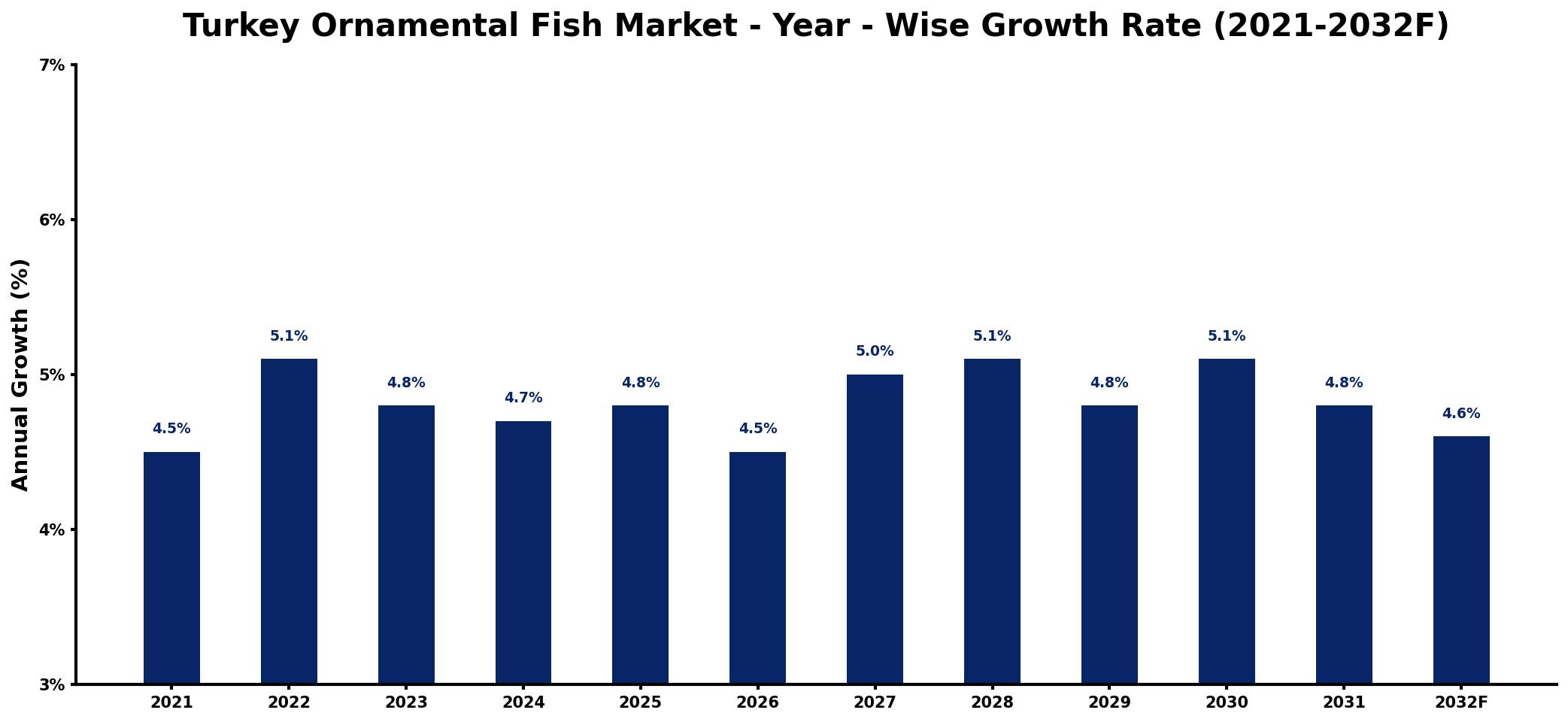
The table below presents the year‑wise growth rates along with the key drivers influencing the market
| Year | Growth Rate | Major Drivers |
| 2021 | 4.5% | Increased consumer interest in aquariums |
| 2022 | 5.1% | Growth in home decoration trends |
| 2023 | 4.8% | Rise in pet ownership rates |
| 2024 | 4.7% | Expansion of online retail platforms |
| 2025 | 4.8% | Investment in sustainable practices |
| 2026 | 4.5% | Increase in educational programs |
| 2027 | 5.0% | growing downstream application demand |
| 2028 | 5.1% | Higher disposable income levels |
| 2029 | 4.8% | Demand for eco-friendly products |
| 2030 | 5.1% | rising infrastructure development spending |
| 2031 | 4.8% | Increased tourism and hospitality investments |
| 2032 | 4.6% | stronger distribution network expansion |
Note: Market size estimations and growth projections presented in this report are based on 6Wresearch's proprietary forecasting methodology, utilizing the latest available industry data, government publications, and primary research inputs.
Turkey Ornamental Fish Market Synopsis
In recent years, the Turkey Ornamental Fish Market has gained momentum, characterized by an expanding base of enthusiastic aquarium hobbyists and increasing popularity of ornamental species. Looking ahead, the market is poised for further expansion as the synergy between urbanization and disposable income growth continues to drive demand.
The market landscape is evolving, with a notable shift towards sustainable practices, as consumers seek ethically sourced fish. A robust network of specialized pet stores and online platforms is catering to this growing interest, while challenges around fish welfare and sustainable breeding practices highlight areas for improvement.
Turkey Ornamental Fish Market Key Takeaways
- The market is experiencing a surge in interest, primarily due to urbanization and rising disposable incomes.
- Sustainable and eco-friendly practices are becoming increasingly important to consumers.
- Online sales and home delivery services are reshaping purchasing patterns in the market.
- Aquascaping trends are driving sales of decorative plants and aquarium accessories.
- Opportunities for investment lie in breeding, retail, and specialized aquarium services.
Evaluation of Restraints in Turkey Ornamental Fish Market
Despite its growth prospects, the Turkey Ornamental Fish Market faces several restraints that could impact its trajectory. Regulatory constraints on imports and exports can limit the availability of certain species, potentially affecting consumer choices. Economic fluctuations may also restrict consumer purchasing power, leading to a decrease in demand for higher-end ornamental fish. Quality control during transportation presents challenges in maintaining the health and welfare of fish, while competition from other pet categories seeks to capture the attention of potential aquarium enthusiasts.
Turkey Ornamental Fish Market Trends
Current trends within the Turkey Ornamental Fish Market indicate a growing demand for unique and exotic species, reflecting an increasing sophistication among hobbyists. Eco-friendly practices are gaining traction, prompting consumers to opt for ethically sourced fish and sustainable aquarium products. The rise of online retailing has made it easier for customers to acquire diverse species and accessories, while a renewed focus on aquascaping is elevating the aesthetic appeal of home aquariums. These trends highlight the markets evolution towards a more environmentally conscious consumer base.
Turkey Ornamental Fish Market Opportunities
The Turkey Ornamental Fish Market presents robust investment opportunities, particularly in breeding popular ornamental fish species and establishing retail outlets or online platforms. Investors can capitalize on the increasing interest in specialized services, such as aquarium maintenance and design consulting. Forming partnerships with local pet stores, aquarium clubs, and hobbyist communities can further enhance market reach. Given the projected growth, this sector offers a fertile ground for innovations and offerings that meet the evolving demands of consumers.
Government Initiatives in the Turkey Ornamental Fish Market
The Turkish government has implemented various policies to regulate the ornamental fish market, promoting environmental sustainability while ensuring compliance within the industry. Licensing requirements for breeders and traders are in place to oversee fish breeding practices, and strict regulations govern the import and export of species to prevent ecological harm. The government also encourages initiatives that focus on the ethical treatment of fish, as well as conservation efforts aimed at preserving native species and natural habitats. These measures are critical to balancing market growth with biodiversity preservation.
Future Insights of the Turkey Ornamental Fish Market
The future of the Turkey Ornamental Fish Market looks promising, with anticipated growth fueled by increased interest in aquaculture and pet ownership. As urbanization continues and middle-class incomes rise, demand for ornamental fish as low-maintenance companions will likely increase. Innovations in breeding techniques and technologies will enhance the availability and variety of fish species. However, market players must navigate environmental regulations and competition from other leisure activities to fully realize this potential. Overall, the landscape appears ripe for expansion, offering opportunities for businesses ready to adapt and innovate.
Turkey Ornamental Fish Market Latest Developments (2025 - 2026)
Recent developments in the Turkey Ornamental Fish Market reflect a dynamic shift towards online sales and home delivery services, as more consumers seek convenience. There is a growing emphasis on community engagement, with local aquarium clubs and pet stores fostering a stronger connection among enthusiasts. Additionally, new partnerships are emerging to promote sustainable practices, aiming to raise awareness about the ethical treatment of ornamental fish. These trends indicate a market actively responding to consumer demands and sustainability challenges.
Turkey Ornamental Fish Market - Key Attractiveness of the Report
- 10 Years of Market Numbers
- Historical Data Starting from 2022 to 2025
- Base Year: 2025
- Forecast Data until 2032
- Key Performance Indicators Impacting the Market
- Major Upcoming Developments and Projects
Key Highlights of the Report:
- Turkey Ornamental Fish Market Outlook
- Market Size of Turkey Ornamental Fish Market, 2025
- Forecast of Turkey Ornamental Fish Market, 2032
- Historical Data and Forecast of Turkey Ornamental Fish Revenues & Volume for the Period 2022-2032F
- Turkey Ornamental Fish Market Trend Evolution
- Turkey Ornamental Fish Market Drivers and Challenges
- Turkey Ornamental Fish Price Trends
- Turkey Ornamental Fish Porter's Five Forces
- Turkey Ornamental Fish Industry Life Cycle
- Historical Data and Forecast of Turkey Ornamental Fish Market Revenues & Volume By Product for the Period 2022-2032F
- Historical Data and Forecast of Turkey Ornamental Fish Market Revenues & Volume By Tropical Freshwater for the Period 2022-2032F
- Historical Data and Forecast of Turkey Ornamental Fish Market Revenues & Volume By Temperate for the Period 2022-2032F
- Historical Data and Forecast of Turkey Ornamental Fish Market Revenues & Volume By Marine for the Period 2022-2032F
- Historical Data and Forecast of Turkey Ornamental Fish Market Revenues & Volume By Application for the Period 2022-2032F
- Historical Data and Forecast of Turkey Ornamental Fish Market Revenues & Volume By Commercial for the Period 2022-2032F
- Historical Data and Forecast of Turkey Ornamental Fish Market Revenues & Volume By Household for the Period 2022-2032F
- Turkey Ornamental Fish Import Export Trade Statistics
- Market Opportunity Assessment By Product
- Market Opportunity Assessment By Application
- Turkey Ornamental Fish Top Companies Market Share
- Turkey Ornamental Fish Competitive Benchmarking By Technical and Operational Parameters
- Turkey Ornamental Fish Company Profiles
- Turkey Ornamental Fish Key Strategic Recommendations






































