Turkiye Piano Market Size Growth Rate
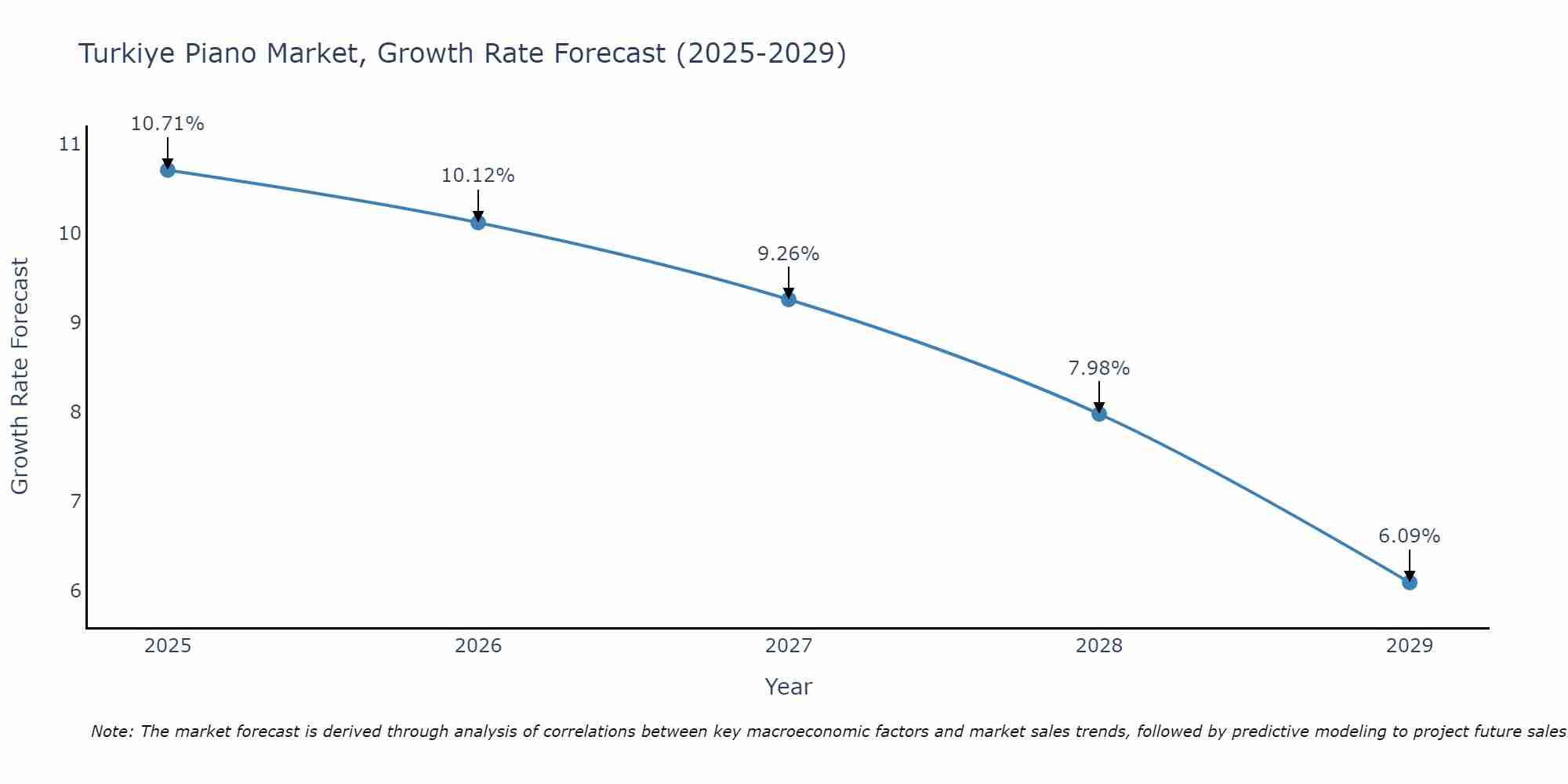
The Turkiye Piano Market may undergo a gradual slowdown in growth rates between 2025 and 2029. Beginning strongly at 10.71% in 2025, growth softens to 6.09% in 2029.
Piano Market: Turkiye vs Top 5 Major Economies in 2027 (Europe)
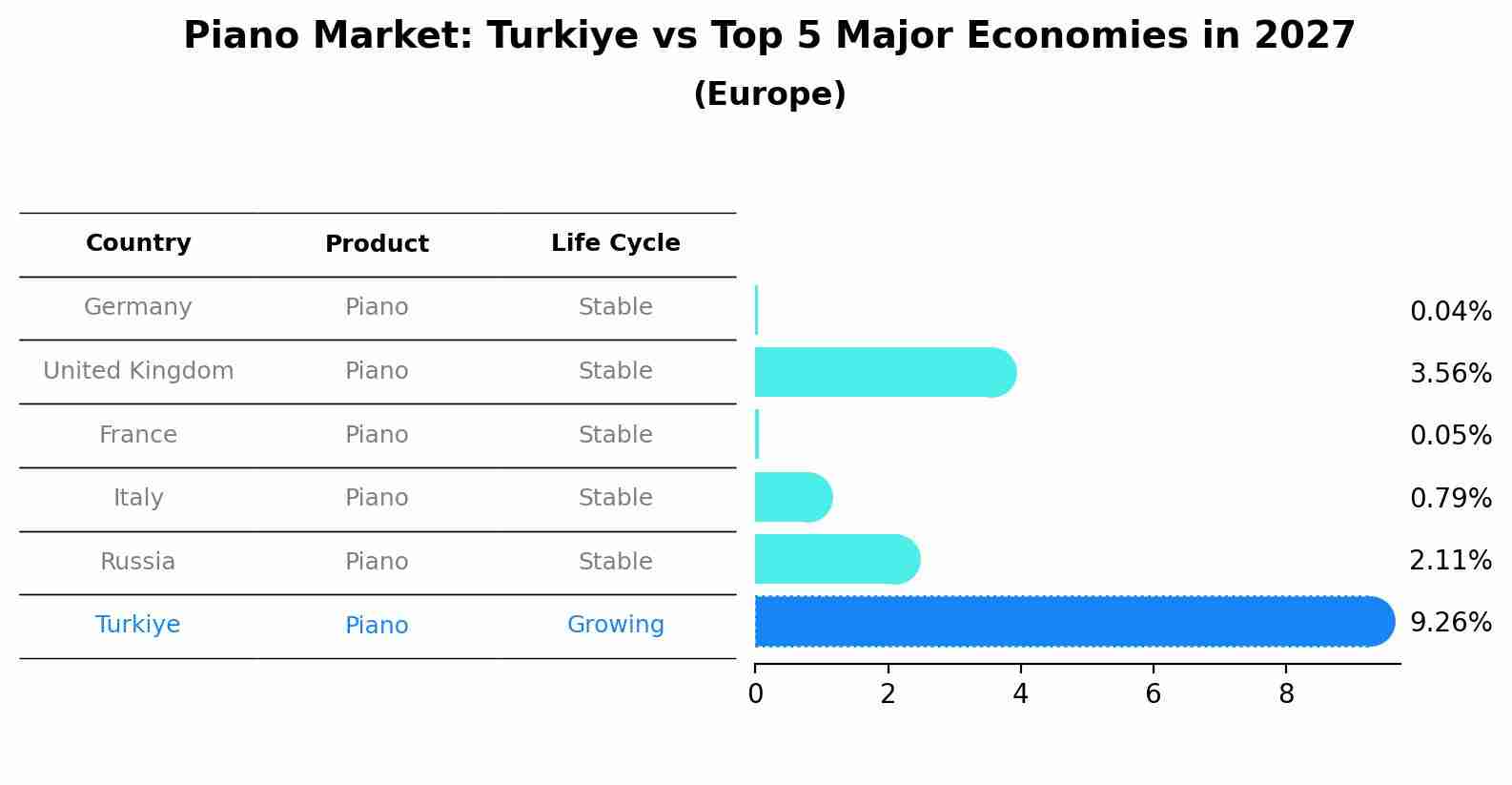
In the Europe region, the Piano market in Turkiye is projected to expand at a growing growth rate of 9.26% by 2027. The largest economy is Germany, followed by United Kingdom, France, Italy and Russia.
Turkey Piano Market Overview
The Turkey piano market is characterized by a growing demand for both acoustic and digital pianos. Acoustic pianos continue to be popular among traditional musicians and music enthusiasts for their rich sound quality and tactile playing experience. However, the digital piano segment is witnessing significant growth due to technological advancements, portability, and versatility features such as various instrument sounds and recording capabilities. Key players in the market offer a wide range of pianos catering to different skill levels and preferences. The market is also influenced by the increasing interest in music education and the rising number of music schools and academies in Turkey. Overall, the Turkey piano market presents opportunities for both acoustic and digital piano manufacturers to cater to a diverse customer base and expand their presence in the country.
Turkey Piano Market Trends
The Turkey Piano Market is currently witnessing a shift towards digital pianos and keyboards. This trend can be attributed to the increasing popularity of digital instruments among beginners and professional musicians alike, due to their affordability, versatility, and technological advancements. Consumers are also showing a growing interest in compact and portable pianos, catering to the needs of modern lifestyles and smaller living spaces. Additionally, there is a rising demand for hybrid pianos that combine the traditional acoustic sound with digital features, providing the best of both worlds to players. Overall, the market is experiencing a transition towards more innovative and convenient piano options, reflecting the evolving preferences of musicians and music enthusiasts in Turkey.
Turkey Piano Market Challenges
In the Turkey piano market, one of the key challenges faced is the limited access to high-quality pianos at affordable prices. This is due to import tariffs and taxes on musical instruments, which can significantly increase the cost of pianos for consumers. Additionally, there is a lack of awareness and education about the benefits of learning to play the piano, leading to lower demand for pianos in the market. Furthermore, the preference for digital pianos over traditional acoustic pianos is growing due to factors such as space constraints and technological advancements, posing a challenge for traditional piano manufacturers. Overall, the Turkey piano market faces obstacles related to affordability, awareness, and changing consumer preferences that impact the demand and growth of the industry.
Turkey Piano Market Investment Opportunities
The Turkey Piano Market offers several investment opportunities for potential investors. With a growing interest in music education and cultural activities, there is a steady demand for pianos in the country. Investing in piano manufacturing companies or retail businesses that specialize in pianos could be lucrative. Additionally, offering piano lessons or establishing music schools could also be a profitable venture as more people seek to learn to play the piano. Collaborating with music festivals or concert halls to sponsor piano-related events could also provide exposure and networking opportunities. Overall, the Turkey Piano Market presents various avenues for investment, catering to the increasing enthusiasm for music and arts in the country.
Turkey Piano Market Government Policy
The Turkish government does not have specific policies in place targeting the piano market. However, the general trade regulations and tax policies applicable to musical instruments like pianos are enforced. These regulations include import duties, VAT, and environmental standards compliance for piano manufacturers and retailers. Additionally, the government provides support for the arts and culture sector, indirectly benefiting the piano market through funding for music education programs, cultural events, and subsidies for music institutions. Overall, while there are no direct policies tailored specifically for the piano market in Turkey, the broader regulatory framework and government support for the arts sector play a role in shaping the industry landscape.
Turkey Piano Market Future Outlook
The future outlook for the Turkey Piano Market appears to be positive, driven by factors such as increasing disposable incomes, growing interest in music education, and a rising preference for high-quality musical instruments. As the economy continues to develop and more people seek out cultural experiences, the demand for pianos is expected to rise. Additionally, advancements in technology are making digital pianos more accessible and affordable, further expanding the market. However, competition from other musical instruments and changing consumer preferences towards electronic music may pose challenges. Overall, the Turkey Piano Market is projected to experience steady growth in the coming years, presenting opportunities for manufacturers, retailers, and distributors to capitalize on the evolving musical landscape.
Key Highlights of the Report:
- Turkey Piano Market Outlook
- Market Size of Turkey Piano Market, 2024
- Forecast of Turkey Piano Market, 2031
- Historical Data and Forecast of Turkey Piano Revenues & Volume for the Period 2021 - 2031
- Turkey Piano Market Trend Evolution
- Turkey Piano Market Drivers and Challenges
- Turkey Piano Price Trends
- Turkey Piano Porter's Five Forces
- Turkey Piano Industry Life Cycle
- Historical Data and Forecast of Turkey Piano Market Revenues & Volume By Type for the Period 2021 - 2031
- Historical Data and Forecast of Turkey Piano Market Revenues & Volume By Grand Piano for the Period 2021 - 2031
- Historical Data and Forecast of Turkey Piano Market Revenues & Volume By Upright Piano for the Period 2021 - 2031
- Historical Data and Forecast of Turkey Piano Market Revenues & Volume By Application for the Period 2021 - 2031
- Historical Data and Forecast of Turkey Piano Market Revenues & Volume By Learning and Teaching for the Period 2021 - 2031
- Historical Data and Forecast of Turkey Piano Market Revenues & Volume By Entertainment for the Period 2021 - 2031
- Historical Data and Forecast of Turkey Piano Market Revenues & Volume By Other for the Period 2021 - 2031
- Turkey Piano Import Export Trade Statistics
- Market Opportunity Assessment By Type
- Market Opportunity Assessment By Application
- Turkey Piano Top Companies Market Share
- Turkey Piano Competitive Benchmarking By Technical and Operational Parameters
- Turkey Piano Company Profiles
- Turkey Piano Key Strategic Recommendations






































