Turkey Small Mammal and Reptile Food Market Size, Share & Growth Rate
The Turkey Small Mammal and Reptile Food Market was estimated at USD 309 Million in 2025 and is projected to reach USD 433 Million by 2032, growing at a CAGR of 4.9% from 2026 to 2032. This steady growth trajectory is primarily fueled by the increasing trend of small mammals and reptiles becoming popular household pets in Turkey. The rising consumer awareness regarding the nutritional requirements of these animals is driving demand for specialized and high-quality food products tailored to their unique dietary needs.
Turkey Small Mammal and Reptile Food Market Year-wise Growth Rate and Key Drivers
This graph highlights how the Turkey Small Mammal and Reptile Food Market has steadily grown over the years, supported by major growth factors.
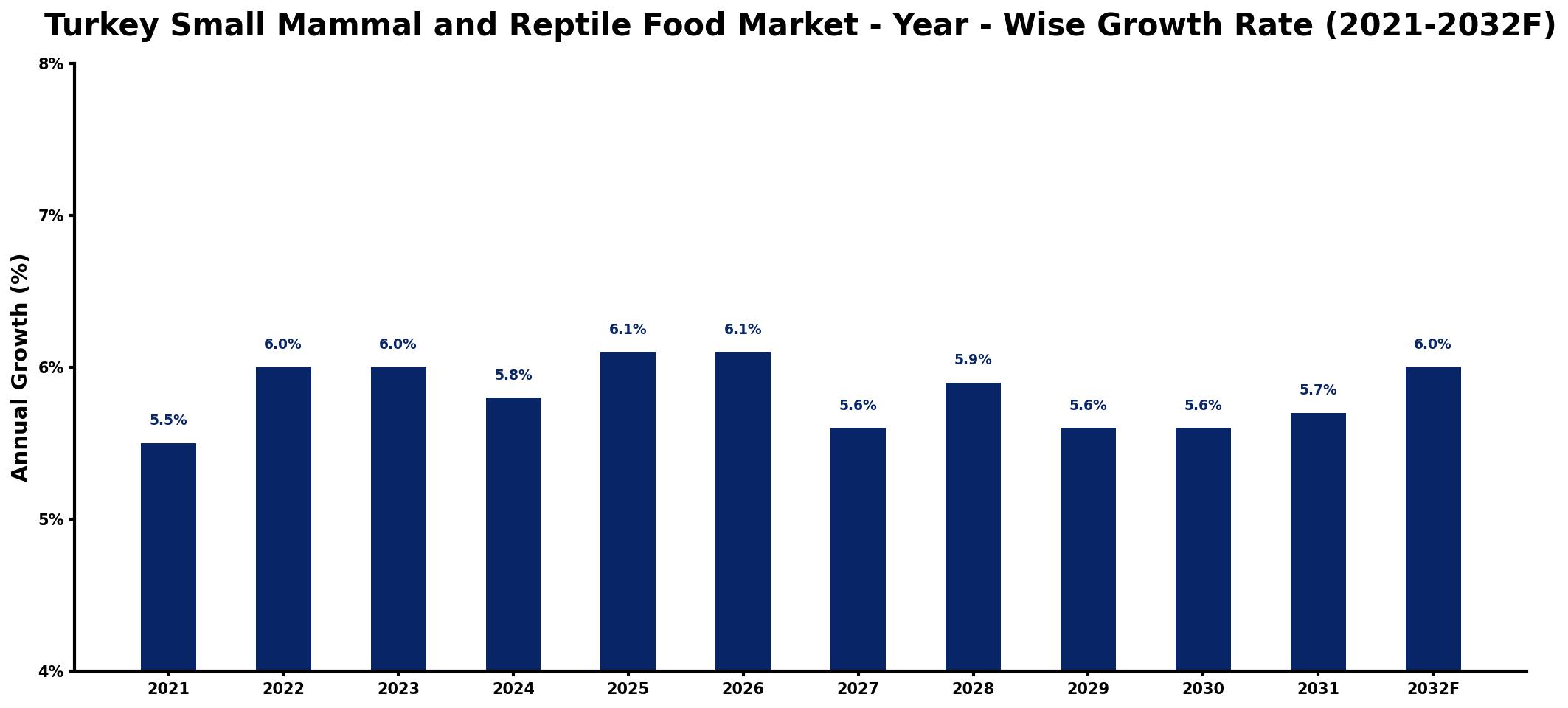
The table below presents the year‑wise growth rates along with the key drivers influencing the market
| Year | Growth Rate | Major Drivers |
| 2021 | 5.5% | Increased pet ownership trends |
| 2022 | 6.0% | Growing demand for premium products |
| 2023 | 6.0% | Expansion of retail distribution channels |
| 2024 | 5.8% | Rising interest in exotic pets |
| 2025 | 6.1% | Investment in sustainable sourcing practices |
| 2026 | 6.1% | Enhancements in product formulations |
| 2027 | 5.6% | Emergence of online shopping platforms |
| 2028 | 5.9% | Strengthening of brand loyalty programs |
| 2029 | 5.6% | Growth of health-conscious consumer base |
| 2030 | 5.6% | Increased marketing of specialty items |
| 2031 | 5.7% | Development of innovative packaging solutions |
| 2032 | 6.0% | Collaborations with veterinary professionals |
Note: Market size estimations and growth projections presented in this report are based on 6Wresearch's proprietary forecasting methodology, utilizing the latest available industry data, government publications, and primary research inputs.
Turkey Small Mammal and Reptile Food Market Synopsis
One of the strongest forces shaping the Turkey Small Mammal and Reptile Food Market today is the growing pet ownership culture, which sees more households integrating small mammals and reptiles into their family units. This shift is not only elevating the status of these pets but is also leading to increased investment in quality nutrition.
In addition to the cultural shift, there is a notable demand for organic and natural food products. Pet owners are becoming increasingly discerning, opting for food that is free from artificial additives and preservatives, and favoring options rich in natural ingredients such as fruits and vegetables. This trend underscores the evolving landscape of the market and highlights consumer preference for premium quality.
Turkey Small Mammal and Reptile Food Market Key Takeaways
- Consumers are prioritizing high-quality nutrition, driving demand for specialized food tailored to small mammals and reptiles.
- There is a significant shift toward natural and organic products, reflecting heightened consumer awareness of pet health.
- The market is being shaped by increasing competition, requiring brands to innovate to maintain market share.
- Investment opportunities lie in developing premium, nutritionally balanced products and eco-friendly options.
- Government policies focus on quality control and ethical sourcing, fostering a safe environment for consumers and pets alike.
Evaluation of Restraints in Turkey Small Mammal and Reptile Food Market
The Turkey Small Mammal and Reptile Food Market faces several restraints that could impact its growth. Intense competition among domestic and international brands often leads to price wars, squeezing profit margins and creating challenges for smaller players. Additionally, changing consumer preferences for more sustainable and natural products necessitate continuous innovation from companies. The regulatory landscape, with its stringent requirements on labeling and ingredient sourcing, also adds layers of complexity for market participants, making it essential for companies to stay agile in response to these challenges.
Turkey Small Mammal and Reptile Food Market Trends
Current trends in the Turkey Small Mammal and Reptile Food Market reveal a growing preference for premium pet food options that are nutritionally balanced and free from harmful additives. Manufacturers are increasingly focused on creating specialized diets that cater to the unique health needs of various small mammal and reptile species. Additionally, the integration of digital marketing strategies to reach pet owners through online platforms is becoming prevalent, as consumers seek convenience and transparency in their purchasing decisions. Eco-friendly packaging and sustainable sourcing are also emerging trends, aligning with the broader consumer movement towards environmentally conscious products.
Turkey Small Mammal and Reptile Food Market Opportunities
The Turkey Small Mammal and Reptile Food Market presents numerous growth and investment opportunities as pet ownership rises. Brands that focus on developing innovative, health-focused products are well-positioned to capitalize on consumer interest in premium nutrition. Expanding distribution channels, particularly through e-commerce platforms, offers another significant avenue for reaching a broader audience. Furthermore, tapping into the demand for sustainable and ethically sourced products can not only enhance brand image but also resonate well with an increasingly eco-conscious consumer base.
Government Initiatives in the Turkey Small Mammal and Reptile Food Market
The Turkish government has enacted policies to regulate the Small Mammal and Reptile Food Market, focusing on animal welfare and consumer safety. These regulations include stringent quality control measures and labeling requirements designed to protect the health of pets. Ethical sourcing practices are monitored to mitigate issues such as illegal wildlife trafficking. Furthermore, the government encourages innovation through research and development initiatives that promote sustainability within the pet food industry.
Future Insights of the Turkey Small Mammal and Reptile Food Market
Looking ahead to 2026-2032, the Turkey Small Mammal and Reptile Food Market is poised for continued growth, driven by the rising trend of exotic pet ownership and an increased focus on animal welfare. As pet owners grow more aware of their pets' specific dietary needs, the demand for tailored nutrition is likely to rise. Brands that prioritize transparency, quality, and sustainability will likely gain a competitive edge, and innovations in product offerings will help shape the future landscape of this dynamic market.
Turkey Small Mammal and Reptile Food Market Latest Developments (2025 - 2026)
Recent developments in the Turkey Small Mammal and Reptile Food Market include a noticeable uptick in the introduction of specialized food products catering to exotic pet owners. Companies are launching a variety of natural and organic options that meet the heightened consumer demand for quality nutrition. Additionally, there is an increasing shift towards online sales channels, with brands enhancing their digital presence to engage with consumers more effectively. Sustainability initiatives are also gaining traction, as more manufacturers focus on eco-friendly packaging solutions.
Turkey Small Mammal and Reptile Food Market - Key Attractiveness of the Report
- 10 Years of Market Numbers
- Historical Data Starting from 2022 to 2025
- Base Year: 2025
- Forecast Data until 2032
- Key Performance Indicators Impacting the Market
- Major Upcoming Developments and Projects
Key Highlights of the Report:
- Turkey Small Mammal and Reptile Food Market Outlook
- Market Size of Turkey Small Mammal and Reptile Food Market, 2025
- Forecast of Turkey Small Mammal and Reptile Food Market, 2032
- Historical Data and Forecast of Turkey Small Mammal and Reptile Food Revenues & Volume for the Period 2022-2032F
- Turkey Small Mammal and Reptile Food Market Trend Evolution
- Turkey Small Mammal and Reptile Food Market Drivers and Challenges
- Turkey Small Mammal and Reptile Food Price Trends
- Turkey Small Mammal and Reptile Food Porter's Five Forces
- Turkey Small Mammal and Reptile Food Industry Life Cycle
- Historical Data and Forecast of Turkey Small Mammal and Reptile Food Market Revenues & Volume By Type for the Period 2022-2032F
- Historical Data and Forecast of Turkey Small Mammal and Reptile Food Market Revenues & Volume By Rabbits Food for the Period 2022-2032F
- Historical Data and Forecast of Turkey Small Mammal and Reptile Food Market Revenues & Volume By Rodents Food for the Period 2022-2032F
- Historical Data and Forecast of Turkey Small Mammal and Reptile Food Market Revenues & Volume By Small Reptiles Food for the Period 2022-2032F
- Historical Data and Forecast of Turkey Small Mammal and Reptile Food Market Revenues & Volume By Other for the Period 2022-2032F
- Historical Data and Forecast of Turkey Small Mammal and Reptile Food Market Revenues & Volume By Application for the Period 2022-2032F
- Historical Data and Forecast of Turkey Small Mammal and Reptile Food Market Revenues & Volume By Pet-Speciality Stores for the Period 2022-2032F
- Historical Data and Forecast of Turkey Small Mammal and Reptile Food Market Revenues & Volume By Supermarkets and Hypermarkets for the Period 2022-2032F
- Historical Data and Forecast of Turkey Small Mammal and Reptile Food Market Revenues & Volume By Convenience Stores for the Period 2022-2032F
- Historical Data and Forecast of Turkey Small Mammal and Reptile Food Market Revenues & Volume By Other for the Period 2022-2032F
- Turkey Small Mammal and Reptile Food Import Export Trade Statistics
- Market Opportunity Assessment By Type
- Market Opportunity Assessment By Application
- Turkey Small Mammal and Reptile Food Top Companies Market Share
- Turkey Small Mammal and Reptile Food Competitive Benchmarking By Technical and Operational Parameters
- Turkey Small Mammal and Reptile Food Company Profiles
- Turkey Small Mammal and Reptile Food Key Strategic Recommendations






































