Turkey Washable Markers Market Size, Share & Growth Rate
The Turkey Washable Markers Market was estimated at USD 445 Million in 2025 and is projected to reach USD 592 Million by 2032, growing at a CAGR of 4.2% from 2026 to 2032. This growth trajectory is largely fueled by heightened consumer awareness regarding the safety and environmental benefits of washable markers. Parents and educators increasingly prioritize non-toxic, easy-to-clean art supplies, driving demand for innovative products that cater to this pressing need.
Turkey Washable Markers Market Year-wise Growth Rate and Key Drivers
This graph highlights how the Turkey Washable Markers Market has steadily grown over the years, supported by major growth factors.
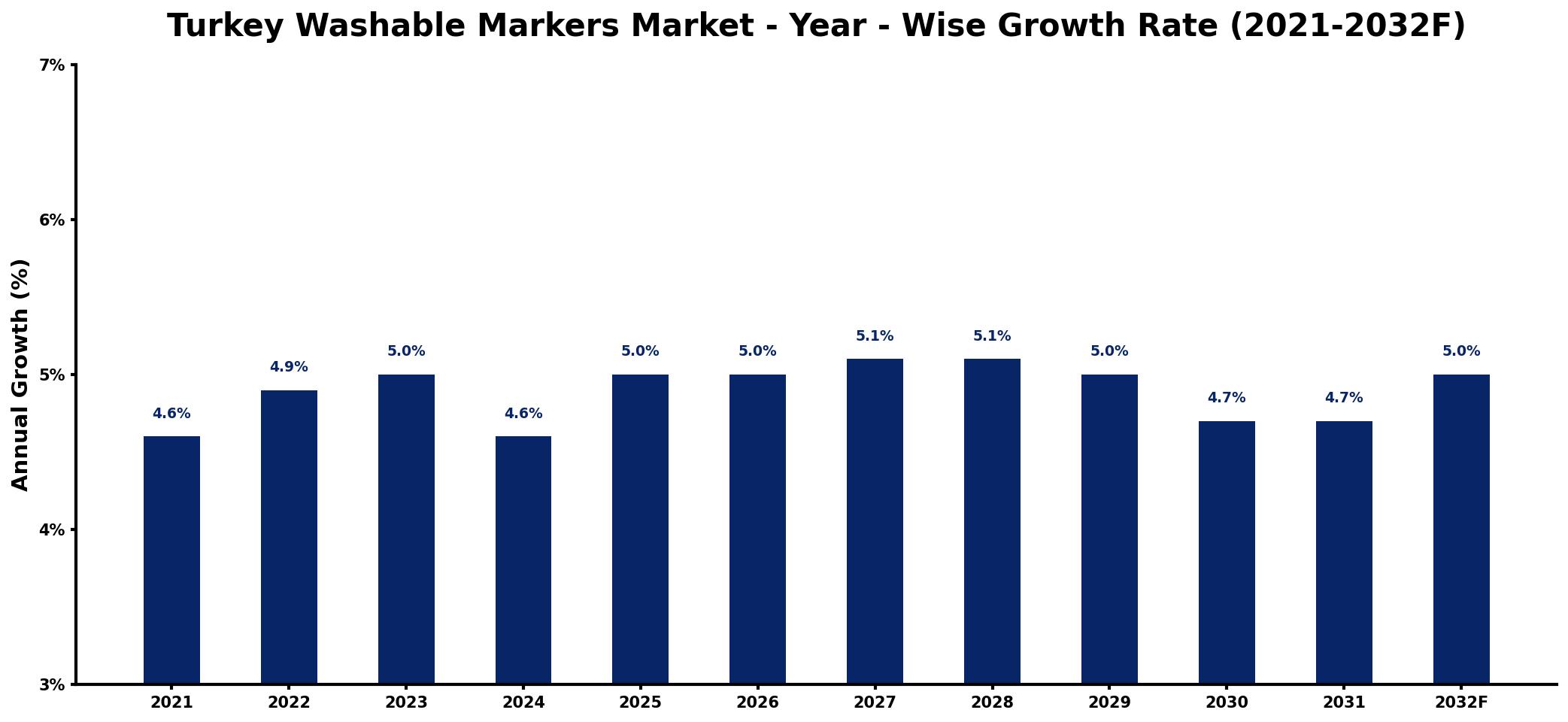
The table below presents the year‑wise growth rates along with the key drivers influencing the market
| Year | Growth Rate | Major Drivers |
| 2021 | 4.6% | Increase in educational spending |
| 2022 | 4.9% | Growth in creative education programs |
| 2023 | 5.0% | Expansion of art therapy initiatives |
| 2024 | 4.6% | Rising popularity of DIY crafts |
| 2025 | 5.0% | Surge in after-school programs |
| 2026 | 5.0% | Boost in eco-friendly materials demand |
| 2027 | 5.1% | rising end-use demand growth |
| 2028 | 5.1% | rising procurement volume requirements |
| 2029 | 5.0% | expanding healthcare application demand |
| 2030 | 4.7% | Rising focus on sustainability education |
| 2031 | 4.7% | improved raw material availability |
| 2032 | 5.0% | strengthening underlying market demand |
Note: Market size estimations and growth projections presented in this report are based on 6Wresearch's proprietary forecasting methodology, utilizing the latest available industry data, government publications, and primary research inputs.
Turkey Washable Markers Market Synopsis
Consumer demand in Turkey is shifting towards washable markers that not only provide vibrant colors but also ensure child safety through non-toxic materials. This aligns well with the growing emphasis on environmental sustainability, as manufacturers are adopting eco-friendly practices in production.
The competitive landscape is marked by significant innovations in product formulation and design. Companies are expanding their offerings to include various colors, tip sizes, and even unique features like scented markers, thus appealing to a broader audience of artists, crafters, and young learners.
Turkey Washable Markers Market Key Takeaways
- The market is experiencing steady growth driven by demand for non-toxic and eco-friendly products.
- Innovation in product design is key, with features catering to diverse consumer preferences gaining traction.
- Competitive pricing and quality differentiation are essential for maintaining market share amidst intense competition.
- Government regulations enhance consumer confidence by ensuring the safety and quality of washable markers.
- Investment in eco-friendly products presents significant opportunities for growth in this evolving market.
Evaluation of Restraints in Turkey Washable Markers Market
Despite its robust growth, the Turkey washable markers market faces several constraints that hinder its full potential. One major challenge is the fierce competition that often leads to price wars, which can significantly affect profit margins for manufacturers. Moreover, the market is sensitive to economic fluctuations, and these changes can influence consumer purchasing power and overall demand. Additionally, the regulatory environment, while ensuring safety, adds complexity to product development and compliance, necessitating careful navigation to align with stringent safety standards for children's products.
Turkey Washable Markers Market Trends
Current trends indicate a rising consumer preference for washable markers that are both non-toxic and environmentally friendly. Parents are increasingly scrutinizing product ingredients, resulting in a significant shift towards safer art supplies. Furthermore, the market is witnessing an expansion in the variety of products, as brands introduce a broader palette of colors and tip sizes to cater to artists of all ages and skill levels. This trend toward diversification is pivotal in meeting the unique demands of consumers.
Turkey Washable Markers Market Opportunities
The Turkey washable markers market offers a wealth of investment opportunities, particularly in developing innovative, eco-friendly products that resonate with health-conscious consumers. Manufacturers can capture a significant share by targeting educational institutions, daycare centers, and families that prioritize quality and safety. Collaborating with local producers to create unique and competitively priced products can further enhance market penetration, unlocking growth in Turkey's expanding art supplies sector.
Government Initiatives in the Turkey Washable Markers Market
The Turkish government has put in place regulations that prioritize consumer safety and product quality in the washable markers market. These regulations enforce clear labeling requirements that inform consumers about product ingredients, safety warnings, and usage instructions. Furthermore, guidelines are in place to ensure that markers are made from non-toxic and eco-friendly materials, specifically designed to protect children from potential health risks. By preventing misleading advertising, these policies foster a transparent market environment, bolstering consumer trust.
Future Insights of the Turkey Washable Markers Market
Looking ahead to 2026-2032, the Turkey washable markers market is expected to sustain its growth, driven by an ongoing demand for safe and creative art supplies. With the rise in online learning environments, the need for engaging and safe artistic tools will continue to surge as children explore their creativity from home. Manufacturers are poised to leverage this shift by introducing innovative features and expanding their product lines to meet changing consumer needs, ensuring the market evolves in tandem with societal trends.
Turkey Washable Markers Market Latest Developments (2025 - 2026)
Recent developments in the Turkey washable markers market indicate a strong push towards sustainability and innovation. Manufacturers are increasingly focusing on creating markers made from recycled materials and offering refillable options to cater to environmentally conscious consumers. Additionally, there is a growing trend in online sales channels, as brands adapt their distribution strategies to meet rising consumer demand for convenient shopping experiences.
Turkey Washable Markers Market - Key Attractiveness of the Report
- 10 Years of Market Numbers
- Historical Data Starting from 2022 to 2025
- Base Year: 2025
- Forecast Data until 2032
- Key Performance Indicators Impacting the Market
- Major Upcoming Developments and Projects
Key Highlights of the Report:
- Turkey Washable Markers Market Outlook
- Market Size of Turkey Washable Markers Market, 2025
- Forecast of Turkey Washable Markers Market, 2032
- Historical Data and Forecast of Turkey Washable Markers Revenues & Volume for the Period 2022-2032F
- Turkey Washable Markers Market Trend Evolution
- Turkey Washable Markers Market Drivers and Challenges
- Turkey Washable Markers Price Trends
- Turkey Washable Markers Porter's Five Forces
- Turkey Washable Markers Industry Life Cycle
- Historical Data and Forecast of Turkey Washable Markers Market Revenues & Volume By Washability for the Period 2022-2032F
- Historical Data and Forecast of Turkey Washable Markers Market Revenues & Volume By Basic- Washable for the Period 2022-2032F
- Historical Data and Forecast of Turkey Washable Markers Market Revenues & Volume By Super-washable for the Period 2022-2032F
- Historical Data and Forecast of Turkey Washable Markers Market Revenues & Volume By End User for the Period 2022-2032F
- Historical Data and Forecast of Turkey Washable Markers Market Revenues & Volume By Children for the Period 2022-2032F
- Historical Data and Forecast of Turkey Washable Markers Market Revenues & Volume By Professionals for the Period 2022-2032F
- Turkey Washable Markers Import Export Trade Statistics
- Market Opportunity Assessment By Washability
- Market Opportunity Assessment By End User
- Turkey Washable Markers Top Companies Market Share
- Turkey Washable Markers Competitive Benchmarking By Technical and Operational Parameters
- Turkey Washable Markers Company Profiles
- Turkey Washable Markers Key Strategic Recommendations






































