Turkey Wood Flooring Market Summary
The turkey wood flooring market was estimated at USD 307 Million in 2025 and is projected to reach USD 417 Million by 2032, growing at a CAGR of 5.5% from 2026 to 2032.
Turkey Wood Flooring Market Year-wise Growth Rate and Key Drivers
This graph highlights how the Turkey Wood Flooring Market has steadily grown over the past five years, supported by major growth factors.
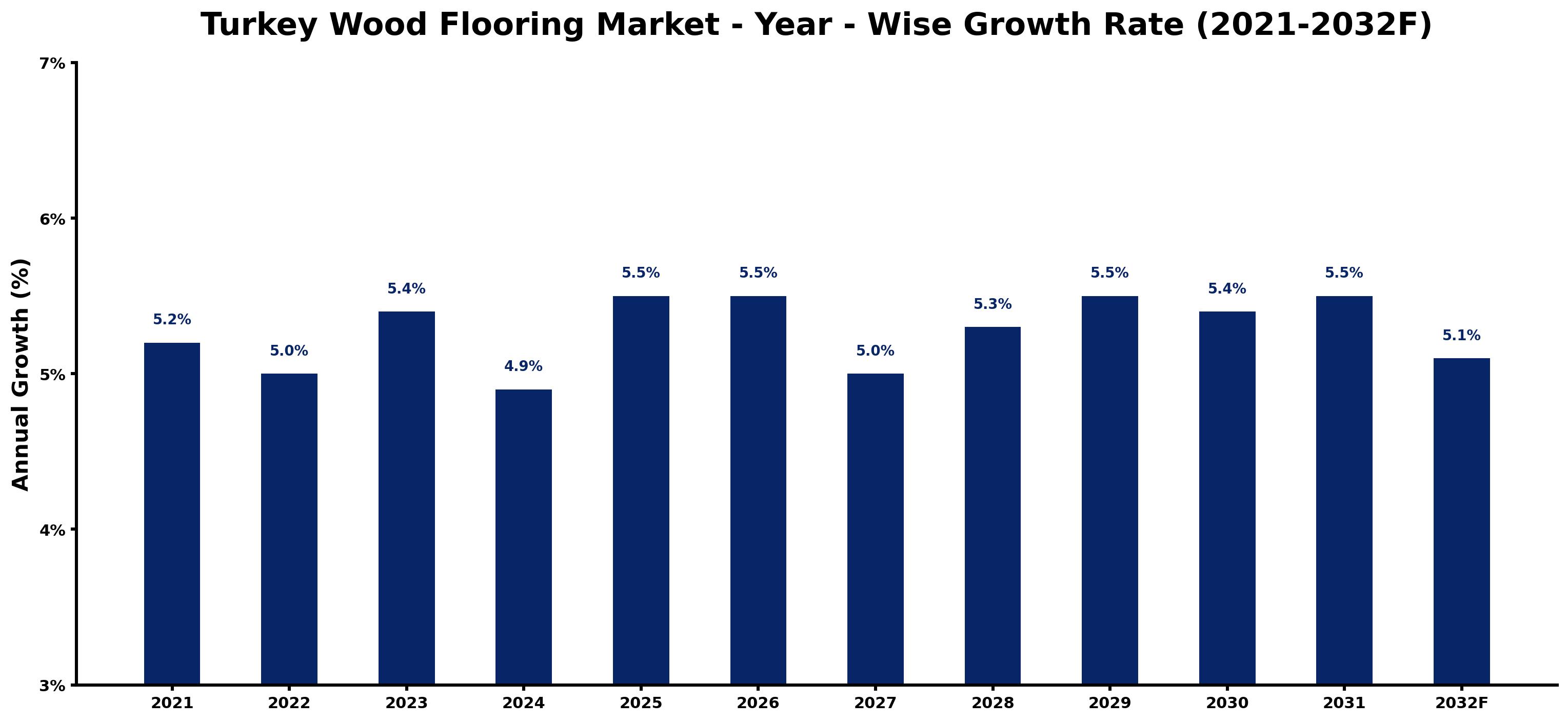
The table below presents the year wise growth rates along with the key drivers influencing the market
| Year | Growth Rate | Major Drivers |
| 2021 | 5.2% | Post-lockdown retail projects emphasized natural materials for aesthetic and health benefits. |
| 2022 | 5.0% | Urbanization trends in Turkey led to increased residential flooring upgrades and renovations. |
| 2023 | 5.4% | Sustainability concerns prompted consumers to seek eco-friendly wood flooring options. |
| 2024 | 4.9% | Rising disposable incomes resulted in higher expenditure on home improvement projects. |
| 2025 | 5.5% | Customizable flooring solutions became popular among affluent homeowners seeking individuality. |
| 2026 | 5.5% | E-commerce platforms expanded, facilitating easier access to diverse wood flooring products. |
| 2027 | 5.0% | Architectural trends favored open-concept designs, increasing demand for seamless flooring solutions. |
| 2028 | 5.3% | Foreign investments in Turkey's construction sector contributed to amplified flooring market activities. |
| 2029 | 5.5% | Technological advancements in manufacturing improved wood flooring durability and design options. |
| 2030 | 5.4% | Increased awareness of indoor air quality concerns drove consumer preference for natural products. |
| 2031 | 5.5% | Luxury housing developments emphasized premium wood flooring materials in upscale projects. |
| 2032 | 5.1% | Consumer education on flooring maintenance extended product lifespans, influencing purchasing decisions. |
Note - Market size estimations and growth projections presented in this report are based on 6Wresearch's advanced forecasting approach, validated with industry datasets as of June 2026.
Turkey Wood Flooring Market Synopsis
The Turkey Wood Flooring Market is projected to reach 5.5% and witness significant growth during the forecast period (2026-2032). As the construction and renovation activities surge in urban and rural areas alike, the demand for wood flooring is being driven by both aesthetic preferences and functional durability. This growth is particularly pronounced in residential applications, where homeowners seek environmentally friendly and long-lasting flooring solutions. The commercial sector also contributes significantly, as businesses recognize the value of wood flooring in enhancing interior spaces.
Turkey Wood Flooring Market Growth Drivers
Several factors are fueling the expansion of the Turkey Wood Flooring Market. First, rapid urbanization across major cities is compelling residents to invest in high-quality flooring options that offer both beauty and longevity. Second, there is a marked increase in renovation projects, wherein wood flooring is favored for its aesthetic appeal and ease of maintenance. Third, consumer awareness surrounding sustainable materials is rising, prompting a shift toward eco-friendly flooring solutions, particularly engineered wood products.
- Urban areas are witnessing a construction boom, characterized by a demand for stylish and durable flooring, making wood a preferred choice.
- Renovation activities are on the rise, as homeowners seek to enhance their living spaces, further propelling the wood flooring market.
- Increasing awareness of environmental issues drives consumers to prefer sustainable and renewable materials, with wood flooring meeting these criteria.
- Technological advancements in manufacturing are leading to innovations in product offerings, enhancing durability and design options that appeal to a broader demographic.
- Growing disposable incomes allow consumers to invest in premium flooring options, thereby increasing the market size for wood flooring across various segments.
Turkey Wood Flooring Market Challenges and Restraints
While the Turkey Wood Flooring Market exhibits considerable growth potential, several challenges impede its progress. Economic fluctuations pose a significant threat, as they can directly affect construction and renovation activities. Additionally, the rising cost of high-quality wood sourcing complicates pricing strategies for market players. Moreover, consumer preferences are evolving, with an increasing inclination toward alternative flooring materials, such as tiles and laminates, which often provide more affordable options.
- Economic instability can lead to reduced investments in construction and renovation, hindering overall market growth.
- High-quality wood sourcing presents cost challenges, which can impact the pricing of wood flooring products.
- The competition from alternative flooring materials such as tiles and laminates can affect market share and profitability of wood flooring suppliers.
- Shifts in consumer preferences towards newer, trendy flooring options may divert attention from traditional wood flooring solutions.
- Stringent regulations concerning sustainable forestry and wood sourcing can affect supply chains and operational costs.
Turkey Wood Flooring Market Government Investment and Initiatives
Government policy plays a crucial role in shaping the landscape of the Turkey Wood Flooring Market. Regulatory frameworks aim to uphold quality control standards and consumer protection measures, ensuring that flooring materials meet technical specifications. Additionally, Turkey's initiatives promote sustainable forestry practices, fostering an environment where eco-friendly wood sourcing is encouraged. The government also provides incentives for local manufacturers to innovate and promote exports, boosting the competitiveness of the wood flooring sector.
- Regulatory frameworks enforce compliance with technical standards, ensuring that wood flooring products are safe and reliable for consumers.
- Government initiatives support sustainable forestry practices, promoting the responsible sourcing of wood materials used in flooring.
- Incentives for local industries are geared towards enhancing innovation, allowing manufacturers to develop new and sustainable flooring solutions.
- Public spending on infrastructure and housing development includes provisions for quality flooring options, impacting overall market growth.
- Environmental policies are being implemented to balance demand for wood products with ecological conservation efforts.
Turkey Wood Flooring Market Latest Developments (May 2025 - June 2026)
Recent developments in the Turkey Wood Flooring Market reflect dynamic changes influenced by evolving consumer demands and technological advancements. A noticeable trend has been the influx of innovative engineered wood products, which combine traditional aesthetics with enhanced durability and sustainability. The market is also experiencing a shift towards eco-friendly certifications, as consumers increasingly prioritize environmentally responsible choices in their flooring decisions. Furthermore, manufacturers are exploring advanced manufacturing techniques to reduce production costs while maintaining product quality, thereby improving market competitiveness.
- There has been a rise in the introduction of engineered wood products, appealing to a broader consumer base through enhanced durability.
- Eco-friendly certifications are gaining traction, prompting manufacturers to align their products with sustainable practices to meet consumer expectations.
- Advanced manufacturing techniques are enabling cost-effective production without compromising on the quality of flooring materials.
- Increased consumer interest in home renovations is creating demand for stylish, high-quality wood flooring options in various applications.
- Collaboration between manufacturers and suppliers is fostering a marketplace that values innovation and sustainability in product development.
Turkey Wood Flooring Market - Key Attractiveness of the Report
- 10 Years of Market Numbers
- Historical Data Starting from 2022 to 2025
- Base Year: 2025
- Forecast Data until 2032
- Key Performance Indicators Impacting the Market
- Major Upcoming Developments and Projects
Key Highlights of the Report:
- Turkey Wood Flooring Market Outlook
- Market Size of Turkey Wood Flooring Market, 2025
- Forecast of Turkey Wood Flooring Market, 2032
- Historical Data and Forecast of Turkey Wood Flooring Revenues & Volume for the Period 2022-2032F
- Turkey Wood Flooring Market Trend Evolution
- Turkey Wood Flooring Market Drivers and Challenges
- Turkey Wood Flooring Price Trends
- Turkey Wood Flooring Porter's Five Forces
- Turkey Wood Flooring Industry Life Cycle
- Historical Data and Forecast of Turkey Wood Flooring Market Revenues & Volume By Product Type for the Period 2022-2032F
- Historical Data and Forecast of Turkey Wood Flooring Market Revenues & Volume By Solid Wood for the Period 2022-2032F
- Historical Data and Forecast of Turkey Wood Flooring Market Revenues & Volume By Engineered Wood for the Period 2022-2032F
- Historical Data and Forecast of Turkey Wood Flooring Market Revenues & Volume By Distribution Channel for the Period 2022-2032F
- Historical Data and Forecast of Turkey Wood Flooring Market Revenues & Volume By Home Centers for the Period 2022-2032F
- Historical Data and Forecast of Turkey Wood Flooring Market Revenues & Volume By Flagship Stores for the Period 2022-2032F
- Historical Data and Forecast of Turkey Wood Flooring Market Revenues & Volume By Specialty Stores for the Period 2022-2032F
- Historical Data and Forecast of Turkey Wood Flooring Market Revenues & Volume By Online for the Period 2022-2032F
- Historical Data and Forecast of Turkey Wood Flooring Market Revenues & Volume By Other for the Period 2022-2032F
- Historical Data and Forecast of Turkey Wood Flooring Market Revenues & Volume By End-User for the Period 2022-2032F
- Historical Data and Forecast of Turkey Wood Flooring Market Revenues & Volume By Residential for the Period 2022-2032F
- Historical Data and Forecast of Turkey Wood Flooring Market Revenues & Volume By Commercial for the Period 2022-2032F
- Turkey Wood Flooring Import Export Trade Statistics
- Market Opportunity Assessment By Product Type
- Market Opportunity Assessment By Distribution Channel
- Market Opportunity Assessment By End-User
- Turkey Wood Flooring Top Companies Market Share
- Turkey Wood Flooring Competitive Benchmarking By Technical and Operational Parameters
- Turkey Wood Flooring Company Profiles
- Turkey Wood Flooring Key Strategic Recommendations






































