Turkey Wound Dressings Market Size, Share & Growth Rate
The Turkey Wound Dressings Market was estimated at USD 1468 Million in 2025 and is projected to reach USD 2090 Million by 2032, growing at a CAGR of 5.2% from 2026 to 2032. This growth trajectory is propelled by an increasingly aging population alongside a rising incidence of chronic wounds, including diabetic ulcers and pressure sores. Additionally, continuous advancements in wound care technologies are fostering innovation, thereby enhancing the effectiveness of wound management solutions across the healthcare landscape in Turkey.
Turkey Wound Dressings Market Growth Rate Analysis (2021-2032)
The Turkey wound dressings market has shown considerable stability, with growth rates ranging from 5.7% to 6.4% over the forecast period. Specifically, the market grew by 6.3% in 2021, slightly declining to 6.1% in 2022 before reaching 5.9% in 2023. This slow decrease can be attributed to the maturing nature of the healthcare infrastructure and a competitive market landscape. However, anticipated investments in healthcare technology and an increasing focus on advanced wound care solutions have set the stage for renewed growth. Projections indicate a rise back to 6.1% in both 2028 and 2029, driven by heightened consumer demand and regulatory support for innovative healthcare products, with a notable uptick to 6.4% expected by 2030.
Turkey Wound Dressings Market Year-wise Growth Rate and Key Drivers
This graph highlights how the Turkey Wound Dressings Market has steadily grown over the past five years, supported by major growth factors.
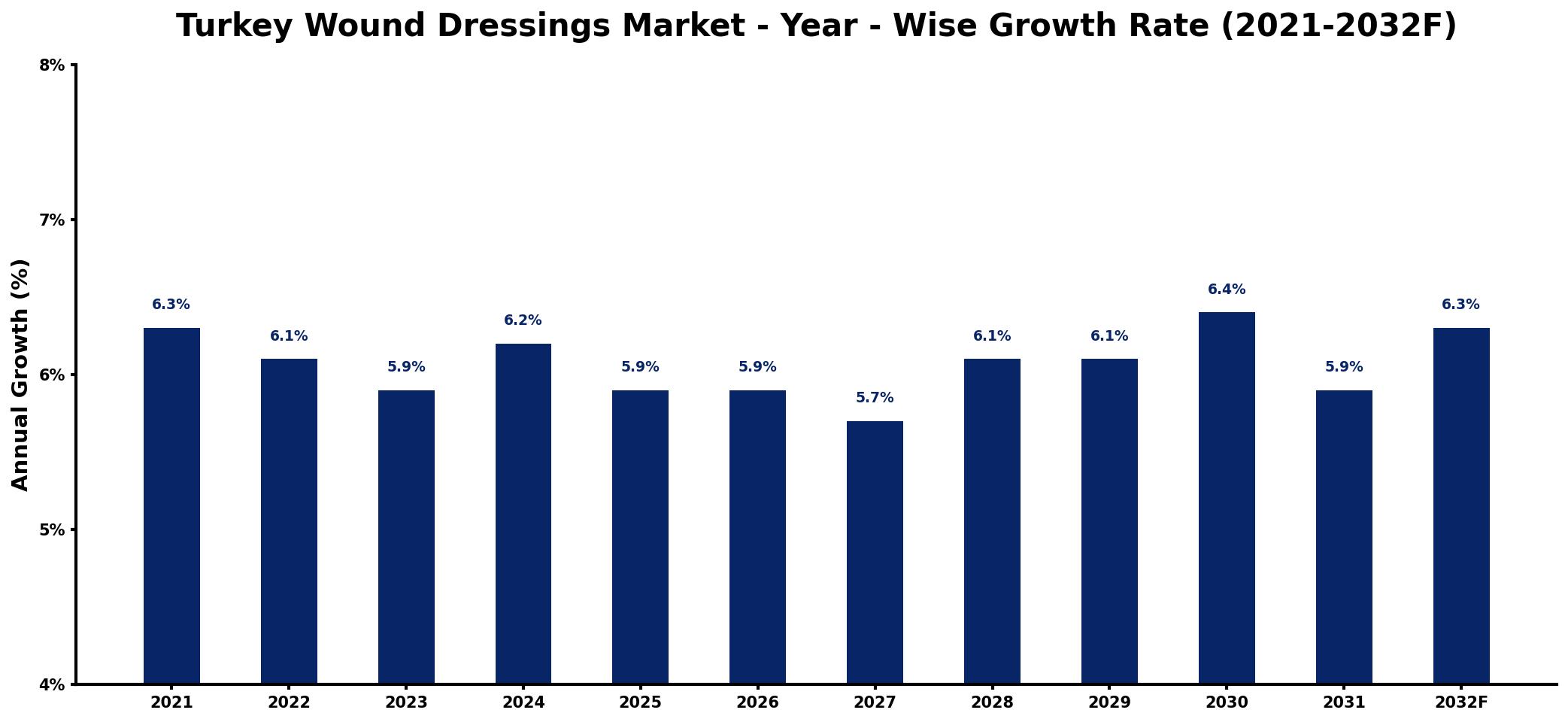
The table below presents the year‑wise growth rates along with the key drivers influencing the market
| Year | Growth Rate | Major Drivers |
| 2021 | 6.3% | Increased healthcare infrastructure investments |
| 2022 | 6.1% | Rising prevalence of chronic conditions |
| 2023 | 5.9% | Growing awareness of advanced solutions |
| 2024 | 6.2% | Expansion of outpatient care facilities |
| 2025 | 5.9% | Technological advancements in healthcare |
| 2026 | 5.9% | Surge in surgical procedures performed |
| 2027 | 5.7% | Heightened focus on patient outcomes |
| 2028 | 6.1% | Increase in elderly population demographics |
| 2029 | 6.1% | Collaboration between healthcare sectors |
| 2030 | 6.4% | Development of innovative treatment options |
| 2031 | 5.9% | Strengthening regulatory compliance standards |
| 2032 | 6.3% | Enhanced distribution network efficiencies |
Note: Market size estimations and growth projections presented in this report are based on 6Wresearch's proprietary forecasting methodology, utilizing the latest available industry data, government publications, and primary research inputs.
Turkey Wound Dressings Market Synopsis
The market for wound dressings in Turkey is characterized by a diverse range of products that cater to various wound types and healing needs. Traditional dressings are increasingly complemented by advanced products, such as hydrocolloid and antimicrobial dressings, addressing the growing demand for effective wound management solutions.
Awareness around the importance of proper wound care is gaining momentum, driven by healthcare providers and educational initiatives. This shift is essential in a market where the prevalence of chronic conditions continues to escalate, demanding innovative and tailored solutions for patient care.
Turkey Wound Dressings Market Key Takeaways
- The demand for advanced wound care products is rising significantly due to an increase in chronic wounds among the geriatric population.
- Innovations in dressing materials, such as biodegradable and eco-friendly options, are emerging to meet both health and environmental concerns.
- Strategic partnerships among manufacturers are facilitating product diversification and increased market presence.
- Government policies are shaping market dynamics by promoting local manufacturing and regulating pricing for wound care products.
- Home healthcare services are witnessing growth as patients prefer convenient wound management solutions.
Evaluation of Restraints in Turkey Wound Dressings Market
While the Turkey Wound Dressings Market shows promise, it faces several restraints. Heightened competition can lead to price wars, creating pressure on profit margins for manufacturers. Additionally, regulatory hurdles may complicate the approval process for new products, particularly for innovative technologies. Certain regions experience limitations in healthcare infrastructure, which can hinder the distribution and accessibility of quality wound dressings. Lastly, the industry must navigate the complexities of reimbursement policies to ensure market viability.
Turkey Wound Dressings Market Trends
The market is currently witnessing a significant shift towards the adoption of advanced wound care products such as antimicrobial dressings and foam-based solutions. This trend is fueled by the increasing prevalence of diabetic foot ulcers and chronic wounds. Moreover, eco-conscious trends are leading to the development of biodegradable wound dressings, aligning with a global emphasis on sustainability. Innovative technologies, including hydrocolloids and alginate dressings, are gaining traction for their ability to enhance healing outcomes.
Turkey Wound Dressings Market Opportunities
The Turkey Wound Dressings Market holds promising investment opportunities, particularly in the segment of advanced wound care products. The rising prevalence of chronic wounds and a growing elderly demographic create a favorable environment for innovation. Companies that focus on developing antimicrobial properties or advanced healing technologies stand to gain substantial market share. Additionally, as home healthcare becomes more popular, there is a growing demand for wound care solutions tailored for patient convenience and cost-effectiveness.
Government Initiatives in the Turkey Wound Dressings Market
The Turkish government has introduced several policies aimed at ensuring the safety and effectiveness of wound dressings in the market. The Ministry of Health oversees the registration processes, ensuring that products meet strict quality standards. Efforts have also been made to regulate pricing, making wound care more affordable for consumers. Furthermore, initiatives encourage local manufacturing of wound dressings to reduce dependency on imports, which supports the growth of the domestic industry.
Future Insights of the Turkey Wound Dressings Market
Looking ahead, the Turkey Wound Dressings Market is poised for steady expansion from 2026 to 2032. As chronic wound cases increase due to an aging population and lifestyle diseases, the demand for innovative wound care solutions is expected to rise. The market will likely witness a shift toward products that offer enhanced infection control and superior healing properties. Furthermore, advancements in healthcare infrastructure and rising expenditures in Turkey are anticipated to create a fertile ground for novel wound care innovations tailored to meet local healthcare demands.
Turkey Wound Dressings Market Latest Developments (2025 - 2026)
In recent months, the Turkey Wound Dressings Market has seen an influx of innovative products aimed at improving wound management. Various manufacturers are collaborating to enhance their offerings, focusing on both technological advancements and sustainability. The market is also experiencing increased regulatory scrutiny, ensuring that new products meet stringent safety and efficacy standards. Additionally, healthcare providers are actively adopting new wound care protocols, emphasizing the importance of tailored treatments for chronic wounds.
Turkey Wound Dressings Market - Key Attractiveness of the Report
- 10 Years of Market Numbers
- Historical Data Starting from 2022 to 2025
- Base Year: 2025
- Forecast Data until 2032
- Key Performance Indicators Impacting the Market
- Major Upcoming Developments and Projects
Key Highlights of the Report:
- Turkey Wound Dressings Market Outlook
- Market Size of Turkey Wound Dressings Market, 2025
- Forecast of Turkey Wound Dressings Market, 2032
- Historical Data and Forecast of Turkey Wound Dressings Revenues & Volume for the Period 2022-2032F
- Turkey Wound Dressings Market Trend Evolution
- Turkey Wound Dressings Market Drivers and Challenges
- Turkey Wound Dressings Price Trends
- Turkey Wound Dressings Porter's Five Forces
- Turkey Wound Dressings Industry Life Cycle
- Historical Data and Forecast of Turkey Wound Dressings Market Revenues & Volume By Type for the Period 2022-2032F
- Historical Data and Forecast of Turkey Wound Dressings Market Revenues & Volume By Advanced Wound Dressings for the Period 2022-2032F
- Historical Data and Forecast of Turkey Wound Dressings Market Revenues & Volume By Traditional Wound Dressings for the Period 2022-2032F
- Historical Data and Forecast of Turkey Wound Dressings Market Revenues & Volume By Wound Type for the Period 2022-2032F
- Historical Data and Forecast of Turkey Wound Dressings Market Revenues & Volume By Surgical and Traumatic Wounds for the Period 2022-2032F
- Historical Data and Forecast of Turkey Wound Dressings Market Revenues & Volume By Diabetic Foot Ulcers for the Period 2022-2032F
- Historical Data and Forecast of Turkey Wound Dressings Market Revenues & Volume By Pressure Ulcers for the Period 2022-2032F
- Historical Data and Forecast of Turkey Wound Dressings Market Revenues & Volume By Venous Leg Ulcers for the Period 2022-2032F
- Historical Data and Forecast of Turkey Wound Dressings Market Revenues & Volume By Burns and Other Wounds for the Period 2022-2032F
- Historical Data and Forecast of Turkey Wound Dressings Market Revenues & Volume By End User for the Period 2022-2032F
- Historical Data and Forecast of Turkey Wound Dressings Market Revenues & Volume By Hospitals, ASCs, and Clinics for the Period 2022-2032F
- Historical Data and Forecast of Turkey Wound Dressings Market Revenues & Volume By Home Care Settings for the Period 2022-2032F
- Historical Data and Forecast of Turkey Wound Dressings Market Revenues & Volume By Other End Users for the Period 2022-2032F
- Turkey Wound Dressings Import Export Trade Statistics
- Market Opportunity Assessment By Type
- Market Opportunity Assessment By Wound Type
- Market Opportunity Assessment By End User
- Turkey Wound Dressings Top Companies Market Share
- Turkey Wound Dressings Competitive Benchmarking By Technical and Operational Parameters
- Turkey Wound Dressings Company Profiles
- Turkey Wound Dressings Key Strategic Recommendations






































