Uganda Omega 3 Ingredients Market: Import Trend Analysis
In the past year, the import trend for omega-3 ingredients in Uganda saw a steady increase. This growth was driven by rising consumer awareness of the health benefits associated with omega-3 supplements and a growing demand for fortified food products in the market.
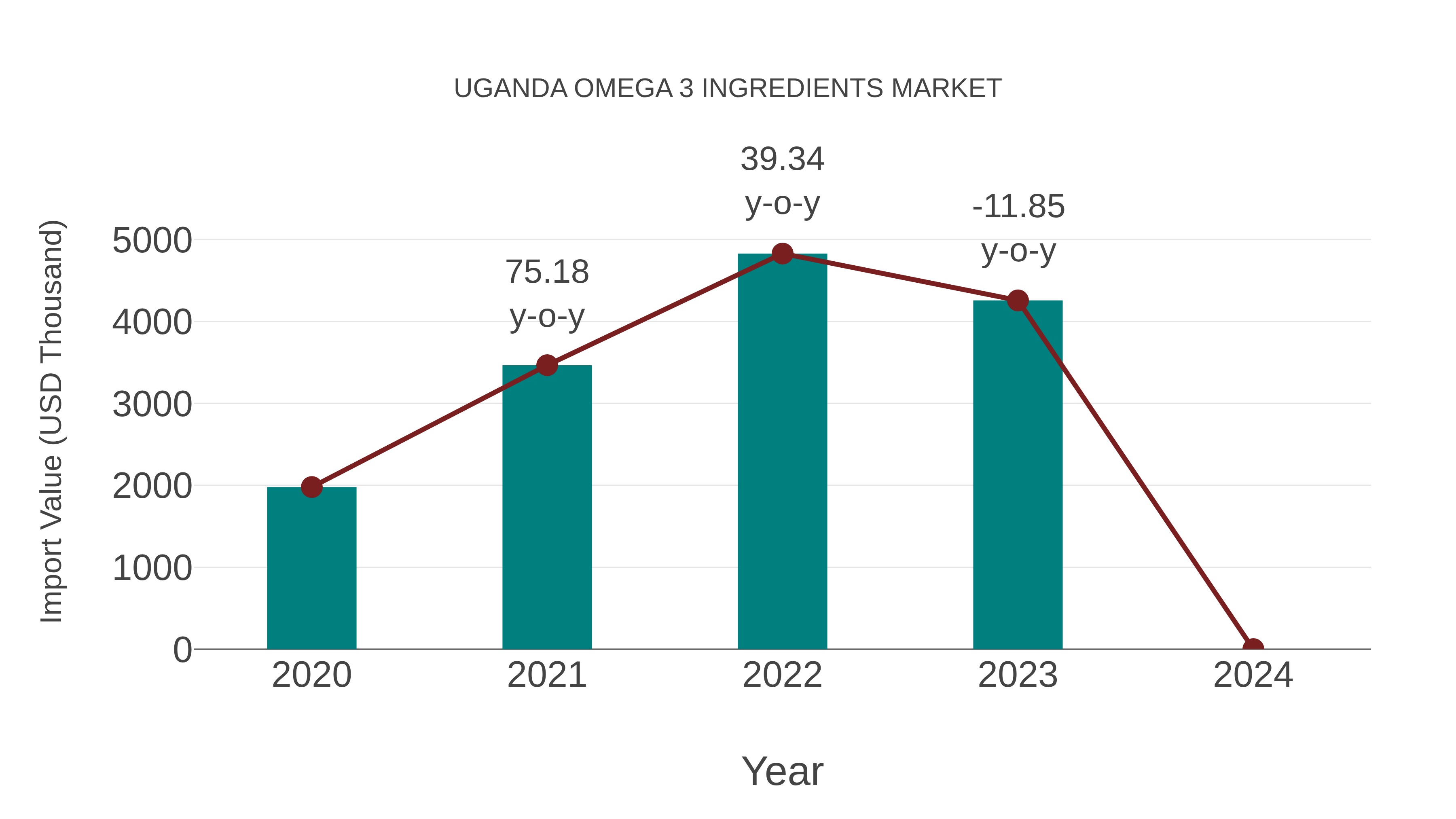
Uganda Omega 3 Ingredients Market Synopsis
The Uganda Omega 3 ingredients market is experiencing steady growth driven by increasing consumer awareness of the health benefits associated with Omega 3 fatty acids. The market is primarily driven by the rising demand for omega 3 supplements and fortified food products. Key players in the market are focusing on product innovation and expansion of distribution networks to capitalize on the growing demand. The market is characterized by a mix of local and international manufacturers offering a range of omega 3 ingredients sourced from fish oil, algal oil, and flaxseed oil among others. Government initiatives promoting healthy eating habits and the inclusion of omega 3 in the diet are further fueling market growth. Overall, the Uganda Omega 3 ingredients market presents opportunities for further expansion and diversification in the coming years.
Uganda Omega 3 Ingredients Market Trends
The Uganda Omega 3 ingredients market is experiencing growth due to the increasing consumer awareness about the health benefits of Omega 3 fatty acids. Consumers are seeking out products fortified with Omega 3 ingredients such as fish oil, flaxseed oil, and algal oil for their potential to improve heart health, cognitive function, and overall well-being. The market is also being driven by the rising demand for functional foods and dietary supplements that contain Omega 3 ingredients. Additionally, manufacturers are focusing on developing innovative delivery formats and formulations to cater to the diverse preferences of consumers. The growing emphasis on preventive healthcare and wellness among the population is expected to further fuel the demand for Omega 3 ingredients in Uganda.
Uganda Omega 3 Ingredients Market Challenges
In the Uganda Omega 3 ingredients market, some key challenges include limited consumer awareness and understanding of the benefits of Omega 3 fatty acids, resulting in low demand for products fortified with such ingredients. Additionally, there may be issues related to the sourcing and quality of Omega 3 ingredients, as well as concerns regarding sustainable fishing practices to obtain these essential fatty acids. Competition from alternative health supplements and the relatively high cost of Omega 3 ingredients compared to other nutritional additives could also hinder market growth. Moreover, inadequate regulatory frameworks and standards for labeling and marketing Omega 3 products may pose challenges in ensuring product credibility and transparency for consumers. Overall, addressing these challenges will be crucial in driving the growth of the Uganda Omega 3 ingredients market.
Uganda Omega 3 Ingredients Market Investment Opportunities
In the Uganda Omega 3 Ingredients market, there are several investment opportunities that can be explored. One potential opportunity lies in the growing demand for Omega 3 fortified products, such as supplements, functional foods, and beverages, driven by increasing health consciousness among consumers. Investing in production facilities or partnerships with local manufacturers to supply Omega 3 ingredients for these products could be lucrative. Additionally, there is potential for expansion into the aquaculture sector, where Omega 3-rich fish feed is in demand to enhance the nutritional profile of farmed fish. Investing in research and development to improve extraction techniques and sustainability practices for sourcing Omega 3 ingredients from sources like fish oil, algae, or flaxseed could also provide a competitive edge in the market.
Jordan Agar Market Government Policies
The Ugandan government has implemented various policies related to the Omega 3 ingredients market to promote growth and sustainability. This includes the prioritization of aquaculture development through initiatives such as the Aquaculture Development Strategy and the Fisheries and Aquaculture Development Plan. Additionally, the government has focused on improving infrastructure, such as cold storage facilities and transportation networks, to support the production and distribution of Omega 3-rich fish products. Furthermore, efforts have been made to enhance research and development in the sector, with investments in technology and innovation to increase productivity and quality. Overall, these policies aim to drive the growth of the Uganda Omega 3 ingredients market and position the country as a key player in the global Omega 3 market.
Uganda Omega 3 Ingredients Market Future Outlook
The Uganda Omega 3 ingredients market is poised for significant growth in the coming years, driven by increasing consumer awareness of the health benefits associated with Omega 3 fatty acids. The growing prevalence of lifestyle-related diseases such as cardiovascular disorders and obesity is expected to fuel the demand for Omega 3 ingredients in functional foods, dietary supplements, and pharmaceuticals. Additionally, the rising disposable income levels and changing dietary preferences among the population are likely to further boost market growth. Technological advancements in extraction methods and increasing investments in research and development activities are anticipated to enhance the quality and availability of Omega 3 ingredients in Uganda. Overall, the market is projected to experience steady expansion, presenting lucrative opportunities for both domestic and international players in the Omega 3 ingredients sector.
Key Highlights of the Report:
- Uganda Omega 3 Ingredients Market Outlook
- Market Size of Uganda Omega 3 Ingredients Market, 2025
- Forecast of Uganda Omega 3 Ingredients Market, 2032
- Historical Data and Forecast of Uganda Omega 3 Ingredients Revenues & Volume for the Period 2022 - 2032F
- Uganda Omega 3 Ingredients Market Trend Evolution
- Uganda Omega 3 Ingredients Market Drivers and Challenges
- Uganda Omega 3 Ingredients Price Trends
- Uganda Omega 3 Ingredients Porter's Five Forces
- Uganda Omega 3 Ingredients Industry Life Cycle
- Historical Data and Forecast of Uganda Omega 3 Ingredients Market Revenues & Volume By Type for the Period 2022 - 2032F
- Historical Data and Forecast of Uganda Omega 3 Ingredients Market Revenues & Volume By Alpha-linolenic Acid (ALA) for the Period 2022 - 2032F
- Historical Data and Forecast of Uganda Omega 3 Ingredients Market Revenues & Volume By Docosahexaenoic Acid (DHA) for the Period 2022 - 2032F
- Historical Data and Forecast of Uganda Omega 3 Ingredients Market Revenues & Volume By Eicosapentaenoic Acid (EPA) for the Period 2022 - 2032F
- Historical Data and Forecast of Uganda Omega 3 Ingredients Market Revenues & Volume By Source for the Period 2022 - 2032F
- Historical Data and Forecast of Uganda Omega 3 Ingredients Market Revenues & Volume By Marine Source for the Period 2022 - 2032F
- Historical Data and Forecast of Uganda Omega 3 Ingredients Market Revenues & Volume By Plant Source for the Period 2022 - 2032F
- Historical Data and Forecast of Uganda Omega 3 Ingredients Market Revenues & Volume By Application for the Period 2022 - 2032F
- Historical Data and Forecast of Uganda Omega 3 Ingredients Market Revenues & Volume By Supplements and Functional Foods for the Period 2022 - 2032F
- Historical Data and Forecast of Uganda Omega 3 Ingredients Market Revenues & Volume By Pharmaceuticals for the Period 2022 - 2032F
- Historical Data and Forecast of Uganda Omega 3 Ingredients Market Revenues & Volume By Infant Formula for the Period 2022 - 2032F
- Historical Data and Forecast of Uganda Omega 3 Ingredients Market Revenues & Volume By Animal Feed for the Period 2022 - 2032F
- Uganda Omega 3 Ingredients Import Export Trade Statistics
- Market Opportunity Assessment By Type
- Market Opportunity Assessment By Source
- Market Opportunity Assessment By Application
- Uganda Omega 3 Ingredients Top Companies Market Share
- Uganda Omega 3 Ingredients Competitive Benchmarking By Technical and Operational Parameters
- Uganda Omega 3 Ingredients Company Profiles
- Uganda Omega 3 Ingredients Key Strategic Recommendations






































