Ukraine Enterprise AI Market Size & Growth Rate (2026-2032)
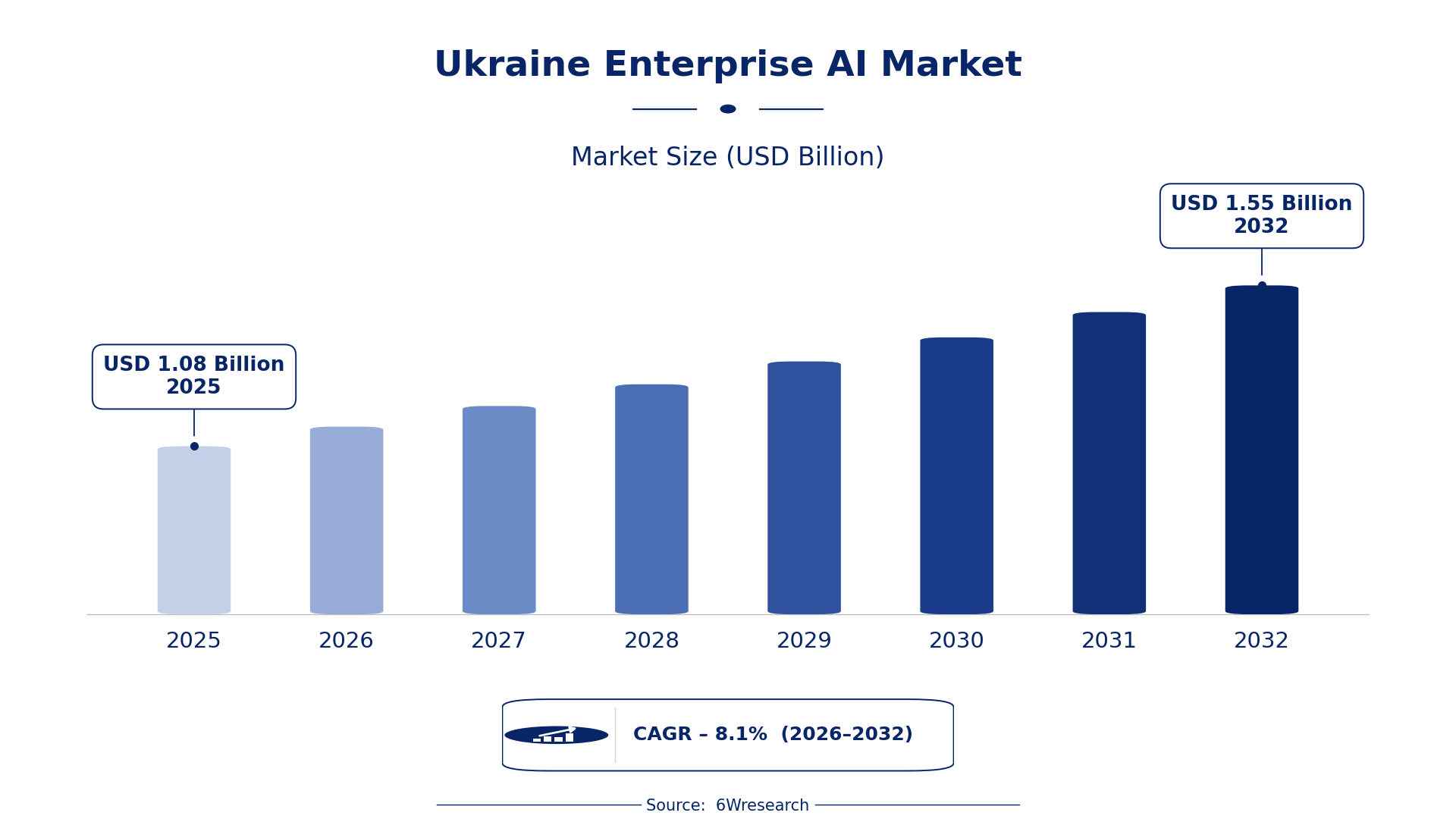
The Ukraine Enterprise AI Market was estimated at USD 1084 Million in 2025 and is projected to reach USD 1551 Million by 2032, growing at a CAGR of 8.1% from 2026 to 2032.
Ukraine Enterprise AI Market Synopsis
The demand for artificial intelligence solutions in Ukraine is surging, particularly within the healthcare and financial sectors. Businesses are increasingly adopting AI technologies to streamline operations, enhance customer experiences, and drive innovation. This trend is shaping a vibrant market that attracts both local and international players.
A growing emphasis on machine learning and natural language processing is evident as enterprises seek to optimize decision-making processes. The Ukrainian market is not just responding to global trends but is also fostering its unique AI capabilities, driven by a skilled workforce and government support.
Ukraine Enterprise AI Market Year-wise Growth Rate and Key Drivers
This graph illustrates the annual growth rates of the Ukraine Enterprise AI Market from 2021 to 2032, highlighting a steady upward trajectory and projected expansion over the forecast period.
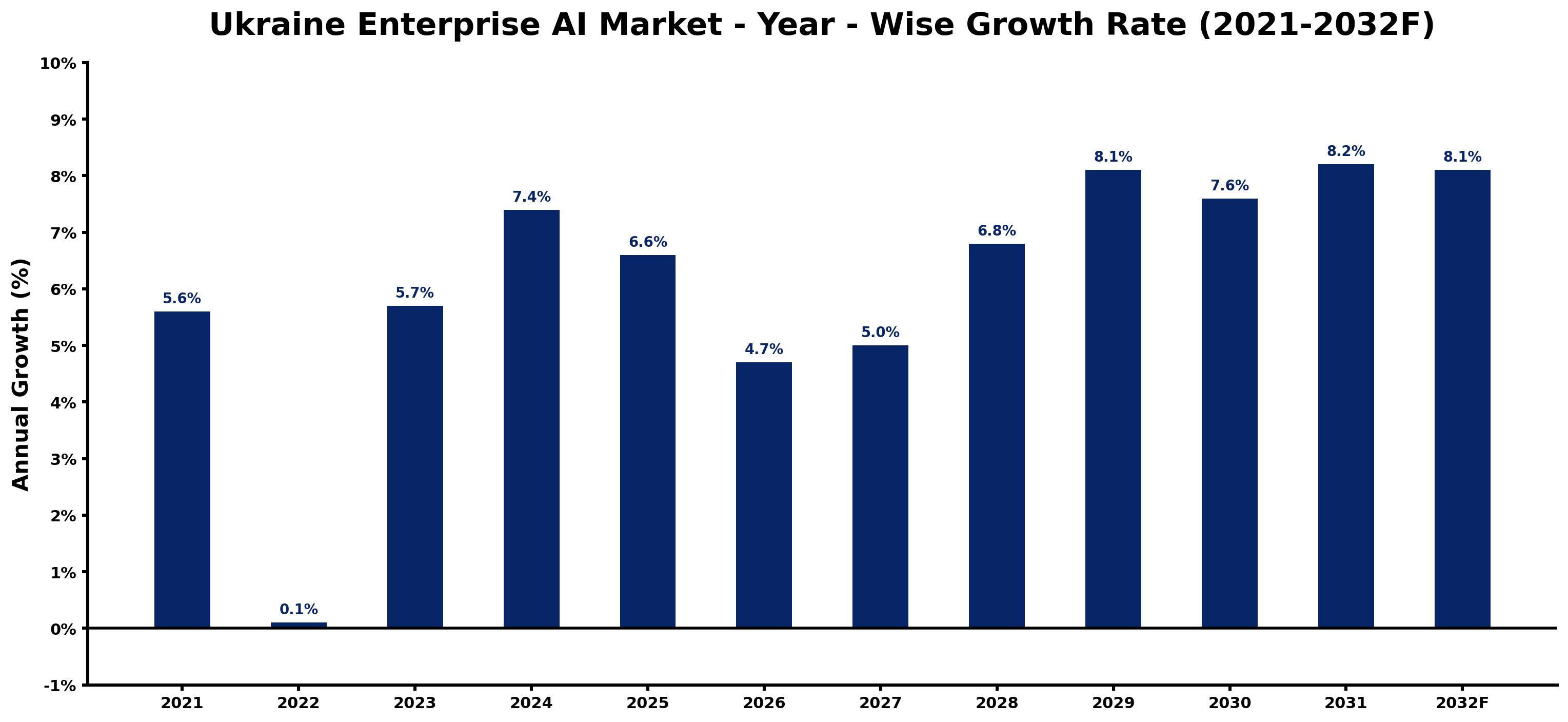
The table below presents the year‑wise growth rates along with the key drivers influencing the market
| Year | Growth Rate | Major Drivers |
| 2021 | 5.6% | Increased investment in AI by Ukrainian tech startups. |
| 2022 | 0.1% | Adoption of AI for enhancing efficiency in war recovery. |
| 2023 | 5.7% | Government grants for AI innovation and research initiatives. |
| 2024 | 7.4% | Growing local demand for predictive analytics in agriculture. |
| 2025 | 6.6% | Emerging AI solutions supporting post-war economic rebuilding. |
| 2026 | 4.7% | Strengthening cybersecurity measures driving AI security applications. |
| 2027 | 5.0% | Ukrainian legislation promoting AI in public administration. |
| 2028 | 6.8% | Rising utilization of AI in logistics and transportation. |
| 2029 | 8.1% | Boost in AI-enabled fintech solutions post-economy stabilization. |
| 2030 | 7.6% | Local AI partnerships enhancing smart city implementations. |
| 2031 | 8.2% | Interest in AI-driven healthcare innovations post-pandemic. |
| 2032 | 8.1% | Adoption of AI for agricultural productivity enhancement. |
Note: Market size estimations and growth projections presented in this report are based on 6Wresearch's proprietary forecasting methodology, utilizing the latest available industry data, government publications, and primary research inputs.
Ukraine Enterprise AI Market Key Takeaways
Below are some of the specific key takeaways from the market, including:
- The healthcare sector is a major driver for AI adoption, seeking to improve patient outcomes through predictive analytics.
- Financial services are leveraging AI for enhanced fraud detection and risk assessment.
- Government initiatives are fostering innovation, providing a supportive environment for startups and established firms alike.
- Industry-specific AI solutions are gaining traction, as businesses aim to tailor technologies to their unique challenges.
- A shortage of AI talent remains a challenge, impacting the pace of implementation across various sectors.
Evaluation of Restraints in Ukraine Enterprise AI Market
Several factors are currently restraining the growth of the Ukraine Enterprise AI market. A prevalent lack of awareness regarding the benefits and implementation of AI technologies exists among many businesses, which hampers adoption rates. Additionally, there is a notable skills gap; companies struggle to find professionals with the necessary expertise to implement AI solutions effectively. Data privacy and security concerns also linger, particularly in sectors that handle sensitive information. Lastly, the current political and economic climate in Ukraine adds a layer of uncertainty that could deter potential investments in AI technology.
Ukraine Enterprise AI Market Trends
A key trend shaping the Ukraine Enterprise AI market is the increasing emphasis on AI-powered analytics. Businesses are recognizing the value of actionable insights derived from data, which drives demand for advanced analytics solutions. Natural language processing applications are also on the rise, particularly in customer service and content generation. Additionally, organizations are integrating AI with existing technologies to enhance operational efficiency, leading to a surge in automation initiatives.
Ukraine Enterprise AI Market Opportunities
The market presents several lucrative opportunities for growth. There is a clear demand for industry-specific AI solutions tailored to unique business needs, particularly in healthcare and finance. Strategic partnerships with global AI firms can facilitate technology integration and innovation. on top of that, investing in AI talent development is crucial to meeting the rising demand for skilled professionals, creating an environment conducive to long-term market growth.
Government Initiatives in the Ukraine Enterprise AI Market
The Ukrainian government is actively promoting the growth of the Enterprise AI market through a variety of initiatives. By prioritizing innovation and creating supportive policies, the government aims to foster a thriving AI ecosystem. These efforts are crucial in building a regulatory framework that encourages investment and collaboration between businesses and research institutions.
- A national AI strategy launched in early 2023 to enhance competitiveness and innovation in AI technologies.
- Ongoing establishment of AI centers of excellence to support research and development, providing resources for startups and enterprises.
- Financial incentives introduced in mid-2024 for AI startups to promote innovation and entrepreneurship.
- Plans for a comprehensive regulatory framework expected to be finalized by 2026, focusing on data privacy and ethical AI use.
Future Insights of the Ukraine Enterprise AI Market
Looking ahead to 2026-2032, the Ukraine Enterprise AI market is set for substantial growth driven by increased adoption across multiple sectors. As businesses recognize the competitive advantages that AI technologies offer, investments in automation and data analytics will intensify. Government support and a growing talent pool will further accelerate the market’s evolution, positioning Ukraine as a key player in the regional AI landscape.
Ukraine Enterprise AI Market Latest Developments
Recent developments in the Ukraine Enterprise AI market reflect a dynamic environment, with various initiatives aimed at enhancing technology adoption and innovation. Over the past year, a notable increase in partnerships between local firms and international AI companies has emerged, fostering knowledge transfer and technology integration.
- A major technology vendor launched a new AI-driven analytics platform in Q1 2025, aimed at the financial sector.
- A regional operator announced an ongoing initiative to incorporate AI into supply chain management, enhancing efficiency and reducing costs.
- In early 2025, a collaborative project between universities and industry leaders commenced, focusing on AI talent development.
- Upcoming plans for a nationwide AI skills training program are expected to roll out by mid-2026, addressing the skills gap in the market.
Ukraine Enterprise AI Market - Key Attractiveness of the Report
- 10 Years of Market Numbers
- Historical Data Starting from 2022 to 2025
- Base Year: 2025
- Forecast Data until 2032
- Key Performance Indicators Impacting the Market
- Major Upcoming Developments and Projects
Key Highlights of the Report:
- Ukraine Enterprise AI Market Outlook
- Market Size of Ukraine Enterprise AI Market, 2025
- Forecast of Ukraine Enterprise AI Market, 2032
- Historical Data and Forecast of Ukraine Enterprise AI Revenues & Volume for the Period 2022-2032F
- Ukraine Enterprise AI Market Trend Evolution
- Ukraine Enterprise AI Market Drivers and Challenges
- Ukraine Enterprise AI Price Trends
- Ukraine Enterprise AI Porter's Five Forces
- Ukraine Enterprise AI Industry Life Cycle
- Historical Data and Forecast of Ukraine Enterprise AI Market Revenues & Volume By Component for the Period 2022-2032F
- Historical Data and Forecast of Ukraine Enterprise AI Market Revenues & Volume By Solution for the Period 2022-2032F
- Historical Data and Forecast of Ukraine Enterprise AI Market Revenues & Volume By Services for the Period 2022-2032F
- Historical Data and Forecast of Ukraine Enterprise AI Market Revenues & Volume By Technology for the Period 2022-2032F
- Historical Data and Forecast of Ukraine Enterprise AI Market Revenues & Volume By Machine learning and deep learning for the Period 2022-2032F
- Historical Data and Forecast of Ukraine Enterprise AI Market Revenues & Volume By Natural Language Processing (NLP) for the Period 2022-2032F
- Historical Data and Forecast of Ukraine Enterprise AI Market Revenues & Volume By Application Area for the Period 2022-2032F
- Historical Data and Forecast of Ukraine Enterprise AI Market Revenues & Volume By Security and risk management for the Period 2022-2032F
- Historical Data and Forecast of Ukraine Enterprise AI Market Revenues & Volume By Marketing management for the Period 2022-2032F
- Historical Data and Forecast of Ukraine Enterprise AI Market Revenues & Volume By Customer support and experience for the Period 2022-2032F
- Historical Data and Forecast of Ukraine Enterprise AI Market Revenues & Volume By Human resource and recruitment management for the Period 2022-2032F
- Historical Data and Forecast of Ukraine Enterprise AI Market Revenues & Volume By Analytics application for the Period 2022-2032F
- Historical Data and Forecast of Ukraine Enterprise AI Market Revenues & Volume By Process automation for the Period 2022-2032F
- Historical Data and Forecast of Ukraine Enterprise AI Market Revenues & Volume By Deployment Type for the Period 2022-2032F
- Historical Data and Forecast of Ukraine Enterprise AI Market Revenues & Volume By Cloud for the Period 2022-2032F
- Historical Data and Forecast of Ukraine Enterprise AI Market Revenues & Volume By On-premises for the Period 2022-2032F
- Historical Data and Forecast of Ukraine Enterprise AI Market Revenues & Volume By Organization Size for the Period 2022-2032F
- Historical Data and Forecast of Ukraine Enterprise AI Market Revenues & Volume By Small and Medium-sized Businesses (SMBs) for the Period 2022-2032F
- Historical Data and Forecast of Ukraine Enterprise AI Market Revenues & Volume By Large enterprises for the Period 2022-2032F
- Ukraine Enterprise AI Import Export Trade Statistics
- Market Opportunity Assessment By Component
- Market Opportunity Assessment By Technology
- Market Opportunity Assessment By Application Area
- Market Opportunity Assessment By Deployment Type
- Market Opportunity Assessment By Organization Size
- Ukraine Enterprise AI Top Companies Market Share
- Ukraine Enterprise AI Competitive Benchmarking By Technical and Operational Parameters
- Ukraine Enterprise AI Company Profiles
- Ukraine Enterprise AI Key Strategic Recommendations






































