Ukraine IoT Connectivity Market Size & Growth Rate (2026-2032)
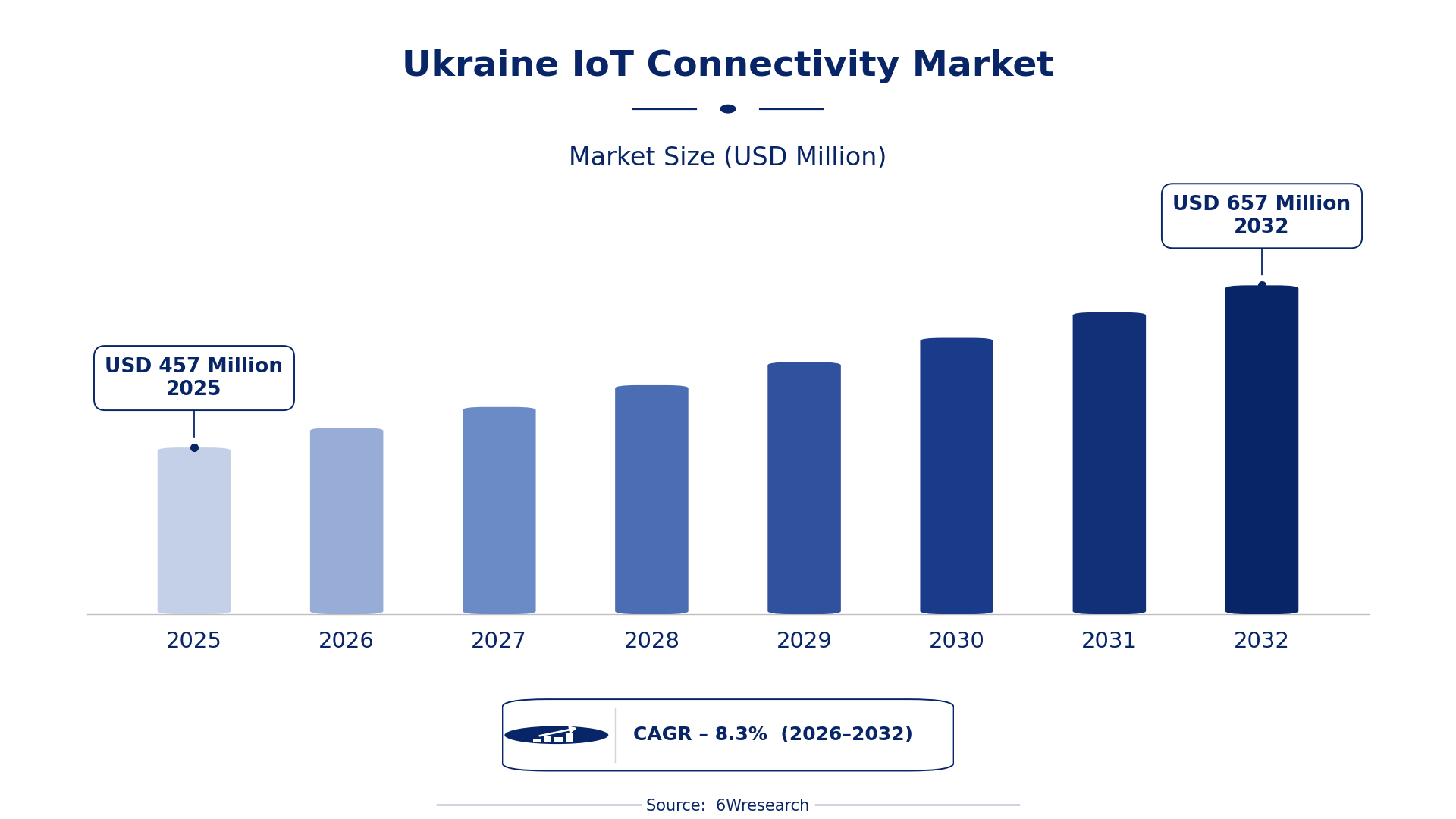
The Ukraine IoT Connectivity Market was estimated at USD 457 Million in 2025 and is projected to reach USD 657 Million by 2032, growing at a CAGR of 8.3% from 2026 to 2032.
Ukraine IoT Connectivity Market Synopsis
The primary force driving the Ukraine IoT Connectivity Market is the rapid adoption of IoT technologies across various sectors, particularly manufacturing, healthcare, and agriculture. This push is fueled by businesses seeking efficiency and real-time data analytics, essential in today’s competitive environment.
Ukraine's favorable regulatory environment is another catalyst for growth. With government initiatives promoting digital transformation, stakeholders are increasingly encouraged to invest in IoT solutions, creating a robust ecosystem that supports ongoing development and innovation.
Ukraine IoT Connectivity Market Year-wise Growth Rate and Key Drivers
This graph illustrates the annual growth rates of the Ukraine IoT Connectivity Market from 2021 to 2032, highlighting a steady upward trajectory and projected expansion over the forecast period.
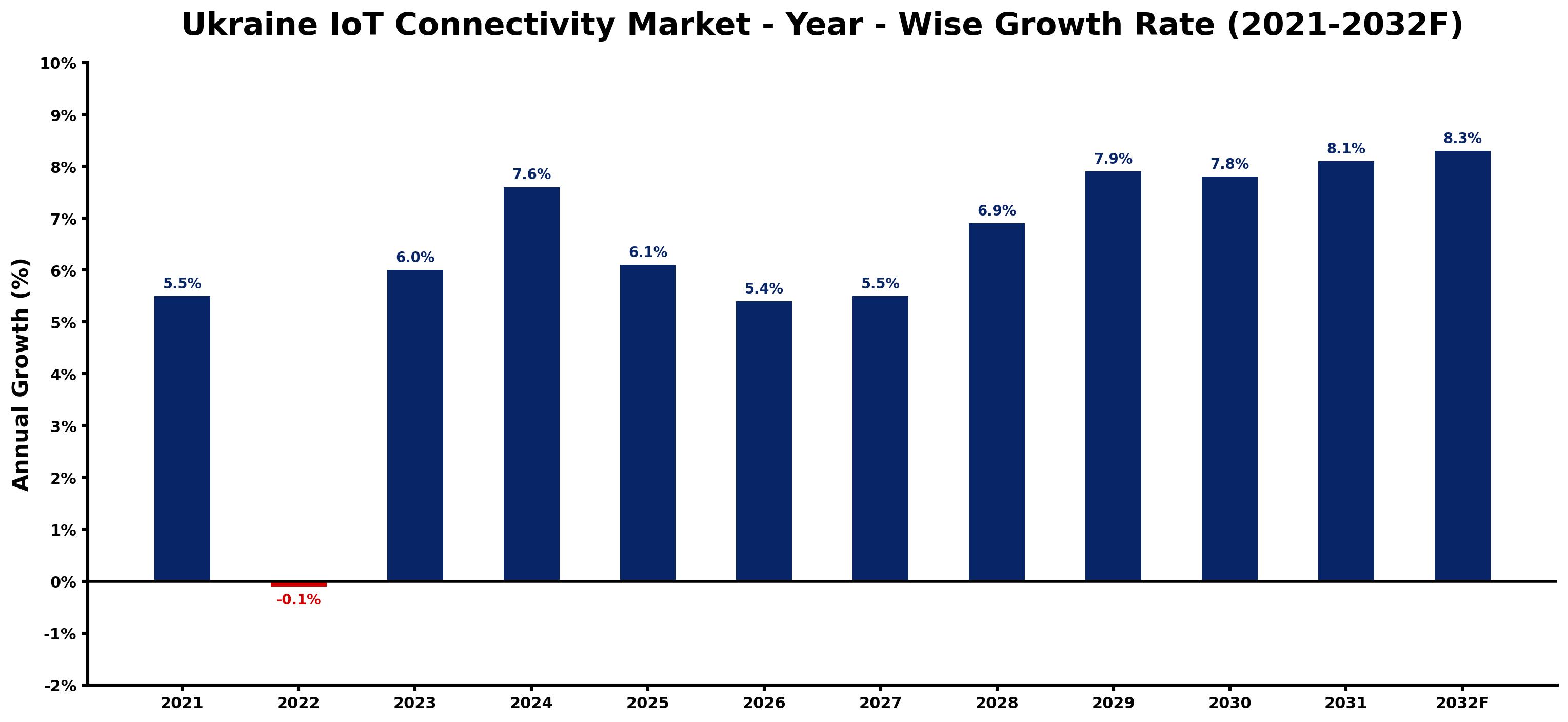
The table below presents the year‑wise growth rates along with the key drivers influencing the market
| Year | Growth Rate | Major Drivers |
| 2021 | 5.5% | Emerging smart agriculture solutions enhancing IoT applications. |
| 2022 | -0.1% | Russian invasion disrupted telecommunications infrastructure and services. |
| 2023 | 6.0% | Increased investments by local startups focusing on IoT innovations. |
| 2024 | 7.6% | Government incentives for digitization in manufacturing sectors. |
| 2025 | 6.1% | Rising consumer adoption of smart home technologies. |
| 2026 | 5.4% | Enhanced collaborations between telecoms and IoT service providers. |
| 2027 | 5.5% | Growing emphasis on cybersecurity for connected devices. |
| 2028 | 6.9% | Development of local IoT platforms boosting market growth. |
| 2029 | 7.9% | Participation in European Union digital transformation initiatives. |
| 2030 | 7.8% | Regulatory support for IoT integration in urban planning. |
| 2031 | 8.1% | Youth tech entrepreneurship driving IoT advancements in Ukraine. |
| 2032 | 8.3% | Increased public awareness of smart city benefits. |
Note: Market size estimations and growth projections presented in this report are based on 6Wresearch's proprietary forecasting methodology, utilizing the latest available industry data, government publications, and primary research inputs.
Ukraine IoT Connectivity Market Key Takeaways
Below are some of the specific key takeaways from the market, including:
- Government initiatives are significantly promoting digital transformation and infrastructure development.
- Telecom operators are expanding connectivity solutions, including cellular, LPWAN, and satellite technologies.
- The emergence of 5G technology is enhancing the potential for IoT applications.
- Real-time data analytics demand is driving investments in IoT solutions across various sectors.
- Partnerships between telecom and technology providers are increasingly common to foster innovation.
Evaluation of Restraints in Ukraine IoT Connectivity Market
The Ukraine IoT Connectivity Market faces several challenges that could impede its growth trajectory. One significant restraint is the lack of standardized regulations and policies that govern IoT technologies. This uncertainty can create hesitance among potential adopters, affecting overall market confidence. Additionally, the uneven quality of network infrastructure in various regions can lead to connectivity issues, undermining the performance of IoT devices. Cybersecurity concerns also loom large, as the increasing number of connected devices heightens vulnerability to cyber threats. To realize its full potential, the market must address these critical challenges and establish a more conducive environment for growth.
Ukraine IoT Connectivity Market Trends
Several trends are shaping the Ukraine IoT Connectivity Market. The deployment of Low Power Wide Area Network (LPWAN) technologies such as LoRa and NB-IoT is gaining traction, offering cost-effective and energy-efficient connectivity solutions. This trend aligns with the growing emphasis on sustainability and reduced operational costs. on top of that, there’s a noticeable shift towards real-time data analytics, as industries seek to harness insights from connected devices to drive efficiency. Collaborations among telecom operators and tech firms are also on the rise, aiming to enhance service offerings and expand market reach.
Ukraine IoT Connectivity Market Opportunities
The Ukraine IoT Connectivity Market presents substantial opportunities for growth and investment. Industries such as agriculture and healthcare are ripe for innovative IoT solutions that can enhance productivity and service delivery. With the government prioritizing digital transformation, there’s a supportive framework for investment in IoT infrastructure. Emerging applications in smart city initiatives also provide avenues for connectivity providers to develop tailored solutions that meet evolving consumer needs. As businesses increasingly recognize the value of IoT, the potential for market expansion remains strong.
Government Initiatives in the Ukraine IoT Connectivity Market
The Ukrainian government is actively fostering the development of the IoT connectivity market through various targeted policies and initiatives. By focusing on digital transformation and infrastructure improvement, the government is creating a framework conducive to innovation and investment. Regulatory measures have also been implemented to ensure data security and privacy, which is crucial in building trust among users and stakeholders.
- A national digital transformation strategy launched in early 2025 aims to integrate IoT across multiple sectors.
- Current initiatives include a public-private partnership underway to expand telecom infrastructure, enhancing connectivity in rural areas.
- Ongoing regulatory reforms are being developed to standardize IoT policies and ensure compliance with international data protection norms.
- Plans are in place for a nationwide IoT ecosystem development program set to begin by 2027 to support innovative projects.
Future Insights of the Ukraine IoT Connectivity Market
Looking ahead to 2026-2032, the Ukraine IoT Connectivity Market is expected to continue its upward trajectory. Factors such as the expansion of 5G networks, increasing investment in IoT infrastructure, and the rising demand for smart solutions across various industries will likely drive growth. As organizations prioritize digital transformation, the need for advanced IoT connectivity solutions will become even more pronounced. This trend indicates a vibrant future for stakeholders willing to invest in this dynamic market.
Ukraine IoT Connectivity Market Latest Developments
Recent developments in the Ukraine IoT Connectivity Market highlight a proactive industry responding to emerging needs and technological advancements. Over the past year, various initiatives and partnerships have been established, signaling a commitment to enhancing connectivity and service offerings. This activity indicates a market that is not only growing but also evolving to meet future demands.
- A leading regional operator launched a new LPWAN service in Q1 2025, targeting agricultural applications to improve efficiency.
- By mid-2025, a major technology vendor initiated a pilot program for smart city solutions aimed at enhancing urban infrastructure.
- Current collaborations between telecom providers are underway to develop 5G connectivity solutions tailored for healthcare applications.
- A planned initiative expected to commence in early 2026 aims to enhance cybersecurity measures for IoT devices, addressing ongoing concerns.
Ukraine IoT Connectivity Market - Key Attractiveness of the Report
- 10 Years of Market Numbers
- Historical Data Starting from 2022 to 2025
- Base Year: 2025
- Forecast Data until 2032
- Key Performance Indicators Impacting the Market
- Major Upcoming Developments and Projects
Key Highlights of the Report:
- Ukraine IoT Connectivity Market Outlook
- Market Size of Ukraine IoT Connectivity Market, 2025
- Forecast of Ukraine IoT Connectivity Market, 2032
- Historical Data and Forecast of Ukraine IoT Connectivity Revenues & Volume for the Period 2022-2032F
- Ukraine IoT Connectivity Market Trend Evolution
- Ukraine IoT Connectivity Market Drivers and Challenges
- Ukraine IoT Connectivity Price Trends
- Ukraine IoT Connectivity Porter's Five Forces
- Ukraine IoT Connectivity Industry Life Cycle
- Historical Data and Forecast of Ukraine IoT Connectivity Market Revenues & Volume By Component for the Period 2022-2032F
- Historical Data and Forecast of Ukraine IoT Connectivity Market Revenues & Volume By Platform for the Period 2022-2032F
- Historical Data and Forecast of Ukraine IoT Connectivity Market Revenues & Volume By Services for the Period 2022-2032F
- Historical Data and Forecast of Ukraine IoT Connectivity Market Revenues & Volume By Application Areas for the Period 2022-2032F
- Historical Data and Forecast of Ukraine IoT Connectivity Market Revenues & Volume By Building & Home Automation for the Period 2022-2032F
- Historical Data and Forecast of Ukraine IoT Connectivity Market Revenues & Volume By Smart Energy & Utility for the Period 2022-2032F
- Historical Data and Forecast of Ukraine IoT Connectivity Market Revenues & Volume By Smart Manufacturing for the Period 2022-2032F
- Historical Data and Forecast of Ukraine IoT Connectivity Market Revenues & Volume By Connected Health for the Period 2022-2032F
- Historical Data and Forecast of Ukraine IoT Connectivity Market Revenues & Volume By Smart Retail for the Period 2022-2032F
- Historical Data and Forecast of Ukraine IoT Connectivity Market Revenues & Volume By Smart Transportation for the Period 2022-2032F
- Historical Data and Forecast of Ukraine IoT Connectivity Market Revenues & Volume By Others (Education and Agriculture) for the Period 2022-2032F
- Historical Data and Forecast of Ukraine IoT Connectivity Market Revenues & Volume By Organization Size for the Period 2022-2032F
- Historical Data and Forecast of Ukraine IoT Connectivity Market Revenues & Volume By Large Enterprises for the Period 2022-2032F
- Historical Data and Forecast of Ukraine IoT Connectivity Market Revenues & Volume By SMEs for the Period 2022-2032F
- Ukraine IoT Connectivity Import Export Trade Statistics
- Market Opportunity Assessment By Component
- Market Opportunity Assessment By Application Areas
- Market Opportunity Assessment By Organization Size
- Ukraine IoT Connectivity Top Companies Market Share
- Ukraine IoT Connectivity Competitive Benchmarking By Technical and Operational Parameters
- Ukraine IoT Connectivity Company Profiles
- Ukraine IoT Connectivity Key Strategic Recommendations






































