Ukraine IT Operations Analytics Market Size & Growth Rate (2026-2032)
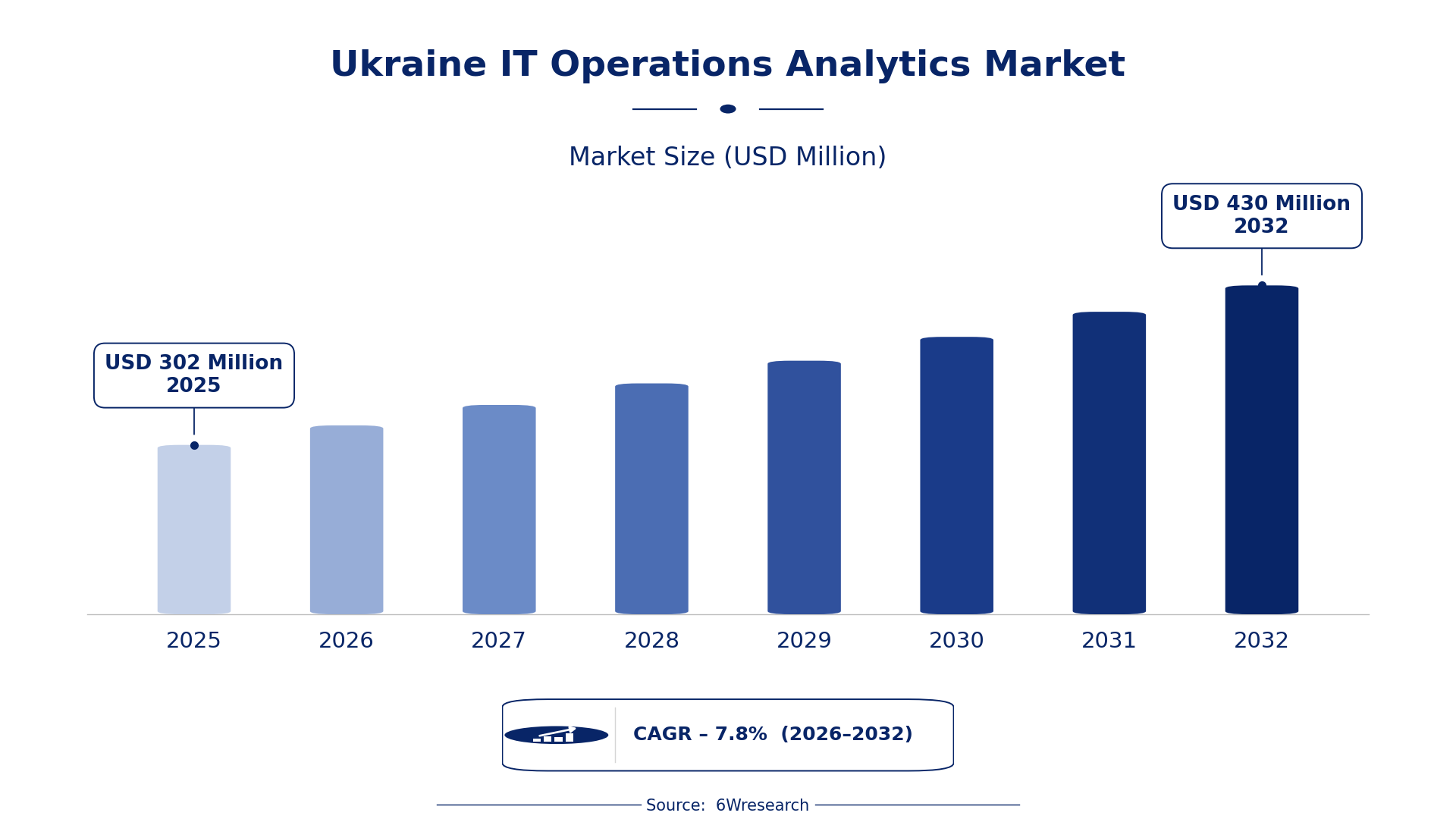
The Ukraine IT Operations Analytics Market was estimated at USD 302 Million in 2025 and is projected to reach USD 430 Million by 2032, growing at a CAGR of 7.8% from 2026 to 2032.
Ukraine IT Operations Analytics Market Synopsis
The Ukraine IT Operations Analytics Market is witnessing substantial growth as organizations increasingly embrace advanced technologies. This shift aims to optimize IT operations and improve overall business efficiency. Companies are recognizing the critical need for real-time insights to enhance infrastructure performance.
As enterprises grapple with complex IT environments, the demand for analytics solutions has surged. Cloud-based models are particularly attractive due to their scalability and cost-effectiveness. This evolving market landscape is pushing vendors to innovate continuously and form strategic partnerships.
Ukraine IT Operations Analytics Market Year-wise Growth Rate and Key Drivers
This graph illustrates the annual growth rates of the Ukraine IT Operations Analytics Market from 2021 to 2032, highlighting a steady upward trajectory and projected expansion over the forecast period.
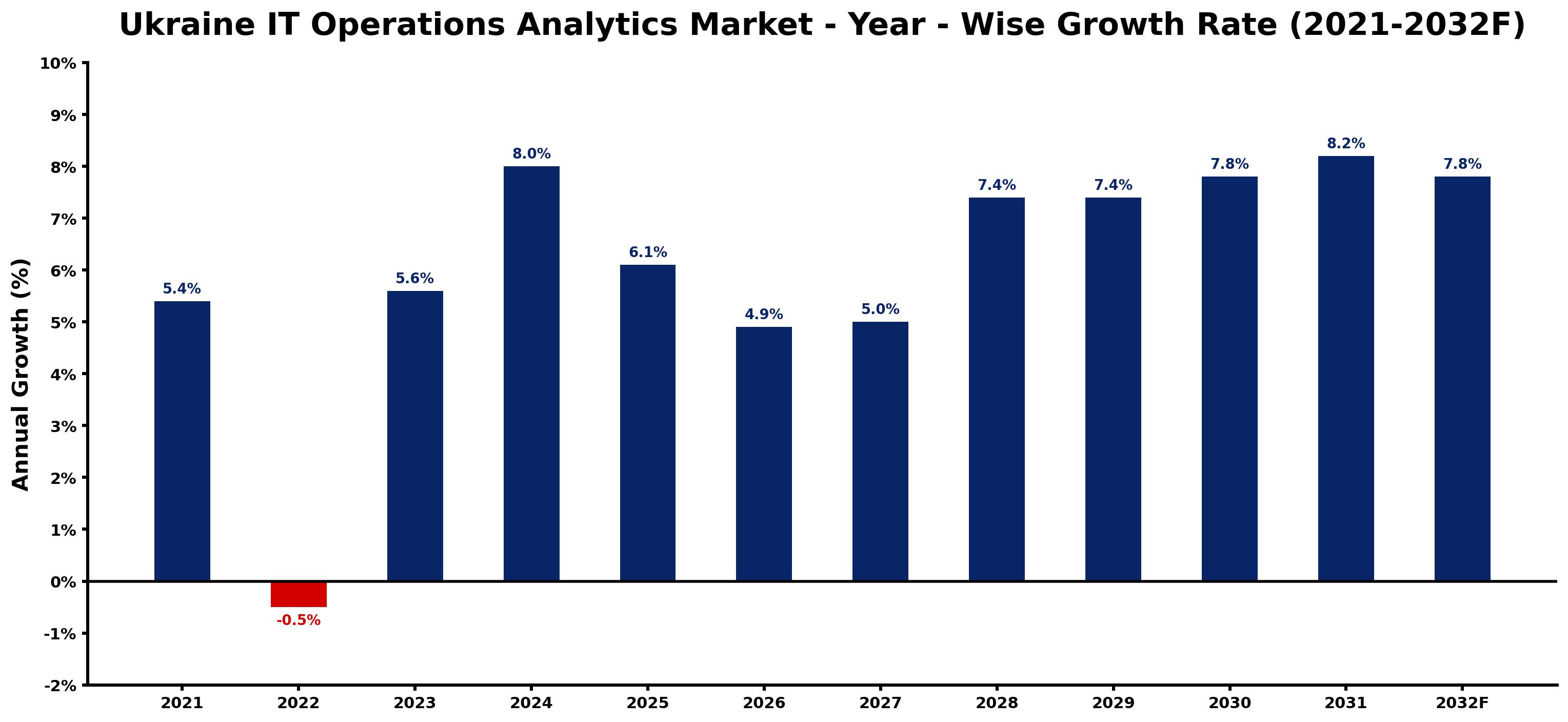
The table below presents the year‑wise growth rates along with the key drivers influencing the market
| Year | Growth Rate | Major Drivers |
| 2021 | 5.4% | Increased cybersecurity regulations drive IT analytics adoption. |
| 2022 | -0.5% | Russian invasion disrupted local IT infrastructure significantly. |
| 2023 | 5.6% | Local startups innovate analytics tools for agricultural sector. |
| 2024 | 8.0% | Government grants support AI initiatives in IT operations. |
| 2025 | 6.1% | Rise in remote work boosts demand for analytics tools. |
| 2026 | 4.9% | Telecom advancements enhance data collection and analysis methods. |
| 2027 | 5.0% | Investment in digital transformation accelerates analytics utilization. |
| 2028 | 7.4% | Growing e-commerce sector demands precise operational analytics. |
| 2029 | 7.4% | Corporate focus on efficiency triggers analytics technology upgrades. |
| 2030 | 7.8% | Regulatory compliance drives investment in operational data analytics. |
| 2031 | 8.2% | Increased foreign investments enhance IT infrastructure capabilities. |
| 2032 | 7.8% | Focus on data-driven decision-making strengthens analytics demand. |
Note: Market size estimations and growth projections presented in this report are based on 6Wresearch's proprietary forecasting methodology, utilizing the latest available industry data, government publications, and primary research inputs.
Ukraine IT Operations Analytics Market Key Takeaways
Below are some of the specific key takeaways from the market, including:
- The market is experiencing rapid growth fueled by the adoption of AI, machine learning, and big data analytics.
- Cloud-based solutions are becoming the preferred choice for many organizations due to their flexibility and efficiency.
- Proactive monitoring and predictive analytics are essential for preventing downtime and ensuring system reliability.
- There is an increasing emphasis on cybersecurity, driving the demand for robust analytics tools.
- The competitive environment is intensifying, with vendors focusing on innovation to differentiate their offerings.
Evaluation of Restraints in Ukraine IT Operations Analytics Market
Despite its growth potential, the Ukraine IT Operations Analytics Market faces several restraints. A significant barrier is the limited awareness and adoption of advanced analytics tools among businesses. Many organizations lack the skilled professionals necessary to implement and utilize these technologies effectively. Additionally, data privacy and security concerns continue to hinder investment in analytics solutions. Integration challenges with existing IT infrastructure further complicate the landscape, leaving many companies hesitant to transition to more advanced systems.
Ukraine IT Operations Analytics Market Trends
Current trends indicate a strong shift toward AI-driven analytics solutions. Businesses are investing heavily in tools that facilitate real-time monitoring and predictive analytics, aiming to streamline their IT operations. Automation is also becoming increasingly vital, as organizations seek to reduce manual intervention and improve efficiency.
There’s a notable trend towards cloud-based analytics solutions, which not only enhance scalability but also reduce operational costs. As cyber threats become more sophisticated, the focus on cybersecurity analytics is intensifying, pushing companies to seek advanced tools that can effectively detect and mitigate potential risks.
Ukraine IT Operations Analytics Market Opportunities
The market presents several promising opportunities. The demand for cloud-based analytics solutions is on the rise, particularly as businesses recognize the benefits of scalability and cost efficiency. on top of that, the integration of machine learning and AI technologies into analytics tools offers a pathway for innovation, addressing complex IT challenges that many organizations face today.
With an increased focus on data protection and cybersecurity, there’s a growing need for analytics tools that can proactively identify and mitigate threats. Companies that can deliver tailored solutions addressing these needs stand to gain a competitive edge in this dynamic market.
Government Initiatives in the Ukraine IT Operations Analytics Market
The Ukrainian government has implemented a variety of policies aimed at fostering the growth of the IT Operations Analytics market. These initiatives are crucial for creating a supportive environment for technological advancement and attracting foreign investment. Efforts to improve the regulatory framework and enhance the quality of education in IT fields are also notable priorities.
- A recently completed initiative included tax incentives for IT companies to stimulate investment in analytics solutions.
- Currently underway is a national program focused on enhancing digital infrastructure, which is essential for supporting analytics capabilities.
- A planned initiative aims to promote data security measures and streamline licensing processes for analytics tools by 2026.
- Ongoing support for research and development activities is being provided to encourage innovation within the analytics sector.
- Future initiatives are expected to address workforce development, ensuring a skilled talent pool is available for the industry.
Future Insights of the Ukraine IT Operations Analytics Market
Looking ahead to 2026-2032, the Ukraine IT Operations Analytics Market is set for sustained growth. Digital transformation efforts are expected to intensify, with businesses increasingly prioritizing analytics to drive operational efficiency. The adoption of advanced technologies such as AI and machine learning will likely accelerate, enabling organizations to gain deeper insights and improve decision-making processes.
As the demand for real-time monitoring and predictive maintenance rises, the market will see a surge in innovative analytics solutions. Enterprises striving for agility and resilience will push for advancements, setting the stage for a thriving analytics ecosystem in Ukraine.
Ukraine IT Operations Analytics Market Latest Developments
In the past year, the Ukraine IT Operations Analytics Market has witnessed several notable developments. Companies are actively seeking solutions that enhance operational performance and address cybersecurity challenges. This focus has prompted various technology vendors to upgrade their offerings and form strategic collaborations.
- A major technology vendor launched a new suite of AI-driven analytics tools in early 2025, designed to enhance real-time monitoring capabilities.
- An initiative that began in late 2024 is currently underway, focusing on integrating machine learning into existing analytics platforms to improve predictive capabilities.
- A partnership between two leading analytics firms was announced in Q1 2025, aimed at developing innovative solutions for the Ukrainian market.
- Upcoming projects include a rollout expected in mid-2026 that will enhance cloud-based analytics services for small and medium-sized enterprises.
- A recent investment initiative aims to increase funding for research in analytics technologies, set to kick off by late 2025.
Ukraine IT Operations Analytics Market - Key Attractiveness of the Report
- 10 Years of Market Numbers
- Historical Data Starting from 2022 to 2025
- Base Year: 2025
- Forecast Data until 2032
- Key Performance Indicators Impacting the Market
- Major Upcoming Developments and Projects
Key Highlights of the Report:
- Ukraine IT Operations Analytics Market Outlook
- Market Size of Ukraine IT Operations Analytics Market, 2025
- Forecast of Ukraine IT Operations Analytics Market, 2032
- Historical Data and Forecast of Ukraine IT Operations Analytics Revenues & Volume for the Period 2022-2032F
- Ukraine IT Operations Analytics Market Trend Evolution
- Ukraine IT Operations Analytics Market Drivers and Challenges
- Ukraine IT Operations Analytics Price Trends
- Ukraine IT Operations Analytics Porter's Five Forces
- Ukraine IT Operations Analytics Industry Life Cycle
- Historical Data and Forecast of Ukraine IT Operations Analytics Market Revenues & Volume By Component for the Period 2022-2032F
- Historical Data and Forecast of Ukraine IT Operations Analytics Market Revenues & Volume By Solutions for the Period 2022-2032F
- Historical Data and Forecast of Ukraine IT Operations Analytics Market Revenues & Volume By Services for the Period 2022-2032F
- Historical Data and Forecast of Ukraine IT Operations Analytics Market Revenues & Volume By Service for the Period 2022-2032F
- Historical Data and Forecast of Ukraine IT Operations Analytics Market Revenues & Volume By Professional Services for the Period 2022-2032F
- Historical Data and Forecast of Ukraine IT Operations Analytics Market Revenues & Volume By Managed Services for the Period 2022-2032F
- Historical Data and Forecast of Ukraine IT Operations Analytics Market Revenues & Volume By Solution for the Period 2022-2032F
- Historical Data and Forecast of Ukraine IT Operations Analytics Market Revenues & Volume By Log Management for the Period 2022-2032F
- Historical Data and Forecast of Ukraine IT Operations Analytics Market Revenues & Volume By Application Performance Management (APM) for the Period 2022-2032F
- Historical Data and Forecast of Ukraine IT Operations Analytics Market Revenues & Volume By Network and Security Management for the Period 2022-2032F
- Historical Data and Forecast of Ukraine IT Operations Analytics Market Revenues & Volume By Root Cause Analysis for the Period 2022-2032F
- Historical Data and Forecast of Ukraine IT Operations Analytics Market Revenues & Volume By Anomaly Detection for the Period 2022-2032F
- Historical Data and Forecast of Ukraine IT Operations Analytics Market Revenues & Volume By Others for the Period 2022-2032F
- Historical Data and Forecast of Ukraine IT Operations Analytics Market Revenues & Volume By Deployment Mode for the Period 2022-2032F
- Historical Data and Forecast of Ukraine IT Operations Analytics Market Revenues & Volume By Cloud for the Period 2022-2032F
- Historical Data and Forecast of Ukraine IT Operations Analytics Market Revenues & Volume By On-premises for the Period 2022-2032F
- Historical Data and Forecast of Ukraine IT Operations Analytics Market Revenues & Volume By End User for the Period 2022-2032F
- Historical Data and Forecast of Ukraine IT Operations Analytics Market Revenues & Volume By BFSI for the Period 2022-2032F
- Historical Data and Forecast of Ukraine IT Operations Analytics Market Revenues & Volume By Retail and Consumer Goods for the Period 2022-2032F
- Historical Data and Forecast of Ukraine IT Operations Analytics Market Revenues & Volume By Telecom for the Period 2022-2032F
- Historical Data and Forecast of Ukraine IT Operations Analytics Market Revenues & Volume By Manufacturing for the Period 2022-2032F
- Historical Data and Forecast of Ukraine IT Operations Analytics Market Revenues & Volume By Energy and Utilities for the Period 2022-2032F
- Historical Data and Forecast of Ukraine IT Operations Analytics Market Revenues & Volume By Healthcare and Life Sciences for the Period 2022-2032F
- Historical Data and Forecast of Ukraine IT Operations Analytics Market Revenues & Volume By Government and Defense for the Period 2022-2032F
- Historical Data and Forecast of Ukraine IT Operations Analytics Market Revenues & Volume By Transportation and Logistics for the Period 2022-2032F
- Historical Data and Forecast of Ukraine IT Operations Analytics Market Revenues & Volume By Organization Size for the Period 2022-2032F
- Historical Data and Forecast of Ukraine IT Operations Analytics Market Revenues & Volume By SMEs for the Period 2022-2032F
- Historical Data and Forecast of Ukraine IT Operations Analytics Market Revenues & Volume By Large Enterprises for the Period 2022-2032F
- Ukraine IT Operations Analytics Import Export Trade Statistics
- Market Opportunity Assessment By Component
- Market Opportunity Assessment By Service
- Market Opportunity Assessment By Solution
- Market Opportunity Assessment By Deployment Mode
- Market Opportunity Assessment By End User
- Market Opportunity Assessment By Organization Size
- Ukraine IT Operations Analytics Top Companies Market Share
- Ukraine IT Operations Analytics Competitive Benchmarking By Technical and Operational Parameters
- Ukraine IT Operations Analytics Company Profiles
- Ukraine IT Operations Analytics Key Strategic Recommendations






































