Ukraine Secondhand Apparel Market Size, Share & Growth Rate
The Ukraine Secondhand Apparel Market was estimated at USD 807 Million in 2025 and is projected to reach USD 1155 Million by 2032, growing at a CAGR of 5.3% from 2026 to 2032. This impressive trajectory is fueled by an increasing consumer shift toward sustainability, where the allure of unique fashion statements combines with affordability. The rise in both online platforms and physical thrift stores signifies a wider acceptance and enthusiasm for secondhand apparel, particularly among younger demographics seeking eco-friendly options.
Ukraine Secondhand Apparel Market Year-wise Growth Rate and Key Drivers
This graph highlights how the Ukraine Secondhand Apparel Market has steadily grown over the years, supported by major growth factors.
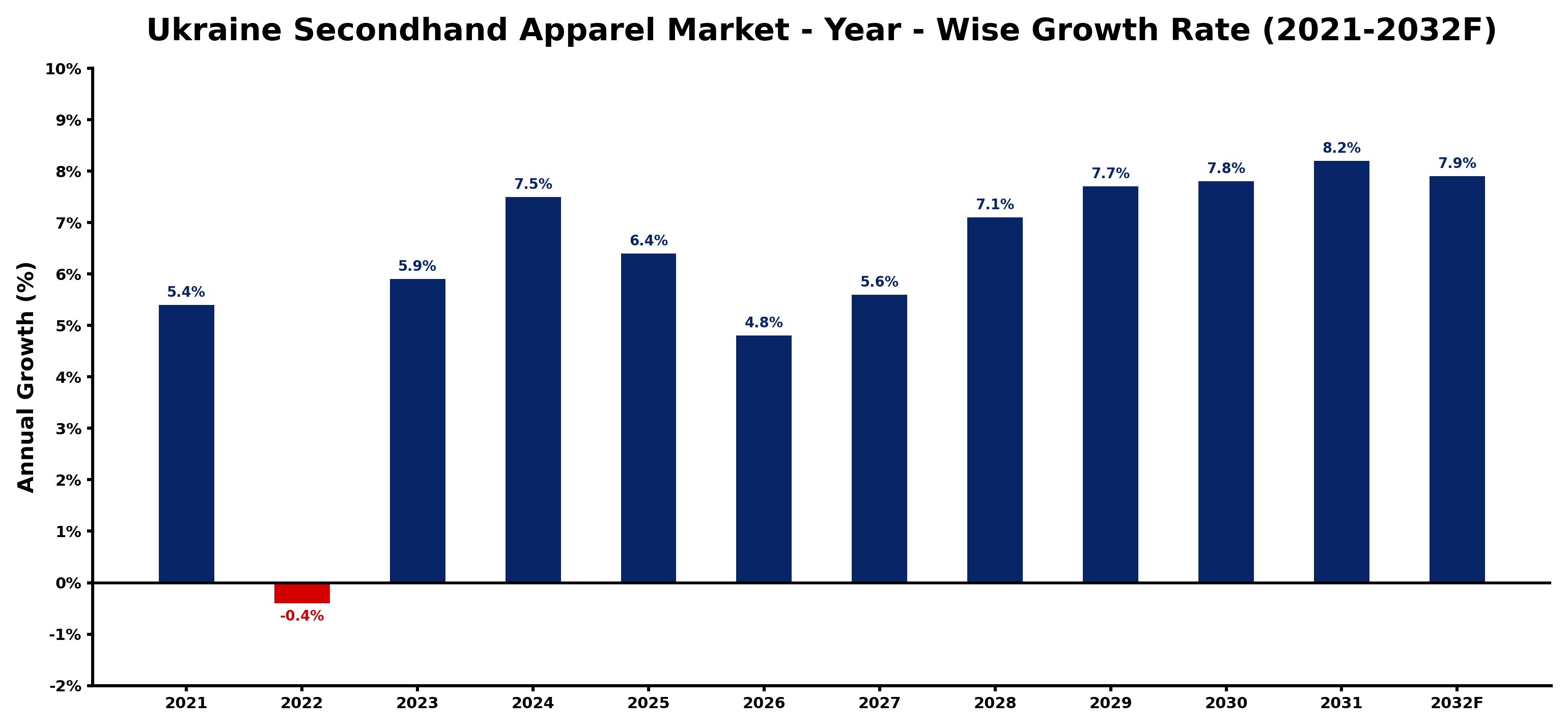
The table below presents the year‑wise growth rates along with the key drivers influencing the market
| Year | Growth Rate | Major Drivers |
| 2021 | 5.4% | Increasing industrial infrastructure investments |
| 2022 | -0.4% | Increasing smart city development projects |
| 2023 | 5.9% | Rising electricity demand across industries |
| 2024 | 7.5% | Growing renewable energy integration projects |
| 2025 | 6.4% | Government infrastructure modernization initiatives |
| 2026 | 4.8% | Government infrastructure modernization initiatives |
| 2027 | 5.6% | Increasing adoption of advanced technologies |
| 2028 | 7.1% | Government infrastructure modernization initiatives |
| 2029 | 7.7% | Increasing industrial infrastructure investments |
| 2030 | 7.8% | Expansion of commercial construction activities |
| 2031 | 8.2% | Rapid growth in telecom and data center sectors |
| 2032 | 7.9% | Rapid growth in telecom and data center sectors |
Note - Market size estimations and growth projections presented in this report are based on 6Wresearch’s advanced forecasting approach, validated with industry datasets as of June 2026.
Ukraine Secondhand Apparel Market Synopsis
The Ukraine Secondhand Apparel Market is witnessing a dynamic transformation, where thrift shopping has gained substantial traction among environmentally conscious consumers. With a robust selection of clothing ranging from vintage to everyday wear, this market caters to a diverse audience that values both style and sustainability.
A notable increase in online resale platforms has empowered consumers to buy and sell pre-owned items with ease. Concurrently, brick-and-mortar thrift stores remain vital, fostering local community engagement while supporting circular fashion practices. As consumer attitudes evolve, the secondhand apparel sector stands ready for notable expansion.
Ukraine Secondhand Apparel Market Key Takeaways
- The market is driven by a growing awareness of sustainability and demand for affordability.
- Online resale platforms are increasingly popular, attracting a younger demographic.
- Consumer preferences are shifting toward unique, customizable fashion options, such as upcycled garments.
- Government regulations aim to ensure the quality and safety of secondhand clothing imports.
- Investment opportunities abound in online marketplaces and traditional thrift store formats.
Evaluation of Restraints in Ukraine Secondhand Apparel Market
Despite the positive growth trajectory, several restraints challenge the Ukraine Secondhand Apparel Market. The prevalence of counterfeit products can significantly damage consumer trust, while concerns about the quality and condition of secondhand garments remain prominent. Furthermore, competition from fast fashion brands presents a formidable hurdle, as these options often offer immediate availability and trendy styles. Regulatory challenges, such as import restrictions and taxation, add additional complexity that stakeholders must navigate to achieve sustained growth.
Ukraine Secondhand Apparel Market Trends
Current trends are reshaping the landscape of the Ukraine Secondhand Apparel Market. The increasing popularity of DIY customization reflects a desire for individuality, with consumers eager to transform pre-owned garments into unique statements. Additionally, the impact of the COVID-19 pandemic has altered perceptions around secondhand shopping, with many viewing it as a more sustainable and budget-friendly alternative to fast fashion. The growing emphasis on conscious consumption practices signifies a broader movement toward reducing environmental footprints through fashion choices.
Ukraine Secondhand Apparel Market Opportunities
Genuine growth and investment opportunities within the Ukraine Secondhand Apparel Market abound. The demand for fashionable yet affordable clothing presents fertile ground for entrepreneurs and investors alike. Opportunities exist in online resale platforms, innovative thrift store concepts, and partnerships with existing retailers. Key success factors will include sourcing high-quality inventory, effective marketing to attract a broad customer base, and providing an efficient shopping experience to enhance customer loyalty.
Government Initiatives in the Ukraine Secondhand Apparel Market
The Ukrainian government has instituted policies designed to regulate the secondhand apparel market. These include mandatory quality inspections for imported garments and licensing requirements for traders, all aimed at ensuring consumer safety and promoting transparency within the industry. Additionally, measures to combat counterfeiting and low-quality goods reflect a commitment to ethical trade practices and the promotion of legitimate businesses. Overall, these policies work toward fostering a more sustainable secondhand apparel market in Ukraine.
Future Insights of the Ukraine Secondhand Apparel Market
The outlook for the Ukraine Secondhand Apparel Market from 2026 to 2032 appears exceptionally promising. As sustainability becomes a core value for an increasing number of consumers, thrift shopping is likely to see greater mainstream acceptance. Enhanced online platforms will improve accessibility, driving further interest in pre-owned fashion. This shift toward circular fashion practices, combined with a broader consumer base keen on reducing waste, positions the secondhand apparel sector for robust and sustained growth.
Ukraine Secondhand Apparel Market Latest Developments (May 2025 - June 2026)
In recent months, the Ukraine Secondhand Apparel Market has witnessed innovative shifts, especially in online shopping experiences. Enhanced user interfaces and personalized shopping features are becoming commonplace among various online platforms, making secondhand shopping more appealing. Additionally, local thrift stores are expanding their community engagement efforts, launching educational campaigns on sustainability and the benefits of thrifting. These developments indicate a vibrant and evolving market landscape.
Ukraine Secondhand Apparel Market - Key Attractiveness of the Report
- 10 Years of Market Numbers
- Historical Data Starting from 2022 to 2025
- Base Year: 2025
- Forecast Data until 2032
- Key Performance Indicators Impacting the Market
- Major Upcoming Developments and Projects
Key Highlights of the Report:
- Ukraine Secondhand Apparel Market Outlook
- Market Size of Ukraine Secondhand Apparel Market, 2025
- Forecast of Ukraine Secondhand Apparel Market, 2032
- Historical Data and Forecast of Ukraine Secondhand Apparel Revenues & Volume for the Period 2022-2032F
- Ukraine Secondhand Apparel Market Trend Evolution
- Ukraine Secondhand Apparel Market Drivers and Challenges
- Ukraine Secondhand Apparel Price Trends
- Ukraine Secondhand Apparel Porter's Five Forces
- Ukraine Secondhand Apparel Industry Life Cycle
- Historical Data and Forecast of Ukraine Secondhand Apparel Market Revenues & Volume By Sector for the Period 2022-2032F
- Historical Data and Forecast of Ukraine Secondhand Apparel Market Revenues & Volume By Resale for the Period 2022-2032F
- Historical Data and Forecast of Ukraine Secondhand Apparel Market Revenues & Volume By Traditional Thrift Stores and Donations for the Period 2022-2032F
- Historical Data and Forecast of Ukraine Secondhand Apparel Market Revenues & Volume By Product Type for the Period 2022-2032F
- Historical Data and Forecast of Ukraine Secondhand Apparel Market Revenues & Volume By Dresses & Tops for the Period 2022-2032F
- Historical Data and Forecast of Ukraine Secondhand Apparel Market Revenues & Volume By Shirts & T-shirts for the Period 2022-2032F
- Historical Data and Forecast of Ukraine Secondhand Apparel Market Revenues & Volume By Sweaters, Coats & Jackets for the Period 2022-2032F
- Historical Data and Forecast of Ukraine Secondhand Apparel Market Revenues & Volume By Jeans & Pants for the Period 2022-2032F
- Historical Data and Forecast of Ukraine Secondhand Apparel Market Revenues & Volume By Others for the Period 2022-2032F
- Historical Data and Forecast of Ukraine Secondhand Apparel Market Revenues & Volume By Target Population for the Period 2022-2032F
- Historical Data and Forecast of Ukraine Secondhand Apparel Market Revenues & Volume By Men for the Period 2022-2032F
- Historical Data and Forecast of Ukraine Secondhand Apparel Market Revenues & Volume By Women for the Period 2022-2032F
- Historical Data and Forecast of Ukraine Secondhand Apparel Market Revenues & Volume By Kids for the Period 2022-2032F
- Historical Data and Forecast of Ukraine Secondhand Apparel Market Revenues & Volume By Sales Channel for the Period 2022-2032F
- Historical Data and Forecast of Ukraine Secondhand Apparel Market Revenues & Volume By Wholesalers/Distributors for the Period 2022-2032F
- Historical Data and Forecast of Ukraine Secondhand Apparel Market Revenues & Volume By Hypermarkets/Supermarkets for the Period 2022-2032F
- Historical Data and Forecast of Ukraine Secondhand Apparel Market Revenues & Volume By Multi-brand Stores for the Period 2022-2032F
- Historical Data and Forecast of Ukraine Secondhand Apparel Market Revenues & Volume By Independent Small Stores for the Period 2022-2032F
- Historical Data and Forecast of Ukraine Secondhand Apparel Market Revenues & Volume By Departmental Stores for the Period 2022-2032F
- Historical Data and Forecast of Ukraine Secondhand Apparel Market Revenues & Volume By Online Retailers for the Period 2022-2032F
- Historical Data and Forecast of Ukraine Secondhand Apparel Market Revenues & Volume By Others for the Period 2022-2032F
- Ukraine Secondhand Apparel Import Export Trade Statistics
- Market Opportunity Assessment By Sector
- Market Opportunity Assessment By Product Type
- Market Opportunity Assessment By Target Population
- Market Opportunity Assessment By Sales Channel
- Ukraine Secondhand Apparel Top Companies Market Share
- Ukraine Secondhand Apparel Competitive Benchmarking By Technical and Operational Parameters
- Ukraine Secondhand Apparel Company Profiles
- Ukraine Secondhand Apparel Key Strategic Recommendations






































