United Arab Emirates (UAE) Animal Horn Market Size, Share & Growth Rate
The United Arab Emirates (UAE) Animal Horn Market was estimated at USD 198 Million in 2025 and is projected to reach USD 270 Million by 2032, growing at a CAGR of 4.5% from 2026 to 2032. This growth trajectory is driven by a niche demand for luxury and culturally significant products that utilize animal horns, as well as a resurgence in traditional craftsmanship. As the market expands, ethical sourcing and sustainability are increasingly shaping consumer preferences, pushing suppliers to adapt to evolving regulatory landscapes.
United Arab Emirates (UAE) Animal Horn Market Year-wise Growth Rate and Key Drivers
This graph highlights how the United Arab Emirates (UAE) Animal Horn Market has steadily grown over the years, supported by major growth factors.
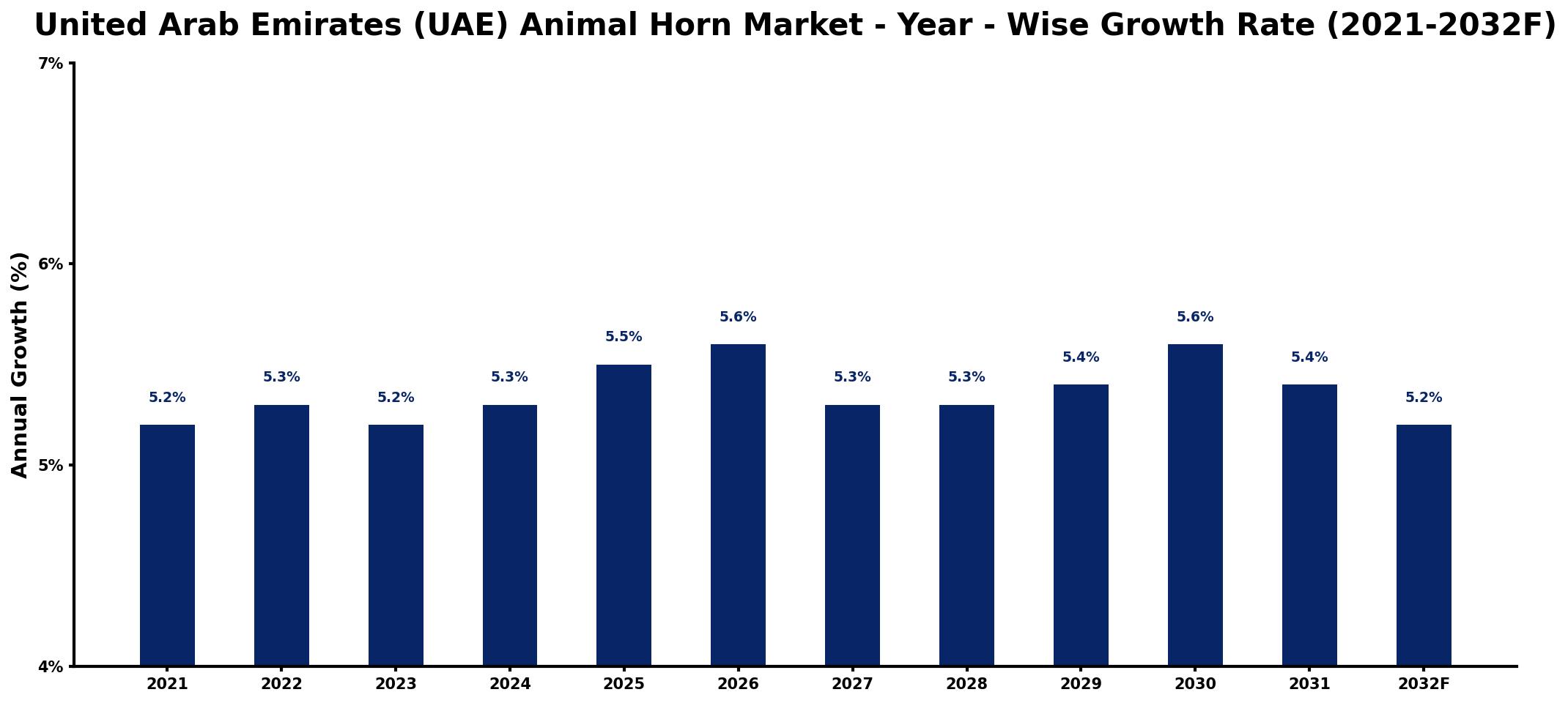
The table below presents the year‑wise growth rates along with the key drivers influencing the market
| Year | Growth Rate | Major Drivers |
| 2021 | 5.2% | Rising demand for luxury items |
| 2022 | 5.3% | Increased interest in traditional crafts |
| 2023 | 5.2% | Growth in fashion accessory market |
| 2024 | 5.3% | Expansion of bespoke furniture sector |
| 2025 | 5.5% | Surge in decorative art investments |
| 2026 | 5.6% | Higher consumer spending on collectibles |
| 2027 | 5.3% | Boost in regional trade activities |
| 2028 | 5.3% | Increased tourism driving souvenir sales |
| 2029 | 5.4% | Growth of sustainable sourcing initiatives |
| 2030 | 5.6% | Rising popularity of artisanal products |
| 2031 | 5.4% | Expanding global export opportunities |
| 2032 | 5.2% | Strengthened cultural heritage appreciation |
Note: Market size estimations and growth projections presented in this report are based on 6Wresearch's proprietary forecasting methodology, utilizing the latest available industry data, government publications, and primary research inputs.
United Arab Emirates (UAE) Animal Horn Market Synopsis
Animal horns in the UAE are not merely raw materials; they are cultural artifacts that embody the region's rich heritage. Skilled artisans transform these natural materials into exquisite pieces that serve both ornamental and practical purposes, appealing to a clientele that values tradition and uniqueness.
The demand for animal horn products is primarily fueled by affluent consumers and collectors who appreciate the artistry involved in crafting these items. However, the market must navigate challenges related to ethical sourcing and conservation, balancing cultural appreciation with the need for responsible trade practices.
United Arab Emirates (UAE) Animal Horn Market Key Takeaways
- The market showcases a growing appetite for ethically sourced, high-end animal horn products.
- Cultural significance and artisanal craftsmanship continue to drive consumer interest.
- Regulatory frameworks around wildlife conservation are reshaping sourcing practices.
- The pandemic has instigated changes in global trade, affecting local demand.
- Investment opportunities exist in sustainable production methods and eco-friendly practices.
Evaluation of Restraints in United Arab Emirates (UAE) Animal Horn Market
Despite its cultural richness, the UAE animal horn market encounters significant restraints. The primary concern revolves around the ethical implications of sourcing, particularly with regard to endangered species. Stricter international regulations and wildlife protection initiatives are creating barriers to accessing certain animal horns, necessitating a shift towards sustainable alternatives. Additionally, ensuring compliance with local and international laws can present challenges for traders and artisans, complicating the procurement process for genuine and ethically sourced materials.
United Arab Emirates (UAE) Animal Horn Market Trends
Emerging trends in the UAE animal horn market indicate a growing emphasis on sustainable and ethically sourced products. Consumers are increasingly aware of the implications of wildlife conservation, influencing their purchasing decisions. Furthermore, a resurgence in traditional arts and crafts is fostering a revival of interest in locally crafted animal horn items, promoting a fusion of modern design with ancient techniques. These trends present a unique opportunity for artisans to reimagine their offerings while respecting cultural heritage.
United Arab Emirates (UAE) Animal Horn Market Opportunities
The UAE animal horn market presents numerous avenues for growth and investment. Opportunities lie in developing products that utilize sustainable materials as alternatives to traditional animal horns, catering to the ethically-conscious consumer. Additionally, expanding educational initiatives about responsible sourcing can enhance market awareness and appreciation, attracting both local and international buyers. Engaging in collaborations with conservation organizations can further strengthen brand reputation and consumer trust, positioning businesses favorably in this evolving market landscape.
Government Initiatives in the United Arab Emirates (UAE) Animal Horn Market
The UAE government has implemented several initiatives aimed at promoting wildlife conservation and sustainable trade practices. This includes regulations that govern the trade of animal products, ensuring they align with international conservation standards. Public awareness campaigns highlighting the importance of ethical sourcing and conservation are also being prioritized, encouraging both consumers and suppliers to make informed decisions. Such government actions are vital in shaping a responsible and sustainable animal horn market in the region.
Future Insights of the United Arab Emirates (UAE) Animal Horn Market
Looking ahead to 2026-2032, the UAE animal horn market is likely to experience a transformative shift toward sustainability and ethical practices. As consumer awareness continues to rise, the demand for responsibly sourced products will dictate market dynamics. The fusion of traditional craftsmanship with modern design principles may open new pathways for innovation, encouraging artisans to explore fresh techniques and materials. With ongoing government support for conservation and ethical trade, the market is well-positioned for balanced growth that honors its cultural significance while promoting sustainability.
United Arab Emirates (UAE) Animal Horn Market Latest Developments (2025 - 2026)
Recent developments in the UAE animal horn market indicate a shift towards transparency in sourcing practices. Many local artisans and traders are adopting certifications that verify the ethical origins of their materials. Additionally, collaborations between conservation groups and artisans are fostering innovative designs that utilize alternative materials while maintaining cultural authenticity. This adaptive approach is helping to mitigate legal risks and cater to a growing base of ethically-minded consumers.
United Arab Emirates (UAE) Animal Horn Market - Key Attractiveness of the Report
- 10 Years of Market Numbers
- Historical Data Starting from 2022 to 2025
- Base Year: 2025
- Forecast Data until 2032
- Key Performance Indicators Impacting the Market
- Major Upcoming Developments and Projects
Key Highlights of the Report:
- United Arab Emirates (UAE) Animal Horn Market Outlook
- Market Size of United Arab Emirates (UAE) Animal Horn Market, 2025
- Forecast of United Arab Emirates (UAE) Animal Horn Market, 2032
- Historical Data and Forecast of United Arab Emirates (UAE) Animal Horn Revenues & Volume for the Period 2022-2032F
- United Arab Emirates (UAE) Animal Horn Market Trend Evolution
- United Arab Emirates (UAE) Animal Horn Market Drivers and Challenges
- United Arab Emirates (UAE) Animal Horn Price Trends
- United Arab Emirates (UAE) Animal Horn Porter's Five Forces
- United Arab Emirates (UAE) Animal Horn Industry Life Cycle
- Historical Data and Forecast of United Arab Emirates (UAE) Animal Horn Market Revenues & Volume By Distribution Channel for the Period 2022-2032F
- Historical Data and Forecast of United Arab Emirates (UAE) Animal Horn Market Revenues & Volume By Online for the Period 2022-2032F
- Historical Data and Forecast of United Arab Emirates (UAE) Animal Horn Market Revenues & Volume By Offline for the Period 2022-2032F
- Historical Data and Forecast of United Arab Emirates (UAE) Animal Horn Market Revenues & Volume By Application for the Period 2022-2032F
- Historical Data and Forecast of United Arab Emirates (UAE) Animal Horn Market Revenues & Volume By Commercial for the Period 2022-2032F
- Historical Data and Forecast of United Arab Emirates (UAE) Animal Horn Market Revenues & Volume By Cosmetics & Personal Care for the Period 2022-2032F
- Historical Data and Forecast of United Arab Emirates (UAE) Animal Horn Market Revenues & Volume By Others for the Period 2022-2032F
- United Arab Emirates (UAE) Animal Horn Import Export Trade Statistics
- Market Opportunity Assessment By Distribution Channel
- Market Opportunity Assessment By Application
- United Arab Emirates (UAE) Animal Horn Top Companies Market Share
- United Arab Emirates (UAE) Animal Horn Competitive Benchmarking By Technical and Operational Parameters
- United Arab Emirates (UAE) Animal Horn Company Profiles
- United Arab Emirates (UAE) Animal Horn Key Strategic Recommendations






































