United Arab Emirates (UAE) Edge Computing Market Size & Growth Rate (2026-2032)
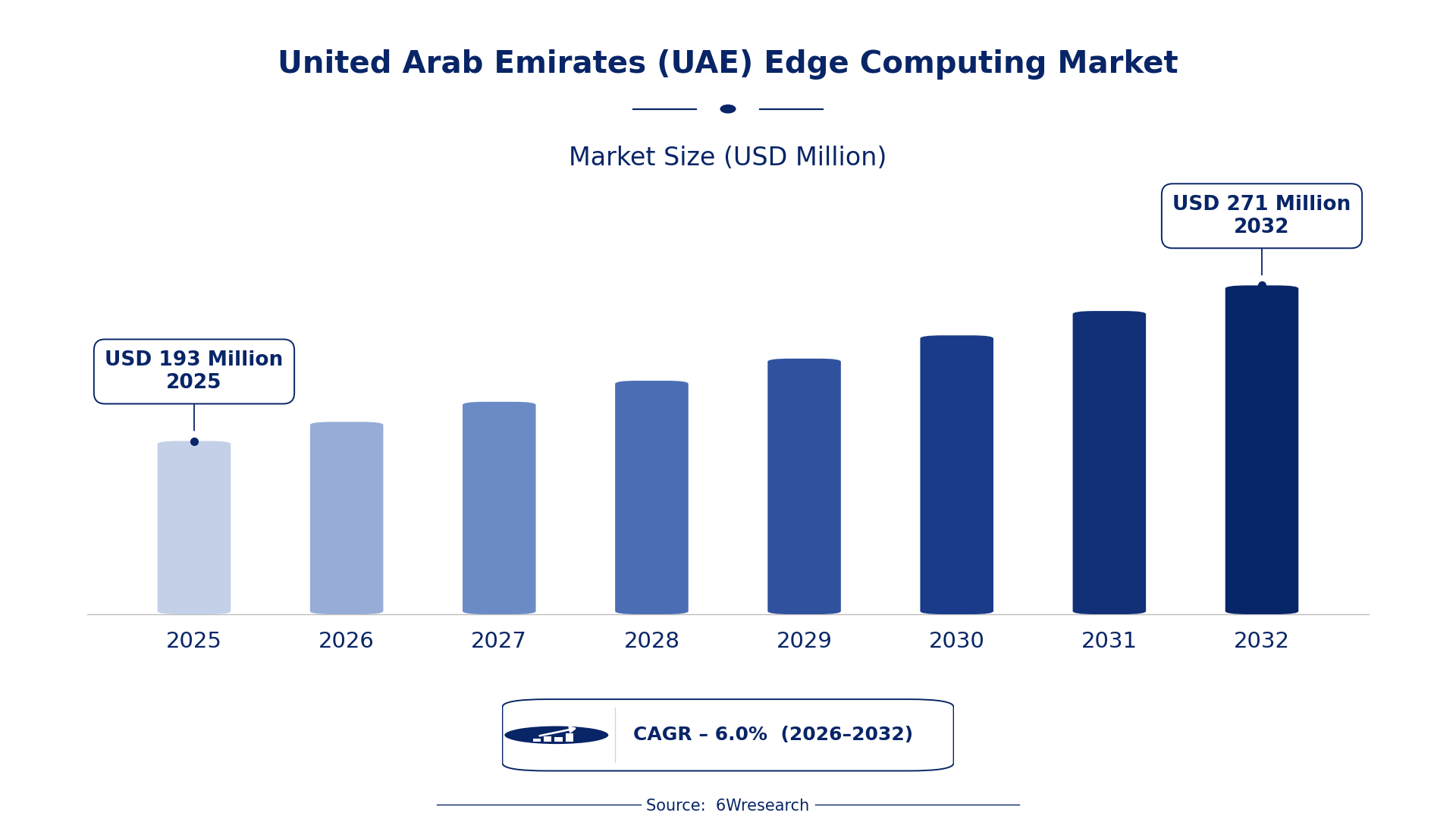
The United Arab Emirates (UAE) Edge Computing Market was estimated at USD 193 Million in 2025 and is projected to reach USD 271 Million by 2032, growing at a CAGR of 6.0% from 2026 to 2032.
United Arab Emirates (UAE) Edge Computing Market Synopsis
The rapid proliferation of IoT devices is the strongest force shaping the UAE Edge Computing Market today. Businesses are increasingly recognizing that processing data closer to its source is essential for enhancing real-time decision-making and reducing latency.
With the UAE's ambitious smart city initiatives and a growing emphasis on digital transformation, edge computing is evolving as a critical infrastructure component. Key sectors such as healthcare, manufacturing, and telecommunications are turning to edge solutions to meet their unique needs and drive efficiency.
United Arab Emirates (UAE) Edge Computing Market Year-wise Growth Rate and Key Drivers
This graph illustrates the annual growth rates of the United Arab Emirates (UAE) Edge Computing Market from 2021 to 2032, highlighting a steady upward trajectory and projected expansion over the forecast period.
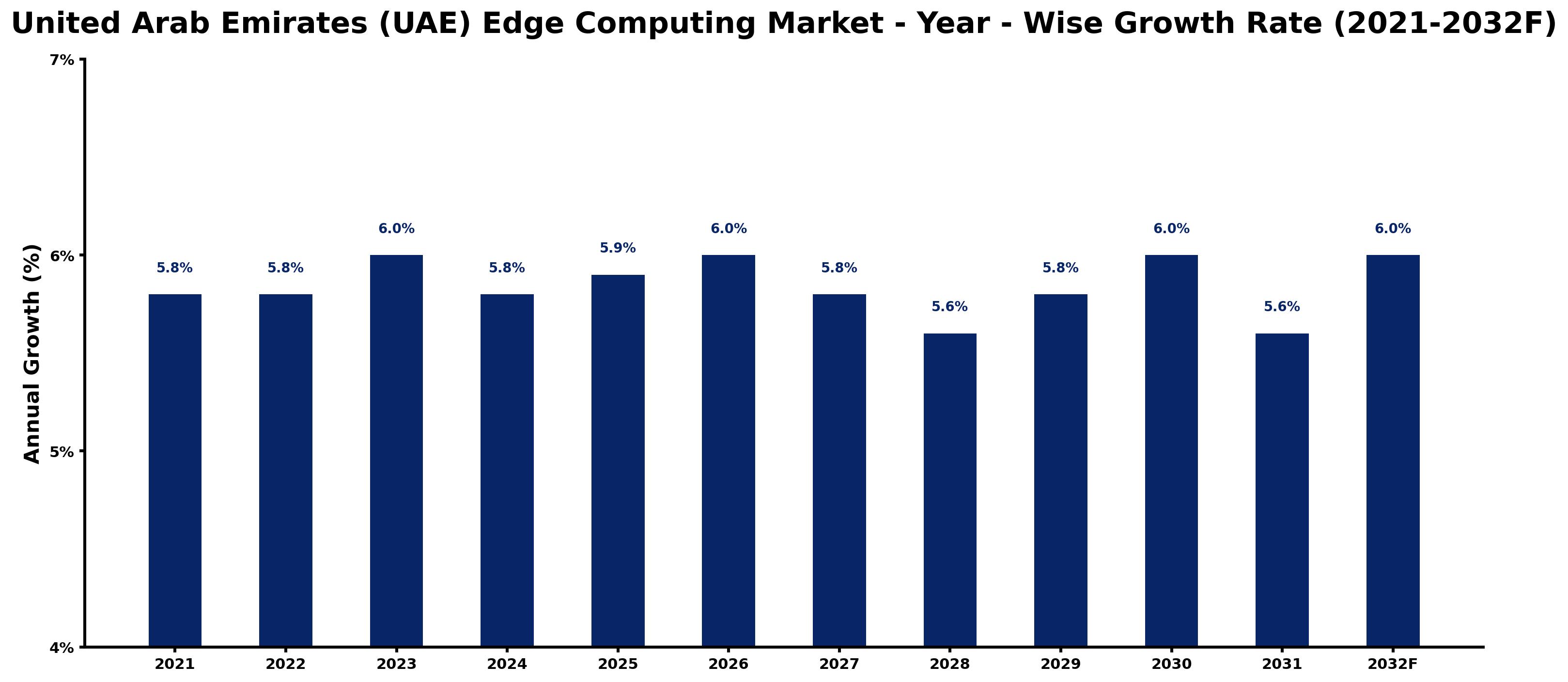
The table below presents the year‑wise growth rates along with the key drivers influencing the market
| Year | Growth Rate | Major Drivers |
| 2021 | 5.8% | Dubai's Data Centre Operations Licensing Framework enacted |
| 2022 | 5.8% | UAE Vision 2021 prioritizes digital transformation initiatives |
| 2023 | 6.0% | Increased adoption of IoT solutions in smart cities |
| 2024 | 5.8% | 5G rollout enhances low-latency edge solutions |
| 2025 | 5.9% | Government pushes for AI integration in services |
| 2026 | 6.0% | Local startups driving innovation in edge technology |
| 2027 | 5.8% | Strategic partnerships with global tech firms growing |
| 2028 | 5.6% | Expo 2020 boosting demand for tech infrastructure |
| 2029 | 5.8% | Investment in UAE's digital economy initiatives surging |
| 2030 | 6.0% | Regulatory support for cloud and edge infrastructure |
| 2031 | 5.6% | Rising cybersecurity concerns drive edge security solutions |
| 2032 | 6.0% | Increased remote work necessitating distributed computing facilities |
Note: Market size estimations and growth projections presented in this report are based on 6Wresearch's proprietary forecasting methodology, utilizing the latest available industry data, government publications, and primary research inputs.
United Arab Emirates (UAE) Edge Computing Market Key Takeaways
Below are some of the specific key takeaways from the market, including:
- The demand for low-latency processing is a primary driver for edge computing adoption in the UAE.
- Investment in smart city projects is significantly boosting edge computing infrastructure.
- The energy sector is utilizing edge computing for enhanced operational efficiency.
- Challenges related to network infrastructure remain a key concern for widespread adoption.
- COVID-19 has accelerated the growth of edge computing, particularly in IoT and AI applications.
Evaluation of Restraints in United Arab Emirates (UAE) Edge Computing Market
While the UAE Edge Computing Market is on a growth trajectory, several restraints are hindering its full potential. One of the most pressing issues is the need for a robust network infrastructure capable of supporting low-latency operations. In areas that are remote or underserved, the lack of reliable connectivity can stifle edge computing implementation. on top of that, as businesses increasingly rely on edge devices for critical data processing, ensuring their security and reliability has become paramount. Without addressing these infrastructure and security concerns, the market may face significant hurdles.
United Arab Emirates (UAE) Edge Computing Market Trends
Several trends are shaping the demand for edge computing in the UAE. The rise of autonomous vehicles is driving the need for real-time data processing and analytics at the edge. Additionally, as smart city initiatives expand, municipalities are deploying edge solutions to enhance urban management and services. The convergence of AI with edge computing also presents new opportunities, enabling businesses to analyze data on-site and respond instantly.
United Arab Emirates (UAE) Edge Computing Market Opportunities
The UAE presents numerous growth and investment opportunities within the edge computing sector. The transition towards renewable energy sources is prompting investments in smart grids that leverage edge computing for efficient data handling. Additionally, the healthcare sector is ripe for innovation, with edge solutions enabling real-time patient monitoring and data analysis. Companies that can navigate the regulatory landscape and establish partnerships with public entities will find fertile ground for growth.
Government Initiatives in the United Arab Emirates (UAE) Edge Computing Market
The UAE government plays a crucial role in shaping the Edge Computing Market through various initiatives aimed at boosting digital infrastructure. Public policy prioritizes innovation and technology adoption, which directly influences the growth of edge computing solutions across multiple sectors.
- A national digital infrastructure upgrade programme now in its rollout phase aims to enhance connectivity across urban and rural areas.
- Ongoing initiatives to support smart city projects are integrating edge computing to improve urban services and efficiency.
- A regulatory framework introduced in 2025 mandates the use of secure and reliable data processing methods for critical sectors.
- Public-private partnerships are being encouraged to expand telecom infrastructure access by 2028, facilitating edge computing deployment.
Future Insights of the United Arab Emirates (UAE) Edge Computing Market
Looking ahead to 2026-2032, the UAE Edge Computing Market is expected to grow as businesses increasingly adopt innovative technologies. The integration of AI and machine learning with edge solutions will likely drive further advancements, creating a feedback loop that enhances data processing capabilities. Additionally, as global trends push for sustainability, edge computing will play a vital role in optimizing energy consumption across various sectors, particularly in smart cities and industrial applications.
United Arab Emirates (UAE) Edge Computing Market Latest Developments
Over the past 12-14 months, the UAE Edge Computing Market has seen a flurry of activity focused on enhancing capabilities and expanding infrastructure. Companies are increasingly investing in edge solutions to meet the growing demand for real-time data processing.
- A leading regional operator launched an edge computing service in early 2025, targeting the healthcare sector for improved patient monitoring.
- A major technology vendor announced an initiative in mid-2025 to integrate AI with edge solutions, enhancing data analytics capabilities.
- Several smart city projects have begun incorporating edge computing technologies, with ongoing deployments expected to be completed by late 2026.
- A planned rollout of edge data centers in underserved regions is set to begin in Q3 2025, addressing connectivity challenges.
United Arab Emirates (UAE) Edge Computing Market - Key Attractiveness of the Report
- 10 Years of Market Numbers
- Historical Data Starting from 2022 to 2025
- Base Year: 2025
- Forecast Data until 2032
- Key Performance Indicators Impacting the Market
- Major Upcoming Developments and Projects
Key Highlights of the Report:
- United Arab Emirates (UAE) Edge Computing Market Outlook
- Market Size of United Arab Emirates (UAE) Edge Computing Market, 2025
- Forecast of United Arab Emirates (UAE) Edge Computing Market, 2032
- Historical Data and Forecast of United Arab Emirates (UAE) Edge Computing Revenues & Volume for the Period 2022-2032F
- United Arab Emirates (UAE) Edge Computing Market Trend Evolution
- United Arab Emirates (UAE) Edge Computing Market Drivers and Challenges
- United Arab Emirates (UAE) Edge Computing Price Trends
- United Arab Emirates (UAE) Edge Computing Porter's Five Forces
- United Arab Emirates (UAE) Edge Computing Industry Life Cycle
- Historical Data and Forecast of United Arab Emirates (UAE) Edge Computing Market Revenues & Volume By Component for the Period 2022-2032F
- Historical Data and Forecast of United Arab Emirates (UAE) Edge Computing Market Revenues & Volume By Hardware for the Period 2022-2032F
- Historical Data and Forecast of United Arab Emirates (UAE) Edge Computing Market Revenues & Volume By Software for the Period 2022-2032F
- Historical Data and Forecast of United Arab Emirates (UAE) Edge Computing Market Revenues & Volume By Services for the Period 2022-2032F
- Historical Data and Forecast of United Arab Emirates (UAE) Edge Computing Market Revenues & Volume By Organization Size for the Period 2022-2032F
- Historical Data and Forecast of United Arab Emirates (UAE) Edge Computing Market Revenues & Volume By Large Enterprises for the Period 2022-2032F
- Historical Data and Forecast of United Arab Emirates (UAE) Edge Computing Market Revenues & Volume By SMEs for the Period 2022-2032F
- Historical Data and Forecast of United Arab Emirates (UAE) Edge Computing Market Revenues & Volume By Application for the Period 2022-2032F
- Historical Data and Forecast of United Arab Emirates (UAE) Edge Computing Market Revenues & Volume By Smart Cities for the Period 2022-2032F
- Historical Data and Forecast of United Arab Emirates (UAE) Edge Computing Market Revenues & Volume By Industrial Internet of Things (IIoT) for the Period 2022-2032F
- Historical Data and Forecast of United Arab Emirates (UAE) Edge Computing Market Revenues & Volume By Remote Monitoring for the Period 2022-2032F
- Historical Data and Forecast of United Arab Emirates (UAE) Edge Computing Market Revenues & Volume By Content Delivery for the Period 2022-2032F
- Historical Data and Forecast of United Arab Emirates (UAE) Edge Computing Market Revenues & Volume By Augmented Reality (AR) and Virtual Reality (VR) for the Period 2022-2032F
- Historical Data and Forecast of United Arab Emirates (UAE) Edge Computing Market Revenues & Volume By Others (Autonomous Vehicles, Drones, And Gaming) for the Period 2022-2032F
- Historical Data and Forecast of United Arab Emirates (UAE) Edge Computing Market Revenues & Volume By Vertical for the Period 2022-2032F
- Historical Data and Forecast of United Arab Emirates (UAE) Edge Computing Market Revenues & Volume By Manufacturing for the Period 2022-2032F
- Historical Data and Forecast of United Arab Emirates (UAE) Edge Computing Market Revenues & Volume By Energy and Utilities for the Period 2022-2032F
- Historical Data and Forecast of United Arab Emirates (UAE) Edge Computing Market Revenues & Volume By Government and Defense for the Period 2022-2032F
- Historical Data and Forecast of United Arab Emirates (UAE) Edge Computing Market Revenues & Volume By Telecommunications for the Period 2022-2032F
- Historical Data and Forecast of United Arab Emirates (UAE) Edge Computing Market Revenues & Volume By Media and Entertainment for the Period 2022-2032F
- Historical Data and Forecast of United Arab Emirates (UAE) Edge Computing Market Revenues & Volume By Retail and Consumer Goods for the Period 2022-2032F
- Historical Data and Forecast of United Arab Emirates (UAE) Edge Computing Market Revenues & Volume By Transportation and Logistics for the Period 2022-2032F
- Historical Data and Forecast of United Arab Emirates (UAE) Edge Computing Market Revenues & Volume By Healthcare and Life Sciences for the Period 2022-2032F
- United Arab Emirates (UAE) Edge Computing Import Export Trade Statistics
- Market Opportunity Assessment By Component
- Market Opportunity Assessment By Organization Size
- Market Opportunity Assessment By Application
- Market Opportunity Assessment By Vertical
- United Arab Emirates (UAE) Edge Computing Top Companies Market Share
- United Arab Emirates (UAE) Edge Computing Competitive Benchmarking By Technical and Operational Parameters
- United Arab Emirates (UAE) Edge Computing Company Profiles
- United Arab Emirates (UAE) Edge Computing Key Strategic Recommendations






































