United Arab Emirates (UAE) Ergonomic Chair Market Size, Share & Growth Rate
The United Arab Emirates (UAE) Ergonomic Chair Market was estimated at USD 1141 Million in 2025 and is projected to reach USD 1977 Million by 2032, growing at a CAGR of 8.2% from 2026 to 2032. This impressive trajectory is primarily driven by a significant shift in workplace culture, with businesses increasingly prioritizing employee well-being. As organizations implement flexible working arrangements, there is a burgeoning demand for ergonomic solutions that enhance comfort during long hours of remote work.
United Arab Emirates (UAE) Ergonomic Chair Market Year-wise Growth Rate and Key Drivers
This graph highlights how the United Arab Emirates (UAE) Ergonomic Chair Market has steadily grown over the years, supported by major growth factors.
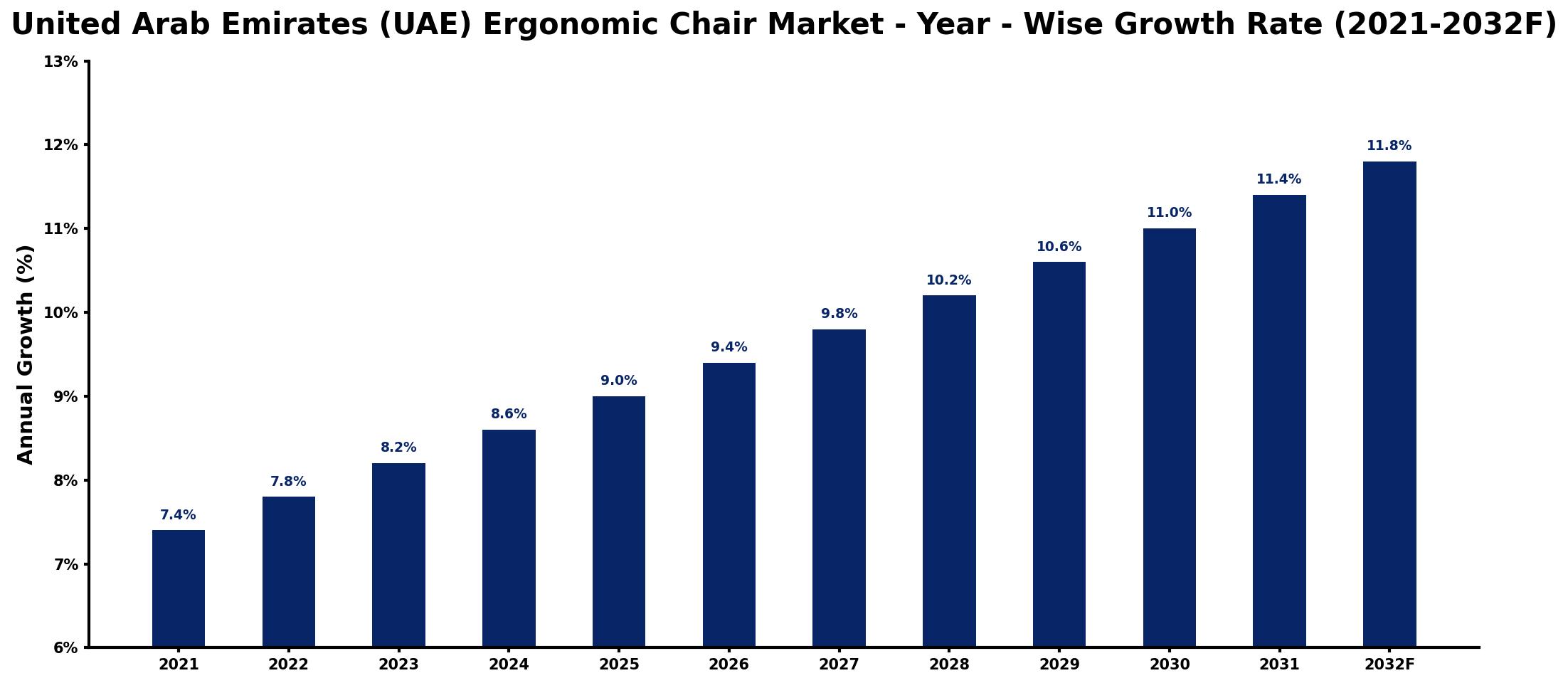
The table below presents the year‑wise growth rates along with the key drivers influencing the market
| Year | Growth Rate | Major Drivers |
| 2021 | 7.4% | Remote work trend accelerates demand |
| 2022 | 7.8% | Health awareness boosts consumer interest |
| 2023 | 8.2% | Corporate wellness programs expand offerings |
| 2024 | 8.6% | Increased focus on workplace comfort |
| 2025 | 9.0% | Technological advancements enhance designs |
| 2026 | 9.4% | Sustainable materials attract eco-conscious buyers |
| 2027 | 9.8% | Rising disposable income fuels purchases |
| 2028 | 10.2% | Growing e-commerce platforms enhance access |
| 2029 | 10.6% | Increased investment in office spaces |
| 2030 | 11.0% | Collaboration spaces drive innovative designs |
| 2031 | 11.4% | Health regulations promote better seating |
| 2032 | 11.8% | Global trends influence local markets |
Note: Market size estimations and growth projections presented in this report are based on 6Wresearch's proprietary forecasting methodology, utilizing the latest available industry data, government publications, and primary research inputs.
United Arab Emirates (UAE) Ergonomic Chair Market Synopsis
Recent momentum in the UAE ergonomic chair market reflects a deeper understanding of ergonomics and its impact on health and productivity. As businesses recognize the value of investing in high-quality seating, the demand for innovative ergonomic solutions is soaring. Looking ahead, the market is set to evolve further with advancements in materials and design tailored to an increasingly discerning consumer base.
Moreover, the rise of remote work has reshaped consumer preferences, leading to greater expectations for customizable ergonomic chairs that support diverse working environments. As more individuals set up home offices, the push for adaptable, supportive seating continues to gain traction, positioning the market for sustained growth in the coming years.
United Arab Emirates (UAE) Ergonomic Chair Market Key Takeaways
- Growing awareness of workplace wellness is driving demand for ergonomic chairs.
- The shift to remote working arrangements is significantly influencing consumer preferences.
- Innovations in design and materials are enhancing the appeal of ergonomic seating.
- Education on the long-term benefits of ergonomic solutions remains essential.
- There are opportunities for investment as the market adapts to changing consumer needs.
Evaluation of Restraints in United Arab Emirates (UAE) Ergonomic Chair Market
Despite its robust growth, the UAE ergonomic chair market faces notable challenges. One significant barrier is consumer education regarding the long-term advantages of ergonomic seating. Many buyers remain hesitant to invest without clear knowledge of the benefits. Furthermore, sourcing premium materials at competitive prices continues to challenge manufacturers, as fluctuating raw material costs can lead to unstable profit margins. Addressing these educational and supply chain issues will be vital for sustained market growth.
United Arab Emirates (UAE) Ergonomic Chair Market Trends
Current trends in the UAE ergonomic chair market highlight a focus on personalization and sustainability. Consumers are increasingly seeking chairs that not only meet ergonomic standards but also reflect their personal style and values. Eco-friendly materials are gaining popularity as awareness of environmental issues rises. Additionally, smart technology integration into ergonomic designs is emerging, with features such as adjustable settings and built-in posture reminders appealing to tech-savvy users. This convergence of design, health, and sustainability is defining the future of ergonomic seating.
United Arab Emirates (UAE) Ergonomic Chair Market Opportunities
The UAE ergonomic chair market presents numerous opportunities for growth and investment. As more organizations adopt flexible work policies, the demand for versatile seating solutions that cater to both office and home environments is expected to expand. Companies focusing on research and development can capitalize on the trend towards smart ergonomic solutions, integrating technology that enhances user experience. Additionally, targeting the healthcare sector with specialized ergonomic chairs designed to assist with rehabilitation and mobility offers another avenue for growth.
Government Initiatives in the United Arab Emirates (UAE) Ergonomic Chair Market
The UAE government is increasingly investing in initiatives that promote workplace wellness and ergonomic standards. Public spending on health and safety regulations encourages businesses to prioritize employee comfort, indirectly stimulating the ergonomic chair market. Additionally, various campaigns aimed at raising awareness of health and productivity benefits related to ergonomics are likely to further drive demand for high-quality ergonomic solutions. These initiatives reinforce the importance of well-designed work environments, positioning ergonomic chairs as a critical element of modern workplace strategy.
Future Insights of the United Arab Emirates (UAE) Ergonomic Chair Market
From 2026 to 2032, the UAE ergonomic chair market is poised for exciting developments. As remote work becomes increasingly normalized, the demand for adaptive seating solutions is expected to flourish. The integration of advanced materials and smart technologies into ergonomic chair designs will likely enhance functionality and appeal. Furthermore, as consumer education initiatives grow, more individuals will recognize the importance of ergonomic solutions, which will contribute to sustained market expansion. Overall, the future looks promising for stakeholders in the UAE ergonomic chair market.
United Arab Emirates (UAE) Ergonomic Chair Market Latest Developments (2025 - 2026)
The ergonomic chair market in the UAE is witnessing notable developments, particularly in response to evolving consumer preferences. Many companies are enhancing their product lines with ergonomically designed chairs that incorporate sustainable materials. Additionally, manufacturers are increasingly focused on online sales channels to meet the surge in demand from home office setups. As competition intensifies, businesses are also exploring innovative marketing strategies to effectively communicate the benefits of ergonomic seating solutions.
United Arab Emirates (UAE) Ergonomic Chair Market - Key Attractiveness of the Report
- 10 Years of Market Numbers
- Historical Data Starting from 2022 to 2025
- Base Year: 2025
- Forecast Data until 2032
- Key Performance Indicators Impacting the Market
- Major Upcoming Developments and Projects
Key Highlights of the Report:
- United Arab Emirates (UAE) Ergonomic Chair Market Outlook
- Market Size of United Arab Emirates (UAE) Ergonomic Chair Market, 2025
- Forecast of United Arab Emirates (UAE) Ergonomic Chair Market, 2032
- Historical Data and Forecast of United Arab Emirates (UAE) Ergonomic Chair Revenues & Volume for the Period 2022-2032F
- United Arab Emirates (UAE) Ergonomic Chair Market Trend Evolution
- United Arab Emirates (UAE) Ergonomic Chair Market Drivers and Challenges
- United Arab Emirates (UAE) Ergonomic Chair Price Trends
- United Arab Emirates (UAE) Ergonomic Chair Porter's Five Forces
- United Arab Emirates (UAE) Ergonomic Chair Industry Life Cycle
- Historical Data and Forecast of United Arab Emirates (UAE) Ergonomic Chair Market Revenues & Volume By Application for the Period 2022-2032F
- Historical Data and Forecast of United Arab Emirates (UAE) Ergonomic Chair Market Revenues & Volume By Enterprise Procurement for the Period 2022-2032F
- Historical Data and Forecast of United Arab Emirates (UAE) Ergonomic Chair Market Revenues & Volume By Government Procurement for the Period 2022-2032F
- Historical Data and Forecast of United Arab Emirates (UAE) Ergonomic Chair Market Revenues & Volume By School Procurement for the Period 2022-2032F
- Historical Data and Forecast of United Arab Emirates (UAE) Ergonomic Chair Market Revenues & Volume By Individual Procurement for the Period 2022-2032F
- Historical Data and Forecast of United Arab Emirates (UAE) Ergonomic Chair Market Revenues & Volume By Other for the Period 2022-2032F
- United Arab Emirates (UAE) Ergonomic Chair Import Export Trade Statistics
- Market Opportunity Assessment By Application
- United Arab Emirates (UAE) Ergonomic Chair Top Companies Market Share
- United Arab Emirates (UAE) Ergonomic Chair Competitive Benchmarking By Technical and Operational Parameters
- United Arab Emirates (UAE) Ergonomic Chair Company Profiles
- United Arab Emirates (UAE) Ergonomic Chair Key Strategic Recommendations






































