United Kingdom (UK) Digital Railway Market Size & Growth Rate (2026-2032)
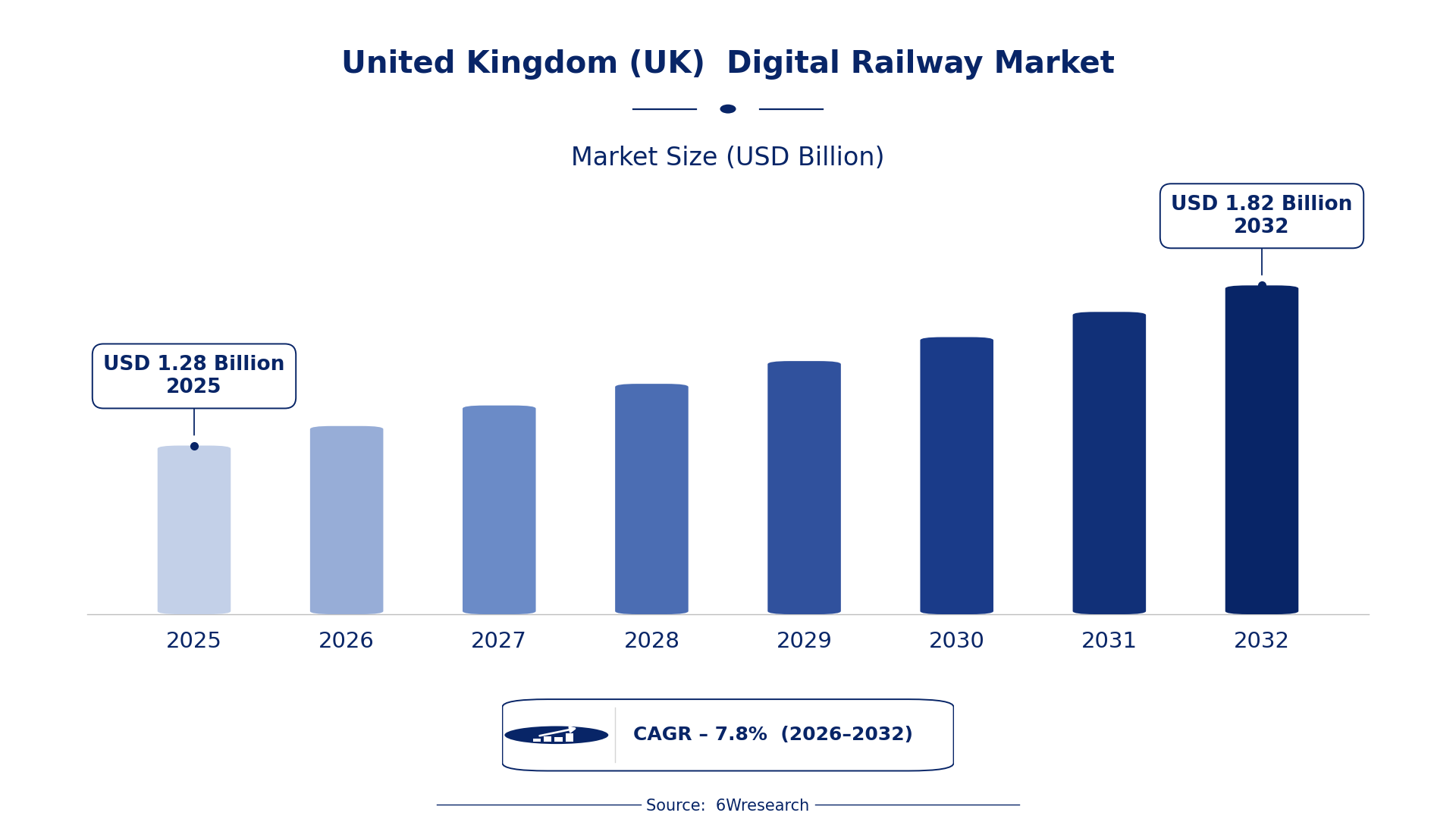
The United Kingdom (UK) Digital Railway Market was estimated at USD 1278 Million in 2025 and is projected to reach USD 1824 Million by 2032, growing at a CAGR of 7.8% from 2026 to 2032.
United Kingdom (UK) Digital Railway Market Synopsis
The UK digital railway market is at a crucial turning point, characterized by a significant push towards modernization. This transformation is driven by the implementation of advanced digital signaling, control systems, and predictive maintenance solutions that collectively aim to enhance the safety and efficiency of rail networks.
Recent initiatives like the European Rail Traffic Management System (ERTMS) are setting new benchmarks in operational efficiency, while real-time passenger information services are reshaping the travel experience. Stakeholders are increasingly focused on interoperability and collaboration to meet future demands and improve infrastructure utilization.
United Kingdom (UK) Digital Railway Market Year-wise Growth Rate and Key Drivers
This graph illustrates the annual growth rates of the United Kingdom (UK) Digital Railway Market from 2021 to 2032, highlighting a steady upward trajectory and projected expansion over the forecast period.
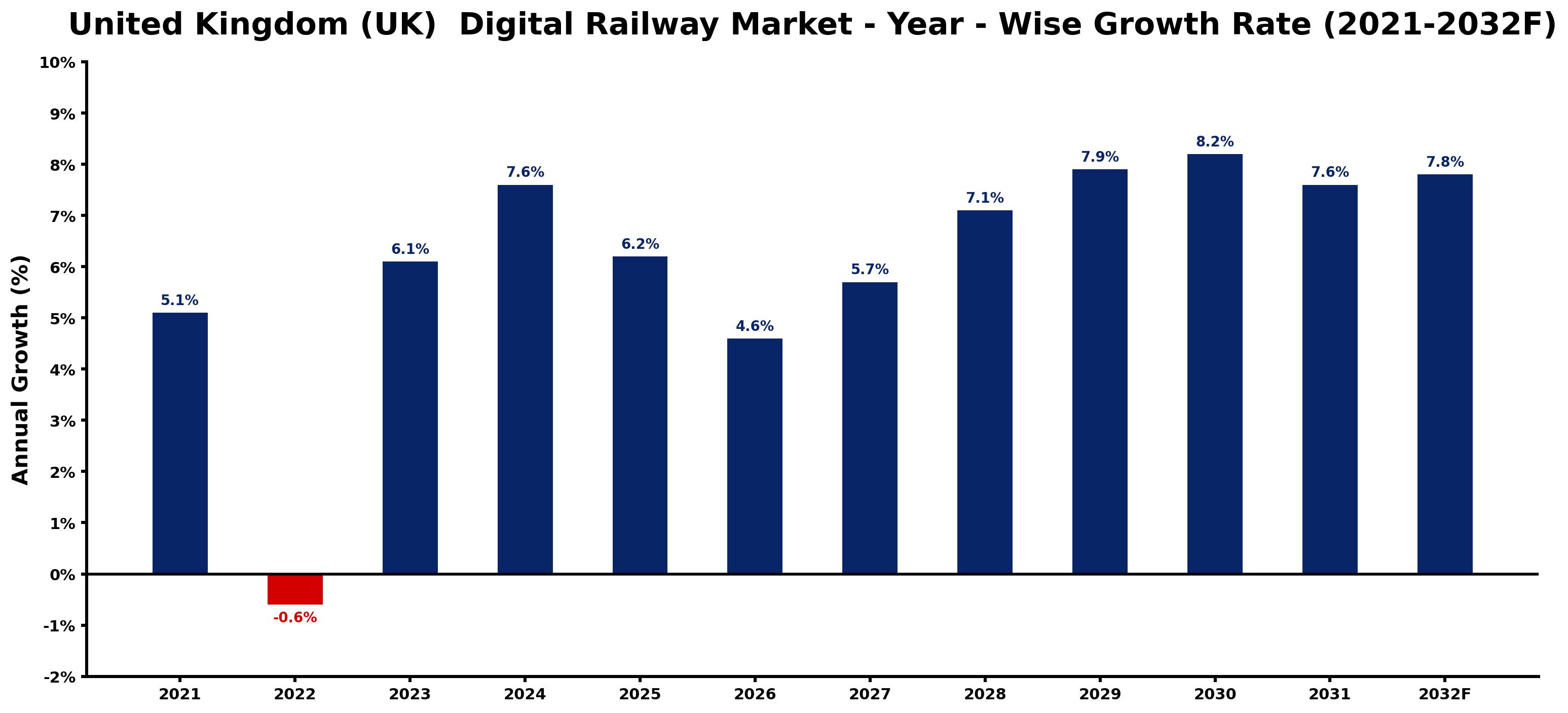
The table below presents the year‑wise growth rates along with the key drivers influencing the market
| Year | Growth Rate | Major Drivers |
| 2021 | 5.1% | Transport for London's digital upgrade initiatives |
| 2022 | -0.6% | Delayed infrastructure projects under Network Rail policy changes. |
| 2023 | 6.1% | Government's 'Transport Decarbonisation Plan' implementation |
| 2024 | 7.6% | Investment in digital signalling technology expansion |
| 2025 | 6.2% | Railway modernization fund boosting technology adoption |
| 2026 | 4.6% | Increased passenger demand for digital services |
| 2027 | 5.7% | Crossrail project's digital integration efforts |
| 2028 | 7.1% | Rise in cybersecurity measures for rail systems |
| 2029 | 7.9% | New digital ticketing solutions improving user experience |
| 2030 | 8.2% | UK's commitment to smart rail technologies |
| 2031 | 7.6% | Collaboration with tech firms for rail innovations |
| 2032 | 7.8% | Focus on data analytics for operational efficiency |
Note: Market size estimations and growth projections presented in this report are based on 6Wresearch's proprietary forecasting methodology, utilizing the latest available industry data, government publications, and primary research inputs.
United Kingdom (UK) Digital Railway Market Key Takeaways
Below are some of the specific key takeaways from the market, including:
- Government initiatives are pivotal in driving investments for digital transformation.
- The market is witnessing substantial growth in IoT-enabled maintenance solutions.
- Real-time information systems are enhancing passenger experiences significantly.
- Collaboration among stakeholders is essential for achieving interoperability.
- Digital signaling systems remain a key focus area for modernization efforts.
Evaluation of Restraints in United Kingdom (UK) Digital Railway Market
Despite the momentum, the UK digital railway market faces substantial hurdles. Aging infrastructure poses a significant challenge, as upgrading to digital signaling and communication systems requires considerable investment and planning. Ensuring interoperability across diverse railway networks complicates the modernization process, often leading to delays and increased costs. Additionally, cybersecurity threats remain a pressing concern, necessitating robust protective measures to secure sensitive operational data. Stakeholders must work together to address these complexities while adhering to regulatory standards.
United Kingdom (UK) Digital Railway Market Trends
Key trends are emerging that will shape the future of the UK digital railway market. The shift towards predictive maintenance powered by IoT technologies is gaining traction, allowing for proactive management of assets. on top of that, the integration of artificial intelligence in train control systems is expected to optimize operations and improve safety outcomes. On the passenger side, the demand for real-time updates and mobile ticketing solutions is driving enhancements in user experience, reflecting a broader trend towards digitization in public transport.
United Kingdom (UK) Digital Railway Market Opportunities
Growth opportunities within the UK digital railway market are abundant. The government’s commitment to infrastructure investment sets a favorable backdrop for technology providers and operators alike. Innovations in smart signaling and control systems present lucrative avenues for development. on top of that, as public awareness increases regarding sustainability, the demand for environmentally friendly rail solutions is likely to rise, offering new prospects for market players focused on carbon reduction technologies.
Government Initiatives in the United Kingdom (UK) Digital Railway Market
The UK government is actively shaping the digital railway market through comprehensive policies aimed at modernization. Regulatory bodies like Network Rail and the Office of Rail and Road (ORR) play crucial roles in ensuring compliance with safety standards and enhancing network performance. The emphasis on improving operational efficiency and passenger experience is evident in various ongoing and upcoming initiatives.
- A national digital infrastructure upgrade programme is currently in its rollout phase, focusing on modernizing existing systems.
- In 2025, a regulatory framework was introduced to enhance billing transparency and customer service standards.
- A public-private partnership aimed at expanding IoT-enabled maintenance solutions is currently underway.
- Planned initiatives include a comprehensive review of signaling standards scheduled for 2027 to ensure interoperability across networks.
- A new investment strategy focused on reducing carbon emissions in railway operations is expected to launch in 2026.
Future Insights of the United Kingdom (UK) Digital Railway Market
Looking ahead to 2026-2032, the UK digital railway market is set to evolve significantly. The ongoing modernization efforts will likely lead to enhanced operational efficiencies and improved passenger experiences. As technology continues to advance, expect to see greater integration of AI and machine learning in operational processes, which will streamline services further. The focus on sustainability will drive innovation, ensuring that the rail network not only meets current demands but also anticipates future needs.
United Kingdom (UK) Digital Railway Market Latest Developments
The last year has seen notable activity in the UK digital railway market, underscoring the commitment to modernization and efficiency. Initiatives aimed at upgrading infrastructure and enhancing passenger services are gaining momentum, supported by government policies and private sector investments.
- A major technology vendor launched a new predictive maintenance solution in early 2025, aimed at improving asset management efficiency.
- A collaboration between several rail operators began in mid-2025, focused on developing unified digital signaling standards.
- A pilot project for real-time passenger information systems was completed in late 2025, with plans for broader implementation by mid-2026.
- Upcoming in Q3 2026 is a rollout of advanced mobile ticketing solutions designed to streamline fare collection.
United Kingdom (UK) Digital Railway Market - Key Attractiveness of the Report
- 10 Years of Market Numbers
- Historical Data Starting from 2022 to 2025
- Base Year: 2025
- Forecast Data until 2032
- Key Performance Indicators Impacting the Market
- Major Upcoming Developments and Projects
Opportunities lie in the integration of IoT technologies for predictive maintenance, advancements in smart signaling systems, and initiatives aimed at reducing carbon emissions. The government’s commitment to infrastructure investment further enhances these prospects.
Key Highlights of the Report:
- United Kingdom (UK) Digital Railway Market Outlook
- Market Size of United Kingdom (UK) Digital Railway Market, 2025
- Forecast of United Kingdom (UK) Digital Railway Market, 2032
- Historical Data and Forecast of United Kingdom (UK) Digital Railway Revenues & Volume for the Period 2022-2032F
- United Kingdom (UK) Digital Railway Market Trend Evolution
- United Kingdom (UK) Digital Railway Market Drivers and Challenges
- United Kingdom (UK) Digital Railway Price Trends
- United Kingdom (UK) Digital Railway Porter's Five Forces
- United Kingdom (UK) Digital Railway Industry Life Cycle
- Historical Data and Forecast of United Kingdom (UK) Digital Railway Market Revenues & Volume By Application for the Period 2022-2032F
- Historical Data and Forecast of United Kingdom (UK) Digital Railway Market Revenues & Volume By Rail operations management for the Period 2022-2032F
- Historical Data and Forecast of United Kingdom (UK) Digital Railway Market Revenues & Volume By Passenger Information System for the Period 2022-2032F
- Historical Data and Forecast of United Kingdom (UK) Digital Railway Market Revenues & Volume By Asset Management for the Period 2022-2032F
- Historical Data and Forecast of United Kingdom (UK) Digital Railway Market Revenues & Volume By Other Applications (other aplications includes connectivity and communication) for the Period 2022-2032F
- Historical Data and Forecast of United Kingdom (UK) Digital Railway Market Revenues & Volume By Services for the Period 2022-2032F
- Historical Data and Forecast of United Kingdom (UK) Digital Railway Market Revenues & Volume By Managed Services for the Period 2022-2032F
- Historical Data and Forecast of United Kingdom (UK) Digital Railway Market Revenues & Volume By Professional Service for the Period 2022-2032F
- Historical Data and Forecast of United Kingdom (UK) Digital Railway Market Revenues & Volume By Solutions for the Period 2022-2032F
- Historical Data and Forecast of United Kingdom (UK) Digital Railway Market Revenues & Volume By Remote Monitoring for the Period 2022-2032F
- Historical Data and Forecast of United Kingdom (UK) Digital Railway Market Revenues & Volume By Route Optimization And Scheduling for the Period 2022-2032F
- Historical Data and Forecast of United Kingdom (UK) Digital Railway Market Revenues & Volume By Analytics for the Period 2022-2032F
- Historical Data and Forecast of United Kingdom (UK) Digital Railway Market Revenues & Volume By Network management for the Period 2022-2032F
- Historical Data and Forecast of United Kingdom (UK) Digital Railway Market Revenues & Volume By Predictive maintenance for the Period 2022-2032F
- Historical Data and Forecast of United Kingdom (UK) Digital Railway Market Revenues & Volume By Security for the Period 2022-2032F
- Historical Data and Forecast of United Kingdom (UK) Digital Railway Market Revenues & Volume By Other Solutions for the Period 2022-2032F
- United Kingdom (UK) Digital Railway Import Export Trade Statistics
- Market Opportunity Assessment By Application
- Market Opportunity Assessment By Services
- Market Opportunity Assessment By Solutions
- United Kingdom (UK) Digital Railway Top Companies Market Share
- United Kingdom (UK) Digital Railway Competitive Benchmarking By Technical and Operational Parameters
- United Kingdom (UK) Digital Railway Company Profiles
- United Kingdom (UK) Digital Railway Key Strategic Recommendations






































