United Kingdom (UK) Emulsifiers Market: Import Trend Analysis
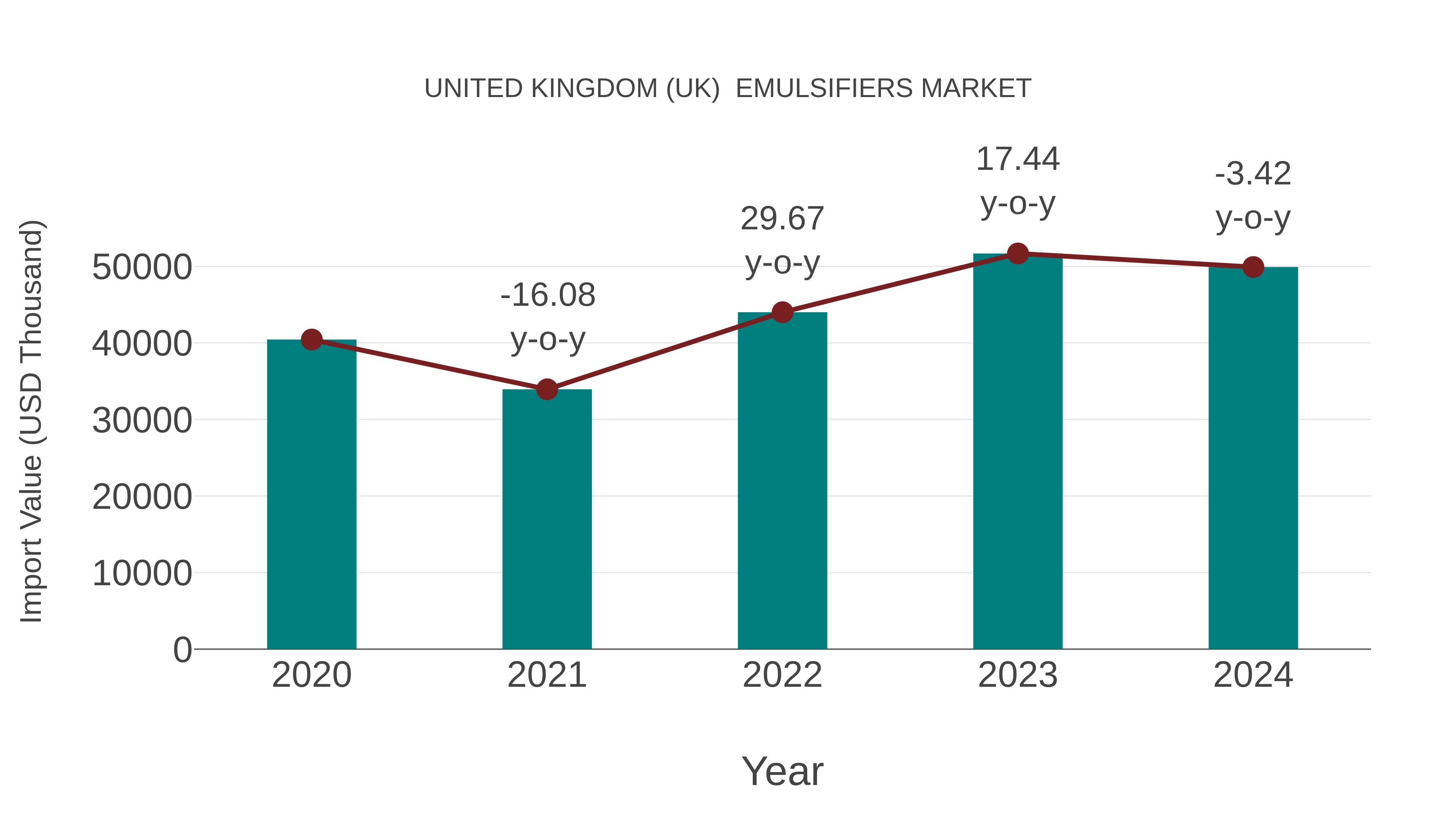
The United Kingdom import trend for emulsifiers in the UK market experienced a decline from 2023 to 2024, with a growth rate of -3.42%. However, the compound annual growth rate (CAGR) for the period 2020-2024 stood at 5.4%. This negative momentum in imports could be attributed to shifting consumer preferences or changes in trade policies impacting market dynamics.
United Kingdom (UK) Emulsifiers Market Overview
The United Kingdom (UK) emulsifiers market is experiencing steady growth due to increasing demand in various industries such as food and beverage, pharmaceuticals, cosmetics, and personal care. Emulsifiers are essential ingredients for formulating stable emulsions, improving texture, and extending shelf life of products. The market is driven by factors like the growing consumer preference for convenience foods, rising awareness about the benefits of natural emulsifiers, and advancements in emulsifier technology. Key players in the UK emulsifiers market are focusing on product innovation, expanding their product portfolios, and forming strategic partnerships to enhance their market presence. Regulatory initiatives emphasizing food safety and quality are also influencing market dynamics. Overall, the UK emulsifiers market is poised for further growth, fueled by evolving consumer preferences and expanding applications across multiple industries.
United Kingdom (UK) Emulsifiers Market Trends and Opportunities
The United Kingdom (UK) emulsifiers market is experiencing steady growth driven by the increasing demand for convenience foods, bakery products, and personal care items. Consumers are seeking products with improved texture, stability, and longer shelf life, leading to a higher adoption of emulsifiers by manufacturers. Clean label and natural emulsifiers are gaining traction in the market as consumers prioritize healthier and more transparent ingredient lists. Opportunities in the UK emulsifiers market include the development of innovative emulsifiers that cater to specific dietary requirements, such as vegan or allergen-free options. Additionally, the growing trend of plant-based products presents a lucrative opportunity for manufacturers to expand their product offerings. Overall, the UK emulsifiers market is poised for further growth and innovation in response to evolving consumer preferences.
United Kingdom (UK) Emulsifiers Market Challenges
In the United Kingdom Emulsifiers Market, challenges primarily revolve around regulatory pressures for cleaner label products, increased consumer demand for natural and organic ingredients, and the need for sustainable sourcing practices. As consumers become more health-conscious and environmentally aware, manufacturers are under pressure to reformulate products with cleaner and more sustainable emulsifiers. Additionally, Brexit uncertainties may impact supply chains and trade relationships, potentially leading to disruptions in the emulsifier market. Companies operating in the UK are also facing pricing pressures and intense competition, requiring them to innovate and differentiate their products to maintain market share. Overall, navigating these challenges requires companies to stay agile, responsive to consumer trends, and compliant with evolving regulations to succeed in the UK emulsifiers market.
United Kingdom (UK) Emulsifiers Market Drivers
The United Kingdom Emulsifiers Market is primarily driven by the growing demand for convenience foods and ready-to-eat products, which require emulsifiers for improved texture and stability. The increasing consumer preference for processed foods, bakery products, and confectionery items is also fueling the demand for emulsifiers in the UK market. Additionally, the rising awareness about clean label ingredients and natural emulsifiers is influencing manufacturers to innovate and introduce cleaner formulations in their products. Moreover, the expanding food and beverage industry in the UK, coupled with the emphasis on product differentiation and shelf-life extension, is further boosting the demand for emulsifiers. Overall, the market growth is driven by the diverse applications of emulsifiers in the food industry and the continuous product development efforts by manufacturers to cater to evolving consumer preferences.
United Kingdom (UK) Emulsifiers Market Government Policies
The United Kingdom (UK) government has implemented various policies that impact the emulsifiers market. This includes regulations set by the Food Standards Agency (FSA) to ensure the safety and quality of food products containing emulsifiers. Additionally, the UK government has set targets to reduce the use of artificial additives in food products, which may affect the demand for emulsifiers. Brexit has also influenced the market, with changes in regulations impacting trade and supply chains. The UK government`s focus on sustainability and environmental impact may lead to increased scrutiny on the sourcing and production of emulsifiers, driving companies to adopt more sustainable practices. Overall, government policies in the UK are contributing to a shifting landscape in the emulsifiers market, emphasizing safety, quality, and sustainability.
United Kingdom (UK) Emulsifiers Market Future Outlook
The United Kingdom (UK) emulsifiers market is poised for steady growth in the coming years due to increasing demand from various end-use industries such as food and beverages, pharmaceuticals, and personal care products. The market is expected to be driven by factors such as the growing popularity of convenience foods, the rising demand for natural and clean label products, and the increasing awareness about the benefits of emulsifiers in enhancing product quality and shelf life. Additionally, technological advancements in emulsifier production and formulation are likely to further fuel market growth. However, challenges such as stringent regulations on food additives and fluctuating raw material prices could pose some hindrances to market expansion. Overall, the UK emulsifiers market is expected to witness a positive trajectory in the foreseeable future.
Key Highlights of the Report:
- United Kingdom (UK) Emulsifiers Market Outlook
- Market Size of United Kingdom (UK) Emulsifiers Market, 2025
- Forecast of United Kingdom (UK) Emulsifiers Market, 2032
- Historical Data and Forecast of United Kingdom (UK) Emulsifiers Revenues & Volume for the Period 2022 - 2032F
- United Kingdom (UK) Emulsifiers Market Trend Evolution
- United Kingdom (UK) Emulsifiers Market Drivers and Challenges
- United Kingdom (UK) Emulsifiers Price Trends
- United Kingdom (UK) Emulsifiers Porter's Five Forces
- United Kingdom (UK) Emulsifiers Industry Life Cycle
- Historical Data and Forecast of United Kingdom (UK) Emulsifiers Market Revenues & Volume By Source for the Period 2022 - 2032F
- Historical Data and Forecast of United Kingdom (UK) Emulsifiers Market Revenues & Volume By Bio-based for the Period 2022 - 2032F
- Historical Data and Forecast of United Kingdom (UK) Emulsifiers Market Revenues & Volume By Synthetic for the Period 2022 - 2032F
- Historical Data and Forecast of United Kingdom (UK) Emulsifiers Market Revenues & Volume By Application for the Period 2022 - 2032F
- Historical Data and Forecast of United Kingdom (UK) Emulsifiers Market Revenues & Volume By Food for the Period 2022 - 2032F
- Historical Data and Forecast of United Kingdom (UK) Emulsifiers Market Revenues & Volume By Cosmetics & Personal Care for the Period 2022 - 2032F
- Historical Data and Forecast of United Kingdom (UK) Emulsifiers Market Revenues & Volume By Oilfield Chemicals for the Period 2022 - 2032F
- Historical Data and Forecast of United Kingdom (UK) Emulsifiers Market Revenues & Volume By Pharmaceutical for the Period 2022 - 2032F
- Historical Data and Forecast of United Kingdom (UK) Emulsifiers Market Revenues & Volume By Agrochemicals for the Period 2022 - 2032F
- Historical Data and Forecast of United Kingdom (UK) Emulsifiers Market Revenues & Volume By Others for the Period 2022 - 2032F
- United Kingdom (UK) Emulsifiers Import Export Trade Statistics
- Market Opportunity Assessment By Source
- Market Opportunity Assessment By Application
- United Kingdom (UK) Emulsifiers Top Companies Market Share
- United Kingdom (UK) Emulsifiers Competitive Benchmarking By Technical and Operational Parameters
- United Kingdom (UK) Emulsifiers Company Profiles
- United Kingdom (UK) Emulsifiers Key Strategic Recommendations






































