United Kingdom (UK) Furniture Market: Import Trend Analysis
In 2024, the United Kingdom furniture market witnessed a decline in import momentum, with a growth rate of -8.75% compared to the previous year. The compound annual growth rate (CAGR) for 2020-2024 stood at -1.04%. This negative trend could be attributed to shifting consumer preferences or changes in trade policies impacting market stability.
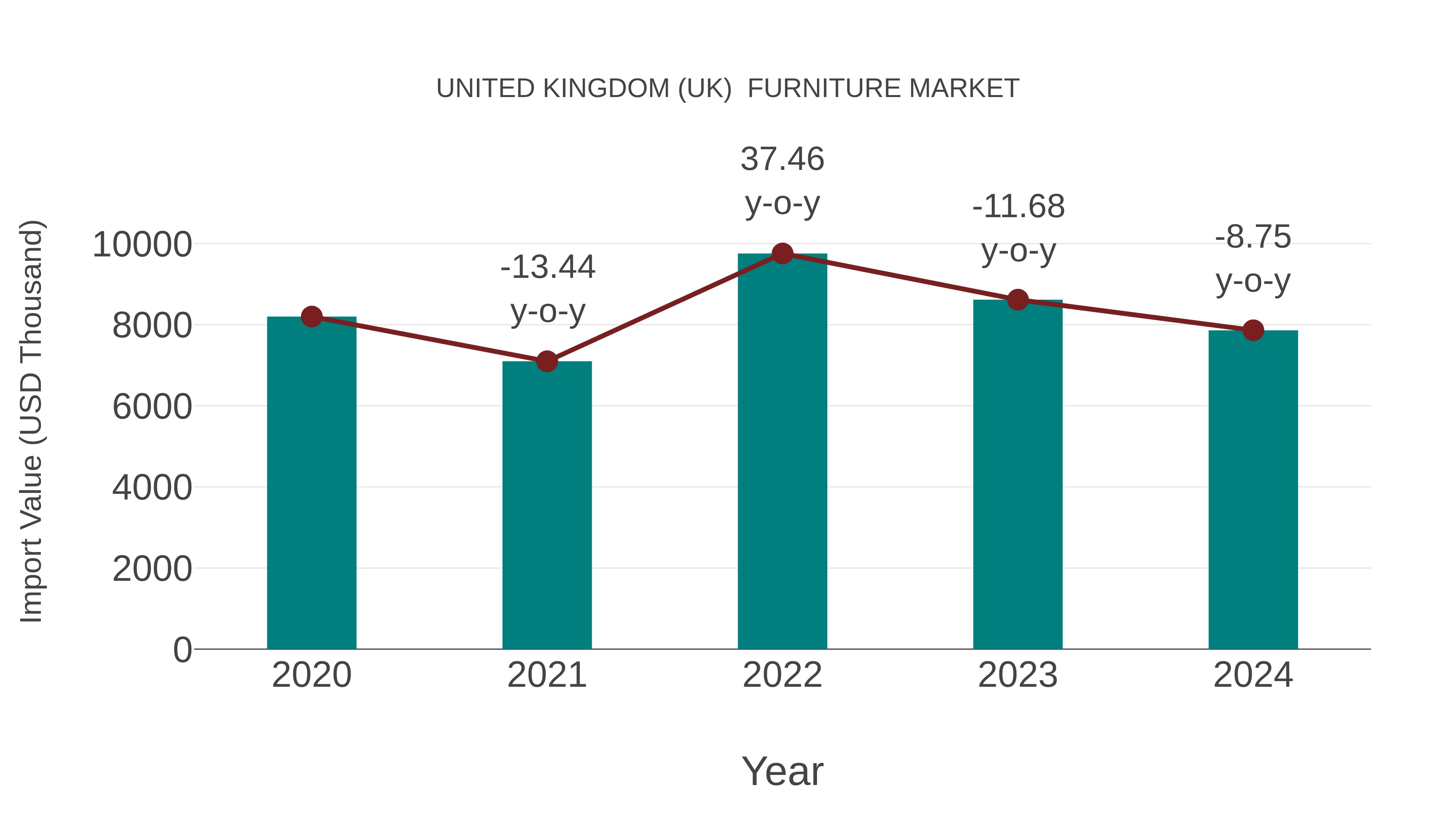
United Kingdom (UK) Export Potential Assessment For Furniture Market (Values in USD Thousand)
united kingdom uk furniture market Synopsis
The United Kingdom (UK) furniture market is expected to witness a CAGR of 3.3% in the period 2020-2026. The key drivers for the growth of this market are rising disposable income, increasing demand for high-end furniture products, and growing consumer preference towards online shopping. Furthermore, government initiatives like Furniture Reuse Network (FRN) which encourages reuse and recycling of unwanted furniture items are also expected to propel the market growth during the forecast period. However, challenges such as rising raw material cost due to fluctuating prices and lack of skilled labor might hamper the market?s growth over the next few years.
Key Highlights of the Report:
- United Kingdom (UK) Furniture Market Outlook
- Market Size of United Kingdom (UK) Furniture Market, 2019
- Forecast of United Kingdom (UK) Furniture Market, 2026
- Historical Data and Forecast of United Kingdom (UK) Furniture Revenues & Volume for the Period 2016 - 2026
- United Kingdom (UK) Furniture Market Trend Evolution
- United Kingdom (UK) Furniture Market Drivers and Challenges
- United Kingdom (UK) Furniture Price Trends
- United Kingdom (UK) Furniture Porter's Five Forces
- United Kingdom (UK) Furniture Industry Life Cycle
- Historical Data and Forecast of United Kingdom (UK) Furniture Market Revenues & Volume By Material Types for the Period 2016 - 2026
- Historical Data and Forecast of United Kingdom (UK) Furniture Market Revenues & Volume By Plastic for the Period 2016 - 2026
- Historical Data and Forecast of United Kingdom (UK) Furniture Market Revenues & Volume By Wood for the Period 2016 - 2026
- Historical Data and Forecast of United Kingdom (UK) Furniture Market Revenues & Volume By Metal for the Period 2016 - 2026
- Historical Data and Forecast of United Kingdom (UK) Furniture Market Revenues & Volume By Other for the Period 2016 - 2026
- Historical Data and Forecast of United Kingdom (UK) Furniture Market Revenues & Volume By Applications for the Period 2016 - 2026
- Historical Data and Forecast of United Kingdom (UK) Furniture Market Revenues & Volume By Residential for the Period 2016 - 2026
- Historical Data and Forecast of United Kingdom (UK) Furniture Market Revenues & Volume By Commercial for the Period 2016 - 2026
- United Kingdom (UK) Furniture Import Export Trade Statistics
- Market Opportunity Assessment By Material Types
- Market Opportunity Assessment By Applications
- United Kingdom (UK) Furniture Top Companies Market Share
- United Kingdom (UK) Furniture Competitive Benchmarking By Technical and Operational Parameters
- United Kingdom (UK) Furniture Company Profiles
- United Kingdom (UK) Furniture Key Strategic Recommendations






































