United Kingdom (UK) Identity and Access Management Market Size & Growth Rate (2026-2032)
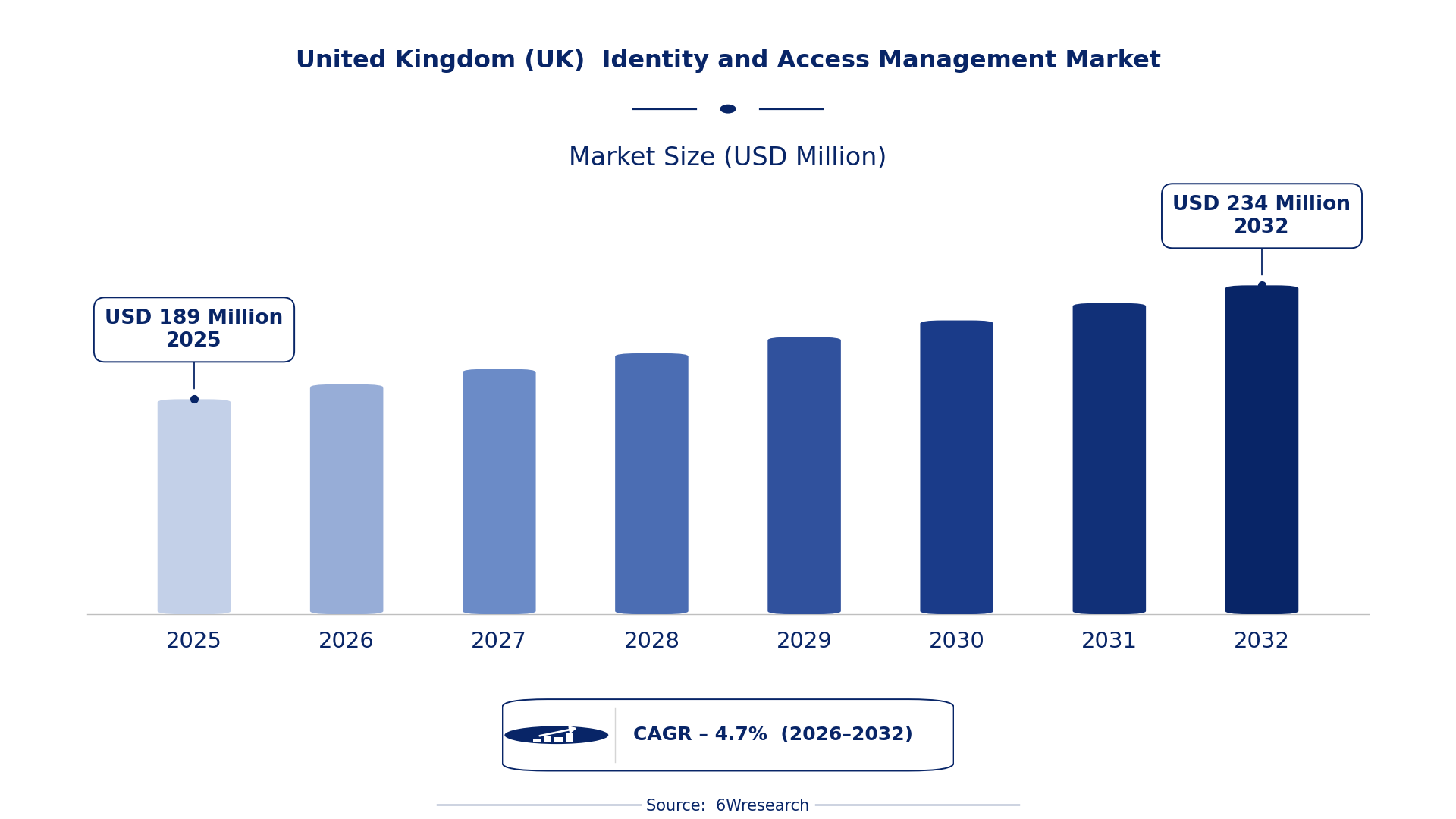
The United Kingdom (UK) Identity and Access Management Market was estimated at USD 189 Million in 2025 and is projected to reach USD 234 Million by 2032, growing at a CAGR of 4.7% from 2026 to 2032.
United Kingdom (UK) Identity and Access Management Market Synopsis
As organizations in the UK increasingly shift towards digital transformation, the demand for sophisticated Identity and Access Management (IAM) solutions has intensified. Companies are investing not just in compliance with data protection regulations but also in enhancing their cybersecurity posture, reflecting a growing awareness of the vulnerabilities inherent in digital operations.
The market shows a notable inclination towards cloud-based IAM solutions, which offer flexibility and scalability—attributes that traditional on-premises systems often lack. This shift is further influenced by a rising number of cyber threats, prompting businesses to rethink their identity management strategies and bolster security measures.
United Kingdom (UK) Identity and Access Management Market Year-wise Growth Rate and Key Drivers
This graph illustrates the annual growth rates of the United Kingdom (UK) Identity and Access Management Market from 2021 to 2032, highlighting a steady upward trajectory and projected expansion over the forecast period.
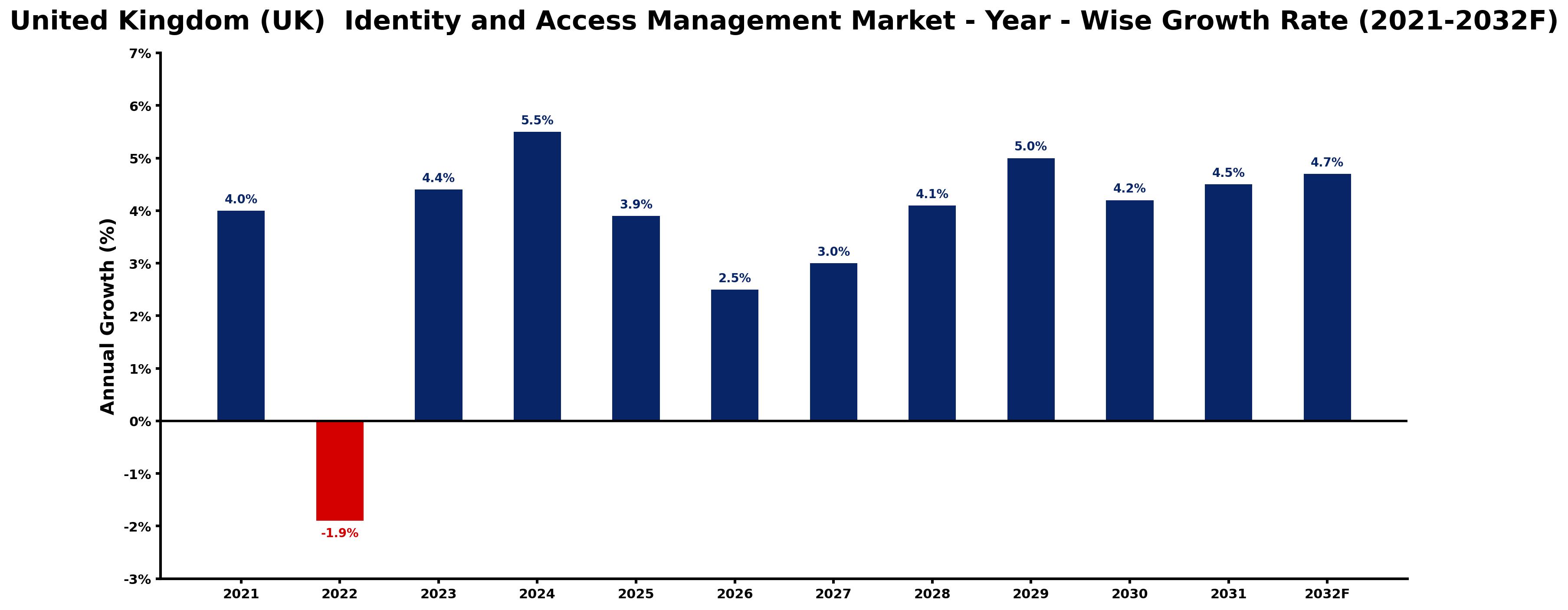
The table below presents the year‑wise growth rates along with the key drivers influencing the market
| Year | Growth Rate | Major Drivers |
| 2021 | 4.0% | Introduction of UK Digital Identity Scheme drives demand. |
| 2022 | -1.9% | UK Cyber Security Agency revised data protection standards. |
| 2023 | 4.4% | Increased compliance with UK GDPR strengthens access management. |
| 2024 | 5.5% | Growing remote work culture necessitates robust identity solutions. |
| 2025 | 3.9% | Government funding for cybersecurity martializes identity management. |
| 2026 | 2.5% | Surge in biometric authentication adoption across financial services. |
| 2027 | 3.0% | Emergence of decentralized identity systems gains traction. |
| 2028 | 4.1% | Public sector digitization projects increase IAM investments. |
| 2029 | 5.0% | Rising concerns over data breaches amplify IAM urgency. |
| 2030 | 4.2% | Regulations on KYC prompt enhanced identity verification practices. |
| 2031 | 4.5% | Increased cybersecurity insurance requirements drive IAM solutions. |
| 2032 | 4.7% | Collaboration between banks and fintechs accelerates IAM deployment. |
Note: Market size estimations and growth projections presented in this report are based on 6Wresearch's proprietary forecasting methodology, utilizing the latest available industry data, government publications, and primary research inputs.
United Kingdom (UK) Identity and Access Management Market Key Takeaways
Below are some of the specific key takeaways from the market, including:
- The growing emphasis on data protection and compliance with GDPR is driving investments in IAM solutions.
- Cloud-based IAM solutions are preferred due to their scalability and ability to integrate with existing systems.
- Emerging technologies like biometric and multi-factor authentication are becoming standard in many organizations.
- Organizations are challenged by the complexities of hybrid IT environments, requiring adaptable IAM strategies.
- Investment opportunities are increasing, particularly in innovative IAM technologies that address remote work security needs.
Evaluation of Restraints in United Kingdom (UK) Identity and Access Management Market
Several factors are constraining the growth of the UK IAM market. Compliance with stringent regulations like GDPR presents a persistent challenge for organizations, forcing them to continually adapt their identity management practices. Additionally, the complexity of managing hybrid IT environments, which encompass both cloud-based and on-premises solutions, often leads to inconsistencies in security protocols. As cyber threats become more sophisticated, companies must find the right balance between robust security measures and user convenience, a balancing act that can hinder productivity and operational efficiency.
United Kingdom (UK) Identity and Access Management Market Trends
In the UK IAM market, trends are predominantly driven by escalating cybersecurity threats and regulatory compliance mandates. Multi-factor authentication is increasingly being integrated as a standard security feature, while biometric authentication methods are gaining traction for their user-friendly experience and enhanced security levels. The need for seamless integration with other security technologies has become paramount, with organizations seeking IAM solutions that ensure a cohesive security strategy across their digital assets.
United Kingdom (UK) Identity and Access Management Market Opportunities
Investment opportunities in the UK IAM market are flourishing as businesses become more aware of the necessity for robust identity solutions. With remote work on the rise, the demand for secure access to corporate networks is escalating. There is a clear opportunity for innovative IAM software providers to develop solutions that cater to emerging threats while enhancing user experience. Consulting firms specializing in IAM implementation are also well-positioned to capitalize on the growing need for strategic security partnerships among organizations.
Government Initiatives in the United Kingdom (UK) Identity and Access Management Market
The UK government has prioritized strengthening cybersecurity protocols, focusing specifically on Identity and Access Management. Key regulatory frameworks, such as GDPR, aim to enforce strict identity management practices to safeguard sensitive data. Collaborative efforts between public and private sectors are essential in addressing the evolving threats posed by cybercriminals, driving the need for reliable IAM technologies.
- A regulatory framework established in 2022 mandates strict compliance with data protection practices, significantly impacting IAM strategy development.
- The Cyber Essentials certification scheme, currently being promoted, provides organizations with guidelines for securing their digital infrastructures.
- A national initiative launched in early 2023 focuses on enhancing the IAM capabilities of critical national infrastructures.
- Current projects in development aim to strengthen public-private partnerships to better address cyber threat landscapes.
- Planned investments for 2024 aim to support IAM technology innovation, particularly in sectors deemed critical to national security.
Future Insights of the United Kingdom (UK) Identity and Access Management Market
Looking ahead to 2026-2032, the UK IAM market is on a clear growth trajectory, propelled by an unyielding focus on cybersecurity and regulatory compliance. As cyber threats become increasingly prevalent, organizations will continue to prioritize the development and implementation of comprehensive IAM solutions. The trend towards cloud adoption is likely to accelerate, with businesses seeking nimble identity solutions that can easily adapt to changing operational needs. Investment in innovative technologies and a strong emphasis on user experience will remain critical as companies strive to secure their digital assets effectively.
United Kingdom (UK) Identity and Access Management Market Latest Developments
Recent developments in the UK IAM market highlight a significant shift towards innovative technologies and enhanced security measures. As organizations adapt to the changing landscape, activity levels have surged, showcasing a robust commitment to improved identity management practices.
- A major technology vendor launched an advanced IAM solution in Q2 2025 that integrates AI-driven analytics for real-time threat detection.
- A regional security firm commenced a collaboration with leading cloud service providers in early 2025, focusing on enhancing IAM capabilities for their clients.
- An initiative started in mid-2025 is currently underway, aimed at facilitating the adoption of biometric solutions across various sectors.
- By late 2025, an IAM technology platform is expected to roll out a new feature set designed to streamline user authentication processes.
- A planned strategic partnership between public sector entities and IAM providers is set for mid-2026 to boost national cybersecurity efforts.
United Kingdom (UK) Identity and Access Management Market - Key Attractiveness of the Report
- 10 Years of Market Numbers
- Historical Data Starting from 2022 to 2025
- Base Year: 2025
- Forecast Data until 2032
- Key Performance Indicators Impacting the Market
- Major Upcoming Developments and Projects
Key Highlights of the Report:
- United Kingdom (UK) Identity and Access Management Market Outlook
- Market Size of United Kingdom (UK) Identity and Access Management Market, 2025
- Forecast of United Kingdom (UK) Identity and Access Management Market, 2032
- Historical Data and Forecast of United Kingdom (UK) Identity and Access Management Revenues & Volume for the Period 2022-2032F
- United Kingdom (UK) Identity and Access Management Market Trend Evolution
- United Kingdom (UK) Identity and Access Management Market Drivers and Challenges
- United Kingdom (UK) Identity and Access Management Price Trends
- United Kingdom (UK) Identity and Access Management Porter's Five Forces
- United Kingdom (UK) Identity and Access Management Industry Life Cycle
- Historical Data and Forecast of United Kingdom (UK) Identity and Access Management Market Revenues & Volume By Component for the Period 2022-2032F
- Historical Data and Forecast of United Kingdom (UK) Identity and Access Management Market Revenues & Volume By Solutions for the Period 2022-2032F
- Historical Data and Forecast of United Kingdom (UK) Identity and Access Management Market Revenues & Volume By Services for the Period 2022-2032F
- Historical Data and Forecast of United Kingdom (UK) Identity and Access Management Market Revenues & Volume By Solution for the Period 2022-2032F
- Historical Data and Forecast of United Kingdom (UK) Identity and Access Management Market Revenues & Volume By Data Directory for the Period 2022-2032F
- Historical Data and Forecast of United Kingdom (UK) Identity and Access Management Market Revenues & Volume By Identity Lifecycle Management for the Period 2022-2032F
- Historical Data and Forecast of United Kingdom (UK) Identity and Access Management Market Revenues & Volume By Deployment Mode for the Period 2022-2032F
- Historical Data and Forecast of United Kingdom (UK) Identity and Access Management Market Revenues & Volume By Cloud for the Period 2022-2032F
- Historical Data and Forecast of United Kingdom (UK) Identity and Access Management Market Revenues & Volume By On-premises for the Period 2022-2032F
- Historical Data and Forecast of United Kingdom (UK) Identity and Access Management Market Revenues & Volume By Organization Size for the Period 2022-2032F
- Historical Data and Forecast of United Kingdom (UK) Identity and Access Management Market Revenues & Volume By SMEs for the Period 2022-2032F
- Historical Data and Forecast of United Kingdom (UK) Identity and Access Management Market Revenues & Volume By Large Enterprises for the Period 2022-2032F
- Historical Data and Forecast of United Kingdom (UK) Identity and Access Management Market Revenues & Volume By Vertical for the Period 2022-2032F
- Historical Data and Forecast of United Kingdom (UK) Identity and Access Management Market Revenues & Volume By BFSI for the Period 2022-2032F
- Historical Data and Forecast of United Kingdom (UK) Identity and Access Management Market Revenues & Volume By Travel and Hospitality for the Period 2022-2032F
- Historical Data and Forecast of United Kingdom (UK) Identity and Access Management Market Revenues & Volume By Healthcare for the Period 2022-2032F
- Historical Data and Forecast of United Kingdom (UK) Identity and Access Management Market Revenues & Volume By Retail and eCommerce for the Period 2022-2032F
- Historical Data and Forecast of United Kingdom (UK) Identity and Access Management Market Revenues & Volume By IT and ITeS for the Period 2022-2032F
- Historical Data and Forecast of United Kingdom (UK) Identity and Access Management Market Revenues & Volume By Education for the Period 2022-2032F
- Historical Data and Forecast of United Kingdom (UK) Identity and Access Management Market Revenues & Volume By Others (Energy and Utilities, Telecommunication, Other Citizen Services) for the Period 2022-2032F
- United Kingdom (UK) Identity and Access Management Import Export Trade Statistics
- Market Opportunity Assessment By Component
- Market Opportunity Assessment By Solution
- Market Opportunity Assessment By Deployment Mode
- Market Opportunity Assessment By Organization Size
- Market Opportunity Assessment By Vertical
- United Kingdom (UK) Identity and Access Management Top Companies Market Share
- United Kingdom (UK) Identity and Access Management Competitive Benchmarking By Technical and Operational Parameters
- United Kingdom (UK) Identity and Access Management Company Profiles
- United Kingdom (UK) Identity and Access Management Key Strategic Recommendations






































